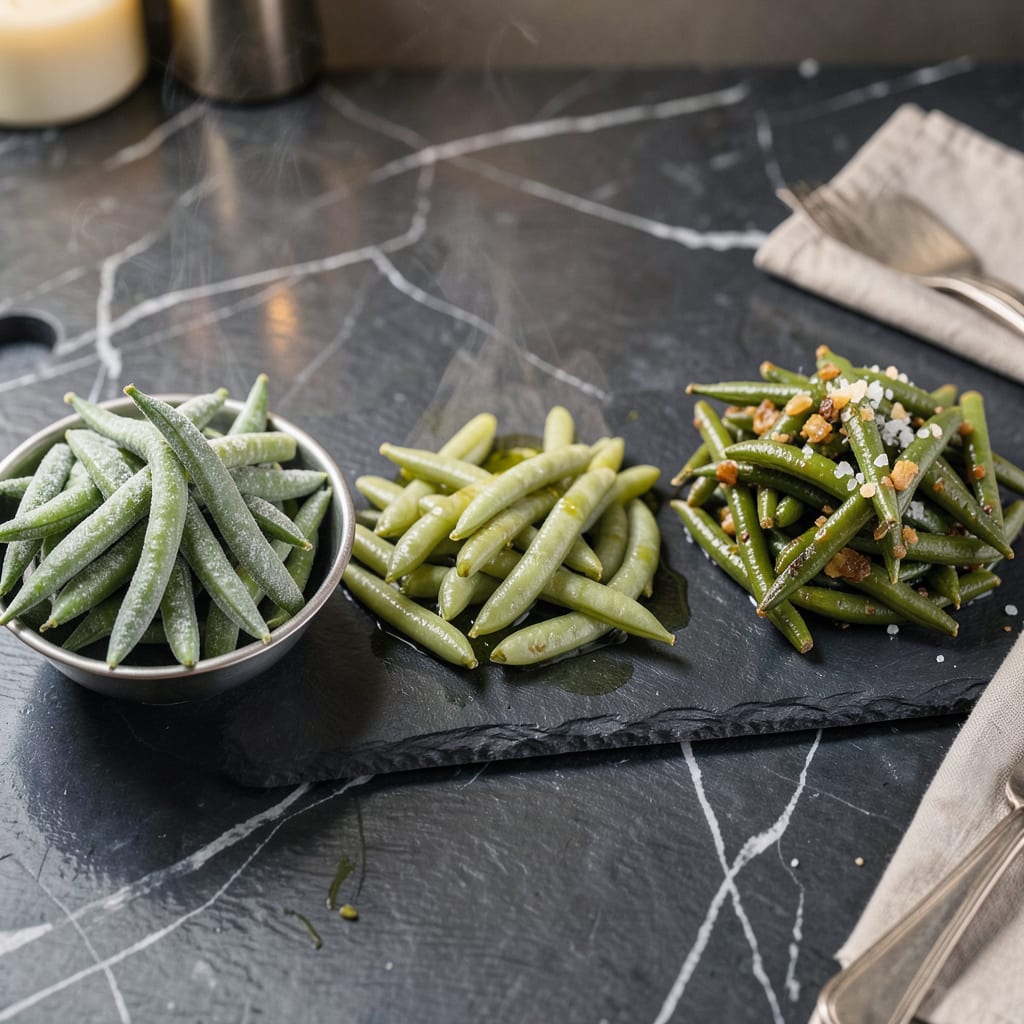
Frozen green beans are typically blanched before freezing, meaning they’re partially cooked but not fully tender. They require additional cooking to reach the desired texture and flavor for most recipes.
This pre-freezing treatment is all about preserving quality—not fully cooking them. 🔥 The quick blanching process (usually 2-3 minutes in boiling water) stops enzyme activity that would otherwise make them mushy or discolored during storage. I think of it like hitting the “pause button” on freshness, which explains why they still need proper cooking time to become perfectly tender and flavorful in your dishes.
What many home cooks don’t realize is that this partial cooking actually gives you more control. 💫 Unlike canned beans that are fully cooked and soft, frozen beans maintain enough structure to handle high-heat methods like stir-frying or roasting without turning to mush. The blanching also helps lock in that bright green color we all love—something you just can’t get with fresh beans that sit too long in the fridge.
💡 In This Article
- How Frozen Green Beans Are Processed Before Freezing
- Best Ways to Cook Frozen Green Beans for Perfect Texture
How Frozen Green Beans Are Processed Before Freezing
The journey from farm to freezer involves a crucial step called blanching—where green beans take a quick dip in boiling water for 2-3 minutes before being flash-frozen. This isn’t about cooking them through, but rather about halting enzyme activity that would degrade color, texture, and nutrients during storage.
The water temperature typically hits 212°F, just long enough to soften the outer layer while keeping the interior crisp. 🔥
What happens next is where the magic lies: immediate ice-cold water baths stop the cooking process dead in its tracks. This rapid cooling prevents the beans from becoming mushy while locking in that vibrant green hue.
Commercial facilities use industrial freezers that drop temperatures to -40°F within minutes, creating tiny ice crystals that preserve cell structure better than your home freezer ever could. ✨
The result? Beans that are technically “pre-cooked” but still firm enough to hold their shape. Unlike canned beans that undergo full cooking and softening, frozen beans maintain about 80% of their raw texture. This partial cooking explains why they need 3-5 minutes of additional heat to become perfectly tender—whether you’re sautéing, steaming, or roasting them.
💫
Here’s the science behind why this matters: blanching deactivates enzymes like peroxidase that cause browning and texture breakdown. The process also helps retain up to 90% of vitamin C content compared to canned beans, which lose about half during their longer cooking process.
That’s why frozen beans often outperform “fresh” beans that have sat in transport for days. ⚡
Compare this to fresh green beans, which contain active enzymes that continue breaking down cell walls even in your fridge. Within 48 hours, fresh beans can lose up to 30% of their crispness. Frozen beans, with their enzyme activity halted, maintain their quality for 8-12 months in the freezer—ready to cook whenever you need them.
🌟
The blanching process also affects how they absorb flavors. Those briefly cooked outer layers become slightly more porous, meaning they’ll soak up garlic, soy sauce, or your favorite seasonings about 25% faster than truly raw beans. This makes them ideal for quick weeknight stir-fries or side dishes where you want maximum flavor in minimal time.
💛

Trained in classic French technique but raised on slow-cooked ribs and spicy rubs, she blends culinary skill with smoke and soul.
- Recipe for Boneless Pork Chops in Cast Iron Skillet: Sear and Baste to Juicy Perfection - October 3, 2026
- Recipe for Boneless Cross Rib Roast: Slow-Roasted Beef with Herb Crust - October 3, 2026
- Hamburgers in Sauce Recipe Crock Pot: Slow-Cooked Savory Delight - October 3, 2026