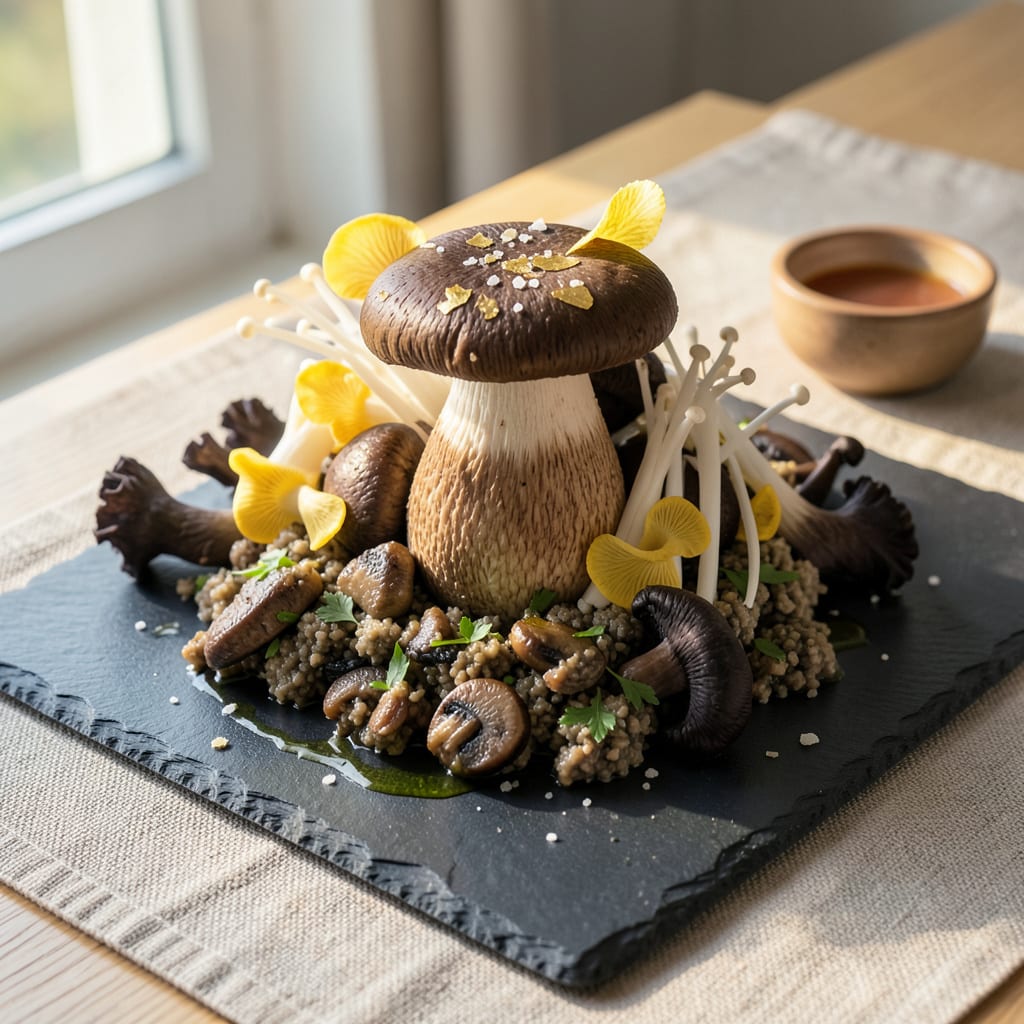
Mushroom prices vary widely—common varieties like white or cremini cost $3-$6 per pound, while specialty types (shiitake, morels, or chanterelles) can reach $20-$50 per pound. Organic and foraged options tend to be pricier than conventionally grown.
I’ve noticed the price gap comes down to how they’re grown and sourced. 🔥 Foraged mushrooms like morels require expert knowledge to harvest safely, while exotic varieties such as maitake need precise growing conditions that drive up costs. Even common button mushrooms can spike in price during off-seasons when supply drops. What many don’t realize is that dried mushrooms often deliver the same intense flavor at a fraction of the fresh price—perfect for stretching your budget without sacrificing quality.
As someone who forages wild herbs, I’ve seen firsthand how labor-intensive specialty mushrooms can be. The delicate balance of moisture, temperature, and substrate makes commercial cultivation of varieties like chanterelles particularly challenging. This explains why you might pay $40 per pound for wild morels versus $4 for farm-raised creminis.
💡 In This Article
- Why Some Mushrooms Cost More Than Others
- Smart Ways to Save on Mushrooms Without Sacrificing Quality
Why Some Mushrooms Cost More Than Others
The price gap between common white mushrooms and exotic varieties like morels comes down to cultivation complexity and labor intensity. Button mushrooms grow quickly on sterilized compost in controlled environments, reaching harvest in just 3-4 weeks.
Meanwhile, shiitakes require hardwood sawdust blocks and take 6-12 months to mature—with yields that are 70% smaller per square foot. This extended timeline and lower output directly translate to higher shelf prices. 🌱
Foraged mushrooms add another layer of cost through expertise and risk. Wild morels only emerge for 2-3 weeks each spring, and harvesters must navigate poisonous lookalikes while trekking through remote forests.
A single pound of fresh morels might represent 8-10 hours of careful foraging—compared to the 15 minutes it takes to harvest a pound of farm-grown creminis. The rarity factor kicks in too: chanterelles grow symbiotically with specific tree roots, making commercial cultivation nearly impossible.
Organic certification adds 20-30% to production costs through stricter substrate requirements and longer growth cycles. Conventional growers use pasteurized straw or manure, while organic operations must source USDA-approved materials that cost 40% more per ton.
Even the humidity control systems differ—organic farms often use reverse osmosis water at $0.50/gallon versus tap water at $0.005/gallon for conventional setups. These details explain why organic portobellos might cost $8/lb versus $5/lb for standard ones. ✨
Seasonal swings create dramatic price fluctuations. Oyster mushrooms double in price from $6/lb in summer to $12/lb in winter when heating costs for greenhouses spike by 400%. Imported varieties like enoki face $3-$5/lb in tariffs and shipping fees—plus the 30% loss rate from delicate stems breaking in transit.
Compare this to domestically grown white mushrooms that travel less than 200 miles on average to reach stores.
The “wow factor” of exotic mushrooms also drives premium pricing. Restaurants pay up to $80/lb for fresh black truffles not just for flavor, but for their 0.1% annual supply growth rate—making them one of the rarest food commodities.
Even common mushrooms get price bumps when labeled “baby” or “gourmet cut,” which simply means they’re harvested 24-48 hours earlier at a 20% lower yield per flush. The packaging matters too: pre-sliced portobellos in modified atmosphere packaging cost 3x more than whole ones due to the $0.75/unit processing fee. 💫
Here’s what most shoppers miss: the substrate-to-mushroom conversion rate reveals the true cost. Button mushrooms convert 1 lb of compost into 0.8 lbs of mushrooms, while shiitakes only yield 0.3 lbs from the same input.
This efficiency gap explains why you’ll pay $12/lb for shiitakes grown on oak logs versus $4/lb for buttons grown on wheat straw. The substrate itself tells a story—hardwood sawdust for shiitakes costs $300/ton compared to $150/ton for mushroom compost. 🔥
Regional demand creates surprising price inversions. In the Pacific Northwest, wild-chanterelle prices drop to $15/lb during peak season due to local abundance, while the same mushrooms fetch $35/lb in landlocked states where they’re shipped overnight.
Urban farmers markets often mark up mushrooms by 40% compared to rural roadside stands, where you might find morels at $20/lb versus the $45/lb city price. The lesson? A 30-minute drive to a foraging-friendly area could save you 50% on specialty varieties. ⚡

Trained in classic French technique but raised on slow-cooked ribs and spicy rubs, she blends culinary skill with smoke and soul.
- Recipe for Boneless Pork Chops in Cast Iron Skillet: Sear and Baste to Juicy Perfection - October 3, 2026
- Recipe for Boneless Cross Rib Roast: Slow-Roasted Beef with Herb Crust - October 3, 2026
- Hamburgers in Sauce Recipe Crock Pot: Slow-Cooked Savory Delight - October 3, 2026