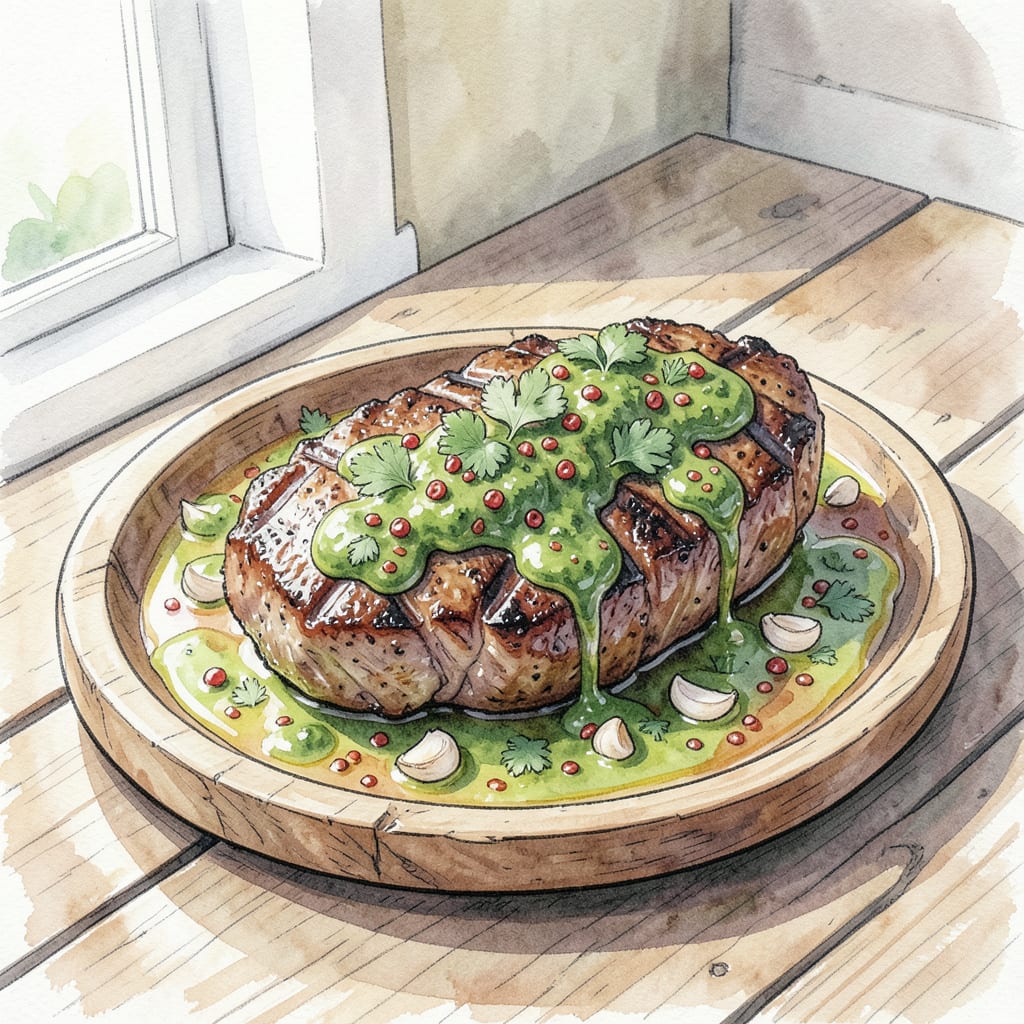
I’ve spent years perfecting my Argentine-style chimichurri sauce recipe, and I’m excited to share it with you. This tangy herb sauce is a game-changer for BBQ enthusiasts, adding a fresh and zesty flavor to grilled meats.
The secret lies in the combination of parsley, oregano, garlic, and red pepper flakes, blended with red wine vinegar and olive oil. With simple ingredients and straightforward instructions, you’ll be enjoying this flavor boost in no time. Let’s get started!
Ingredients for Argentine Chimichurri Bbq
Simple ingredients come together to create this tangy Argentinian herb sauce.
| Ingredient | Amount | Notes |
|---|---|---|
| Fresh Parsley Leaves 🌿 | 1 cup | Packed, stems removed |
| Fresh Oregano Leaves 🌿 | ¼ cup | Chopped fresh |
| Garlic Cloves 🧄 | 4 cloves | Peeled, minced |
| Red Pepper Flakes 🌶️ | 1 tsp | Or more to taste |
| Red Wine Vinegar 🍷 | ½ cup | Good quality red wine vinegar |
| Extra-Virgin Olive Oil 🫒 | ¾ cup | High quality, fruity |
| Salt 🧂 | 1 tsp | Kosher or sea salt |
| Black Pepper 🌶️ | ½ tsp | Freshly ground |
[recipe_ingredient_scaler]
For the best flavor, use fresh, high-quality ingredients. I recommend visiting local farmers markets for the freshest herbs. Trader Joe’s has great value on fresh parsley and oregano. Make sure to remove stems from parsley and oregano before chopping.
No fresh oregano? Use dried oregano at one-third the amount. For less heat, reduce red pepper flakes to 0.5 tsp. For a different flavor profile, try adding 1/4 cup chopped fresh cilantro. If you prefer a smoother sauce, you can blend it a bit longer.
Store chimichurri in an airtight container in the fridge for up to 1 week. The oil may solidify when cold—let it come to room temperature before using. You can also freeze it in ice cube trays for up to 3 months.
Step-by-Step Instructions for Argentine Chimichurri BBQ Sauce
Creating this tangy herb sauce is straightforward and rewarding – let’s get started!
Step 1: Prepare the Herb Mixture
Begin by combining the 1 cup Fresh Parsley Leaves and 0.25 cup Fresh Oregano Leaves in a food processor. I like to use a mini processor for this step as it helps maintain the texture of the herbs. Process until the mixture is finely chopped but not pureed – you want to retain some texture.
Next, add the 4 cloves Garlic Cloves that you’ve already peeled and minced. Process for another 5-10 seconds until the garlic is fully incorporated and the mixture is well combined. Be careful not to over-process, as this can make the mixture too fine and lose its fresh flavor.
Step 2: Add the Remaining Ingredients
Add the 1 tsp Red Pepper Flakes, 1 tsp Salt, and 0.5 tsp Black Pepper to the processor. Process for a few seconds to distribute these seasonings evenly throughout the herb mixture.
With the processor running, slowly pour in the 0.5 cup Red Wine Vinegar through the feed tube. This helps emulsify the sauce and ensures everything combines smoothly. Stop processing once the vinegar is fully incorporated.
Step 3: Emulsify with Olive Oil
Transfer the herb-vinegar mixture to a bowl, then slowly whisk in the 0.75 cup Extra-Virgin Olive Oil. I like to use a high-quality, fruity olive oil as it adds depth to the chimichurri. Whisk constantly to create a smooth, emulsified sauce.
Taste the chimichurri and adjust seasoning if needed. You can add more red pepper flakes if you prefer it spicier, or more salt if it needs it. The sauce should be tangy, herby, and slightly spicy – perfect for complementing grilled meats.
Step 4: Rest and Serve
Transfer the chimichurri to an airtight container and let it rest at room temperature for at least 30 minutes before serving. This resting period allows the flavors to meld together beautifully.
Before serving, give the chimichurri a good stir and taste again. You can adjust the seasoning one last time if needed. Serve it alongside your favorite grilled meats – it pairs particularly well with steak, chorizo, and chicken.
Storing and Reheating This Dish
Refrigerator Storage Tips
Store your chimichurri sauce in an airtight glass container in the refrigerator. I prefer using Pyrex containers with tight-fitting lids. The sauce will keep for up to 1 week. The flavors will meld together and improve over time. ❄️
Freezer Storage for Longer Life
For longer storage, consider freezing your chimichurri. Pour the sauce into ice cube trays – this makes it easy to thaw only what you need. Once frozen, transfer the cubes to a freezer-safe bag or airtight container. Frozen chimichurri will keep for up to 3 months. Simply thaw in the refrigerator or at room temperature when you’re ready to use it.
Reheating and Serving
When you’re ready to serve, give the chimichurri a good stir. If it’s been refrigerated, let it come to room temperature before serving to allow the flavors to shine. If you’ve frozen it, you may need to whisk in a little more olive oil or red wine vinegar to re-emulsify the sauce. Taste and adjust seasoning as needed before serving.
Tips for Maintaining Freshness
To maintain the best flavor and color, always use a clean spoon when serving. Avoid dipping meat directly into the storage container, as this can introduce bacteria. If you notice any off smells or colors, it’s best to discard the sauce and make a fresh batch. Proper storage will keep your chimichurri fresh and delicious. 🔥
Using Leftover Chimichurri
Don’t let leftover chimichurri go to waste! Use it as a marinade for chicken or fish, or as a dressing for salads. You can also mix it with sour cream or Greek yogurt for a tasty dip. The versatility of chimichurri makes it a valuable addition to your condiment collection. 💡
Nutrition Facts
120kcal

Trained in classic French technique but raised on slow-cooked ribs and spicy rubs, she blends culinary skill with smoke and soul.
- Recipe for Boneless Pork Chops in Cast Iron Skillet: Sear and Baste to Juicy Perfection - October 3, 2026
- Recipe for Boneless Cross Rib Roast: Slow-Roasted Beef with Herb Crust - October 3, 2026
- Hamburgers in Sauce Recipe Crock Pot: Slow-Cooked Savory Delight - October 3, 2026