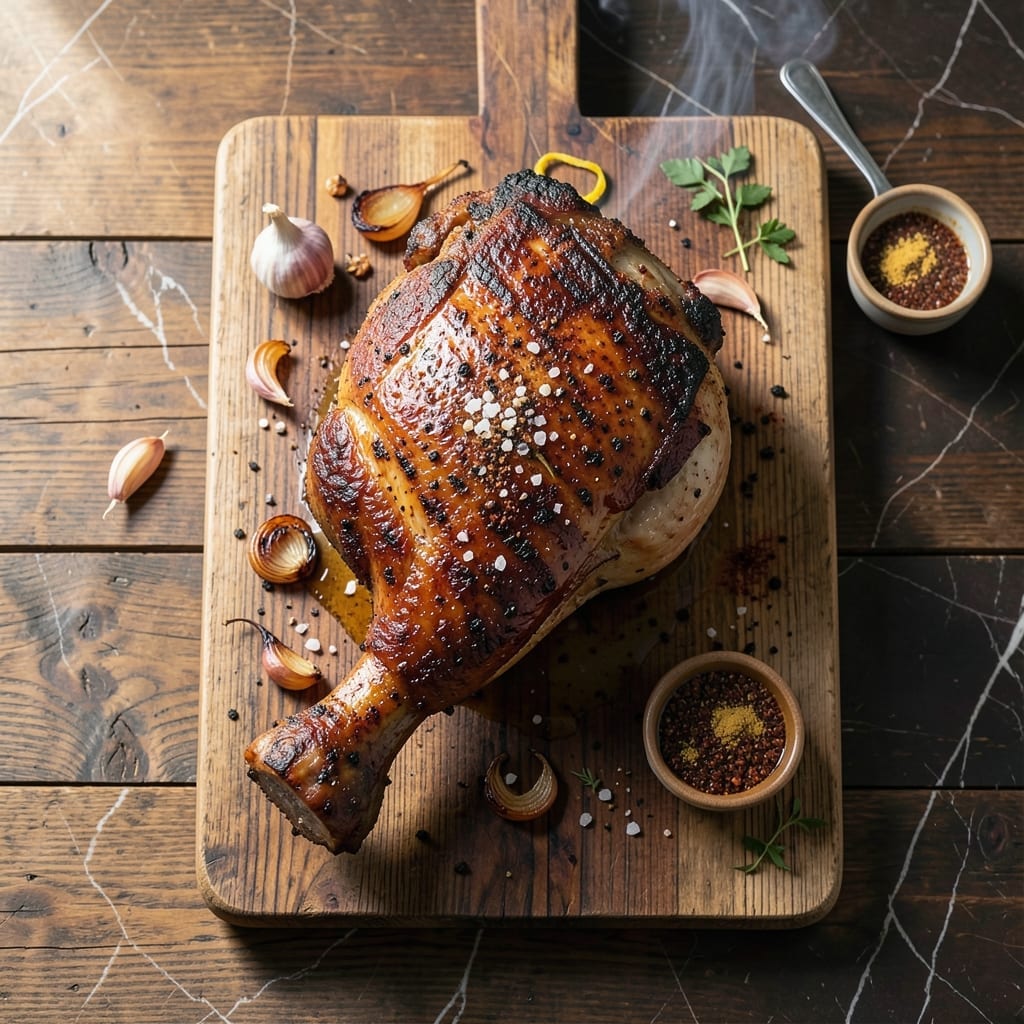
Fire-kissed meat with a deep, smoky crust—this arm roast transforms tough cuts into perfect tenderness over open flame. The key lies in low, controlled heat and patience.
I learned the art of slow smoking from backyard cookouts, where hickory smoke worked its magic. This method honors that tradition with a professional touch, ensuring every bite delivers rich, complex flavor.
Expect a caramelized bark outside and juicy, fall-apart meat inside. The smoke penetrates deeply, creating a dish that tastes like it spent hours in a pitmaster’s hands.
Serve it sliced thin for sandwiches or as a hearty main with classic sides. This is open-flame cooking at its best.
Ingredients for Arm Roast Recipe Grill
Transform tough cuts with these carefully selected ingredients for open-flame smoked perfection.
| Ingredient | Amount | Notes |
|---|---|---|
| Beef Arm Roast 🥩 | 3 lb | Chuck arm roast preferred, well-marbled |
| Hickory Wood Chunks 🪵 | 4 pieces | For smoking, soaked in water |
| Coarse Kosher Salt 🧂 | 2 tbsp | Diamond Crystal preferred for even coating |
| Freshly Ground Black Pepper 🌶️ | 1 ½ tbsp | Coarse grind for crust texture |
| Garlic Powder 🧄 | 1 tbsp | Not garlic salt, for dry rub |
| Onion Powder 🧅 | 1 tbsp | Adds depth to bark formation |
| Smoked Paprika 🌶️ | 1 tbsp | Enhances smoke flavor profile |
| Brown Sugar 🍚 | ¼ cup | Light or dark, for caramelization |
| Mustard Powder 🟡 | 1 tsp | Boosts crust adhesion and tang |
| Olive Oil 🫒 | ¼ cup | For binding dry rub to meat |
| Beef Broth 🥣 | 1 cup | For spritzing during cooking |
| Apple Cider Vinegar 🍏 | ¼ cup | Balances richness in spritz |
[recipe_ingredient_scaler]
The beef is non-negotiable—chuck arm roast with visible marbling ensures tenderness after hours over fire. Source from local butchers or Whole Foods for consistent quality. Hickory wood chunks should be dense and dry (soak them 2 hours before use). For the dry rub, Diamond Crystal kosher salt dissolves better than table salt, creating a superior bark. Don’t skip the coarse black pepper—it adds critical texture to the crust.
Need a wood substitute? Pecan or oak work well, though hickory offers the most authentic flavor. No brown sugar? Turbinado sugar at equal amounts provides similar caramelization. The beef broth in the spritz can be swapped for apple juice for a sweeter note. For the olive oil, avocado oil handles high heat better. Mustard powder is subtle but essential—Dijon powder can substitute in a pinch.
Store the arm roast wrapped tightly in the fridge for up to 5 days before cooking, or freeze for 6-12 months. Dry rub ingredients keep indefinitely in airtight containers. Leftover smoked meat holds in the fridge for 4-5 days or freezes beautifully for 3 months—perfect for sandwiches later.
Why You’ll Love This Recipe
- Set It and Forget: I season the roast with salt, pepper, and garlic powder, then let the grill do all the work—no babysitting required.
- Smoky Depth: Hickory wood chunks infuse the beef arm roast with a rich, campfire-like flavor that’s impossible to resist.
- Feeds a Crowd: This roast is my go-to for Sunday dinners, easily stretching to feed eight with leftovers for sandwiches the next day.
- Budget Friendly: A beef arm roast is affordable, and the simple seasoning keeps costs low without sacrificing taste.
Step-by-Step Instructions for Open-Flame Smoked Arm Roast
Master the technique for achieving tender, smoke-infused beef with a perfect bark every time.
Step 1: Prepare the Dry Rub and Season the Roast
In a bowl, combine the 2 tbsp coarse kosher salt, 1.5 tbsp freshly ground black pepper, 1 tbsp garlic powder, 1 tbsp onion powder, 1 tbsp smoked paprika, 0.25 cup brown sugar, and 1 tsp mustard powder. Stir until evenly blended. The mustard powder enhances crust adhesion, while the brown sugar promotes caramelization.
Pat the 3 lb beef arm roast completely dry with paper towels, then rub it all over with the 0.25 cup olive oil. This helps the dry rub adhere. Apply the rub generously to every surface, pressing firmly to create a thick, even coating. The roast should look almost entirely covered in seasoning.
Step 2: Set Up the Grill for Indirect Heat and Smoke
Prepare your grill for indirect heat by banking charcoal to one side or turning on only half the burners for a gas grill. Target a temperature of 275°F. Add the 4 pieces hickory wood chunks (pre-soaked in water) directly onto the hot coals or in a smoker box for gas grills. Soaked wood chunks smolder rather than burn, producing clean, fragrant smoke.
Place a disposable aluminum pan filled with water on the cool side of the grill. This pan stabilizes the temperature and adds moisture to the cooking environment, preventing the roast from drying out during the long cook. Close the lid and allow the grill to come to temperature with smoke established.
Step 3: Smoke the Roast to Develop the Bark
Position the beef arm roast on the cool side of the grill, fat cap up. Insert a meat thermometer into the thickest part of the roast, avoiding the bone. Smoke undisturbed for 3-4 hours until the internal temperature reaches 165°F. Resist the urge to open the lid frequently—each opening releases heat and smoke, extending the cooking time.
During this phase, combine the 1 cup beef broth and 0.25 cup apple cider vinegar in a spray bottle. Every 45-60 minutes, lightly spritz the roast to keep the surface moist and promote bark formation. The vinegar balances the richness of the beef, while the broth adds depth.
Step 4: Wrap and Finish to Tenderness
Once the roast reaches 165°F, remove it from the grill and wrap it tightly in heavy-duty aluminum foil with ½ cup of the remaining spritz mixture. This step, known as the Texas crutch, powers the roast through the stall while keeping it moist. Return the wrapped roast to the grill and continue cooking until the internal temperature hits 203°F for optimal tenderness.
The wrapped phase typically takes another 2-3 hours. The roast is done when a thermometer probe slides in with minimal resistance, like butter. Avoid overcooking—beyond 205°F, the meat can become dry.
Step 5: Rest and Slice for Service
Carefully transfer the wrapped roast to a cutting board and let it rest for 30-45 minutes. This resting period allows the juices to redistribute, ensuring every slice is moist and flavorful. Tent the roast loosely with foil to keep it warm.
Unwrap the roast and slice against the grain into ½-inch thick portions. The meat should pull apart easily with a fork, with a dark, smoky bark on the exterior. Serve immediately with the accumulated juices from the foil for an extra burst of flavor.
Pro Tips For Making Arm Roast Recipe Grill
- Dry the Roast: Pat the arm roast completely dry with paper towels before seasoning—this guarantees a better bark and even char on the grill.
- Soak the Wood: Submerge hickory chunks in water for at least 30 minutes before grilling to prevent them from burning up too fast, ensuring steady smoke.
- Skip the Cold Meat: Take the beef out of the fridge 45 minutes before grilling so it cooks more evenly and doesn’t seize up when it hits the heat.
- Rest Under Foil: After pulling it off the grill, tent the roast loosely with foil and let it rest for 15 minutes—this keeps all the juices from running out when you slice.
Storing and Reheating This Dish
Refrigerator Storage
Let your smoked arm roast cool for no more than 2 hours before slicing or storing whole. Wrap tightly in aluminum foil or place in an airtight container, then refrigerate at 40°F or below for up to 4-5 days. The flavors deepen overnight, making leftovers even more delicious. ❄️
Freezer Storage
For long-term storage, wrap slices or the whole roast in plastic wrap, then in freezer paper or a heavy-duty freezer bag. Squeeze out excess air to prevent freezer burn. Your smoked creation will keep beautifully for 3 months without losing quality.
Stovetop Reheating
Place meat in a skillet with ¼ cup beef broth or water, cover, and warm over medium-low heat for 8-10 minutes. Stir occasionally to prevent sticking. This method preserves moisture better than any other. 🔥
Microwave Reheating
For quick meals, arrange slices on a microwave-safe plate with a damp paper towel on top. Heat on 50% power for 1-2 minutes, checking and flipping halfway. The steam from the towel keeps the meat tender.
Oven Reheating
Preheat oven to 300°F. Wrap meat in foil with 2 tbsp broth and warm for 15-20 minutes. This works best for larger portions and maintains that smoky flavor we worked so hard to achieve.
Serving Leftovers
Shred or chop for sandwiches, tacos, or loaded baked potatoes. The smoky flavor pairs perfectly with provolone cheese and pickled jalapeños on a crusty roll. I often make a quick gravy from the reheating juices.
Nutrition Facts
Frequently Asked Questions
What’s the ideal grill temperature for smoking?
Maintain a steady 275°F for low-and-slow cooking. This temperature allows the connective tissue to break down without drying out the meat.
How do I know when it’s done?
Use a meat thermometer—the roast is ready at 203°F internally. The probe should slide in like butter, signaling perfect tenderness.
Can I use a different type of wood?
Yes! Pecan or oak work well, though hickory delivers the boldest smoke flavor. Avoid softwoods like pine, which can impart bitter notes.
Why wrap it in foil during cooking?
Wrapping (the Texas crutch) speeds up cooking and prevents drying. It helps push through the stall while keeping the meat moist and tender.

Trained in classic French technique but raised on slow-cooked ribs and spicy rubs, she blends culinary skill with smoke and soul.
- Recipe for Boneless Pork Chops in Cast Iron Skillet: Sear and Baste to Juicy Perfection - October 3, 2026
- Recipe for Boneless Cross Rib Roast: Slow-Roasted Beef with Herb Crust - October 3, 2026
- Hamburgers in Sauce Recipe Crock Pot: Slow-Cooked Savory Delight - October 3, 2026