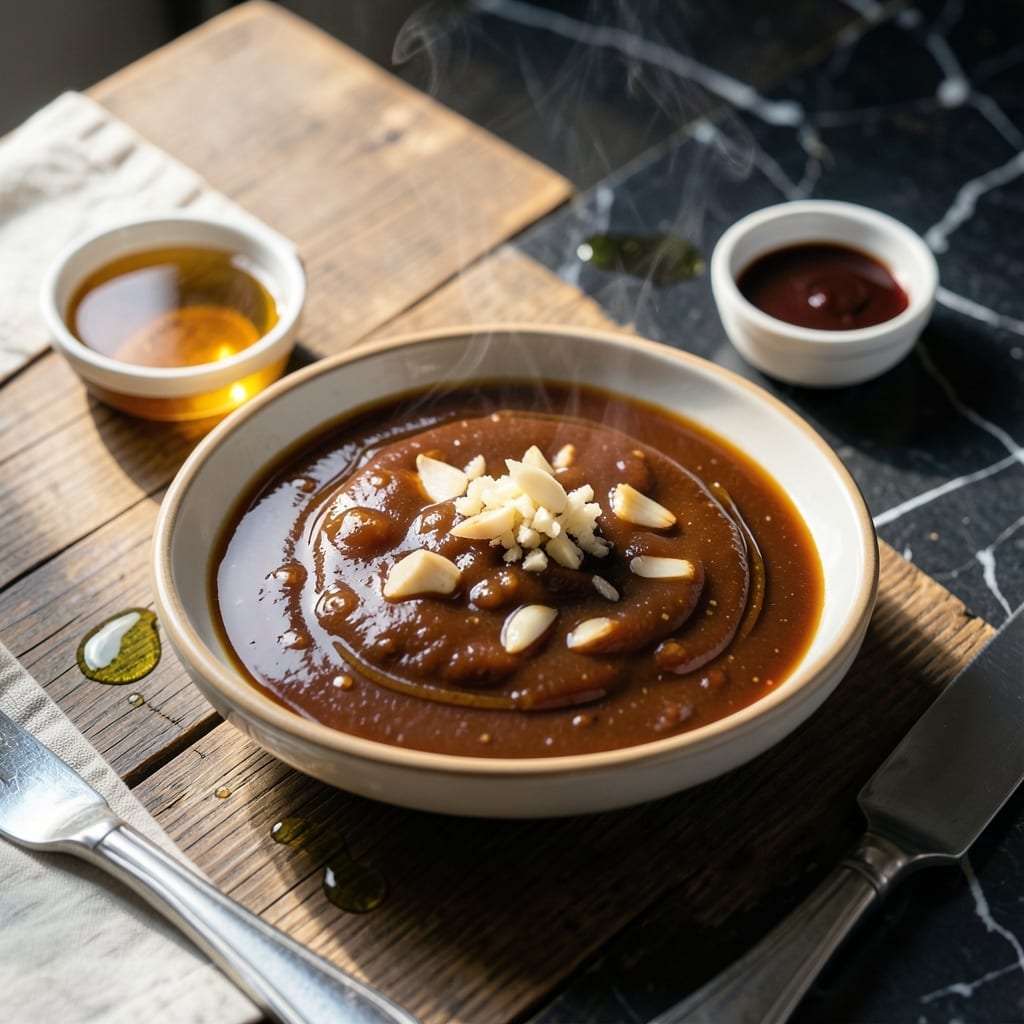
This sauce transforms grilled meats with its sweet and umami depth, blending traditional Asian flavors into a versatile glaze.
Perfect for brushing on ribs, chicken, or vegetables, it delivers restaurant-quality results with minimal effort.
Ingredients for Asian Barbecue Sauce
Ten ingredients create this complex glaze with deep sweet and umami character for grilling.
| Ingredient | Amount | Notes |
|---|---|---|
| Soy Sauce 🥢 | ½ cup | Low-sodium preferred for balance |
| Hoisin Sauce 🥫 | ½ cup | Thick, sweet-salty base ingredient |
| Honey 🍯 | ¼ cup | For natural sweetness |
| Rice Vinegar 🍚 | 2 tbsp | Adds necessary acidity |
| Fresh Ginger 🌿 | 1 tbsp | Finely grated for even distribution |
| Garlic Cloves 🧄 | 3 cloves | Minced for maximum flavor release |
| Sesame Oil 🫒 | 1 tbsp | Toasted variety for depth |
| Sriracha Sauce 🌶️ | 1 tbsp | Adjust for preferred heat level |
| Brown Sugar 🍚 | 2 tbsp | Packed for rich caramelization |
| Lime Juice 🍈 | 1 tbsp | Freshly squeezed for brightness |
[recipe_ingredient_scaler]
The soy sauce is the backbone here. Kikkoman low-sodium gives clean flavor without overpowering saltiness. Hoisin adds thickness and complexity—Lee Kum Kee is widely available and reliable. For the honey, local raw varieties (from farmers markets) add floral depth, but standard grocery store brands work perfectly fine for everyday cooking.
Need to make it gluten-free? Tamari at a 1:1 ratio replaces soy sauce. No hoisin? Combine 1 part miso paste with 2 parts honey for similar effect. The brown sugar can be swapped for coconut sugar at equal amounts. For extra umami, a teaspoon of oyster sauce (or vegetarian oyster sauce) elevates the depth significantly.
This sauce keeps beautifully. Store in an airtight container in the fridge for up to 2 weeks. The flavors meld and intensify over time. For longer storage, freeze in portions for up to 3 months—perfect for spontaneous grilling sessions.
Why You’ll Love This Recipe
- Five-Minute Mix: I just dump everything in a saucepan and stir—soy, hoisin, honey, vinegar, and grated ginger, done.
- Sweet-Savory Balance: The honey and hoisin give it that sticky, caramelized depth while the rice vinegar cuts through with a bright tang.
- Slathers on Everything: I’ve used it on chicken, tofu, and even as a dipping sauce for dumplings. Between us, it’s my secret for making leftovers taste brand new.
Step-by-Step Instructions for Asian Barbecue Sauce
This straightforward method ensures a perfectly balanced glaze with deep umami and sweetness.
Step 1: Sauté Aromatics for Flavor Foundation
Heat a medium saucepan over medium heat. Add the 1 tbsp Sesame Oil, then immediately add the 1 tbsp Fresh Ginger and 3 cloves Garlic Cloves. Sauté for 1-2 minutes until fragrant but not browned.
This initial step blooms the aromatics in the oil, releasing their essential oils and creating a robust flavor base. The sesame oil’s nutty depth complements the sharpness of the ginger and garlic, forming the perfect foundation for your sauce.
Step 2: Combine Liquid Ingredients and Sweeteners
Pour in the 0.5 cup Soy Sauce, 0.5 cup Hoisin Sauce, 0.25 cup Honey, 2 tbsp Rice Vinegar, and 1 tbsp Lime Juice. Stir well to combine, then add the 2 tbsp Brown Sugar and 1 tbsp Sriracha Sauce.
The soy and hoisin provide the umami backbone, while the honey and brown sugar contribute sweetness. The rice vinegar and lime juice introduce the necessary acidity to balance the rich flavors. The sriracha adds a subtle heat that develops as the sauce reduces.
Step 3: Simmer and Reduce to Desired Consistency
Increase heat to medium-high and bring the mixture to a gentle boil. Once boiling, reduce heat to medium-low and let it simmer for 10-12 minutes, stirring occasionally.
You’ll notice the sauce beginning to thicken as it reduces. The bubbles will become smaller and more viscous as the water content evaporates. The sauce is ready when it coats the back of a spoon and leaves a clear trail when you run your finger through it.
This reduction process intensifies all the flavors while achieving the perfect glaze consistency for brushing onto meats during grilling.
Step 4: Cool and Adjust Seasoning
Remove the saucepan from heat and let the sauce cool to room temperature. This takes about 20-30 minutes at room temperature. As it cools, the sauce will thicken slightly more.
Taste and adjust the seasoning if needed. If you prefer more heat, a pinch of red pepper flakes can be added. For additional sweetness, a touch more honey can be stirred in while the sauce is still warm. The flavors will meld and deepen as it cools.
The finished sauce should have a glossy appearance and a complex balance of sweet, salty, tangy, and umami flavors with just a hint of heat from the sriracha.
Pro Tips For Making Asian Barbecue Sauce
- Simmer Low and Slow: I learned this the hard way—boiling the sauce makes the honey seize up and turn grainy. Keep it at a gentle simmer, just enough to let the flavors meld without breaking the texture.
- Grate the Ginger: Sounds tedious, but finely grated ginger blends into the sauce better than minced. I was skeptical until I tried it and noticed the difference in every bite.
- Skip the Over-Salting: Soy sauce and hoisin are already packed with sodium. Taste before adding extra salt, or you’ll end up with a sauce that’s harsh instead of balanced.
- Thin with Water: If the sauce thickens too much while cooking, add a tablespoon of warm water at a time to loosen it. This isn’t the prettiest fix, but it saves the batch every time.
Common Mistakes When Making This Recipe
Overcooking the Sauce
Simmering too long can turn your glaze into a thick, sticky paste. Aim for 10-12 minutes max on medium-low heat—any longer and the sugars caramelize too much, losing that perfect brushable consistency. I learned this the hard way at my first local BBQ competition. 🔥
Skipping the Aromatics
Don’t rush the ginger and garlic step. Sautéing them in 1 tbsp Sesame Oil for 1-2 minutes releases their oils, creating depth. Raw ginger and garlic taste harsh and can overpower the sauce’s balance.
Using Full-Sodium Soy
Regular soy sauce can make your glaze too salty. Stick with low-sodium soy sauce—Kikkoman is my go-to. This keeps the umami without overwhelming the other flavors.
Ignoring the Acid
The 2 tbsp Rice Vinegar and 1 tbsp Lime Juice aren’t just for tang—they balance the sweetness. Skip them, and your sauce will taste flat. I always taste before adjusting, but don’t omit these entirely.
Not Tasting Before Serving
Flavors meld as the sauce cools. Let it sit for 20-30 minutes, then taste. You might need a pinch more brown sugar or a dash of sriracha to perfect the balance.
Storing Improperly
This sauce keeps well, but only in an airtight container in the fridge for up to 2 weeks. Leaving it uncovered or at room temperature risks spoilage and flavor degradation. 💡
Nutrition Facts
Frequently Asked Questions
Can I make this sauce ahead of time?
It tastes even better after 24 hours as flavors meld. Store in an airtight container in the fridge for up to 2 weeks, or freeze for 3 months.
What can I use instead of hoisin sauce?
Mix 1 part miso paste with 2 parts honey for a similar sweet-salty depth. Oyster sauce also works in a pinch, though it’s thinner.
How do I adjust the heat level?
Add more sriracha for extra spice, or reduce it for a milder version. A pinch of red pepper flakes can also boost the heat without altering the texture.
Is this sauce gluten-free?
Swap soy sauce for tamari at a 1:1 ratio. Ensure all other ingredients are certified gluten-free, especially hoisin and oyster sauce.

Trained in classic French technique but raised on slow-cooked ribs and spicy rubs, she blends culinary skill with smoke and soul.
- Recipe for Boneless Pork Chops in Cast Iron Skillet: Sear and Baste to Juicy Perfection - October 3, 2026
- Recipe for Boneless Cross Rib Roast: Slow-Roasted Beef with Herb Crust - October 3, 2026
- Hamburgers in Sauce Recipe Crock Pot: Slow-Cooked Savory Delight - October 3, 2026