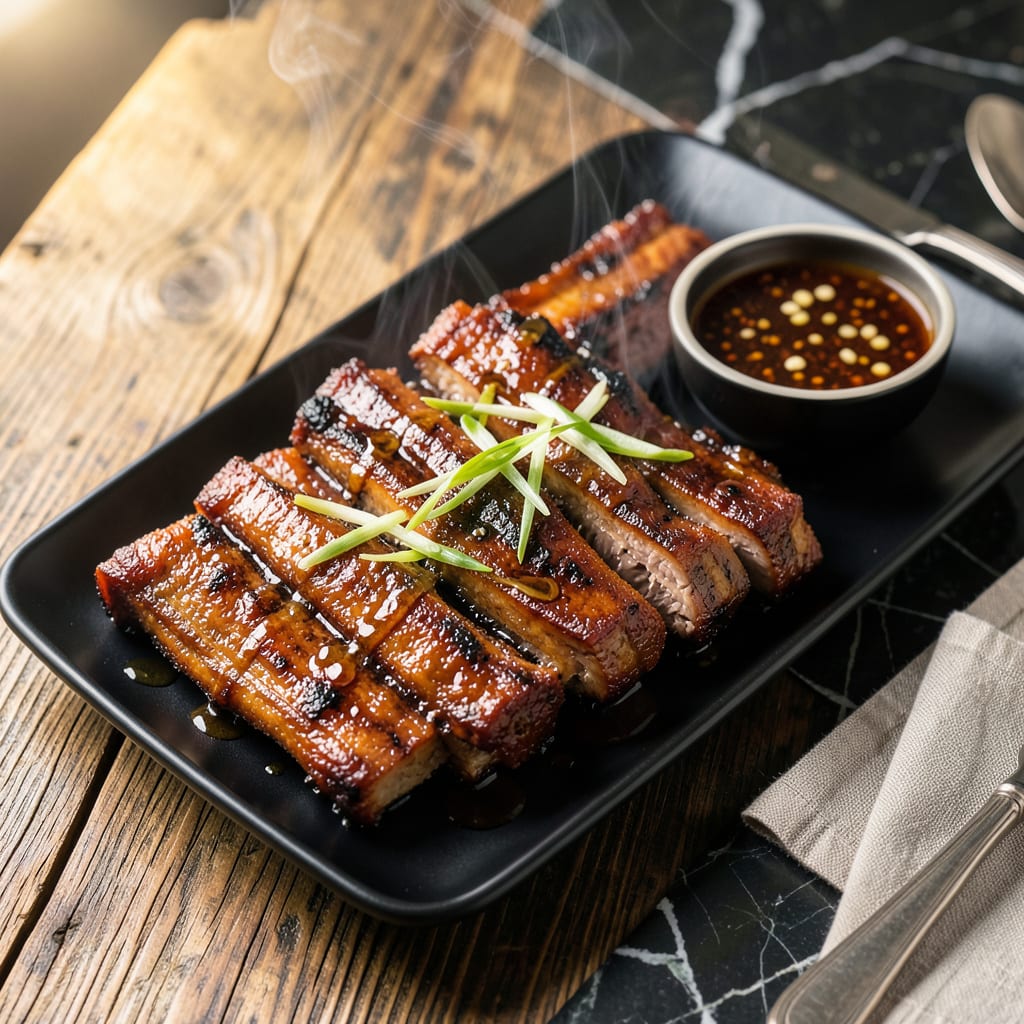
This sauce transforms ribs with a bold sweet-spicy profile without a hint of vinegar. Foolproof balance of soy, honey, and chili paste creates depth that clings perfectly to meat.
Mix in minutes, then brush on during the final stage of cooking. Stores well for up to 2 weeks in the fridge—ideal for meal prep or last-minute grilling.
Ingredients for Asian Bbq Sauce Recipe for Ribs
Eight ingredients deliver bold sweet-spicy depth perfect for ribs. No vinegar needed here.
| Ingredient | Amount | Notes |
|---|---|---|
| Soy Sauce 🥢 | ½ cup | Low-sodium preferred for balance |
| Honey 🍯 | ½ cup | Raw or pure for depth |
| Gochujang 🌶️ | 2 tbsp | Korean chili paste, essential |
| Fresh Ginger 🌿 | 1 tbsp | Peeled and finely grated |
| Garlic Cloves 🧄 | 3 cloves | Minced to fine paste |
| Sesame Oil 🫒 | 1 tbsp | Toasted for nutty aroma |
| Rice Vinegar 🍶 | 1 tbsp | Optional, for slight tang |
| Brown Sugar 🍚 | 2 tbsp | Light or dark, packed |
[recipe_ingredient_scaler]
The gochujang is non-negotiable—look for it in the Asian aisle at Whole Foods or H Mart. Soy sauce should be low-sodium to keep the salt in check, but regular works if you reduce the brown sugar slightly. Fresh ginger matters (the jarred stuff lacks punch), and microplane it for maximum flavor extraction. Honey quality shows up in the final glaze, so spring for the good stuff if you can.
No gochujang? Sriracha plus 1 tsp miso paste gets you close, but the depth won’t be the same. Short on honey? Maple syrup or agave works in a pinch. The sesame oil should be toasted, not light—Kadoya brand is a reliable choice. Brown sugar can be swapped for coconut sugar, but the molasses notes in brown add complexity worth keeping.
This keeps 2 weeks in the fridge—glass jar is best. The flavors meld and deepen after a day, so make it ahead if possible. Freezes beautifully for up to 3 months (thaw before using).
Why You’ll Love This Recipe
- I’ll be real: I always double the batch because this sauce freezes perfectly for next week’s chicken or tofu.
- 5-Minute Mix: I just dump the soy sauce, honey, gochujang, ginger, and garlic in a bowl and stir—no cooking required until it hits the ribs.
- Sweet & Spicy Balance: The honey mellows the gochujang’s heat while garlic and ginger add that deep, savory punch I crave.
- Budget Stretcher: Five pantry staples transform cheap ribs into restaurant-worthy dinner—honestly, my wallet thanks me every time.
Step-by-Step Instructions for Asian BBQ Sauce for Ribs
This method ensures a perfectly balanced glaze with deep umami and just the right heat.
Step 1: Sauté Aromatics in Sesame Oil
Heat the 1 tbsp Sesame Oil in a medium saucepan over medium heat. Add the 1 tbsp Fresh Ginger and 3 cloves Garlic Cloves, stirring constantly for 30-45 seconds until fragrant but not browned. The ginger should release its spicy aroma while the garlic turns translucent at the edges.
Watch the heat carefully—sesame oil has a low smoke point, and burnt garlic will impart a bitter flavor. This aromatic base builds the foundation for the sauce’s complex flavor profile.
Step 2: Combine Wet Ingredients and Sweetener
Pour in the 0.5 cup Soy Sauce, 0.5 cup Honey, 1 tbsp Rice Vinegar, and 2 tbsp Brown Sugar. Stir well to dissolve the brown sugar completely. The mixture should come to a gentle simmer within 2-3 minutes.
The honey and brown sugar create a rich, caramelized depth while the soy sauce provides the essential umami backbone. The rice vinegar adds a subtle tang that balances the sweetness without overpowering the glaze.
Step 3: Incorporate Gochujang for Heat and Depth
Reduce heat to medium-low and whisk in the 2 tbsp Gochujang until fully integrated. This Korean chili paste will thicken the sauce slightly and give it a deep red color. Simmer for 5-7 minutes, stirring frequently to prevent sticking.
The gochujang’s fermented heat and sweetness will meld with the other ingredients, creating a glossy, well-balanced sauce. You’ll notice the sauce darken and develop a syrupy consistency as it reduces.
Step 4: Reduce to Desired Consistency
Continue simmering for another 3-5 minutes until the sauce has thickened enough to coat the back of a spoon. The final volume should reduce by about one-third. Test the consistency by dragging a spoon through the sauce—it should leave a clear path that slowly fills in.
Remove from heat and let cool slightly. The sauce will thicken further as it cools. For ribs, you want a glaze that’s thick enough to cling but still pourable. Use immediately or store in an airtight container for up to 1 week in the refrigerator.
Pro Tips For Making Asian Bbq Sauce Recipe For Ribs
- Simmer Low and Slow: I learned this the hard way—boil the sauce and the honey will burn, leaving a bitter taste. Keep it at a gentle simmer for 8-10 minutes to let the flavors meld without scorching.
- Grate the Ginger: Skip the powdered stuff and use fresh ginger, finely grated. About 1 tablespoon does the trick and makes a real difference in brightness compared to lazy pre-ground versions.
- Balance the Gochujang: After burning three batches, I finally figured out that gochujang can overpower. Start with 1 tablespoon, taste, then add more—it’s easier to adjust than fix an overly spicy sauce.
- Thin with Water: Sounds weird, but it works: if the sauce thickens too much while simmering, add a splash of water to loosen it. The ribs will soak it up better when it’s not glue-like.
Serving Suggestions for Leftovers
Garnishing Tips
Finish ribs with a sprinkle of toasted sesame seeds and thinly sliced green onions for visual pop and nutty crunch. I always keep a small jar of each on hand for last-minute touches. The contrast in textures elevates every bite. ✨
Side Dish Pairings
Serve with steamed jasmine rice to soak up extra sauce or quick-pickled cucumbers for a refreshing crunch. I love the balance of sweet, spicy, and tangy in one meal.
Plating Ideas
Arrange ribs on a platter with sauce drizzled artistically. Add lime wedges on the side for guests to squeeze over their portion. The citrus brightens the rich glaze beautifully.
Family-Style Service
Keep sauce warm in a small slow cooker for easy dipping. I set mine to low heat and add a splash of water if it thickens too much. Everyone loves customizing their ribs.
Beverage Pairings
A cold Asian lager like Sapporo cuts through the richness, while green tea offers a lighter option. I’ve even served this with chilled sake for special occasions. 🍺
Leftovers Hack
Shred leftover ribs and toss with extra sauce for Asian BBQ sliders. Toast the buns with a little sesame oil for added flavor. My family requests these the next day.
Nutrition Facts

Trained in classic French technique but raised on slow-cooked ribs and spicy rubs, she blends culinary skill with smoke and soul.
- Recipe for Boneless Pork Chops in Cast Iron Skillet: Sear and Baste to Juicy Perfection - October 3, 2026
- Recipe for Boneless Cross Rib Roast: Slow-Roasted Beef with Herb Crust - October 3, 2026
- Hamburgers in Sauce Recipe Crock Pot: Slow-Cooked Savory Delight - October 3, 2026