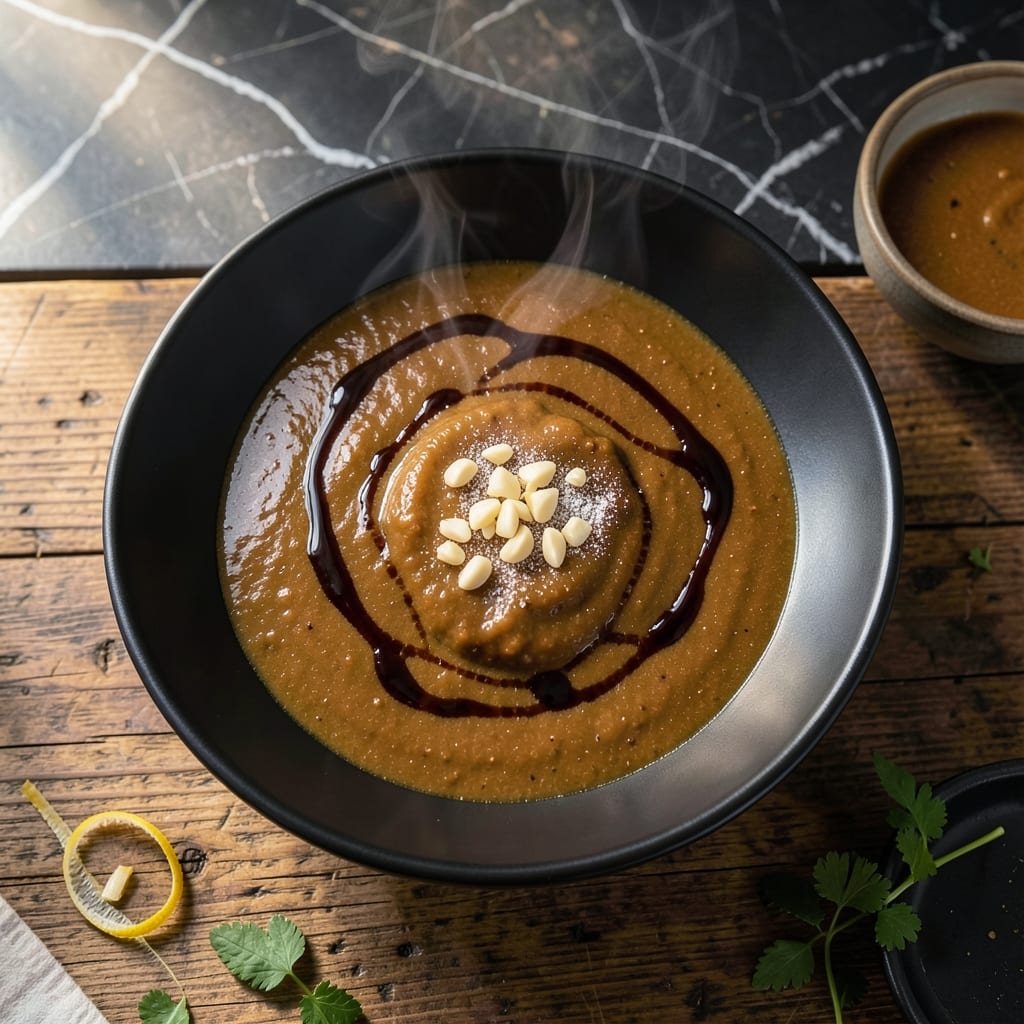
This silky Asian gravy transforms stir fries from ordinary to extraordinary with its rich umami depth and velvety texture. A professional technique ensures smooth results without lumps or separation.
The foundation combines soy sauce, oyster sauce, and a touch of sugar for balanced sweet-salty complexity. Cornstarch creates that signature glossy finish, while garlic and ginger add aromatic warmth to every bite.
Ready in under 10 minutes, this versatile sauce clings perfectly to noodles, vegetables, or proteins. Its deep flavor profile elevates even the simplest weeknight meals to restaurant quality.
Store in an airtight container for up to 5 days or freeze for longer shelf life. The flavors intensify as it rests, making it even better the next day.
Ingredients for Asian Gravy
Nine ingredients create this restaurant-quality umami sauce with velvety texture and complex flavor.
| Ingredient | Amount | Notes |
|---|---|---|
| Soy Sauce 💧 | ½ cup | Low-sodium preferred for balance |
| Oyster Sauce 🫒 | ¼ cup | Essential for umami depth |
| Granulated Sugar 🍚 | 1 tbsp | Balances saltiness perfectly |
| Cornstarch 🌾 | 2 tbsp | For silky, glossy texture |
| Water 💧 | 1 cup | Cold for proper slurry |
| Fresh Garlic Cloves 🧄 | 4 cloves | Minced for aromatic warmth |
| Fresh Ginger Root 🌿 | 1 tbsp | Finely grated for even distribution |
| Sesame Oil 🫒 | 1 tsp | Toasted for nutty aroma |
| Rice Vinegar 🍋 | 1 tbsp | Adds subtle tangy brightness |
[recipe_ingredient_scaler]
The soy and oyster sauces form the flavor backbone. Kikkoman for soy sauce offers consistent quality, while Lee Kum Kee oyster sauce delivers authentic depth. For soy sauce, low-sodium allows better salt control in the final sauce. Fresh garlic and ginger are non-negotiable—pre-minced versions lack the vibrant aroma needed for professional results.
No oyster sauce? Vegetarian oyster sauce works perfectly, or use hoisin with a dash of fish sauce for similar complexity. Cornstarch can be swapped with arrowroot at a 1:1 ratio. Rice vinegar substitutes include apple cider vinegar or white wine vinegar. For sugar, brown sugar adds a molasses note that complements the umami beautifully.
This sauce keeps 5 days refrigerated in an airtight container. The flavors meld and deepen over time, making it taste even better the next day. For longer storage, freeze in ice cube trays for up to 3 months—perfect for quick weeknight meals.
Why You’ll Love This Recipe
- I’ll be real: these are ingredients I already keep on hand, so it’s a zero-cost flavor upgrade.
- 5-Minute Mix: I just stir soy sauce, oyster sauce, sugar, and cornstarch with water—no chopping, no fuss.
- Umami Bomb: The soy and oyster sauce combo delivers that deep, savory punch I crave in every bite.
- Pairs With Everything: Honestly, I slather this gravy on rice, noodles, stir-fries—even roasted veggies taste spot-on.
Step-by-Step Instructions for Asian Gravy
Master this technique and you’ll produce a glossy, restaurant-quality sauce with consistent results every time.
Step 1: Create the Cornstarch Slurry
In a small bowl, whisk together the 2 tbsp Cornstarch with the 1 cup Water until completely smooth. This slurry is the foundation of your gravy’s signature velvety texture. Ensure there are no lumps remaining—this guarantees even thickening without clumps in your finished sauce.
The water must be cold, as warm liquid can prematurely activate the cornstarch, reducing its thickening power. I always use a fork for this initial mixing, as it breaks up any potential clumps more effectively than a spoon.
Step 2: Sauté Aromatics for Flavor Base
Heat a saucepan over medium heat and add the 1 tsp Sesame Oil. Once shimmering, add the 4 cloves Fresh Garlic Cloves (minced) and 1 tbsp Fresh Ginger Root (finely grated). Sauté for 30-45 seconds until fragrant but not browned.
This brief cooking time softens the raw edge of the aromatics while preserving their bright, fresh character. Watch carefully—garlic and ginger can burn quickly, which would introduce bitterness to your sauce. The sesame oil adds a subtle nutty depth that complements the umami flavors.
Step 3: Build the Sauce Foundation
Pour in the 0.5 cup Soy Sauce, 0.25 cup Oyster Sauce, 1 tbsp Granulated Sugar, and 1 tbsp Rice Vinegar. Stir to combine and bring the mixture to a gentle simmer. The sugar will dissolve as the liquid heats, creating a balanced sweet-savory profile.
Allow this to simmer for 2-3 minutes to meld the flavors. The oyster sauce contributes essential umami depth, while the rice vinegar adds a subtle tang that brightens the overall profile. This is where the sauce develops its complex, layered character.
Step 4: Thicken to Silky Perfection
Gradually pour in the cornstarch slurry while whisking constantly. Continue to cook over medium heat for 2-3 minutes, stirring frequently, until the sauce thickens to your desired consistency. It should coat the back of a spoon with a glossy sheen.
The transformation is immediate—the liquid will change from thin to luxuriously thick as the cornstarch activates. Stop cooking as soon as it reaches the right consistency, as the sauce will continue to thicken slightly as it cools. This timing ensures a silky, not gelatinous, texture.
Step 5: Finish and Serve
Remove the sauce from heat and let it sit for 1 minute to set. The gravy will develop a beautiful, glossy appearance as it rests. Give it a final stir to ensure even consistency throughout.
This sauce is now ready to elevate any stir-fry or noodle dish. Its rich umami flavor and silky texture will cling perfectly to vegetables, proteins, or rice. For best results, use immediately while hot, as it will thicken further upon cooling.
Pro Tips For Making Asian Gravy
- Bloom the Sauces: Cook the soy and oyster sauces together for 1-2 minutes before adding water—this deepens the flavor way more than just mixing them raw. I learned this the hard way after wondering why my gravy tasted flat.
- Cold Water Slurry: Always mix your cornstarch with cold water first, not hot, or you’ll get lumps. About 1 tablespoon cornstarch to 2 tablespoons water works every time.
- Skip the Overcook: Once the gravy thickens, pull it off the heat immediately. It’ll continue to set as it cools, and nobody likes gluey sauce.
- Sugar Last: Add the sugar after the gravy starts to thicken—this prevents it from caramelizing too early and turning your sauce bitter. Sounds weird, but it works.
Dietary Considerations for This Recipe
Gluten-Free Option
Swap regular soy sauce for tamari to make this sauce gluten-free. San-J makes a reliable tamari that maintains the same rich flavor. The oyster sauce remains the only other potential gluten source—look for certified gluten-free brands like Wok Mei. 💪
Vegetarian Adaptation
Replace oyster sauce with vegetarian oyster sauce from Lee Kum Kee or Koon Chun. It delivers the same umami depth using mushrooms instead of seafood. The rest of the ingredients are already vegetarian-friendly, so no other changes are needed.
Low-Sodium Version
Use low-sodium soy sauce and low-sodium oyster sauce to reduce the salt content. I recommend Kikkoman Low-Sodium Soy Sauce for consistent flavor. You can boost umami with 1 tsp mushroom powder to compensate for reduced salt.
Vegan Modification
For a fully vegan version, use coconut aminos instead of soy sauce and a mushroom-based oyster sauce substitute. Red Boat Fish-Free Sauce works well as an oyster sauce alternative. Replace sesame oil with any neutral oil if avoiding animal products.
Nut-Free Variation
Verify your oyster sauce is nut-free, as some brands process in facilities with tree nuts. Maekrua and Healthy Boy are safe choices. The sesame oil can be replaced with avocado oil or vegetable oil without affecting the flavor profile.
Allergy Considerations
This sauce contains no dairy, eggs, or tree nuts in its base form. However, always check labels on soy sauce and oyster sauce for potential cross-contamination. For severe allergies, consider making a homemade oyster sauce substitute using mushrooms and soy sauce. 🥗
Nutrition Facts
Frequently Asked Questions
Can I use flour instead of cornstarch?
Yes, but the results will differ. Use 2 tbsp all-purpose flour mixed with 2 tbsp water for a slurry. The sauce will be slightly less glossy but still thick. Cook for 1-2 minutes longer to remove the raw flour taste.
Why did my sauce turn lumpy?
Lumps occur when cornstarch isn’t fully dissolved before heating. Always whisk the slurry until completely smooth. If lumps form, strain through a fine-mesh sieve while hot.
How can I make it spicier?
Add 1 tsp sriracha or 1/2 tsp red pepper flakes when building the sauce base. For heat without altering flavor, include 1/4 tsp cayenne with the aromatics.
Can I make this ahead of time?
The gravy keeps 5 days refrigerated and flavors deepen as it rests. Reheat gently with 1-2 tbsp water to restore the silky texture.

Trained in classic French technique but raised on slow-cooked ribs and spicy rubs, she blends culinary skill with smoke and soul.
- Recipe for Boneless Pork Chops in Cast Iron Skillet: Sear and Baste to Juicy Perfection - October 3, 2026
- Recipe for Boneless Cross Rib Roast: Slow-Roasted Beef with Herb Crust - October 3, 2026
- Hamburgers in Sauce Recipe Crock Pot: Slow-Cooked Savory Delight - October 3, 2026