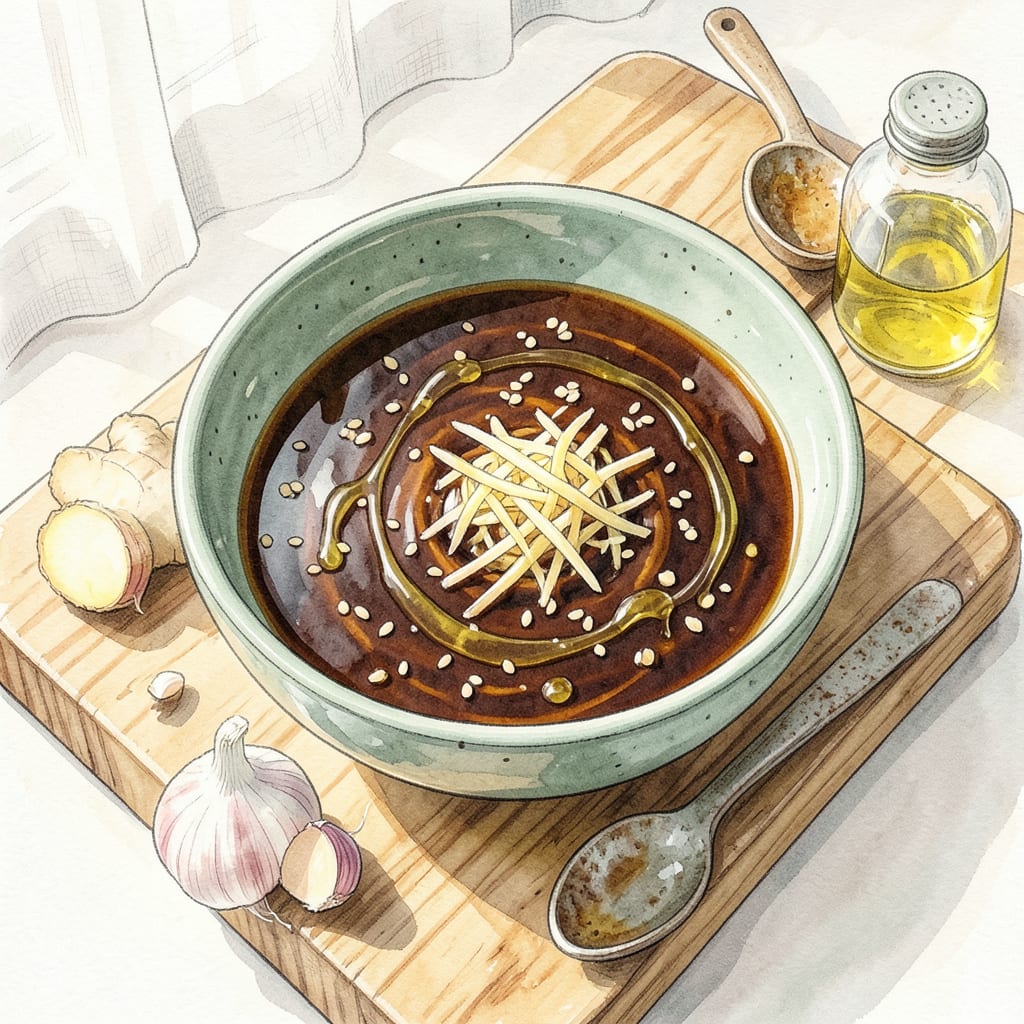
This Asian salad dressing delivers the perfect balance of tangy, sweet, and umami flavors that elevate any dish. Developed through years of refining restaurant-quality recipes, it combines soy sauce, rice vinegar, and sesame oil with just the right amount of sweetness. The result is a versatile dressing that transforms simple greens into something extraordinary.
What sets this recipe apart is its foolproof method—simply whisk the ingredients until fully emulsified, creating a smooth, cohesive dressing every time. Store it in an airtight container for up to five days, and use it to brighten everything from crisp cabbage slaw to grilled chicken. The possibilities are endless with this professional-grade condiment.
Ingredients for Asian Salad Dressing
Nine carefully balanced ingredients create this restaurant-quality dressing with tangy, sweet, and umami depth.
| Ingredient | Amount | Notes |
|---|---|---|
| Soy Sauce 🫒 | ⅓ cup | Low-sodium preferred for balance |
| Rice Vinegar 🍚 | ¼ cup | Unseasoned for clean acidity |
| Sesame Oil 🌾 | 2 tbsp | Toasted for nutty depth |
| Maple Syrup 🍁 | 3 tbsp | Pure grade A for sweetness |
| Fresh Ginger 🌿 | 1 tbsp | Peeled and finely grated |
| Garlic Cloves 🧄 | 2 cloves | Minced for aromatic punch |
| Dijon Mustard 🟡 | 1 tsp | Smooth, not grainy variety |
| Red Pepper Flakes 🌶️ | ¼ tsp | Adjust for heat preference |
| Neutral Oil 🫒 | ¼ cup | Avocado or grapeseed preferred |
[recipe_ingredient_scaler]
The soy sauce foundation requires low-sodium for proper balance—Kikkoman or San-J Tamari (gluten-free) are optimal choices. Rice vinegar must be unseasoned (check labels at Whole Foods or Asian markets). For sesame oil, Kadoya brand offers consistent toasted flavor. Fresh ginger is non-negotiable; powdered lacks the bright, zesty quality this dressing demands. Most supermarkets now carry it pre-peeled in the produce section (worth the convenience).
Maple syrup can be replaced with agave nectar at 1:1 ratio, though flavor will be milder. No rice vinegar? Apple cider vinegar with 1/2 tsp sugar approximates the tang. For nut-free versions, replace sesame oil with toasted sunflower oil (available at Trader Joe’s). The Dijon mustard stabilizes the emulsion—yellow mustard in a pinch, but expect less complexity. Red pepper flakes can be swapped for gochugaru (Korean chili flakes) for fruitier heat.
This dressing emulsifies best when used within 5 days. Store in a glass jar (dark glass ideal) to preserve flavors. The oils may separate—shake vigorously before each use. For longer storage, omit garlic and ginger, adding fresh when serving. Freezing isn’t recommended as it alters the texture of the emulsification. Always bring to room temperature before using for optimal flavor release.
Step-by-Step Instructions for Asian Salad Dressing
This straightforward method ensures perfect balance of tangy, sweet, and umami flavors in every batch.
Step 1: Prepare the Aromatic Base
Begin by finely grating the 1 tbsp fresh ginger using a microplane or fine grater. You want a smooth paste without fibrous strands. Mince the 2 cloves garlic cloves until very fine, almost paste-like. This ensures even distribution throughout the dressing and prevents overpowering garlic bites.
Combine the grated ginger and minced garlic in a medium bowl. Add the 1 tsp Dijon mustard and 0.25 tsp red pepper flakes, stirring until fully incorporated. The mustard acts as an emulsifier, while the red pepper flakes begin releasing their subtle heat into the mixture.
Step 2: Build the Flavor Foundation
Pour the 0.33 cup soy sauce and 0.25 cup rice vinegar into the bowl with the aromatic base. Whisk vigorously for 20-30 seconds until the mixture becomes uniform. The soy sauce provides the umami backbone, while the rice vinegar contributes the essential tangy brightness.
Add the 3 tbsp maple syrup and 2 tbsp sesame oil. The maple syrup should be pure grade A for clean sweetness, and the sesame oil should be toasted for maximum nutty aroma. Whisk again for 15-20 seconds until the syrup fully dissolves and the dressing takes on a glossy sheen.
Step 3: Emulsify and Finish
Slowly drizzle in the 0.25 cup neutral oil while whisking continuously. This gradual incorporation creates a stable emulsion that prevents separation. I prefer avocado or grapeseed oil for their neutral flavor profiles that don’t compete with the dressing’s primary components.
Continue whisking for an additional 30-45 seconds after all the oil is incorporated. The finished dressing should have a smooth, slightly thickened consistency that coats the back of a spoon. Taste and adjust seasoning if needed, though the balanced proportions typically require no additional adjustments.
Step 4: Rest and Serve
Transfer the dressing to a glass jar or airtight container. Let it rest at room temperature for 10-15 minutes before using. This brief resting period allows the flavors to meld completely, with the ginger and garlic infusing more deeply into the liquid components.
Store any unused portion in the refrigerator for up to 5 days. The dressing may thicken slightly when chilled – simply shake well before each use. For best results, bring refrigerated dressing to room temperature before serving to allow the full flavor profile to emerge.
Essential Equipment for Great Asian Salad Dressing
Whisking Tools
For perfect emulsification, I swear by my OXO Good Grips 11-inch Balloon Whisk. The large surface area incorporates air while blending ingredients smoothly. A smaller whisk won’t create the same velvety texture. Look for one with a comfortable grip—you’ll be whisking for at least 1-2 minutes total. 💪
Measuring Essentials
Precision matters with salad dressings, so I use OXO stainless steel measuring cups for liquids and color-coded spoons for smaller quantities. The 1/3 cup and 1/4 cup measures are particularly important here. For the sesame oil, a small glass measuring cup helps prevent waste from sticky residues.
Microplane Magic
A fine microplane grater is non-negotiable for the ginger. I use the Microplane Premium Zester—it creates the perfect paste texture without fibrous bits. The same tool works beautifully for citrus zest if you’re adding variations. Clean it immediately after use to prevent ginger fibers from drying and becoming difficult to remove.
Storage Solutions
Glass containers preserve flavor best. My go-to is 16-ounce mason jars with airtight lids—they’re perfect for shaking before use. For longer storage, amber glass bottles from specialty stores protect against light degradation. Always leave 1/2 inch headspace for shaking room.
Oil Dispenser
Controlling the oil flow is crucial for emulsification. I use a squeeze bottle with a narrow spout to drizzle the neutral oil slowly while whisking. The Oxo Good Grips Oil Sprayer works well too, giving you precise control. Avoid pouring directly from the bottle—it’s too fast for proper emulsion.
Garlic Press Alternative
While I normally love my garlic press, for dressings I prefer a sharp chef’s knife to mince garlic finely. The Wüsthof 8-inch gives me perfect control. Pressed garlic can release too much liquid, potentially breaking your emulsion. A good knife lets you control the texture better. ✨
Nutrition Facts

Trained in classic French technique but raised on slow-cooked ribs and spicy rubs, she blends culinary skill with smoke and soul.
- Recipe for Boneless Pork Chops in Cast Iron Skillet: Sear and Baste to Juicy Perfection - October 3, 2026
- Recipe for Boneless Cross Rib Roast: Slow-Roasted Beef with Herb Crust - October 3, 2026
- Hamburgers in Sauce Recipe Crock Pot: Slow-Cooked Savory Delight - October 3, 2026