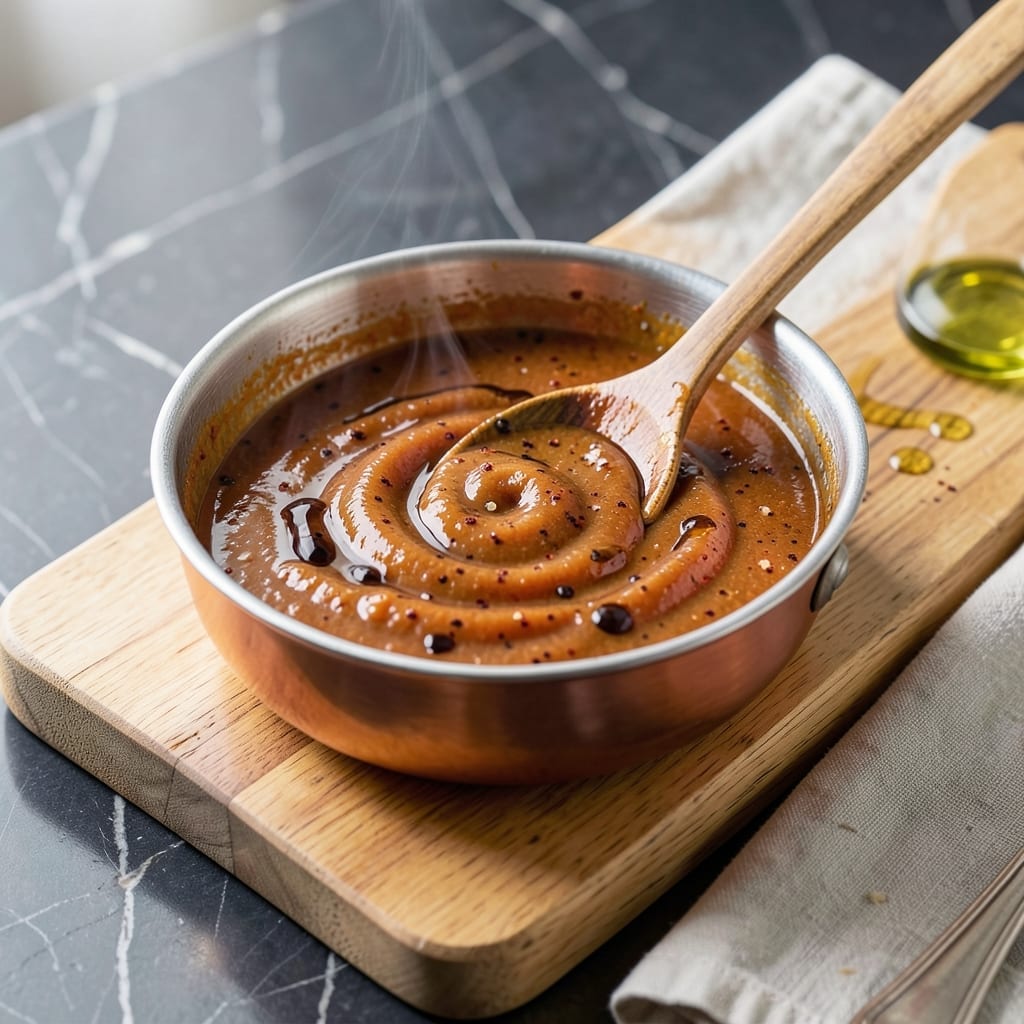
Low-carb barbecue sauce doesn’t mean sacrificing flavor. This recipe delivers smoky depth without the sugar overload.
I developed this version after years of perfecting traditional sauces, focusing on natural sweeteners and bold spices. It’s the ideal companion for grilled meats or as a marinade.
Ingredients for Atkins Barbecue Sauce
Bold spices and natural sweeteners create a sugar-free sauce with authentic barbecue character.
| Ingredient | Amount | Notes |
|---|---|---|
| Tomato Paste 🍅 | ½ cup | No sugar added variety |
| Apple Cider Vinegar 🍎 | ¼ cup | Raw unfiltered preferred |
| Worcestershire Sauce 🫒 | 1 tbsp | Check for sugar-free label |
| Liquid Smoke 💨 | 1 tsp | Hickory flavor recommended |
| Erythritol 🧂 | 3 tbsp | Granulated for even mixing |
| Smoked Paprika 🌶️ | 1 tbsp | Spanish variety preferred |
| Garlic Powder 🧄 | 1 tsp | Freshly ground if possible |
| Onion Powder 🧅 | 1 tsp | Fine grind for smooth texture |
| Ground Black Pepper 🌶️ | ½ tsp | Freshly cracked for best flavor |
| Cayenne Pepper 🔥 | ¼ tsp | Adjust to heat preference |
[recipe_ingredient_scaler]
The tomato paste is the foundation, so seek out no-sugar-added varieties—most grocery stores carry them in the canned goods aisle. Muir Glen makes a reliable option. For the liquid smoke, Wright’s is the gold standard (hickory flavor gives that classic pit-smoked depth). Erythritol blends better than other sweeteners here—Lakanto is widely available and measures like sugar.
Need a swap? Monk fruit sweetener works at a 1:1 ratio instead of erythritol. Out of liquid smoke? Chipoltle powder at half the amount adds smokiness. If avoiding Worcestershire, coconut aminos plus a dash of fish-free sauce mimics the umami. The vinegar can be white wine vinegar in a pinch, though cider vinegar’s fruitiness balances the smokiness better.
This keeps beautifully. Refrigerate in an airtight container for up to 2 weeks. For longer storage, freeze in ice cube trays for 6 months—perfect for portioning. Stir before using as natural separation may occur.
Why You’ll Love This Recipe
- 5-Minute Mix: I just dump everything in a saucepan and stir—no chopping, no fuss, just tomato paste, vinegar, and those smoky flavors blending together.
- Smoky Sweet Kick: The liquid smoke and erythritol give it that classic BBQ tang with a hint of sweetness, but without the sugar crash.
- Grill or Meal Prep: I slather it on ribs, mix it into pulled pork, or even use it as a marinade—honestly, it’s my go-to for anything needing a bold, low-carb punch.
- Stays Fresh: One batch lasts me weeks in the fridge, so I’m never scrambling for sauce when a craving hits.
Step-by-Step Instructions for Low-Carb Barbecue Sauce
This straightforward method ensures balanced flavors and perfect consistency without added sugars.
Step 1: Combine the Liquid Base Ingredients
In a medium saucepan, whisk together the 0.5 cup Tomato Paste and 0.25 cup Apple Cider Vinegar until smooth. The tomato paste should be a no-sugar-added variety to maintain the low-carb integrity of this sauce.
Add the 1 tbsp Worcestershire Sauce and 1 tsp Liquid Smoke, stirring well to incorporate. I prefer hickory-flavored liquid smoke for its robust, authentic barbecue character. The mixture will appear thick and concentrated at this stage.
Step 2: Incorporate the Sweetener and Spices
Sprinkle in the 3 tbsp Erythritol while continuing to stir. Granulated erythritol dissolves evenly, preventing graininess in the finished sauce. This sugar substitute provides the necessary sweetness without impacting blood sugar levels.
Next, add the 1 tbsp Smoked Paprika, 1 tsp Garlic Powder, and 1 tsp Onion Powder. Spanish smoked paprika offers a deeper, more complex smokiness that complements the liquid smoke beautifully. The fine grind of the onion powder ensures a smooth texture.
Step 3: Season and Simmer for Depth
Complete the seasoning with 0.5 tsp Ground Black Pepper and 0.25 tsp Cayenne Pepper. Freshly cracked black pepper provides superior aroma and flavor. The cayenne adds subtle heat that builds gradually—adjust this amount if you prefer a milder sauce.
Place the saucepan over medium heat and bring the mixture to a gentle simmer. Stir frequently to prevent sticking, especially as the sauce begins to thicken. You’ll notice the color deepen and the aroma become more pronounced after 5-7 minutes of simmering.
Step 4: Adjust Consistency and Finish
Reduce the heat to low and let the sauce simmer for an additional 8-10 minutes. The sauce should thicken enough to coat the back of a spoon but still remain pourable. If it becomes too thick, add 1-2 tablespoons of water to reach your desired consistency.
Taste and adjust seasoning if needed. The flavors should be well-balanced—tangy from the vinegar, sweet from the erythritol, with a lingering smokiness. Remove from heat and let the sauce cool to room temperature. It will continue to thicken slightly as it cools.
Transfer to an airtight container. The sauce keeps well in the refrigerator for up to 2 weeks, allowing the flavors to meld and develop further over time.
Pro Tips For Making Atkins Barbecue Sauce
- Simmer Low and Slow: Cook the sauce on low heat for at least 15-20 minutes—this lets the tomato paste mellow and the flavors meld without burning the erythritol.
- Bloom the Paste: Sauté the tomato paste in a dry pan for 1-2 minutes before adding liquids. I learned this the hard way—it removes the raw, tinny taste.
- Balance the Smoke: Start with half the liquid smoke you think you need, then adjust. Too much can make the sauce taste like a campfire instead of barbecue.
- Sweeten Smart: Erythritol can have a cooling effect, so dissolve it fully in the warm vinegar first to avoid grainy texture in the finished sauce.
Common Mistakes When Making Great atkins barbecue sauce
Over-Sweetening the Sauce
Erythritol is less sweet than sugar, so resist the urge to add extra. Stick to the 3 tbsp measurement—too much can create an artificial aftertaste. I learned this the hard way during my early experiments with sugar substitutes. 💡
Skipping the Simmer
Rushing the process by not simmering long enough results in raw, harsh flavors. The 8-10 minutes on low heat is crucial for marrying all the spices and mellowing the vinegar’s bite. Patience here makes the difference between good and great sauce.
Using Regular Tomato Paste
Regular tomato paste often contains added sugars, which defeats the low-carb purpose. Always check labels for no-sugar-added versions. I trust Muir Glen for consistent quality without hidden sweeteners.
Neglecting to Stir
Tomato paste can stick and burn easily, especially over medium heat. Stir frequently during the initial simmer to prevent scorching. A wooden spoon works best to scrape the bottom of your saucepan.
Ignoring Spice Freshness
Old spices lose their potency, leading to bland sauce. Check that your smoked paprika and cayenne pepper are within 6 months of purchase. I source mine from local spice shops for maximum freshness.
Storing Improperly
This sauce keeps for 2 weeks in the fridge, but only in an airtight container. Exposure to air causes oxidation and flavor degradation. For longer storage, freeze in ice cube trays for up to 6 months. 🔥
Nutrition Facts
Frequently Asked Questions
Can I use a different sweetener?
Yes, monk fruit sweetener works at a 1:1 ratio instead of erythritol. Stevia can also be used, but its concentrated sweetness requires careful measurement.
How do I adjust the heat level?
Reduce or omit the 0.25 tsp cayenne pepper for milder sauce. For more heat, add extra in 0.125 tsp increments and taste as you go.
Why does my sauce taste bitter?
Over-simmering or using old spices can cause bitterness. Stick to the 8-10 minutes simmer time and ensure your smoked paprika is fresh.

Trained in classic French technique but raised on slow-cooked ribs and spicy rubs, she blends culinary skill with smoke and soul.
- Recipe for Boneless Pork Chops in Cast Iron Skillet: Sear and Baste to Juicy Perfection - October 3, 2026
- Recipe for Boneless Cross Rib Roast: Slow-Roasted Beef with Herb Crust - October 3, 2026
- Hamburgers in Sauce Recipe Crock Pot: Slow-Cooked Savory Delight - October 3, 2026