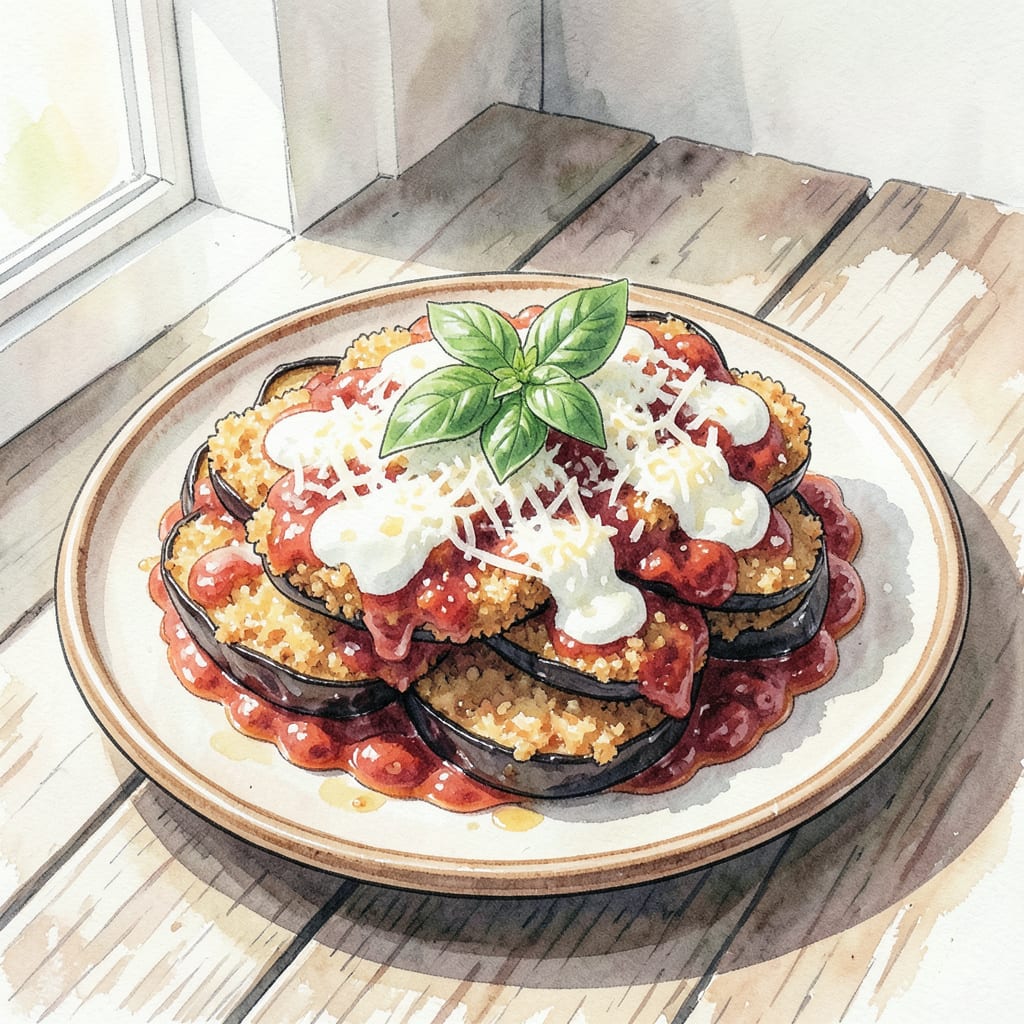
I’ve perfected my aubergine parmigiana recipe through years of experimenting with different techniques. The secret to achieving that crispy exterior lies in proper eggplant preparation – salting, pressing, and precise breading.
This classic Italian dish combines tender eggplant layers with rich homemade tomato sauce and melted mozzarella cheese. With careful temperature control and layering, you’ll achieve that perfect parmigiana texture everyone loves. Let’s start cooking!
Ingredients for Aubergine Parmigiana
Crispy eggplant layers, rich tomato sauce, and melted mozzarella – a classic Italian comfort dish.
| Ingredient | Amount | Notes |
|---|---|---|
| Eggplant 🍆 | 2 whole | Sliced into 1/4-inch thick rounds |
| Kosher Salt 🧂 | 1 tbsp | For salting eggplant |
| All-Purpose Flour 🌾 | 1 cup | For breading |
| Large Eggs 🥚 | 2 whole | Beaten for egg wash |
| Italian Breadcrumbs 🍞 | 1 ½ cups | Panko works too |
| Parmesan Cheese 🧀 | 1 cup | Freshly grated from block |
| Olive Oil 🫒 | ½ cup | For frying eggplant |
| Garlic Cloves 🧄 | 4 cloves | Minced for sauce |
| Crushed Tomatoes 🍅 | 2 cups | San Marzano preferred |
| Fresh Basil 🌿 | ¼ cup | Chopped, for garnish |
| Mozzarella Cheese 🧀 | 8 oz | Fresh mozzarella, sliced |
| Black Pepper 🌶️ | ½ tsp | Freshly ground preferred |
[recipe_ingredient_scaler]
The eggplant matters here. Look for firm, heavy eggplants with deep purple skin – these will yield the best texture. I usually grab mine from local farmers’ markets during peak season, but good supermarkets work too. The salting step is crucial for drawing out moisture and preventing sogginess.
No San Marzano tomatoes? Canned crushed tomatoes are your best bet – just check the ingredient list for added salt or basil. Fresh basil is nice for garnish, but dried oregano works in a pinch. For the breadcrumbs, Panko gives that extra lightness. If you’re using regular breadcrumbs, try toasting them in a dry pan for a minute to get some extra crunch.
This reheats beautifully – honestly tastes better the next day once everything melds together. Keeps for 4-5 days in the fridge, freezes for 3 months. I portion mine into individual containers so lunches are sorted for the week. Leftovers can be reheated in the oven at 350°F for about 15-20 minutes, or until heated through.
Step-by-Step Instructions for Aubergine Parmigiana
Let’s build this Italian classic layer by layer, ensuring crispy eggplant and rich sauce.
Step 1: Salt and Prepare the Eggplant
Start by slicing the 2 whole Eggplant into ¼-inch thick rounds. Place them on a wire rack set over a baking sheet, sprinkle both sides with 1 tbsp Kosher Salt, and let them sit for 30 minutes to draw out excess moisture. You’ll notice beads of moisture forming on the surface—this step is crucial for preventing soggy eggplant.
After 30 minutes, rinse the eggplant slices under cold water to remove excess salt, then pat them dry with paper towels. This step helps the breading adhere better and prevents steam from building up during frying.
Step 2: Bread the Eggplant Slices
Prepare your breading station: place 1 cup All-Purpose Flour in one shallow dish, beat 2 whole Large Eggs in another, and mix 1.5 cups Italian Breadcrumbs with 1 cup Parmesan Cheese in a third. Dip each eggplant slice first in the flour, coating both sides evenly, then in the egg wash, letting excess drip off, and finally in the breadcrumb mixture, pressing gently to adhere.
Place the breaded eggplant slices on a clean plate or tray. You’ll notice how the breadcrumb mixture creates a nice crust on the eggplant—the key to that perfect crispy exterior.
Step 3: Fry the Eggplant Until Golden
Heat 0.5 cup Olive Oil in a large skillet over medium-high heat until it reaches 350°F. Fry the breaded eggplant slices in batches until they’re golden brown on both sides, about 3-4 minutes per side. Transfer the fried eggplant to a paper towel-lined plate to drain excess oil.
Keep an eye on the oil temperature—it should stay between 325°F and 375°F for optimal frying. If it gets too hot, the outside will burn before the inside is fully cooked.
Step 4: Prepare the Tomato Sauce
In a large saucepan, heat a couple of tablespoons of Olive Oil over medium heat. Add 4 cloves Garlic Cloves, minced, and sauté until fragrant, about 1 minute. Be careful not to burn the garlic—it can quickly go from perfectly toasted to bitter.
Add 2 cups Crushed Tomatoes, 0.5 tsp Black Pepper, and a pinch of salt. Simmer the sauce over low heat for at least 20 minutes, stirring occasionally, until it thickens and develops rich flavor. The longer it simmers, the better it gets.
Step 5: Assemble and Bake the Parmigiana
Preheat your oven to 375°F. In a 9×13-inch baking dish, spread a thin layer of the tomato sauce on the bottom. Arrange a layer of fried eggplant slices on top, overlapping slightly to cover the surface. Spread more tomato sauce over the eggplant, followed by slices of 8 oz Mozzarella Cheese. Repeat this layering process until you run out of ingredients, finishing with a layer of mozzarella on top.
Bake for 35-40 minutes until the cheese is golden brown and bubbly. Let it rest for 10-15 minutes before slicing. Garnish with 0.25 cup Fresh Basil, chopped, just before serving. The resting period allows the layers to set, making it easier to serve neat portions.
Storing and Reheating aubergine parmigiana
Refrigerator Storage Tips
Cool the parmigiana to room temperature within 2 hours of baking to prevent bacterial growth. Transfer it to an airtight container or cover the baking dish tightly with plastic wrap or aluminum foil. Store in the refrigerator at 40°F or below for up to 4 days. ❄️
Freezer Storage Options
For longer storage, assemble the parmigiana but don’t bake it. Wrap the entire 9×13-inch dish tightly in plastic wrap then aluminum foil. Freeze for up to 3 months. When ready, thaw overnight in the refrigerator before baking as instructed. You can also freeze individual portions for convenience.
Reheating Instructions
For best results, reheat in the oven. Preheat to 350°F. If refrigerated, bake covered for 20-25 minutes, then uncover and bake for an additional 5-10 minutes until heated through. If frozen, bake covered for 40-45 minutes, then uncover and bake for an additional 10-15 minutes. 🔥
Microwave Reheating
For individual portions, microwave on medium power for 1-2 minutes, checking and stirring every 30 seconds until hot. Be aware that this method can make the breading soggy. Covering with a paper towel can help minimize this effect.
Tips for Best Results
Reheat only what you plan to eat to maintain quality. If you notice the eggplant becoming soggy, try reheating at a higher temperature for a shorter time. Adding a sprinkle of fresh basil just before serving can brighten up the flavors. I like to reheat mine on weekends for a quick, satisfying meal. 🧀
Storage Containers Matter
Use glass or ceramic containers for storing leftovers as they won’t absorb flavors or odors. For freezer storage, consider using freezer-safe containers or wrapping individual portions in plastic wrap then placing them in a freezer bag to prevent freezer burn.

Trained in classic French technique but raised on slow-cooked ribs and spicy rubs, she blends culinary skill with smoke and soul.
- Recipe for Boneless Pork Chops in Cast Iron Skillet: Sear and Baste to Juicy Perfection - October 3, 2026
- Recipe for Boneless Cross Rib Roast: Slow-Roasted Beef with Herb Crust - October 3, 2026
- Hamburgers in Sauce Recipe Crock Pot: Slow-Cooked Savory Delight - October 3, 2026