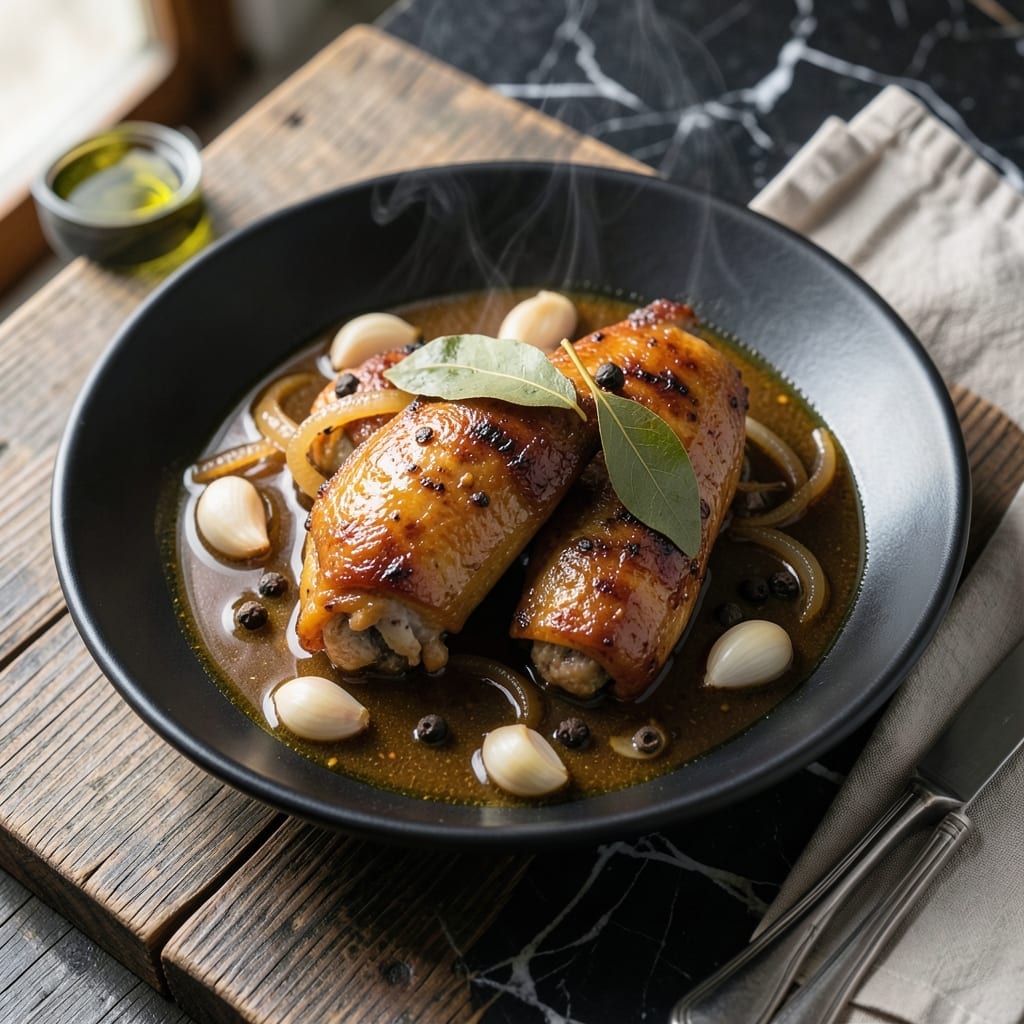
This Filipino classic delivers a perfect balance of tangy vinegar and rich soy, creating a dish that’s both comforting and deeply flavorful. The traditional method involves slow braising to infuse the chicken with complex layers of taste.
What makes this version special is its authenticity—no shortcuts, just the time-honored technique of simmering chicken in its marinade until fall-off-the-bone tender. The vinegar cuts through the richness while the soy builds depth.
The result is tender chicken with a glossy, caramelized sauce that’s both tangy and savory. Every bite captures the essence of Filipino home cooking, where simple ingredients transform into something extraordinary.
Serve with steamed rice to soak up every drop of that flavorful sauce. This is the kind of dish that gets better with time, making it perfect for leftovers.
Ingredients for Authentic Chicken Adobo Recipe Filipino
Simple, authentic ingredients that deliver that signature Filipino tangy-savory depth everyone loves.
| Ingredient | Amount | Notes |
|---|---|---|
| Chicken Thighs 🍗 | 2 lb | Boneless, skin-on preferred |
| Soy Sauce 🫒 | ¾ cup | Filipino brand preferred |
| White Vinegar 💧 | ¾ cup | Cane vinegar traditional |
| Garlic Cloves 🧄 | 8 cloves | Peeled, smashed |
| Bay Leaves 🌿 | 3 whole | Dried, whole leaves |
| Black Peppercorns 🌶️ | 1 tbsp | Whole, lightly crushed |
| Brown Sugar 🍚 | 2 tbsp | Optional, for balance |
| Onion 🧅 | 1 whole | Yellow or white, sliced |
| Water 💧 | ½ cup | For braising liquid |
| Vegetable Oil 🫒 | 2 tbsp | For searing chicken |
| Salt 🧂 | ½ tsp | Adjust to taste |
[recipe_ingredient_scaler]
The soy sauce is non-negotiable for authenticity—Silver Swan or Datu Puti are the gold standard Filipino brands. Chicken thighs (skin-on, bone-in) give you that melt-in-your-mouth texture that’s central to adobo. Asian markets often carry these brands, but most well-stocked supermarkets have them too. Bay leaves should be whole and dried; fresh ones can be too assertive and don’t hold up to the long braise.
Out of white vinegar? Apple cider vinegar works in a pinch, though it’ll be slightly fruitier. No bay leaves? Skip them entirely—they’re traditional but not dealbreakers. For a deeper caramelization, add the brown sugar; omit it for a more traditional sour profile. The garlic can be minced if you prefer, but smashing releases more flavor into the sauce.
Adobo tastes even better the next day once the flavors meld. Keeps in the fridge for 4-5 days and freezes beautifully for up to 3 months. Store in an airtight container, sauce and all—it’s the best part.
Why You’ll Love This Recipe
- One Pot Wonder: I just toss the thighs, soy sauce, vinegar, and garlic in a pot and let it simmer—no fancy techniques needed.
- Tangy Garlic Bomb: The vinegar and garlic hit that perfect sweet-savory-tangy balance that makes my mouth water every time.
- Feeds a Crowd: I make a big batch for Sunday dinner and everyone—even the picky eaters—goes back for seconds.
- Leftovers for Days: Honestly, it tastes even better the next day, and the flavors just keep deepening in the fridge.
Step-by-Step Instructions for Chicken Adobo
Traditional Filipino technique delivers rich, tangy-sweet flavor with tender meat.
Step 1: Sear the Chicken Thighs
Heat the 2 tbsp vegetable oil in a large pot over medium-high heat. Pat the 2 lb chicken thighs dry and season with the 0.5 tsp salt. When the oil shimmers, add the chicken skin-side down and sear for 4-5 minutes until deep golden brown.
Flip and sear the other side for another 3-4 minutes. The skin should render some fat and crisp slightly. Remove the chicken and set aside—this initial searing builds a flavor foundation for the braise.
Step 2: Sauté the Aromatics
In the same pot, add the sliced 1 whole onion and cook for 3 minutes until softened. Add the 8 cloves garlic cloves and cook for 30 seconds until fragrant but not browned—burnt garlic turns bitter in this dish.
Stir in the 1 tbsp black peppercorns and 3 whole bay leaves, toasting them briefly for 15 seconds to release their aromas. This forms the base of the adobo’s signature depth of flavor.
Step 3: Build the Braising Liquid
Pour in the 0.75 cup soy sauce, 0.75 cup white vinegar, and 2 tbsp brown sugar. Stir well to dissolve the sugar and combine the liquids. Add the 0.5 cup water to balance the intensity of the vinegar and soy.
Return the chicken to the pot, along with any accumulated juices. The liquid should come about halfway up the chicken—if it doesn’t, add a splash more water. This ensures even cooking and maximum flavor absorption.
Step 4: Braise Until Tender
Bring the mixture to a boil, then reduce heat to medium-low to maintain a gentle simmer. Cover and cook for 30-35 minutes, turning the chicken halfway through. You’ll know it’s done when the meat pulls away from the bone easily and registers 165°F internally.
Uncover and simmer for another 10 minutes to reduce the sauce slightly and intensify the flavors. The sauce should coat the back of a spoon but remain pourable—this is the hallmark of authentic adobo.
The black peppercorns and bay leaves will have infused their essence into the sauce, creating that distinctive warm, herbal undertone that makes this dish unmistakably Filipino.
Pro Tips For Making Authentic Chicken Adobo Recipe Filipino
- Simmer Low and Slow: Keep the heat at a gentle simmer—too high and the vinegar will evaporate before it can tenderize the chicken. I learned this the hard way after ending up with dry, overcooked thighs.
- Use Bone-In Thighs: Skip the boneless cuts; bone-in, skin-on thighs stay juicier and add depth to the sauce. My grandmother swore by this, and she was right.
- Balance the Vinegar: Never add vinegar directly to hot oil—it can cause splattering. Mix it with the soy sauce first, then pour it in once the chicken is browned.
- Reduce the Sauce: After braising, let the sauce reduce uncovered for 5-7 minutes to thicken it slightly. Sounds weird, but it works: the flavors intensify and cling to the chicken better.
Common Mistakes When Making authentic chicken adobo recipe filipino
Over-Reducing the Sauce
Don’t boil this dish too vigorously—it can make the vinegar evaporate too quickly, leaving your sauce overly salty from the soy. I keep mine at a gentle simmer and check the balance every 10 minutes during the final reduction. 💡
Skipping the Sear
Some home cooks dump everything in the pot raw to save time, but you’ll miss the deep, caramelized flavors that come from searing the chicken thighs first. That 4-5 minute browning step builds the foundation for the entire dish.
Using the Wrong Vinegar
White vinegar is traditional—cane vinegar if you can find it. Apple cider vinegar works in a pinch but adds fruitiness that can throw off the authentic tang. I once tried rice vinegar and the flavor was noticeably off.
Discarding the Fat
The rendered fat from the chicken skin carries incredible flavor. Instead of pouring it off, I skim just the excess after searing, leaving about 1 tbsp to sauté the aromatics. This adds richness to your final sauce.
Under-Seasoning
Taste as you go! The soy provides saltiness, but you may need to adjust with the 0.5 tsp salt depending on your brand. I always do a final taste test before serving and add more if needed. ✨
Rushing the Braise
This dish needs that full 30-35 minute simmer to let the connective tissue break down. Cutting it short results in tough chicken. Trust me, the wait is worth it for that fall-off-the-bone texture.
Nutrition Facts
Frequently Asked Questions
Can I use chicken breasts instead of thighs?
You can, but thighs are preferred for their fat content and flavor. If using breasts, reduce cooking time to 20-25 minutes to prevent dryness.
Why do we add vinegar last in some versions?
Traditional methods sometimes add vinegar later to preserve its bright acidity. In this recipe, it cooks with everything for balanced flavor from start to finish.
How do I fix sauce that’s too sour?
Balance it with a touch of brown sugar or a splash of water to dilute. Taste as you adjust—authentic adobo should be tangy but not puckering.
Can I make this in a slow cooker?
Yes! Sear the chicken first, then cook on low for 4-5 hours. Skip the final reduction—slow cookers don’t reduce liquid as effectively.

Trained in classic French technique but raised on slow-cooked ribs and spicy rubs, she blends culinary skill with smoke and soul.
- Recipe for Boneless Pork Chops in Cast Iron Skillet: Sear and Baste to Juicy Perfection - October 3, 2026
- Recipe for Boneless Cross Rib Roast: Slow-Roasted Beef with Herb Crust - October 3, 2026
- Hamburgers in Sauce Recipe Crock Pot: Slow-Cooked Savory Delight - October 3, 2026