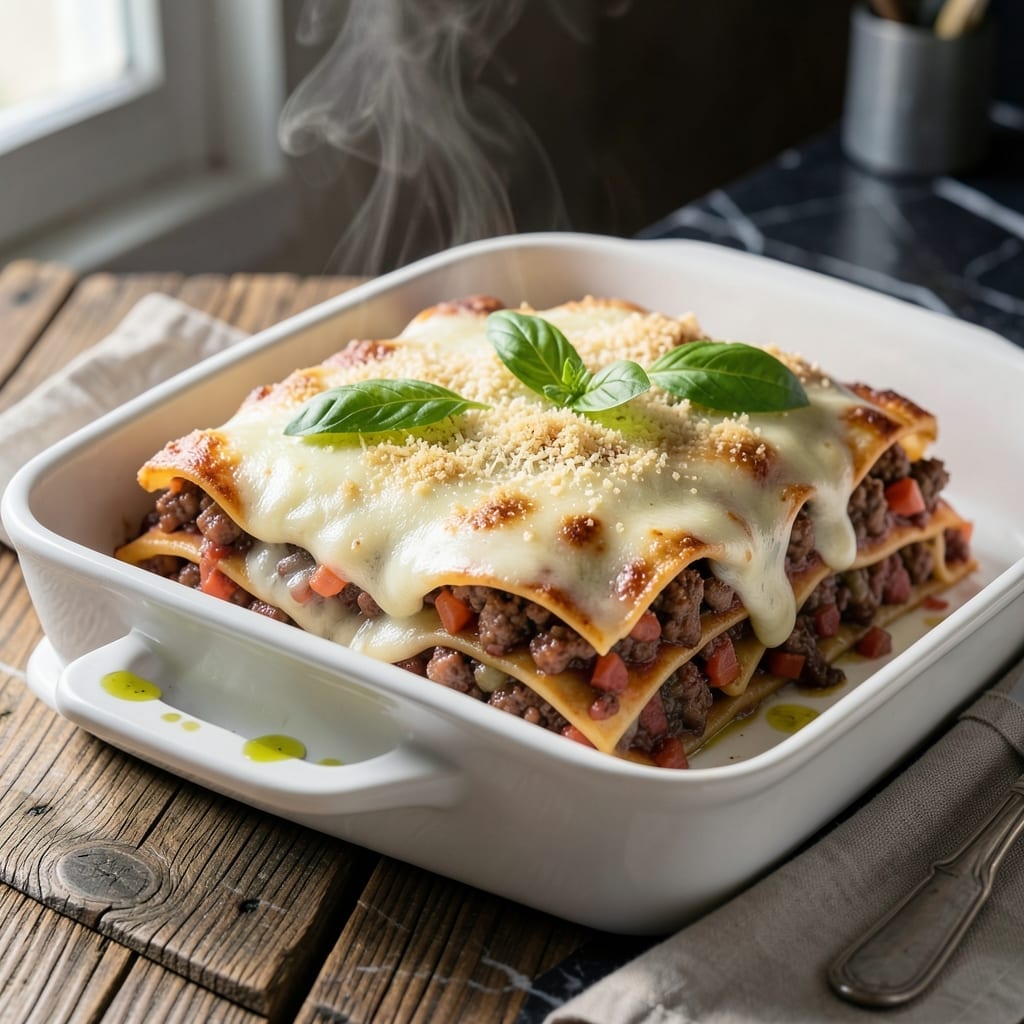
This lasagna brings true Italian tradition to your table with layers of rich ragù, creamy béchamel, and delicate pasta sheets. The authentic method requires patience but rewards with unmatched depth of flavor.
I’ve perfected the balance between the hearty meat sauce and velvety white sauce, ensuring each bite delivers that signature creamy texture. Fresh pasta sheets and quality Parmigiano-Reggiano make all the difference.
The layering process is key—alternate ragù, béchamel, and pasta for the ideal ratio in every slice. Baked until golden and bubbling, this dish is a celebration of authentic Italian comfort.
Serve it straight from the oven for a meal that feels like a hug from Nonna herself.
Ingredients for Authentic Italian Lasagna Recipe with Bechamel Sauce
Rich ragù, velvety béchamel, and delicate pasta sheets—Italian tradition on your table.
| Ingredient | Amount | Notes |
|---|---|---|
| Ground Beef 🥩 | 1 ½ lb | 80/20 lean-to-fat ratio preferred |
| Onion 🧅 | 1 whole | Yellow or white, finely diced |
| Carrot 🥕 | 1 whole | Peeled and finely diced |
| Celery Stalk 🌿 | 1 whole | Finely diced for soffritto |
| Garlic Cloves 🧄 | 4 cloves | Minced for ragù base |
| Tomato Paste 🍅 | 2 tbsp | Double-concentrated preferred |
| Canned Crushed Tomatoes 🍅 | 28 oz | San Marzano variety ideal |
| Dry Red Wine 🍷 | ½ cup | Chianti or Sangiovese recommended |
| Fresh Pasta Sheets 🍝 | 12 sheets | No-boil variety acceptable |
| Whole Milk 🥛 | 4 cups | Full-fat for creamy béchamel |
| Unsalted Butter 🧈 | ¾ cup | European-style for richness |
| All-Purpose Flour 🌾 | ½ cup | For roux in béchamel |
| Parmigiano-Reggiano Cheese 🧀 | 1 ½ cups | Freshly grated from wedge |
| Nutmeg 🌰 | ¼ tsp | Freshly grated preferred |
| Salt 🧂 | 2 tsp | Diamond Crystal kosher salt |
[recipe_ingredient_scaler]
The beef is the backbone here. Ground chuck with 80/20 fat ratio gives the ragù that unctuous texture—leaner blends dry out. For the Parmigiano-Reggiano, splurge on a wedge from Whole Foods or Eataly and grate it yourself (pre-grated has anti-caking agents that dull the flavor). Fresh pasta sheets are ideal, but De Cecco or Barilla no-boil work in a pinch. Don’t skip the wine—it deglazes the pan and lifts all the meaty flavors.
No red wine? Beef broth plus 1 tsp balsamic vinegar gets you 80% there. Out of fresh pasta? Use dried lasagna noodles but parboil them first. Swap the nutmeg for white pepper if you prefer a milder spice. For the milk, whole is non-negotiable—2% won’t give you that velvety béchamel. The ragù can simmer while you prep everything else (worth the extra time).
Ragù and béchamel can be made 2 days ahead and refrigerated. Assemble the lasagna the morning of, then bake. Leftovers keep for 4-5 days in the fridge—reheat covered with foil. The flavors deepen overnight, so it’s honestly better as leftovers.
Why You’ll Love This Recipe
- One-Pot Wonder: I brown the beef with onion, carrot, and celery right in the same pot I build the lasagna in—no extra dishes to wash.
- Rich Layers: That first bite with the creamy béchamel, hearty beef, and tender pasta? Ridiculously good.
- Feeds a Crowd: I make this for Sunday dinner and it disappears before I can even set the leftovers aside.
- Leftovers for Days: Honestly, it tastes even better the next day—if there’s any left by then.
Step-by-Step Instructions for Authentic Italian Lasagna With Bechamel Sauce
This method delivers layers of rich ragù and silky béchamel every time.
Step 1: Prepare the Soffritto and Brown the Ground Beef
Finely dice the onion, carrot, and celery stalk to create a classic soffritto. Heat a large pot over medium heat and add the ground beef. Cook for 5-7 minutes, breaking it up with a wooden spoon, until it’s browned and crumbly.
Add the diced onion, carrot, and celery stalk to the pot with the beef. Stir well and cook for another 5 minutes until the vegetables soften. This builds a flavorful base for the ragù. Stir in the minced garlic cloves and cook for 30 seconds until fragrant.
Step 2: Build the Ragù with Wine and Tomatoes
Add the tomato paste to the pot and stir to coat the meat and vegetables. Cook for 2 minutes to deepen the flavor. Pour in the dry red wine and stir, scraping up any browned bits from the bottom of the pot. Let it simmer for 3-4 minutes until the liquid reduces by half.
Stir in the canned crushed tomatoes and season with salt. Reduce the heat to low and let the ragù simmer uncovered for 30-40 minutes, stirring occasionally, until it thickens and the flavors meld beautifully. Season with additional salt to taste.
Step 3: Make the Béchamel Sauce
In a separate saucepan, melt the unsalted butter over medium heat. Once melted, add the all-purpose flour and whisk constantly for 1-2 minutes to cook the roux. This should smell nutty but not brown.
Gradually whisk in the whole milk, a little at a time, ensuring the mixture remains smooth. Cook, stirring frequently, for 5-7 minutes until the sauce thickens enough to coat the back of a spoon. Remove from heat and stir in the nutmeg and 1 cup of the Parmigiano-Reggiano cheese. Season with salt.
Step 4: Layer and Assemble the Lasagna
Preheat your oven to 375°F. Spread a thin layer of ragù on the bottom of a 9×13-inch baking dish. Add a layer of fresh pasta sheets, slightly overlapping if needed. Spread a portion of the béchamel sauce over the pasta, then sprinkle with some of the remaining Parmigiano-Reggiano cheese.
Repeat the layers, starting with ragù, then pasta, béchamel, and cheese, until all ingredients are used, finishing with a layer of béchamel and a generous sprinkling of Parmigiano-Reggiano on top.
Step 5: Bake to Golden Perfection
Cover the baking dish with aluminum foil and bake for 25 minutes. Then, remove the foil and bake for another 15-20 minutes until the top is golden brown and bubbly.
Let the lasagna rest for 10-15 minutes before slicing. This allows the layers to set, making it easier to serve neat portions. The ragù will be rich and hearty, while the béchamel adds a creamy, velvety texture that defines authentic Italian lasagna.
Pro Tips For Making Authentic Italian Lasagna Recipe With Bechamel Sauce
- Sweat the Veggies: Cook the onion, carrot, and celery in olive oil for at least 10 minutes until soft and translucent—this builds the base flavor for your ragù that can’t be rushed.
- Drain the Beef: After browning the ground beef, drain off the excess fat completely. I learned this the hard way—greasy lasagna ruins the layers.
- Thin Bechamel: Whisk your béchamel until it coats the back of a spoon but is still pourable. Too thick and it’ll dry out the lasagna.
- Rest Before Cutting: Let the lasagna sit for 15-20 minutes after baking so the layers set. Cutting too soon turns it into a sloppy mess.
Dietary Considerations for These Flavors
Gluten-Free Option
Swap regular pasta sheets for gluten-free lasagna noodles—I recommend Jovial or Barilla brands. Cook them according to package instructions before layering. The texture is slightly firmer, but the flavor remains authentic. 💪
Dairy-Free Adaptation
Use olive oil instead of butter for the roux, and substitute unsweetened almond milk for whole milk. For cheese, try nutritional yeast or a dairy-free Parmesan alternative like Follow Your Heart.
Vegetarian Version
Replace ground beef with 1.5 lbs cremini mushrooms or lentils for a hearty texture. Sauté with the soffritto for 8-10 minutes until deeply browned. The ragù will still be rich and satisfying.
Lower-Carb Alternative
Use thinly sliced zucchini or eggplant instead of pasta sheets. Salt and drain them for 30 minutes before layering to remove excess moisture. This lightens the dish while keeping the flavors bold.
Lactose-Intolerant Tip
Use lactose-free whole milk and aged Parmigiano-Reggiano, which naturally has less lactose. The béchamel will still be creamy and delicious without the discomfort.
Egg-Free Note
This recipe contains no eggs, so it’s naturally egg-free. Just ensure your pasta sheets don’t contain egg if you’re avoiding it completely. Most fresh pasta is egg-based, so check labels carefully.
Nutrition Facts
Frequently Asked Questions
Can I use dried lasagna noodles instead of fresh?
Yes, but parboil them for 2 minutes first to soften. Dried noodles absorb more sauce, so add an extra 1/4 cup of béchamel to compensate.
Why does my béchamel turn lumpy?
Lumps form if milk is added too quickly or the heat is too high. Whisk constantly while adding milk in a slow stream over medium heat. If lumps appear, blend briefly with an immersion blender.
How long should I let it rest before serving?
Rest for at least 10-15 minutes to let layers set. This prevents a runny mess when slicing. The flavors meld better too!
Can I substitute another cheese for Parmigiano-Reggiano?
Pecorino Romano works well, but it’s saltier, so reduce added salt by 1/2 teaspoon. Avoid pre-shredded cheeses—they contain anti-caking agents that affect texture.

Trained in classic French technique but raised on slow-cooked ribs and spicy rubs, she blends culinary skill with smoke and soul.
- Recipe for Boneless Pork Chops in Cast Iron Skillet: Sear and Baste to Juicy Perfection - October 3, 2026
- Recipe for Boneless Cross Rib Roast: Slow-Roasted Beef with Herb Crust - October 3, 2026
- Hamburgers in Sauce Recipe Crock Pot: Slow-Cooked Savory Delight - October 3, 2026