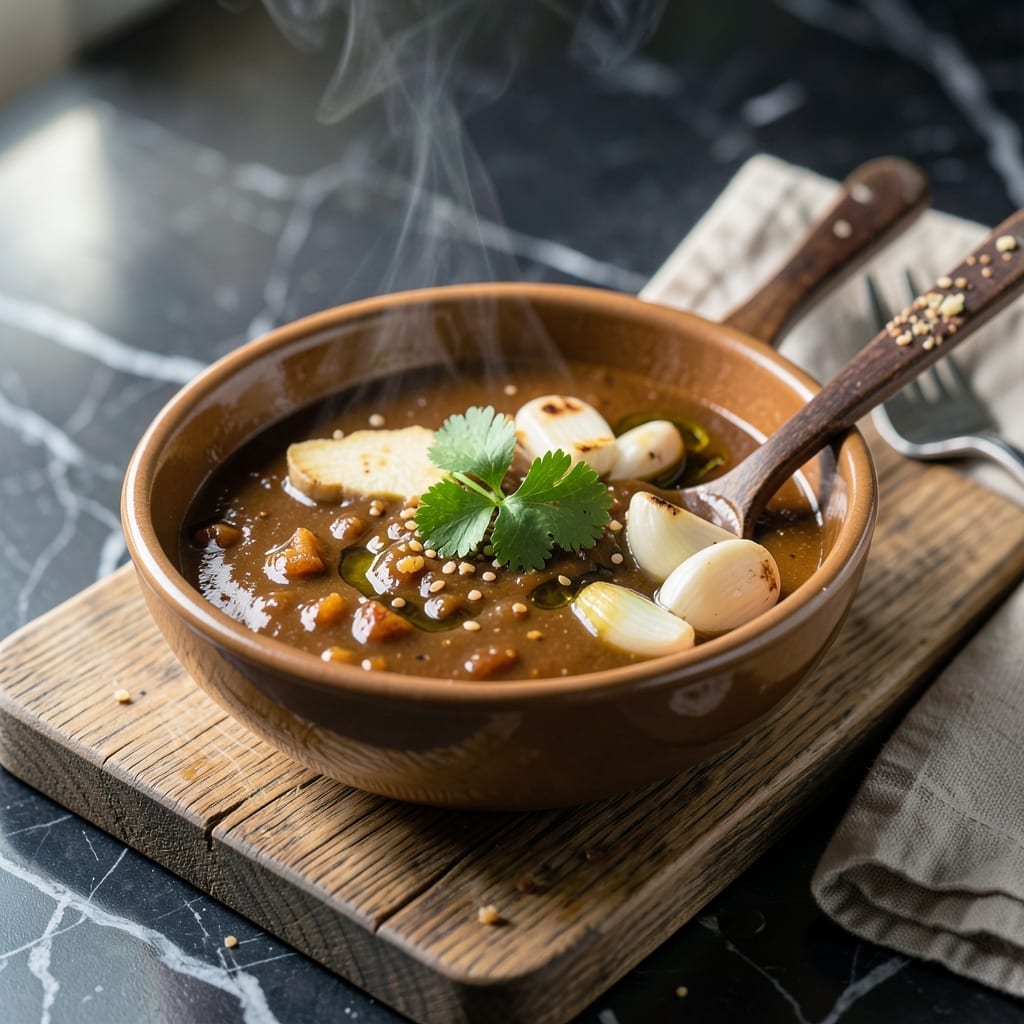
This Japanese-inspired sauce delivers a perfect balance of bold, tangy, and slightly sweet flavors to elevate any dish. I developed it to add depth to grilled meats without overpowering them.
With a simple blend of soy sauce, mirin, and aromatic ingredients, this versatile glaze transforms chicken, ribs, or even roasted vegetables into restaurant-quality creations. It keeps well for weeks in the fridge.
Ingredients for Bachan Barbecue Sauce
Nine ingredients create this bold, tangy glaze with Japanese flair and deep umami richness.
| Ingredient | Amount | Notes |
|---|---|---|
| Soy Sauce 🫒 | ¾ cup | Low-sodium preferred for balance |
| Mirin 🍶 | ½ cup | Sweet rice wine for authenticity |
| Rice Vinegar 🍚 | ¼ cup | Unseasoned for clean tang |
| Brown Sugar 🍯 | ¼ cup | Light or dark, packed |
| Fresh Ginger 🌿 | 1 tbsp | Peeled and finely grated |
| Garlic Cloves 🧄 | 3 cloves | Peeled and minced |
| Sesame Oil 🫒 | 1 tbsp | Toasted for depth |
| Gochujang 🌶️ | 1 tbsp | Korean chili paste optional |
| Dijon Mustard 🟡 | 1 tsp | Smooth texture preferred |
[recipe_ingredient_scaler]
The soy sauce is the backbone here. Kikkoman or Yamasa are reliable choices for consistent flavor. Mirin can be found in the Asian aisle at most Whole Foods or H-Mart—avoid the cheap imitations with added corn syrup. Fresh ginger is non-negotiable (the powdered stuff lacks the bright, zesty kick), and organic ginger often has a more pronounced flavor.
No mirin? Dry sherry with a pinch of sugar works in a pinch. Gochujang adds heat and complexity, but sriracha at half the amount can substitute if needed. The brown sugar can be swapped for honey or maple syrup (though it’ll slightly alter the flavor profile). Toasting the sesame oil first enhances its nuttiness.
This sauce keeps beautifully in the fridge for 3-4 weeks. Store in an airtight glass jar to preserve freshness. For longer storage, freeze in ice cube trays—perfect for portioning out as needed.
Why You’ll Love This Recipe
- 5-Minute Mix: I dump everything in a saucepan and it’s done before the rice finishes cooking.
- Umami Bomb: The soy and mirin combo hits that sweet-salty depth I crave every time.
- Drizzle on Anything: Grill nights, stir-fries, even a fried egg sandwich—this sauce plays well with all of them.
- Fridge Stays Stocked: One batch makes a full jar that keeps for weeks, so I’m never caught without backup flavor.
Step-by-Step Instructions for Japanese-Inspired Barbecue Glaze
Master this technique for a balanced sauce with complex sweet, tangy, and umami layers.
Step 1: Bloom Aromatics in Sesame Oil
Heat 1 tbsp Sesame Oil in a medium saucepan over medium heat until it shimmers. Add 1 tbsp Fresh Ginger and 3 cloves Garlic Cloves, stirring constantly for 30-45 seconds until fragrant but not browned.
This initial step extracts the essential oils from the aromatics, building the foundation for deep flavor. Watch carefully—the garlic should turn just pale golden at the edges. If it browns, it will become bitter and overpower the sauce. The ginger will soften slightly and release its pungent aroma.
Step 2: Combine Liquid Ingredients and Sweeteners
Add 0.75 cup Soy Sauce, 0.5 cup Mirin, 0.25 cup Rice Vinegar, and 0.25 cup Brown Sugar to the saucepan. Stir until the brown sugar fully dissolves and the mixture comes to a gentle simmer.
This is where the magic happens—the soy sauce provides umami depth, the mirin adds sweetness and sheen, the rice vinegar contributes bright acidity, and the brown sugar caramelizes slightly for complexity. Maintain a gentle simmer, not a rolling boil, to prevent the sugars from scorching.
Step 3: Incorporate Thickening and Spice Elements
Whisk in 1 tbsp Gochujang and 1 tsp Dijon Mustard until fully combined. The gochujang will deepen the color and add a subtle fermented heat, while the Dijon mustard provides a smooth tang and helps emulsify the sauce.
Reduce the heat to medium-low and let the mixture simmer for 8-10 minutes, stirring occasionally. You’ll notice the sauce beginning to thicken slightly and develop a glossy appearance. This reduction step intensifies the flavors and creates the perfect consistency for glazing.
Step 4: Adjust Consistency and Cool
After 8-10 minutes, the sauce should coat the back of a spoon but still be pourable. If it’s too thin, simmer for an additional 2-3 minutes. If it’s too thick, add a splash of water to reach your desired consistency.
Remove the saucepan from heat and let the glaze cool to room temperature. As it cools, it will thicken slightly more. This resting period allows the flavors to meld completely, resulting in a harmonious balance of sweet, tangy, and savory notes with just a hint of heat.
Pro Tips For Making Bachan Barbecue Sauce
- Simmer Low and Slow: Keep the heat at a gentle simmer—too high and the brown sugar will caramelize too fast, making the sauce bitter. I learned this the hard way after burning my first two batches.
- Grate the Ginger: Fresh ginger is non-negotiable, but grating it instead of mincing releases more juice and flavor into the sauce. A microplane works best here.
- Balance the Mirin: If your mirin is particularly sweet, cut it with a splash of water or extra rice vinegar to keep the sauce from being cloying. Sounds weird, but it works.
- Strain for Smoothness: After cooking, strain out the ginger fibers for a silkier texture—your guests won’t even know it was there, but they’ll notice the difference.
Flavor Customization for This bachan barbecue sauce
Spice Level Adjustments
For a milder version, reduce the gochujang to ½ tbsp or omit it entirely. The sauce will still have depth from the soy and mirin. I often do this when serving to kids or those sensitive to heat. 🌶️
Sweetness Variations
Prefer it sweeter? Increase the brown sugar to ⅓ cup or swap in honey for a floral note. The honey version pairs beautifully with grilled pork chops. For a tangier profile, add 1 tbsp extra rice vinegar.
Umami Boosters
Add 1 tsp fish sauce or 1 tbsp miso paste for extra depth. I discovered this trick at a local BBQ competition—it elevates the sauce to restaurant quality. Just whisk in at the end to preserve the fresh flavor.
Herb Infusions
Stir in 1 tbsp chopped cilantro or thyme after cooling for a fresh twist. I forage wild thyme along my coastal rides, and it adds a bright, earthy note. Strain before storing if you prefer a smooth texture.
Citrus Brightness
Finish with 1 tsp lime or yuzu zest for a zesty kick. This works especially well with seafood or chicken. The citrus cuts through the richness and adds a vibrant, sunny note. 💛
Texture Options
For a thicker glaze, simmer an additional 5 minutes or mix in ½ tsp cornstarch slurry. For a dip, thin with 1-2 tbsp water. I prefer it glossy and pourable for brushing on ribs during the last minutes of grilling.
Nutrition Facts
Frequently Asked Questions
Can I use regular vinegar instead of rice vinegar?
Stick with rice vinegar for authentic flavor. Apple cider vinegar works in a pinch but has a sharper taste. Avoid white vinegar—it’s too harsh for this delicate balance.
How long does this sauce keep in the fridge?
It stays fresh for 3-4 weeks in an airtight glass jar. For longer storage, freeze in ice cube trays for up to 3 months.
What if I don’t have gochujang?
Substitute with ½ tbsp sriracha or a pinch of cayenne. The heat level will differ, but the sauce will still shine.
Can I reduce the sodium content?
Yes! Use low-sodium soy sauce and cut the mirin by 1 tbsp. Add a splash of water if needed to balance the flavors.

Trained in classic French technique but raised on slow-cooked ribs and spicy rubs, she blends culinary skill with smoke and soul.
- Recipe for Boneless Pork Chops in Cast Iron Skillet: Sear and Baste to Juicy Perfection - October 3, 2026
- Recipe for Boneless Cross Rib Roast: Slow-Roasted Beef with Herb Crust - October 3, 2026
- Hamburgers in Sauce Recipe Crock Pot: Slow-Cooked Savory Delight - October 3, 2026