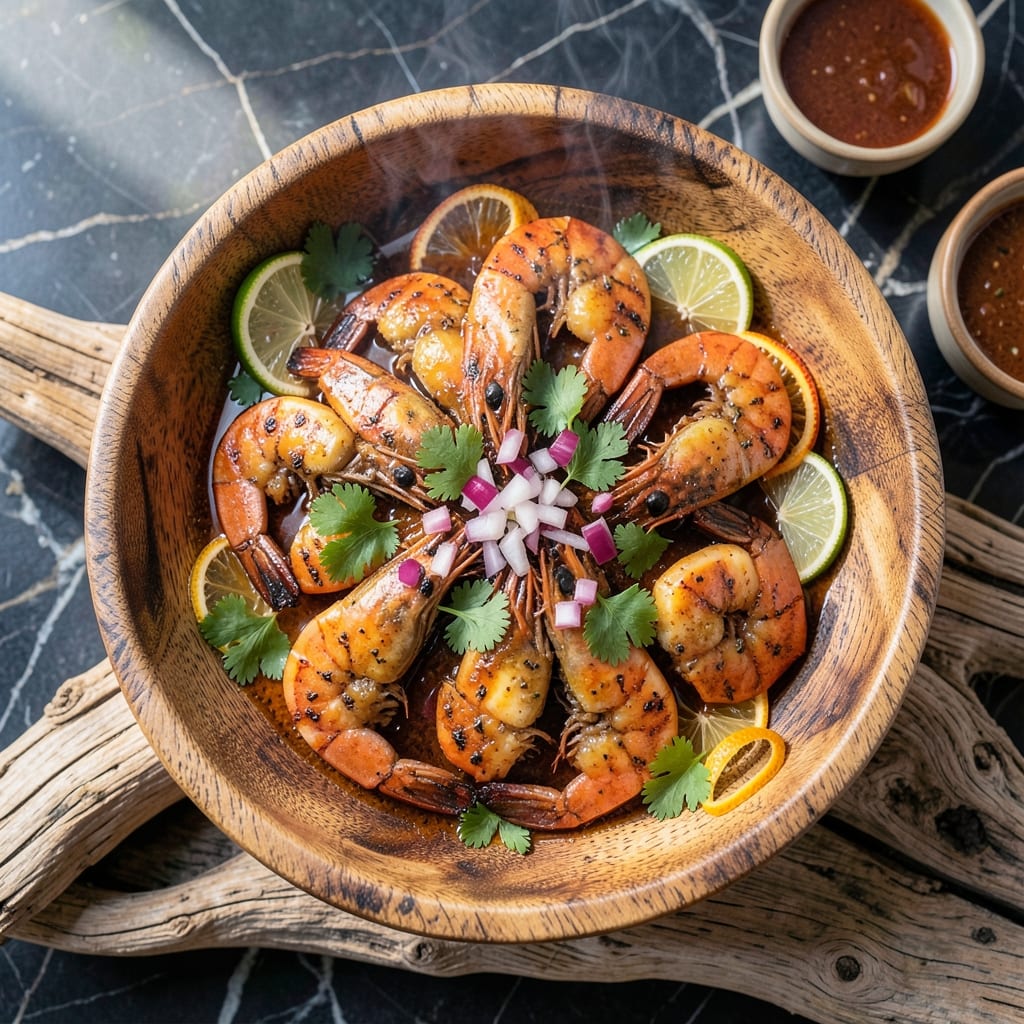
This recipe brings authentic Caribbean jerk seasoning to plump shrimp with a bright citrus finish. I developed this after testing multiple spice blends to capture that signature heat and complexity.
The marinade combines traditional jerk spices with fresh lime and orange juice for balance. It transforms the shrimp into tender, flavor-packed bites with just 15 minutes of marination.
Grilling or sautéing locks in the bold flavors while creating a slight char. The result is restaurant-quality shrimp that tastes like a tropical getaway.
Serve with rice, plantains, or a simple salad for a complete meal. This dish delivers every time.
Ingredients for Bahama Breeze Jerk Shrimp
Caribbean spices and citrus transform plump shrimp into bold, restaurant-quality bites with minimal effort.
| Ingredient | Amount | Notes |
|---|---|---|
| Large Shrimp 🍤 | 1 ½ lb | Peeled, deveined, tails on |
| Lime Juice 🍈 | ¼ cup | Freshly squeezed preferred |
| Orange Juice 🍊 | ¼ cup | Freshly squeezed preferred |
| Ground Allspice 🌿 | 1 tbsp | Essential for jerk flavor |
| Ground Thyme 🍃 | 1 tbsp | Dried for intensity |
| Garlic Powder 🧄 | 1 tbsp | Fine grind preferred |
| Onion Powder 🧅 | 1 tbsp | Balances spice blend |
| Ground Cinnamon 🌰 | 1 tsp | Adds warmth to rub |
| Cayenne Pepper 🔥 | ½ tsp | Adjust for heat preference |
| Brown Sugar 🍚 | 2 tbsp | Balances heat with sweetness |
| Soy Sauce 🫒 | 2 tbsp | Low-sodium recommended |
| Olive Oil 🫒 | 2 tbsp | For marinade and cooking |
| Scotch Bonnet Pepper 🌶️ | 1 whole | Seeded and minced (optional) |
| Fresh Cilantro 🌿 | ¼ cup | Chopped, for garnish |
| Salt 🧂 | 1 tsp | Kosher or sea salt |
[recipe_ingredient_scaler]
The shrimp quality matters here. Wild-caught or sustainably sourced from Whole Foods or Trader Joe’s yields the best texture. For the jerk spices, Penzeys or bulk bins at natural food stores offer superior freshness. The allspice must be ground—whole berries won’t disperse properly in the marinade. Scotch bonnet peppers provide authentic heat, but habaneros work as a substitute.
No lime juice? Bottled works in a pinch, but fresh delivers brighter acidity. Brown sugar can be swapped for coconut sugar, though the molasses notes are lost. If avoiding heat entirely, omit cayenne and Scotch bonnet (but it won’t be jerk). The soy sauce can be replaced with tamari for gluten-free or coconut aminos for a lighter flavor.
The marinade can be prepped 1 day ahead—flavors intensify with time. Cooked shrimp keeps for 2-3 days refrigerated, though best served immediately. For meal prep, store unmarinated shrimp in the marinade for up to 24 hours before cooking.
Why You’ll Love This Recipe
- I’ll be real: the flavors taste even better the next day in tacos or over rice.
- Minimal effort: I toss the shrimp with lime, orange juice, and spices—no marinating overnight required.
- Flavor explosion: The allspice and thyme hit hard with that classic jerk punch, while the citrus keeps it bright.
- Weeknight hero: Honestly, it’s my go-to for last-minute dinners or when friends drop by unexpectedly.
Step-by-Step Instructions for Jerk Shrimp
Master the technique behind this Caribbean classic with precision and authentic flavor development.
Step 1: Create the Jerk Marinade Base
In a medium bowl, whisk together the 0.25 cup lime juice, 0.25 cup orange juice, 2 tbsp soy sauce, and 2 tbsp olive oil until fully emulsified. The citrus acids will begin tenderizing the shrimp immediately, so have your remaining ingredients ready.
Add the 1 tbsp ground allspice, 1 tbsp ground thyme, 1 tbsp garlic powder, 1 tbsp onion powder, 1 tsp ground cinnamon, 0.5 tsp cayenne pepper, and 2 tbsp brown sugar. Stir vigorously until the spices are fully suspended in the liquid. The mixture should appear thick and aromatic.
Finely mince the 1 whole Scotch Bonnet Pepper (seeds removed for milder heat) and incorporate it into the marinade. The pepper’s capsaicin will develop more intensity as it sits, so adjust timing accordingly if you prefer less heat. Stir in the 1 tsp salt last.
Step 2: Marinate the Shrimp Properly
Add the 1.5 lb large shrimp to the marinade, ensuring each piece is fully coated. I use my hands for this step to guarantee even distribution. The shrimp should glisten with the marinade, with no dry spots visible.
Cover the bowl and refrigerate for 30 minutes minimum, but no longer than 2 hours. The lime juice will begin to “cook” the shrimp if left too long, resulting in a mealy texture. For best results, stir the shrimp halfway through the marinating time to redistribute the flavors.
While the shrimp marinates, the acids will penetrate the flesh, allowing the spices to adhere better during cooking. You’ll notice the shrimp taking on a slightly opaque appearance at the edges—this is normal and indicates the marinade is working.
Step 3: Cook the Shrimp with Precision
Heat a large skillet or grill pan over medium-high heat until a drop of water sizzles and evaporates immediately upon contact. Remove the shrimp from the marinade (reserve the marinade) and arrange them in a single layer in the pan. Don’t overcrowd—the shrimp should have space between each piece for proper searing.
Cook for 2-3 minutes per side until the shrimp turn opaque white with pink highlights and develop slight char marks. The internal temperature should reach 145°F when tested with an instant-read thermometer. The shrimp will continue cooking slightly after removal from heat.
As the shrimp cook, baste them occasionally with the reserved marinade using a spoon. This builds layers of flavor and creates a glossy finish. Discard any remaining marinade that has come into contact with raw shrimp to prevent cross-contamination.
Step 4: Finish and Garnish Professionally
Transfer the cooked shrimp to a serving platter. The shrimp should have visible grill marks or sear lines, with a deep amber color from the brown sugar caramelization. If any pieces appear undercooked, return them to the pan for an additional 30-60 seconds per side.
Sprinkle the 0.25 cup fresh cilantro over the shrimp just before serving. The herb’s bright, citrusy notes complement the deep, complex jerk flavors perfectly. Serve immediately while hot—the flavors are most vibrant when freshly cooked.
For presentation, arrange the shrimp in a single layer with the cilantro evenly distributed. The dish should have a glossy sheen from the marinade and visible flecks of spices clinging to the shrimp.
Pro Tips For Making Bahama Breeze Jerk Shrimp
- Dry the Shrimp: Pat the shrimp completely dry before marinating—I learned this the hard way after my first batch steamed instead of searing in the pan. Even a little moisture prevents that perfect char.
- Toast the Allspice: Lightly toast the ground allspice in a dry pan for 30 seconds before mixing it into the marinade. Sounds weird, but it wakes up the flavor and makes the jerk seasoning taste way more authentic.
- Skip the Overcrowding: Cook the shrimp in a single layer with space between each one, or they’ll boil in their own juices instead of getting that slightly crisp edge. I used to rush this part and wondered why my shrimp were rubbery.
- Use Fresh Juice: Bottled lime and orange juice just don’t cut it here—freshly squeezed makes a real difference in brightness. My grandmother swore by this, and she was right: the citrus tastes alive, not flat.
Common Mistakes When Making Great bahama breeze jerk shrimp
Over-Marinating Mistake
Never marinate shrimp longer than 2 hours in this citrus-heavy blend. I learned this the hard way when my first batch turned mushy—the lime juice starts “cooking” the protein. Stick to 30-60 minutes maximum for perfect texture. 💡
Skipping the Baste
Always baste the shrimp with reserved marinade while cooking. This builds layers of flavor and that signature glossy finish. Use a spoon to drizzle it over the shrimp as they sear. Discard any marinade that touched raw shrimp.
Without basting, you’ll lose that authentic jerk depth. The sugars in the marinade caramelize beautifully with this technique.
Crowding the Pan
Overcrowding causes steaming instead of searing. Cook shrimp in batches if needed, leaving space between each piece. This ensures proper char and prevents soggy results.
I use my largest skillet and cook in 2 batches for 1.5 lb. The difference in texture is noticeable.
Underseasoning the Spice Blend
Don’t skimp on the jerk seasonings. The allspice, thyme, and cinnamon must be measured accurately—these are non-negotiable for authentic flavor. I weigh my spices for consistency.
For heat, use the full ½ tsp cayenne plus Scotch bonnet. Adjust next time if it’s too spicy.
Improper Heat Level
Medium-high heat is essential for that slight char without burning the sugars. Test your pan with a water droplet—it should sizzle and evaporate immediately.
If the marinade starts burning, lower the heat slightly. The brown sugar can scorch if the pan’s too hot.
Nutrition Facts
Frequently Asked Questions
Can I use frozen shrimp for this recipe?
Yes, thaw frozen shrimp completely in the fridge overnight before marinating. Pat them very dry first so the marinade sticks properly. Never cook from frozen.
How spicy is this dish?
It packs noticeable heat from cayenne and Scotch bonnet. For milder flavor, reduce cayenne to ¼ tsp and remove all pepper seeds. The citrus balances the spice well.
What’s the best way to serve these shrimp?
Try them over coconut rice with grilled pineapple. Or skewer for appetizers with lime wedges. The flavors shine with simple sides.
Can I make the marinade ahead?
Mix the marinade up to 2 days ahead. Store it refrigerated in an airtight container. Add shrimp just before marinating.

Trained in classic French technique but raised on slow-cooked ribs and spicy rubs, she blends culinary skill with smoke and soul.
- Recipe For Leftover Fried Fish: Crunchy Leftovers Transformed - October 3, 2026
- Recipe for Crock Pot Swiss Steak: Slow-Cooked Beef With Mushroom Gravy - October 3, 2026
- Recipe for Kabsa Rice: Spiced Middle Eastern Feast in One Pot - October 3, 2026