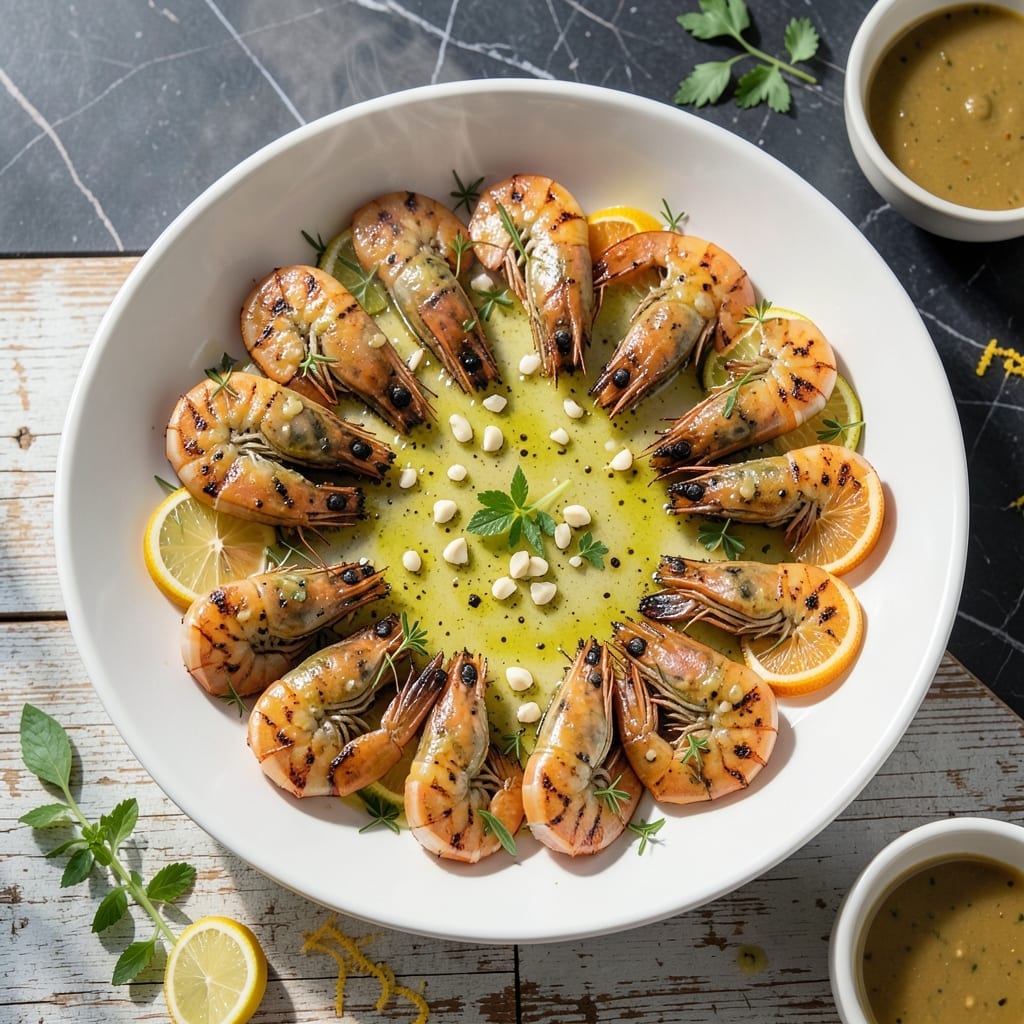
There’s nothing like the first whiff of citrus and herbs hitting hot grill grates. This shrimp recipe captures that coastal essence with a marinade that tenderizes while adding bright, zesty depth.
I developed this method after years of perfecting seafood on the grill, combining my love for fire with classic French technique. The key is a quick marinade—just long enough to infuse flavor without overpowering the shrimp’s natural sweetness.
The result is succulent, slightly charred shrimp with a restaurant-quality finish. The citrus cuts through the richness, while the herbs add an aromatic touch that lingers.
Serve these straight off the grill for a dish that feels special but comes together effortlessly. Here’s how to master it.
Ingredients for Citrus Grilled Shrimp
Fresh citrus, herbs, and shrimp—simple ingredients for bold coastal flavor.
| Ingredient | Amount | Notes |
|---|---|---|
| Large Shrimp 🦐 | 1 ½ lb | Peeled, deveined, tails on |
| Extra-Virgin Olive Oil 🫒 | ⅓ cup | Divided for marinade and grilling |
| Fresh Lemon Juice 🍋 | ¼ cup | About 2-3 lemons |
| Fresh Lime Juice 🍈 | 2 tbsp | About 1-2 limes |
| Fresh Orange Juice 🍊 | 2 tbsp | About 1 orange |
| Garlic Cloves 🧄 | 4 cloves | Minced finely |
| Fresh Parsley 🌿 | ¼ cup | Chopped, flat-leaf preferred |
| Fresh Cilantro 🌿 | ¼ cup | Chopped, stems removed |
| Fresh Thyme 🌿 | 1 tbsp | Leaves stripped from stems |
| Lemon Zest 🍋 | 1 tbsp | From 1-2 lemons |
| Salt 🧂 | 1 tsp | Kosher or sea salt |
| Black Pepper 🌶️ | ½ tsp | Freshly ground |
| Red Pepper Flakes 🌶️ | ¼ tsp | Optional for heat |
| Honey 🍯 | 1 tbsp | Balances citrus acidity |
[recipe_ingredient_scaler]
The shrimp quality is non-negotiable for this dish. Wild-caught Gulf or Pacific shrimp offer the best texture and flavor. Look for 16/20 count (16-20 shrimp per pound)—large enough to stay juicy on the grill. Most seafood counters can peel and devein them for you (just ask to leave tails on). For absolute freshness, Whole Foods or a local fishmonger are ideal, but frozen shrimp (thawed properly) work in a pinch.
No fresh herbs? Dried herbs at one-third the amount work, but fresh really shines here. Short on citrus? Use all lemon if that’s what you’ve got—just add a pinch of sugar to balance. The honey can be swapped for agave or maple syrup if needed. For extra depth, a splash of white wine in the marinade adds brightness without overpowering.
Marinate shrimp no longer than 30 minutes—the acid starts to cook them. Keeps in the fridge for 1 day pre-cooking, but best grilled fresh. Leftovers? Toss with greens for a stellar salad the next day.
Why You’ll Love This Recipe
- 15-Minute Marvel: I can prep these shrimp while the grill heats up—just toss with olive oil and citrus, no fancy steps.
- Zesty Explosion: The combo of lemon, lime, and orange juice gives a bright, tangy punch that makes every bite sing.
- Crowd Pleaser: Honestly, this works for weeknight dinners or a backyard BBQ with zero stress.
- Budget Friendly: Large shrimp stretch further than you’d think, and the citrus does all the heavy lifting flavor-wise.
Step-by-Step Instructions for Citrus Grilled Shrimp
Master the technique for perfectly charred shrimp with bright, balanced citrus flavors.
Step 1: Prepare the Citrus-Herb Marinade
In a large bowl, whisk together 0.33 cup extra-virgin olive oil, 0.25 cup fresh lemon juice, 2 tbsp fresh lime juice, and 2 tbsp fresh orange juice until emulsified. The acidity should create a pale, slightly cloudy mixture.
Add 4 cloves garlic cloves (minced), 0.25 cup fresh parsley, 0.25 cup fresh cilantro, 1 tbsp fresh thyme, 1 tbsp lemon zest, 1 tsp salt, 0.5 tsp black pepper, 0.25 tsp red pepper flakes, and 1 tbsp honey. Stir until the herbs are evenly distributed and the honey dissolves completely. This creates a vibrant, aromatic base that infuses the shrimp with complex flavor.
Step 2: Marinate the Shrimp
Add the 1.5 lb large shrimp to the marinade, ensuring each piece is fully coated. I use my hands for this—it guarantees every curve and crevice of the shrimp gets exposed to the marinade. Let it sit at room temperature for 15-20 minutes.
Don’t exceed 30 minutes of marinating time. The citrus acids will begin to “cook” the shrimp, turning the texture mealy instead of tender. The shrimp should take on a slightly opaque appearance at the edges when ready to grill.
Step 3: Preheat and Clean the Grill
Preheat your grill to medium-high heat (about 400°F). This temperature ensures a good sear without burning the shrimp before they cook through. Use a grill brush to scrub the grates clean—this prevents the shrimp from sticking and tearing when you flip them.
Once hot, oil the grates lightly with a folded paper towel dipped in some of the reserved extra-virgin olive oil. You’ll know the grill is ready when a drop of water sizzles and evaporates immediately on contact.
Step 4: Grill to Perfection
Remove the shrimp from the marinade, shaking off excess liquid, and arrange them on the grill in a single layer. Close the lid and cook for 2-3 minutes per side until the shrimp turn opaque and pink with distinct grill marks.
Avoid overcrowding the grill—this causes steam instead of sear. The shrimp are done when they curl into a loose “C” shape and the internal temperature reaches 145°F. If they form a tight “O” shape, they’ve overcooked.
Step 5: Rest and Serve
Transfer the shrimp to a serving platter and let them rest for 2-3 minutes. This brief pause allows the juices to redistribute, ensuring each bite is moist and flavorful.
Garnish with any remaining chopped herbs from the marinade. Serve immediately while hot—the contrast of smoky char and bright citrus is best experienced fresh off the grill.
Pro Tips For Making Citrus Grilled Shrimp
- Dry the Shrimp: Pat the shrimp completely dry before grilling—I learned this the hard way after my first batch steamed instead of searing. Even a little moisture prevents that perfect char.
- High Heat Only: Crank the grill to medium-high and don’t touch it. Shrimp cook in 2-3 minutes per side, and anything lower turns them rubbery.
- Zest Before Juicing: Sounds weird, but it works: zest the lemon, lime, and orange before juicing. The oils in the zest add a brightness the juice alone can’t.
- Skewer for Control: Thread the shrimp onto skewers before grilling. It keeps them from slipping through the grates and makes flipping a breeze—no more chasing shrimp around the grill.
Storing and Reheating Leftovers
Refrigerator Storage
Let your shrimp cool for no more than 2 hours before transferring to airtight containers. I prefer glass containers with snap-on lids to preserve freshness. Store at 40°F or below for up to 2 days for optimal quality. ❄️
Freezer Storage
For longer storage, freeze in a single layer on a baking sheet first, then transfer to freezer bags. Squeeze out excess air to prevent freezer burn. This method keeps shrimp fresh for up to 3 months. Label with the date for easy tracking.
Stovetop Reheating
Heat a skillet over medium heat with 1 tbsp olive oil. Add shrimp in a single layer and warm for 2-3 minutes, flipping once. Avoid high heat to prevent rubbery texture.
Microwave Reheating
Place shrimp on a microwave-safe plate, cover with a damp paper towel, and heat on 50% power for 1-2 minutes. Stir or flip halfway for even warming. Add a splash of water if they seem dry. 🔥
Serving Leftovers
Reheated shrimp work beautifully in salads or tacos. Toss with mixed greens, avocado, and a citrus vinaigrette for a quick lunch. The flavors meld wonderfully overnight.
Nutrition Facts
Frequently Asked Questions
What size shrimp works best?
Use 16/20 count (16-20 per pound) for ideal results. These are large enough to stay juicy on the grill and won’t fall through the grates. Smaller shrimp may overcook or stick.
Can I use dried herbs instead of fresh?
Yes, but use 1/3 the amount since dried herbs are more concentrated. Fresh herbs provide brighter flavor, but dried thyme, parsley, or cilantro will still work in a pinch.
How do I know when they’re done?
Shrimp are done when they turn opaque and pink with grill marks, typically after 2-3 minutes per side. They should form a loose “C” shape—if they curl into an “O”, they’re overcooked.
Can I make this indoors?
Use a grill pan or cast-iron skillet over medium-high heat. Cook for the same time, but watch closely—indoor heat can be less even than a grill.

Trained in classic French technique but raised on slow-cooked ribs and spicy rubs, she blends culinary skill with smoke and soul.
- Recipe for Boneless Pork Chops in Cast Iron Skillet: Sear and Baste to Juicy Perfection - October 3, 2026
- Recipe for Boneless Cross Rib Roast: Slow-Roasted Beef with Herb Crust - October 3, 2026
- Hamburgers in Sauce Recipe Crock Pot: Slow-Cooked Savory Delight - October 3, 2026