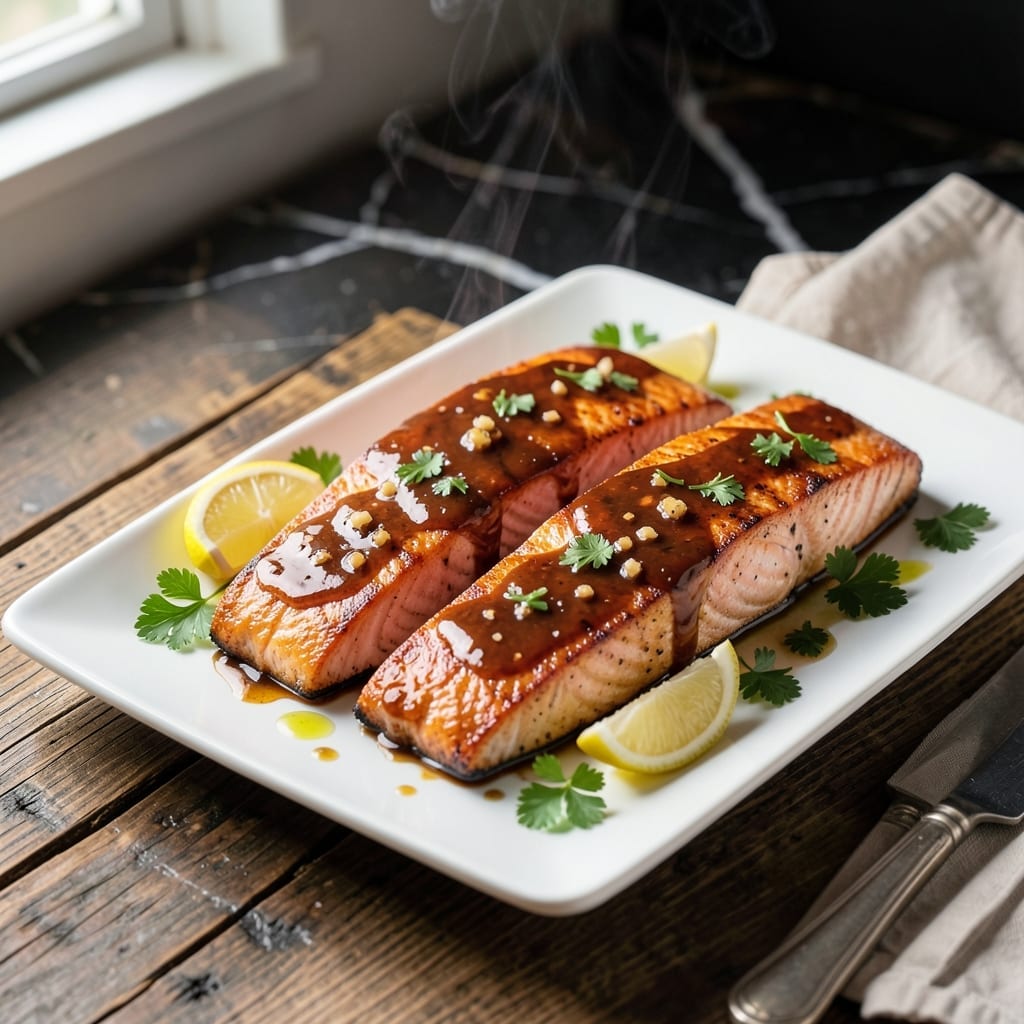
This baked salmon proves that flaky, perfectly cooked fish can come from your home oven in under 25 minutes. The barbecue glaze caramelizes beautifully, creating a sticky, sweet-savory crust.
I developed this method to bring smoky barbecue flavor indoors without sacrificing the salmon’s natural tenderness. The key is a hot oven and precise timing to achieve that ideal texture.
Ingredients for Baked Barbecue Salmon
Simple ingredients for restaurant-quality salmon at home. Flaky, sweet, and smoky perfection.
| Ingredient | Amount | Notes |
|---|---|---|
| Salmon Fillets 🐟 | 1 ½ lb | Skin-on or skinless, center-cut |
| Barbecue Sauce 🍯 | ¾ cup | Thick, smoky variety preferred |
| Olive Oil 🫒 | 1 tbsp | Extra-virgin for richness |
| Garlic Cloves 🧄 | 2 cloves | Minced finely for glaze |
| Light Brown Sugar 🧈 | 2 tbsp | Packed for caramelization |
| Dijon Mustard 🟡 | 1 tbsp | Adds tangy depth |
| Worcestershire Sauce 🍶 | 1 tsp | Vegan variety if strict |
| Smoked Paprika 🌶️ | ½ tsp | For authentic smoke flavor |
| Salt 🧂 | ½ tsp | Kosher or sea salt preferred |
| Black Pepper 🌶️ | ¼ tsp | Freshly ground for best flavor |
| Lemon 🍋 | 1 whole | Zested and juiced for brightness |
| Fresh Dill 🌿 | 2 tbsp | Chopped for garnish |
| Red Onion 🧅 | ¼ whole | Thinly sliced for topping |
[recipe_ingredient_scaler]
The salmon is the star—wild-caught center-cut fillets are ideal. Costco and Whole Foods have great options, but any fresh salmon works. Look for vibrant color and no fishy smell (that’s old stock). I prefer skin-on for easier handling, but skinless is fine if you hate the texture. The glaze thickens best with thick, smoky barbecue sauce—Sweet Baby Ray’s or Stubb’s are reliable.
No barbecue sauce? Mix ketchup with molasses and vinegar for a quick substitute. Fresh out of Dijon? Yellow mustard at half the amount works. The Worcestershire adds depth, but soy sauce or coconut aminos can pinch-hit. Smoked paprika is key for that grill flavor—no sub for this one. The dill can be dried (use one-third the amount), but fresh really brightens the dish.
Salmon keeps 2-3 days in the fridge—store it raw, cook just before serving. The glaze can be made 1 day ahead and reheated. Leftovers? Flake into salads or wraps. They’re still delicious cold.
Why You’ll Love This Recipe
- One Pan Wonder: I just toss the salmon with olive oil, garlic, and a brush of barbecue sauce—no fancy prep, no mess.
- Sweet & Smoky: That caramelized brown sugar in the barbecue sauce? Ridiculously good with the rich salmon.
- Weeknight Hero: Honestly, it’s my go-to for busy Tuesdays—ready before the rice finishes cooking.
- Double Duty: Leftovers (if there are any) make killer salmon salad sandwiches the next day.
Step-by-Step Instructions for Baked Barbecue Salmon
Here’s my no-fail method for perfectly flaky, glazed salmon every time.
Step 1: Prep the Salmon and Make the Glaze
Preheat your oven to 400°F. Line a baking sheet with parchment paper for easy cleanup. Pat the 1.5 lb salmon fillets dry with paper towels—this helps the glaze adhere better. Season both sides with 0.5 tsp salt and 0.25 tsp black pepper. Place the fillets skin-side down on the prepared baking sheet.
In a small bowl, whisk together the 0.75 cup barbecue sauce, 1 tbsp olive oil, 2 tbsp light brown sugar, 1 tbsp Dijon mustard, 1 tsp Worcestershire sauce, and 0.5 tsp smoked paprika until smooth. The sugar should dissolve completely into the sauce.
Step 2: Add Aromatics and First Glaze Layer
Finely mince the 2 cloves garlic cloves and thinly slice the 0.25 whole red onion. Scatter these evenly over the salmon fillets. Zest the 1 whole lemon directly over the fish, then cut it in half for juicing later.
Spoon about half of the barbecue glaze over the salmon, spreading it evenly to coat the top surface. Reserve the remaining glaze for later. This first layer will caramelize beautifully in the oven.
Step 3: Bake Until Flaky
Bake on the middle rack for 12-15 minutes. You’re looking for the salmon to turn opaque and flake easily with a fork. The glaze should start to bubble and darken at the edges—this is the sugar caramelizing.
Real talk: Don’t overbake. Salmon continues cooking for a minute or two after you pull it from the oven. When it reaches 145°F internally, it’s done. The flesh should separate cleanly along the natural muscle lines when pressed gently with a fork.
Step 4: Finish with Fresh Flavors
Remove the salmon from the oven and immediately spoon the remaining glaze over the fillets. Squeeze the juice from the zested lemon halves evenly over the top. The acid will cut through the richness of the glaze.
Sprinkle the 2 tbsp fresh dill evenly over the salmon. Let it rest for 5 minutes before serving—this allows the flavors to meld and the fish to finish cooking gently. The dill should look vibrant and fresh against the caramelized glaze.
Pro Tips For Making Baked Barbecue Salmon
- Preheat the Pan: I learned this the hard way—always sear the salmon in a hot pan with olive oil for 2 minutes per side before baking to lock in moisture and prevent dryness.
- Pat Dry First: Skip the wet fillets and pat them dry with paper towels first—this guarantees a better sear and helps the barbecue sauce cling instead of sliding off.
- Don’t Over Sauce: Resist the urge to drown the salmon in barbecue sauce; a light brush before baking and another coat at the end is plenty, otherwise it steams instead of caramelizes.
- Add Sugar Late: Mix the light brown sugar into the barbecue sauce during the last 5 minutes of baking—this prevents burning and gives that sticky, glossy finish without bitterness.
Perfect Pairings for This baked barbecue salmon
Side Dish Ideas
This salmon pairs beautifully with roasted asparagus—toss 1 lb spears with 1 tbsp olive oil and roast at 400°F for 12 minutes. The crisp-tender texture complements the flaky fish perfectly.
Grain Options
For heartier meals, serve over cilantro-lime rice made with 1 cup jasmine rice, 2 cups water, and zest of 1 lime. The citrus notes echo the lemon in the glaze. Or try quinoa for extra protein.
Wine Pairings
A chilled Pinot Noir from Oregon cuts through the smoky-sweet glaze. I love Eyrie Vineyards—its bright acidity balances the dish. For whites, a Viognier offers floral notes that complement the dill. 🍷
Simple Salads
A cucumber-dill salad with 1 sliced cucumber, 2 tbsp Greek yogurt, and 1 tbsp lemon juice mirrors the salmon’s fresh garnish. Add thinly sliced red onion for a peppery bite.
Bread Choices
Warm cornbread soaks up extra glaze beautifully. My go-to is Jiffy mix with a dash of smoked paprika to tie into the salmon’s flavor. Serve in wedges for easy sharing. 💛
Nutrition Facts
Frequently Asked Questions
Can I use frozen salmon for this?
Yes, but thaw it completely first. Place frozen fillets in the fridge overnight or submerge sealed fillets in cold water for 30-60 minutes. Pat very dry before baking to ensure the glaze sticks properly.
How do I prevent the glaze from burning?
Bake on the middle rack and tent loosely with foil if the glaze darkens too quickly. Start checking at 12 minutes—when it bubbles and caramelizes, it’s done. The sugar in the glaze burns easily at high heat.
What if I don’t have smoked paprika?
Use regular paprika plus a pinch of liquid smoke or a dash of chipotle powder for that smoky depth. Skip it entirely if needed, but the flavor won’t be as authentic.

Trained in classic French technique but raised on slow-cooked ribs and spicy rubs, she blends culinary skill with smoke and soul.
- Recipe for Boneless Pork Chops in Cast Iron Skillet: Sear and Baste to Juicy Perfection - October 3, 2026
- Recipe for Boneless Cross Rib Roast: Slow-Roasted Beef with Herb Crust - October 3, 2026
- Hamburgers in Sauce Recipe Crock Pot: Slow-Cooked Savory Delight - October 3, 2026