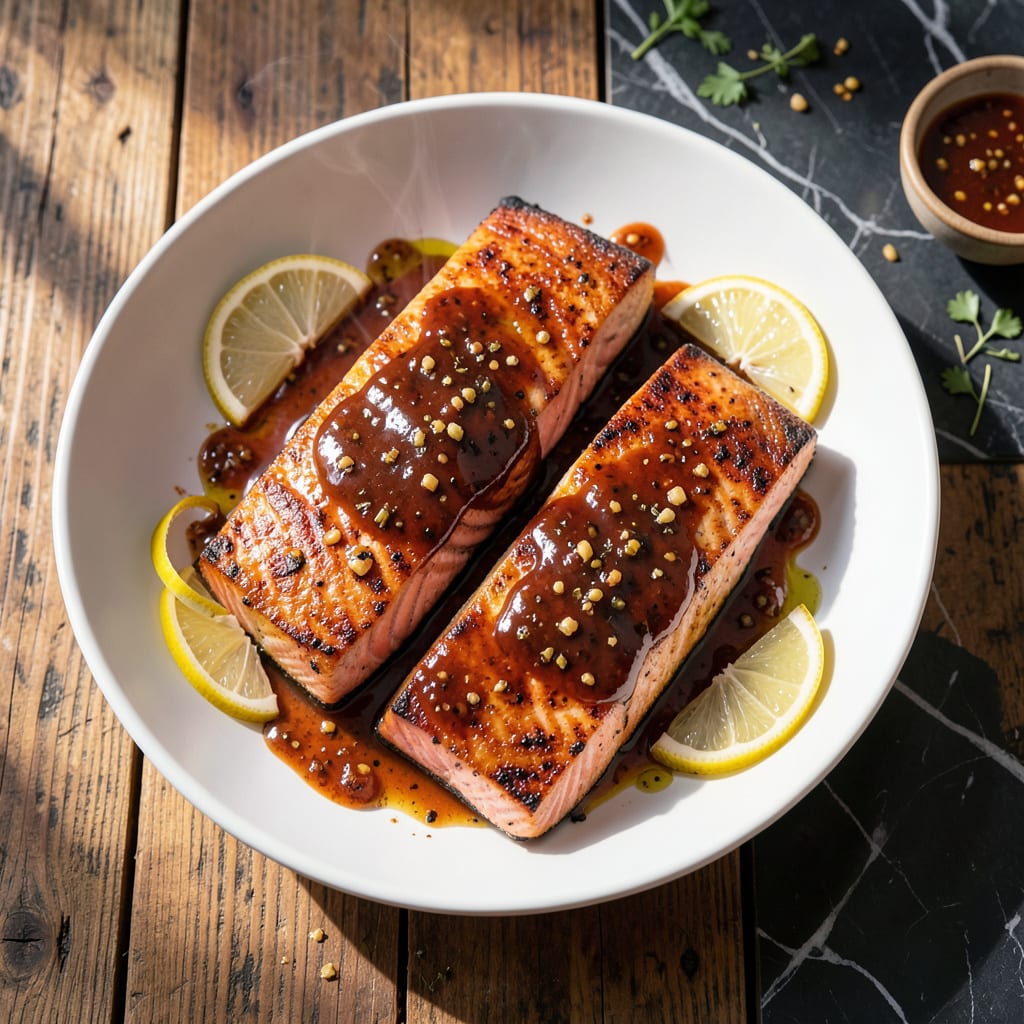
This baked salmon delivers flaky perfection with a zesty barbecue glaze that caramelizes beautifully in the oven. I developed this method to bring smoky depth to a dish typically reserved for the grill.
The high-heat baking process ensures tender, moist fillets while the glaze creates a slightly sticky, flavorful crust. It’s a foolproof way to achieve restaurant-quality results at home with minimal effort.
Ingredients for Baked Bbq Salmon
Wild-caught salmon and bold spices create a restaurant-worthy dish with minimal effort and maximum flavor impact.
| Ingredient | Amount | Notes |
|---|---|---|
| Salmon Fillets 🐟 | 1 ½ lb | Skin-on, wild-caught preferred |
| Barbecue Sauce 🍯 | ¾ cup | High-quality, low-sugar preferred |
| Olive Oil 🫒 | 2 tbsp | Extra-virgin for richness |
| Lemon Juice 🍋 | 1 tbsp | Freshly squeezed for brightness |
| Garlic Cloves 🧄 | 3 cloves | Minced for aromatic depth |
| Dijon Mustard 🟡 | 1 tbsp | Smooth, no seeds |
| Brown Sugar 🥚 | 2 tbsp | Light or dark works |
| Smoked Paprika 🌶️ | 1 tsp | For authentic smokiness |
| Onion Powder 🧅 | 1 tsp | Enhances savory base |
| Salt 🧂 | ½ tsp | Diamond Crystal kosher preferred |
| Black Pepper 🌶️ | ½ tsp | Freshly ground for best flavor |
| Fresh Dill 🌿 | ¼ cup | Chopped, for fresh finish |
| Red Pepper Flakes 🌶️ | ¼ tsp | Optional for heat |
[recipe_ingredient_scaler]
The salmon quality is paramount. Wild-caught sockeye or king fillets deliver the richest flavor and flakiest texture (the good stuff, not farmed Atlantic). Look for vibrant, moist fillets with no brown spots. Whole Foods and Trader Joe’s consistently carry excellent options. For the barbecue sauce, Stubb’s Original or Sweet Baby Ray’s provide the right balance of tang and sweetness.
No barbecue sauce on hand? Mix half a cup ketchup with 1 tbsp each of apple cider vinegar, Worcestershire sauce (vegetarian version), and brown sugar. Fresh out of dill? Fresh parsley or chives work as substitutes. The smoked paprika is non-negotiable for that authentic barbecue depth—if you only have regular, add a pinch of liquid smoke (worth the extra minute).
Salmon is best cooked the day of purchase but can be stored 1-2 days in the fridge. The glaze can be mixed 24 hours ahead and refrigerated. Leftover salmon keeps 3-4 days and reheats gently in a 300°F oven for 10-12 minutes.
Why You’ll Love This Recipe
- Ready in 20: I toss the fillets with olive oil, garlic, and lemon juice, then let the oven do the rest.
- Smoky Sweetness: That sticky BBQ glaze with the lemon brightness? Ridiculously good.
- Feeds the Crowd: I serve it for family dinners and it’s always the first thing to disappear.
- Next-Day Win: Leftovers taste even better cold on a salad the next afternoon.
Step-by-Step Instructions for Baked BBQ Salmon
This method ensures perfectly flaky salmon with a caramelized glaze every single time.
Step 1: Prepare and Season the Salmon Fillets
Preheat your oven to 400°F. Pat the 1.5 lb salmon fillets completely dry with paper towels—this is critical for even cooking and proper browning. Place them skin-side down on a parchment-lined baking sheet.
Drizzle the fillets with the 2 tbsp olive oil and rub it evenly over the surface. Season with the 0.5 tsp salt, 0.5 tsp black pepper, 1 tsp smoked paprika, and 1 tsp onion powder. This dry rub creates a flavor foundation that complements the glaze beautifully.
Step 2: Create the Zesty BBQ Glaze
In a small bowl, whisk together the 0.75 cup barbecue sauce, 1 tbsp Dijon mustard, 2 tbsp brown sugar, 1 tbsp lemon juice, and 3 cloves minced garlic cloves. The Dijon adds depth while the lemon juice brightens the rich BBQ flavor.
For a touch of heat, stir in the 0.25 tsp red pepper flakes. This glaze should be thick but pourable—if it’s too stiff, microwave it for 10-15 seconds to loosen. The aroma at this stage should be irresistibly smoky and slightly sweet.
Step 3: Bake and Glaze the Salmon
Spread half of the prepared glaze evenly over the seasoned salmon fillets. Bake on the middle rack for 12 minutes. You’ll notice the edges beginning to turn opaque and the glaze starting to bubble—that’s your signal to add the remaining glaze.
Carefully remove the baking sheet and spread the remaining glaze over the fillets. Return to the oven for another 3-5 minutes until the salmon is opaque throughout and the glaze is caramelized at the edges. The internal temperature should reach 145°F.
Step 4: Rest and Garnish Before Serving
Remove the salmon from the oven and let it rest for 5 minutes. This allows the juices to redistribute for maximum flakiness. The fillets should separate easily along the natural layers when tested with a fork.
Sprinkle the 0.25 cup fresh dill evenly over the top just before serving. The bright green herb provides a fresh contrast to the rich, smoky-sweet glaze. Serve immediately while the glaze is still glossy and the salmon is at its peak tenderness.
Pro Tips For Making Baked Bbq Salmon
- Preheat the Pan: I learned this the hard way—always preheat your baking sheet for 10 minutes at 400°F before adding the salmon. It prevents sticking and gives that perfect caramelized edge to the barbecue sauce.
- Pat Salmon Dry: Sounds weird, but it works: blot the fillets with a paper towel before seasoning. Excess moisture steams the fish instead of letting it roast, and the sauce won’t cling as well.
- Don’t Over-Sauce: After ruining a batch with soggy, over-sauced salmon, I now brush a light first coat, bake for 8 minutes, then add a second layer. Too much sauce burns before the fish cooks through.
- Use Fresh Lemon: Bottled lemon juice tastes flat—freshly squeezed brightens the barbecue glaze and cuts through the richness. A quick zester over the top before baking adds even more zing.
Dietary Considerations for This Dish
Gluten-Free Friendly
This dish is naturally gluten-free when using certified GF barbecue sauce like Stubb’s Gluten-Free Original. Always check labels—some sauces contain wheat-based thickeners. I’ve found Annie’s Organic also works well for my sensitive friends. 💪
Dairy-Free and Pescatarian
Perfect for dairy-free diets, this recipe contains no milk, cheese, or butter. As a pescatarian, I appreciate how the 1.5 lb salmon provides complete protein without land animal products. The olive oil and spices keep it rich and satisfying.
Low-Carb Adaptation
For keto or low-carb diets, reduce the 2 tbsp brown sugar in the glaze to 1 tbsp or swap for monk fruit sweetener. Use a sugar-free barbecue sauce like G Hughes to cut carbs significantly while keeping that smoky flavor.
Allergen Awareness
Primary allergens to watch: fish (salmon) and mustard in the Dijon. For mustard allergies, substitute 1 tbsp yellow mustard or simply omit it. The garlic and smoked paprika still provide plenty of flavor depth.
Sodium Considerations
To reduce sodium, choose a low-sodium barbecue sauce and cut the added 0.5 tsp salt in half. The lemon juice and fresh dill help compensate with bright, fresh flavors. I often make this adjustment for my coastal rides after saltwater fishing. 🌊
Nutrition Facts

Trained in classic French technique but raised on slow-cooked ribs and spicy rubs, she blends culinary skill with smoke and soul.
- Recipe for Boneless Pork Chops in Cast Iron Skillet: Sear and Baste to Juicy Perfection - October 3, 2026
- Recipe for Boneless Cross Rib Roast: Slow-Roasted Beef with Herb Crust - October 3, 2026
- Hamburgers in Sauce Recipe Crock Pot: Slow-Cooked Savory Delight - October 3, 2026