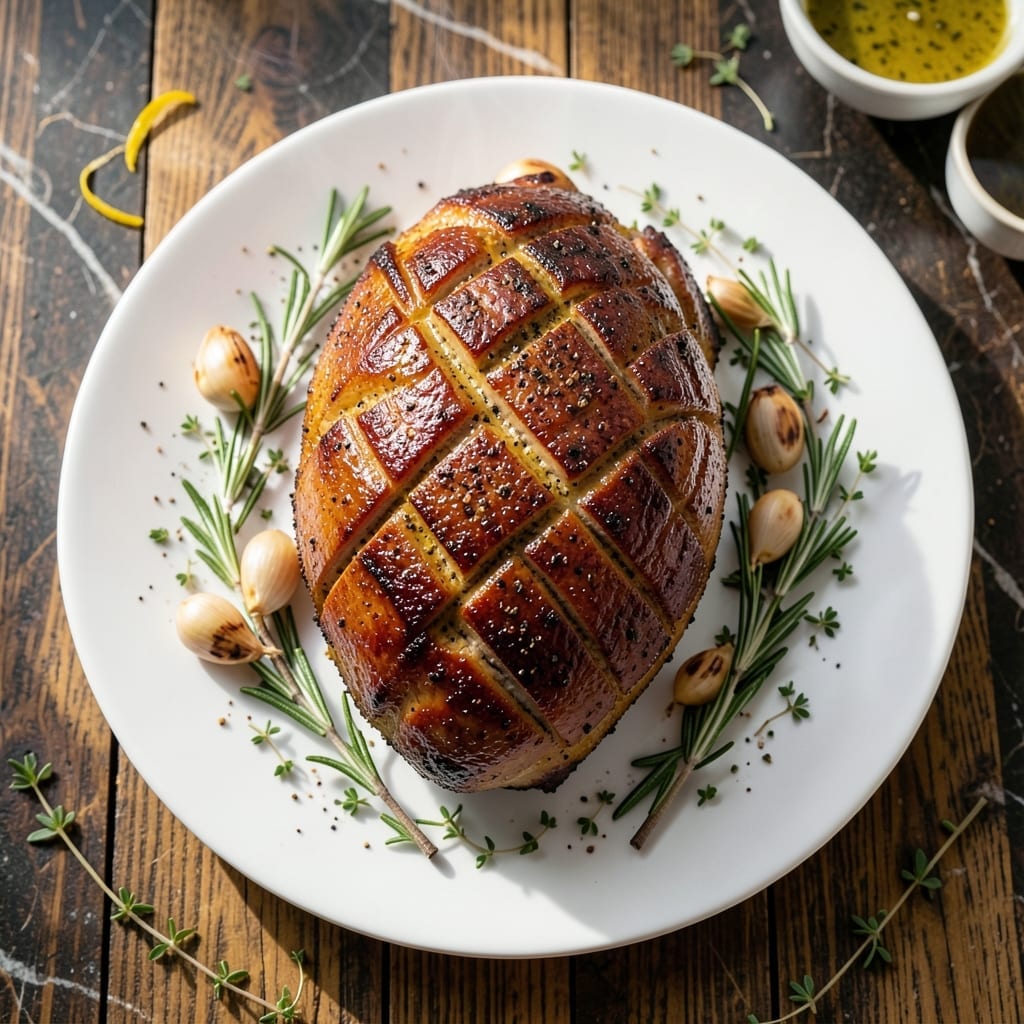
This herb-crusted baked pork tenderloin delivers tender, moist results every time with minimal effort. A simple blend of fresh herbs and spices creates a flavorful crust.
The secret is baking at high heat to lock in juices while forming a golden crust. This method guarantees a centerpiece worthy of any dinner table without complicated techniques.
Ingredients for Baked Pork Tenderloin
A handful of fresh herbs and a few pantry staples transform this into a showstopper.
| Ingredient | Amount | Notes |
|---|---|---|
| Pork Tenderloin 🥩 | 1 ½ lb | Trimmed of silver skin |
| Fresh Rosemary 🌿 | 2 tbsp | Finely chopped, stems removed |
| Fresh Thyme Leaves 🍃 | 2 tbsp | Stems discarded, loosely packed |
| Garlic Cloves 🧄 | 4 cloves | Minced to fine paste |
| Dijon Mustard 🟡 | 2 tbsp | Smooth, not whole grain |
| Olive Oil 🫒 | 2 tbsp | Extra-virgin for richness |
| Kosher Salt 🧂 | 1 ½ tsp | Diamond Crystal preferred |
| Freshly Ground Black Pepper 🌶️ | 1 tsp | Coarsely ground for texture |
| Dried Sage 🍃 | 1 tsp | Rubbed between fingers |
| Smoked Paprika 🌶️ | 1 tsp | Sweet or hot variety |
| Breadcrumbs 🍞 | ½ cup | Panko for crispier crust |
| Lemon Zest 🍋 | 1 tbsp | From 1 medium lemon |
[recipe_ingredient_scaler]
The pork tenderloin quality is non-negotiable. Look for even color and minimal fat—avoid pieces with excessive marbling or dry spots. Whole Foods and Costco consistently stock excellent options. Fresh herbs from the produce section outperform dried every time (the aroma should be vibrant and potent), but Penzeys offers superior dried varieties if needed.
No fresh rosemary or thyme? Dried at one-third the amount works, though the flavor profile shifts slightly. Panko breadcrumbs can replace regular for extra crunch. Out of Dijon? Whole grain mustard at the same quantity adds a pleasant texture. For the olive oil, California olive oil or Bertolli are reliable mid-range choices.
The herb crust is best applied just before baking. Store the tenderloin in its original packaging in the fridge for up to 3 days, or freeze for 6 months. Leftovers reheat surprisingly well—slice and warm gently in a skillet with a splash of broth.
Why You’ll Love This Recipe
- One Pan Wonder: I toss the pork with mustard, herbs, and garlic, then let the oven do the rest—one sheet pan, minimal cleanup.
- That Rosemary Kick: The fresh rosemary and thyme with Dijon create this deep, aromatic flavor that makes every bite feel special.
- Feeds the Fam: It’s my go-to for Sunday dinners or meal prep—great for feeding a table or packing for lunch the next day.
- Budget Stretcher: A whole tenderloin cooks up fast, serves plenty, and leftovers (if any) reheat like a dream.
Step-by-Step Instructions for Baked Pork Tenderloin
Master this technique for a perfectly tender, herb-crusted result with minimal effort.
Step 1: Prepare the Herb Marinade Base
In a small bowl, combine the 2 tbsp Dijon mustard, 2 tbsp olive oil, 2 tbsp fresh rosemary, 2 tbsp fresh thyme leaves, 4 cloves garlic cloves, 1.5 tsp kosher salt, 1 tsp freshly ground black pepper, 1 tsp dried sage, and 1 tsp smoked paprika.
Whisk until the herbs are evenly distributed throughout the mixture. This aromatic base will infuse the pork with deep, layered flavors while keeping it moist during baking. The mustard acts as both a flavor enhancer and a binding agent for the crust.
Step 2: Coat and Crust the Pork Tenderloin
Pat the 1.5 lb pork tenderloin dry with paper towels to ensure the marinade adheres properly. Rub the herb mixture all over the surface of the pork, pressing it into every crevice. This step is crucial for maximum flavor penetration.
In a shallow dish, combine the 0.5 cup breadcrumbs with the 1 tbsp lemon zest. Roll the coated pork tenderloin in the breadcrumb mixture, pressing gently to create an even, adherent crust. The lemon zest adds a bright contrast to the rich herbs.
Step 3: Sear for Crispy Crust Development
Heat a large oven-safe skillet over medium-high heat. Add 1 tbsp olive oil and when it begins to shimmer, carefully place the crust-coated pork tenderloin in the pan. Sear for 2-3 minutes per side until the breadcrumb coating turns golden brown.
This searing step creates a crispy exterior while locking in juices. Watch for the crust to develop a deep golden color—this visual cue indicates it’s ready for the oven. The skillet will be hot, so use tongs to handle the pork safely.
Step 4: Bake to Perfect Doneness
Transfer the skillet with the pork tenderloin to a preheated 400°F oven. Bake for 20-25 minutes or until the internal temperature reaches 145°F on an instant-read thermometer. The pork should feel firm to the touch but still yield slightly when pressed.
Resist the temptation to overcook—pork tenderloin continues cooking as it rests. The crust should be deeply golden and crisp, while the interior remains juicy and tender. If the crust begins to darken too quickly, tent loosely with foil.
Step 5: Rest and Serve
Remove the pork tenderloin from the oven and transfer it to a cutting board. Tent loosely with foil and let it rest for 10 minutes. This resting period allows the juices to redistribute throughout the meat, ensuring every slice remains moist.
Slice the pork tenderloin against the grain into 1-inch thick pieces. Each slice should reveal a perfectly pink center with a fragrant, golden crust. Serve immediately while the crust is still crisp, accompanied by your favorite sides.
Pro Tips For Making Baked Pork Tenderloin
- Start Hot, Finish Low: Sear the tenderloin in a screaming-hot pan for 2 minutes per side first—I learned this the hard way after my first few came out pale and bland. Then finish in a 400°F oven until it hits 145°F internally.
- Crush the Garlic: Smash the garlic cloves with the side of your knife before mincing. Sounds weird, but it works: it releases more flavor into the Dijon mustard rub and keeps the pork from tasting flat.
- Skip the Overcrowding: Leave space between the tenderloin and the pan sides, or the herbs will steam instead of crisp. I used to pack everything in tight and wondered why my rosemary and thyme tasted muted.
- Rest Under Foil: Tent the pork with foil and give it a solid 10 minutes before slicing—my grandmother swore by this, and she was right. The juices redistribute, and you won’t lose that perfect moisture to the cutting board.
Creative Variations of Baked Pork Tenderloin
Asian-Inspired Glaze
Swap the herb crust for a sticky-sweet glaze using ¼ cup honey, 3 tbsp soy sauce, and 1 tbsp grated ginger. Brush it on after searing, then bake as usual. I love adding 1 tsp sesame seeds for crunch. 🔥
Spicy Cajun Rub
Replace the herbs with a bold Cajun seasoning blend—2 tbsp total of paprika, garlic powder, onion powder, cayenne, and oregano. Add 1 tbsp brown sugar to the breadcrumbs for a touch of sweetness to balance the heat.
Mediterranean Twist
Use 1 tbsp za’atar in the breadcrumb mix and replace lemon zest with 1 tsp sumac. After baking, drizzle with 2 tbsp tahini thinned with water and sprinkle with chopped parsley. This reminds me of my coastal rides.
Apple-Cinnamon Crust
Add ½ cup finely diced dried apples and 1 tsp cinnamon to the breadcrumbs. The sweetness pairs beautifully with pork’s richness. Serve with caramelized onions for a fall-inspired dish.
Mustard-Herb Crust
Boost the mustard flavor by using 3 tbsp whole grain mustard and reduce olive oil to 1 tbsp. Add 1 tbsp chopped fresh tarragon for a French-inspired twist. The texture is incredible.
Balsamic Reduction
After baking, drizzle with a balsamic glaze made by simmering ½ cup balsamic vinegar until syrupy. Garnish with crumbled goat cheese for a sophisticated touch. Perfect for local BBQ competitions. ✨
Nutrition Facts
Frequently Asked Questions
What temperature should the oven be set to?
Preheat your oven to 400°F for the perfect balance of crispy crust and juicy interior. This high heat ensures the breadcrumb coating browns beautifully while cooking the pork evenly.
How long should I let the pork rest before slicing?
Always rest the pork for at least 10 minutes after baking. This allows the juices to redistribute, keeping every slice moist and flavorful. Skipping this step can result in dry meat.
Can I use dried herbs instead of fresh?
Yes, but use one-third the amount since dried herbs are more concentrated. While fresh herbs provide the best flavor, dried rosemary, thyme, and sage will still deliver great results.
What’s the best way to tell when it’s done?
Use an instant-read thermometer to check the internal temperature, which should reach 145°F. The pork should feel firm but still yield slightly when pressed. Overcooking will make it dry.

Trained in classic French technique but raised on slow-cooked ribs and spicy rubs, she blends culinary skill with smoke and soul.
- Recipe for Boneless Pork Chops in Cast Iron Skillet: Sear and Baste to Juicy Perfection - October 3, 2026
- Recipe for Boneless Cross Rib Roast: Slow-Roasted Beef with Herb Crust - October 3, 2026
- Hamburgers in Sauce Recipe Crock Pot: Slow-Cooked Savory Delight - October 3, 2026