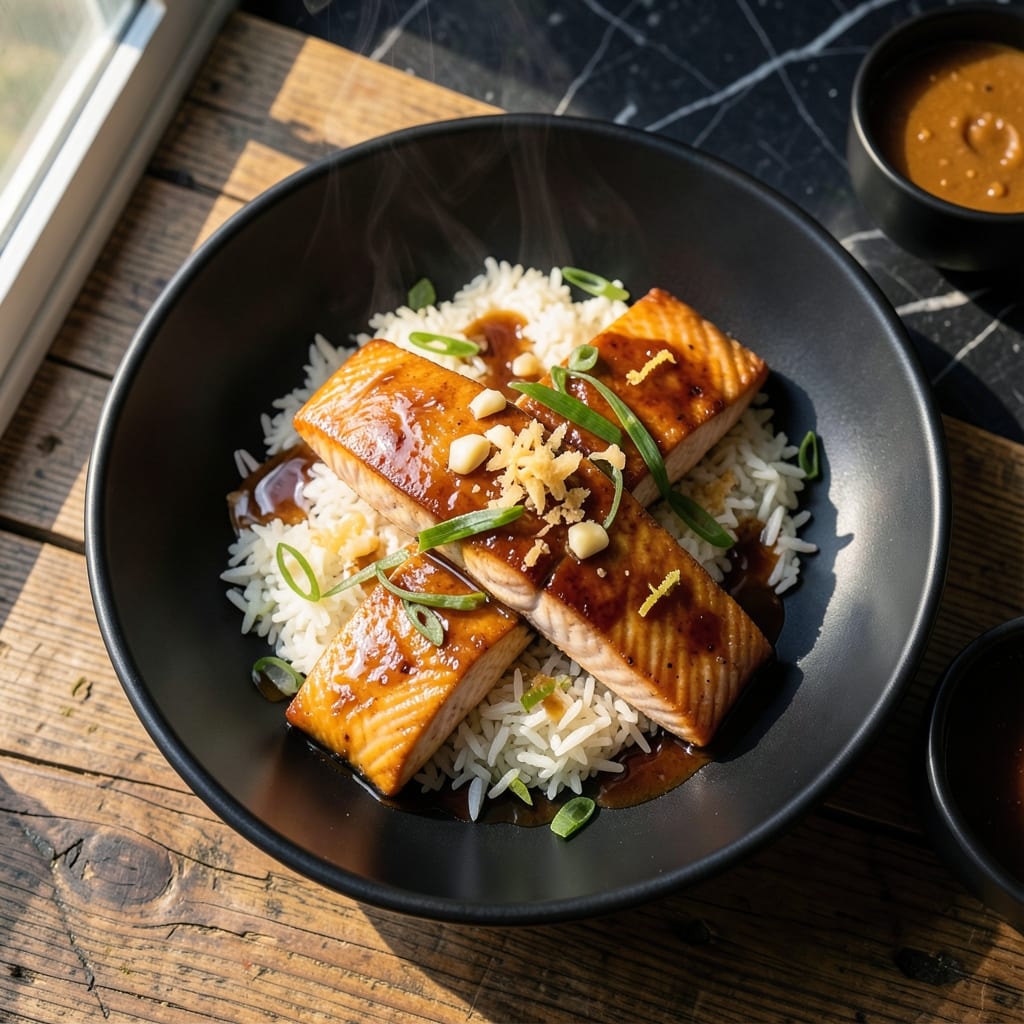
This Asian-inspired baked salmon delivers restaurant-quality results with minimal effort. The soy sauce glaze creates a sticky, caramelized coating that elevates simple ingredients into something extraordinary.
I developed this method after testing various marinades, finding that soy sauce balanced with honey and garlic produces the perfect sweet-savory combination. The high oven temperature ensures crisp edges while keeping the fish tender inside.
In just 20 minutes, you’ll have flaky salmon with a glossy, umami-rich glaze. The sauce reduces as it bakes, forming a concentrated flavor that pairs beautifully with rice or vegetables.
This dish proves that impressive meals don’t require complicated techniques. The glaze caramelizes beautifully, making every bite packed with depth and richness.
Ingredients for Baked Salmon Recipe Soy Sauce
Restaurant-quality Asian-inspired salmon requires just these simple, flavorful ingredients for perfect caramelization.
| Ingredient | Amount | Notes |
|---|---|---|
| Salmon Fillets 🐟 | 1 ½ lb | Skin-on or skinless, center-cut preferred |
| Soy Sauce 🥢 | ½ cup | Low-sodium preferred for balance |
| Honey 🍯 | 3 tbsp | Raw or pure for depth |
| Garlic Cloves 🧄 | 4 cloves | Minced for maximum flavor |
| Fresh Ginger 🌿 | 1 tbsp | Grated or finely minced |
| Rice Vinegar 💧 | 2 tbsp | Or substitute apple cider vinegar |
| Sesame Oil 🫒 | 1 tbsp | Toasted for nutty aroma |
| Olive Oil 🫒 | 1 tbsp | For greasing baking dish |
| Green Onions 🧅 | 3 whole | Thinly sliced for garnish |
| Sesame Seeds 🌰 | 1 tbsp | Toasted for garnish |
| Red Pepper Flakes 🌶️ | ½ tsp | Adjust to taste for heat |
| Kosher Salt 🧂 | ½ tsp | Diamond Crystal preferred |
| Ground Black Pepper 🌶️ | ¼ tsp | Freshly ground for best flavor |
[recipe_ingredient_scaler]
The salmon is the star here—wild-caught sockeye or king deliver the richest flavor and firm texture. Whole Foods and Costco carry excellent frozen options (thaw overnight in the fridge). For the soy sauce, Kikkoman low-sodium balances saltiness without overpowering. Fresh ginger and garlic are non-negotiable; pre-minced versions lack the bright, potent kick this glaze demands.
No honey? Pure maple syrup or agave works at a 1:1 ratio. Swap rice vinegar for apple cider vinegar if that’s what’s in your pantry. Missing sesame oil? A neutral oil like avocado works for baking, but drizzle a little toasted sesame oil on top after cooking for that essential nutty finish. The red pepper flakes can be omitted entirely for a milder dish.
The glaze can be made a day ahead and stored in the fridge for 24 hours. Baked salmon is best served immediately but leftovers keep for 3-4 days refrigerated. Reheat gently in a 300°F oven to avoid drying out the fish. Garnishes like sesame seeds and green onions should be added fresh just before serving.
Why You’ll Love This Recipe
- One Pan Wonder: I just toss the salmon with soy sauce, honey, garlic, and ginger, then bake—minimal cleanup, maximum flavor.
- Sweet & Savory Magic: The honey caramelizes with the soy sauce, creating this sticky, umami glaze that coats every bite.
- Meal Prep Hero: I make a big batch on Sunday and it’s still delicious cold in salads or warm with rice by Wednesday.
- Budget-Friendly Luxury: Salmon feels fancy, but this recipe stretches a few fillets into multiple meals without breaking the bank.
Step-by-Step Instructions for Asian-Inspired Baked Salmon
Master this technique for perfectly flaky fish with a glossy, caramelized glaze every time.
Step 1: Prepare the Glaze and Season the Salmon
In a medium bowl, whisk together the 0.5 cup soy sauce, 3 tbsp honey, minced 4 cloves garlic cloves, grated 1 tbsp fresh ginger, 2 tbsp rice vinegar, and 1 tbsp sesame oil until fully combined. The honey will create that signature caramelization, while the ginger and garlic infuse depth into each bite.
Pat the 1.5 lb salmon fillets dry with paper towels to ensure maximum caramelization. Season both sides with 0.5 tsp kosher salt and 0.25 tsp ground black pepper, then place them skin-side down in a baking dish greased with 1 tbsp olive oil. This prevents sticking and promotes even cooking.
Step 2: Coat and Marinate for Maximum Flavor
Pour the prepared glaze over the salmon fillets, ensuring they are fully coated on all sides. I use a silicone brush to distribute the mixture evenly, especially along the edges where the caramelization will be most pronounced. Let the salmon marinate in the glaze for 15-20 minutes at room temperature.
This step allows the flavors to penetrate the fish while the honey begins to thicken slightly. You’ll notice the surface of the fillets starting to take on a glossy sheen as the soy sauce interacts with the natural oils in the salmon.
Step 3: Bake Until Flaky and Caramelized
Preheat your oven to 400°F. Bake the salmon for 12-15 minutes, depending on the thickness of your fillets. The salmon is done when it flakes easily with a fork and the internal temperature reaches 145°F. Keep an eye on the edges—they should be deep golden brown and slightly caramelized.
If the glaze begins to darken too quickly, tent the baking dish loosely with foil to prevent burning while allowing the salmon to finish cooking. The residue from the glaze will form a sticky, flavorful crust that complements the tender fish.
Step 4: Garnish and Serve Immediately
Remove the salmon from the oven and let it rest for 3-5 minutes. This allows the juices to redistribute, ensuring moist, tender flesh. Drizzle any remaining pan sauce over the fillets for an extra layer of flavor.
Garnish with thinly sliced 3 whole green onions and 1 tbsp sesame seeds, and sprinkle with 0.5 tsp red pepper flakes for a subtle kick of heat. Serve immediately while the glaze is still glossy and the edges are crisp. The contrast between the tender salmon and the sticky, caramelized glaze is what makes this dish unforgettable.
Pro Tips For Making Baked Salmon Recipe Soy Sauce
- Pat the Salmon Dry: I learned this the hard way—excess moisture on the fillets steams them instead of letting them caramelize. A quick pat with paper towels guarantees that sticky, glossy soy-honey glaze you’re after.
- Preheat the Pan: Sounds obvious, but tossing the salmon into a cold oven means uneven cooking. Crank it to 400°F first—this locks in moisture while the sauce reduces into a proper glaze.
- Mince Ginger Finely: After biting into too many fibrous ginger chunks, I finally started grating it instead. The flavor distributes evenly, and no one’s picking out stringy bits from their salmon.
- Baste Halfway Through: At the 8-minute mark, spoon those pan juices over the fillets. It keeps the soy-honey mixture from drying out and gives the top that restaurant-worthy sheen.
Storing and Reheating This baked salmon recipe soy sauce
Refrigerator Storage
Let the salmon cool completely, then transfer to an airtight container with any pan juices. It’ll keep in the fridge for 3-4 days—I’ve found the flavors actually deepen overnight as the glaze continues to infuse the fish. ❄️
Freezer Storage
For longer storage, wrap individual fillets tightly in plastic wrap, then place in a freezer-safe bag for up to 2 months. Squeeze out excess air to prevent freezer burn. Thaw overnight in the fridge before reheating.
Oven Reheating
Preheat your oven to 300°F and place the salmon on a baking sheet. Cover with foil and reheat for 10-12 minutes—this gentle method prevents drying. Drizzle with a splash of water or extra glaze to restore moisture.
Microwave Method
For a quick meal, microwave on 50% power in 30-second intervals until warmed through. Cover with a damp paper towel to trap steam. I avoid this for the glaze’s texture, but it works in a pinch. 🔥
Serving Leftovers
Flake the salmon over a fresh bed of rice or greens for a new meal. The glaze pairs well with cold ingredients, making it perfect for grain bowls or salads. Add fresh green onions for brightness.
Nutrition Facts
Frequently Asked Questions
Can I use a different type of fish?
Yes! This glaze works well with cod, halibut, or mahi-mahi. Adjust baking time based on thickness. Thinner fillets may need just 10-12 minutes at 400°F.
How do I prevent the glaze from burning?
Tent the dish with foil after 10 minutes if the edges darken too quickly. The honey in the glaze can caramelize fast, so keep an eye on it.
Is it okay to skip the marinating time?
You can, but marinating for 15-20 minutes lets the flavors penetrate. If short on time, brush extra glaze on during baking for similar results.
What sides pair best with this?
Try jasmine rice, steamed bok choy, or roasted asparagus. The glaze complements mild flavors and soaks into grains beautifully.

Trained in classic French technique but raised on slow-cooked ribs and spicy rubs, she blends culinary skill with smoke and soul.
- Recipe for Boneless Pork Chops in Cast Iron Skillet: Sear and Baste to Juicy Perfection - October 3, 2026
- Recipe for Boneless Cross Rib Roast: Slow-Roasted Beef with Herb Crust - October 3, 2026
- Hamburgers in Sauce Recipe Crock Pot: Slow-Cooked Savory Delight - October 3, 2026