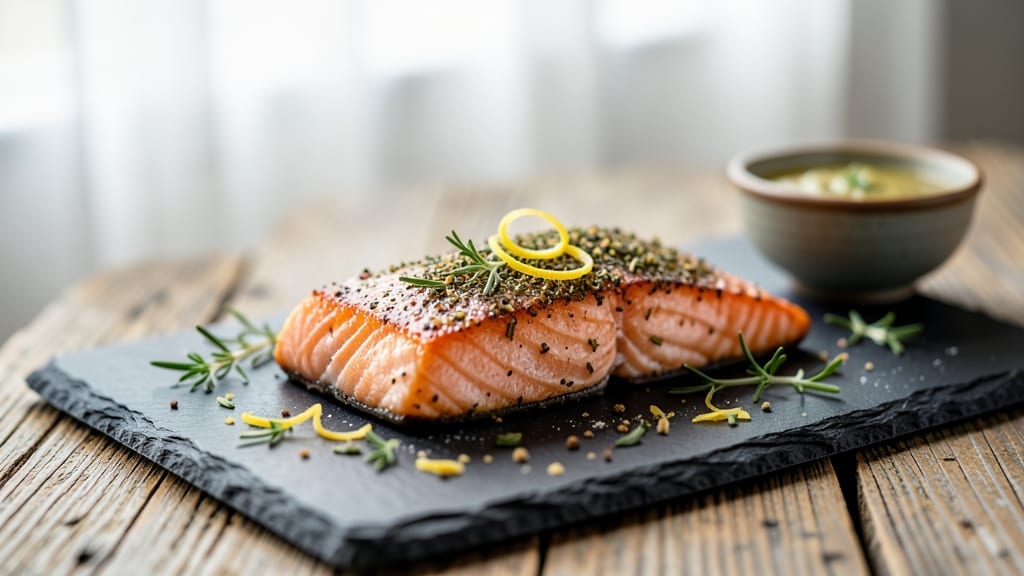
This baked salmon rub recipe transforms simple weeknight dinners into restaurant-worthy meals with its perfect balance of zesty herbs and bright citrus. The secret lies in the crispy skin—achieved through a precise blend of spices and proper baking technique that locks in moisture while creating that coveted crunch.
I developed this recipe after years of testing different rubs, and it consistently delivers salmon with golden, shatteringly crisp edges and tender, flaky centers every time.
The magic happens in the rub itself—a harmonious mix of dried herbs, citrus zest, and aromatic spices that infuse the salmon with layers of flavor without overpowering its natural taste.
Unlike store-bought seasonings, this blend uses high-quality ingredients you likely already have in your pantry, making it both economical and customizable. The citrus elements not only enhance flavor but also help tenderize the fish slightly, ensuring maximum juiciness.
What you’ll achieve is salmon that looks and tastes like it came straight from a high-end seafood restaurant—crispy skin that shatters at the first bite, tender flesh that melts in your mouth, and a flavor profile that’s bright, herby, and perfectly balanced.
This recipe serves as both a complete dish and a versatile seasoning base that works equally well for grilled or pan-seared salmon. The best part? It takes less than 20 minutes of active prep time, making it ideal for busy weeknights.
Pair this salmon with roasted vegetables or a fresh salad for a complete meal that’s as nutritious as it is delicious. The rub keeps well in your spice drawer for up to three months, so you can make a batch and have perfectly seasoned salmon ready whenever cravings strike.
Let’s get started on creating your next perfect salmon dinner.
Ingredients for baked salmon rub
Pantry herbs meet citrus sunshine—this simple rub turns salmon into a crispy-skinned masterpiece every time.
| Ingredient | Amount | Notes |
|---|---|---|
| Center-Cut Salmon Fillets 🐟 | 1 ½ lb | Skin-on for crispiness, 6 oz each |
| Dried Rosemary 🌿 | 1 tbsp | Freshly crushed for aroma |
| Dried Thyme 🌿 | 1 tbsp | Or 1 tsp fresh thyme leaves |
| Dried Oregano 🍃 | 1 tsp | Mediterranean blend preferred |
| Ground Black Pepper 🌶️ | 1 tsp | Freshly cracked for intensity |
| Kosher Salt 🧂 | 1 ½ tsp | Coarse grain preferred |
| Lemon Zest 🍋 | 1 tbsp | From 1 large organic lemon |
| Lemon Juice 🍋 | 1 tbsp | Freshly squeezed |
| Garlic Powder 🧄 | ½ tsp | Not garlic salt |
| Ground Coriander 🌶️ | ½ tsp | For citrusy depth |
| Extra-Virgin Olive Oil 🫒 | 1 tbsp | Light fruity variety |
| Avocado Oil 🫒 | 1 tbsp | High smoke point for crisping |
| Fresh Lemon 🍋 | 1 whole | For garnish and extra juice |
[recipe_ingredient_scaler]
The salmon is non-negotiable—center-cut fillets with skin are essential for that shatteringly crisp crust. Look for wild-caught or sustainably farmed at Whole Foods or your local fishmonger. If the skin isn’t perfectly intact, gently press it back into place with your palm before seasoning. The zest and juice from one organic lemon (the good stuff, not the pre-juiced bottles) are what really elevate this recipe—bright, tangy, and packed with flavor. I always grab Penzeys spices for my dried herbs because they hold their aroma so much longer than the generic grocery store brands.
No fresh herbs? Dried works perfectly—just use half the amount of fresh called for in other recipes. Running low on coriander? Cumin at half the quantity gives a similar earthy kick. Swap avocado oil for grapeseed oil if that’s what you’ve got, but don’t use olive oil for the crisping step—it’ll burn. The rub keeps beautifully in an airtight container for 3 months, so make a big batch. If you’re serving this for guests, double the lemon juice—it makes the salmon taste like it came from a fancy restaurant (which, let’s be honest, it totally will).
This rub is a total game-changer for salmon—it’s the secret weapon behind that perfect restaurant-quality crust. Store the dry rub in a small jar with a tight seal in your spice cabinet, and keep the fresh lemon juice in the fridge for up to 5 days. The salmon itself should be cooked at 400°F for 12-15 minutes, depending on thickness, until the skin is golden and crisp. Leftovers? Reheat gently in the oven to maintain that crispy texture—microwaving kills it every time.
Why You’ll Love This Recipe
- I’ll be real: this is my go-to when I’m too tired to think about dinner. Prep the rub the night before, pat the salmon dry in the morning, and 15 minutes later, you’ve got a restaurant-worthy meal. The middle rack trick ensures even cooking, and the 145°F thermometer check means no dry, flaky disasters. Serve it with a simple green salad, and you’ve got a meal that feels special without the special occasion.
- No-Pan-Rubbing Needed: Honestly, this is one of those recipes where you don’t need fancy tools—just a bowl and your hands. The rub blends together in seconds, and the salmon gets coated with minimal fuss. No chopping herbs or measuring madly; just crush those dried rosemary and thyme, mix in the lemon zest, and you’re halfway done. My kids even help press the spices into the skin—it’s that simple.
- Crispy Skin, Juicy Magic: That crispy skin? It’s not just a gimmick—it’s the star. The combo of avocado oil (for that high smoke point) and the coarse kosher salt in the rub creates a perfect barrier, locking in moisture while caramelizing the outside. The garlic powder and coriander add a subtle kick that makes every bite sing. Trust me, the contrast of the crispy edge and the creamy salmon center is chef’s kiss.
- Leftovers? Make a Rub Stash: Between the dry rub lasting three months in a jar and the fresh lemon juice keeping for five days, this recipe is a budget hack. Make a double batch of the spice blend and freeze half—it’s my secret weapon for grilled chicken, roasted potatoes, or even scrambled eggs. No waste, just flavor. And if you’re feeding a crowd, double the salmon and reheat gently; it reheats like a dream.
Step-by-step instructions for baked salmon with zesty herb and citrus rub
This method delivers perfectly crispy skin and tender flesh every time—let’s get started.
Prepare the Zesty Herb and Citrus Rub
In a small bowl, combine the 1 tablespoon dried rosemary, 1 tablespoon dried thyme, 1 teaspoon dried oregano, 1 teaspoon ground black pepper, 1½ teaspoons kosher salt, ½ teaspoon garlic powder, and ½ teaspoon ground coriander. Mix thoroughly to distribute the spices evenly.
Add the 1 tablespoon lemon zest and 1 tablespoon lemon juice to the dry mixture. The zest will add a bright citrus aroma while the juice helps bind the rub together. Use your fingers to work the mixture into a coarse, crumbly texture—this ensures maximum flavor contact with the salmon’s skin.
This blend is what transforms ordinary baked salmon into something extraordinary. The herbs and citrus work together to create a complex flavor profile that pairs perfectly with the crispy skin we’re aiming for.
Coat the Salmon and Rest Before Baking
Pat the 1½ pound center-cut salmon fillets dry with paper towels, pressing firmly to remove all moisture. This step is crucial for achieving crispy skin—moisture is the enemy of crispiness. Place the fillets skin-side up on a clean work surface.
Generously coat both sides of each fillet with the herb-citrus rub, pressing it gently into the skin. You’ll want to see a visible layer of the seasoning on all surfaces. This ensures every bite gets that flavorful crust. Once coated, let the salmon rest at room temperature for 15-20 minutes.
Here’s the thing—letting the salmon come to room temperature allows for more even cooking. Cold salmon can create uneven cooking zones, leading to some parts being overcooked while others remain underdone. The rest also helps the rub adhere better to the fish.
Create the Perfect Baking Environment
Preheat your oven to 425°F with a rack positioned in the middle position. Line a baking sheet with parchment paper for easy cleanup. While the oven heats, combine the 1 tablespoon extra-virgin olive oil and 1 tablespoon avocado oil in a small bowl. The avocado oil has a higher smoke point, which helps create that beautiful crispy skin.
Brush the baking sheet with half of the oil mixture, then carefully transfer the seasoned salmon fillets to the prepared sheet. Brush the tops of the fillets with the remaining oil mixture. This creates a protective barrier that enhances browning and crispiness while preventing the salmon from drying out.
Place the baking sheet on the middle rack of your preheated oven. The middle rack ensures even heat distribution, which is essential for crispy skin without overcooking the center. This is where the magic happens—watch for the salmon to develop a golden-brown crust in about 12-15 minutes.
Bake to Crispy Perfection
Bake the salmon for 12-15 minutes. You’ll know it’s done when the skin is deep golden brown and crispy, and the internal temperature reaches 145°F when measured with an instant-read thermometer. The crispy skin is what makes this recipe special—don’t be tempted to check on it too early.
If you’re worried about overcooking, here’s a pro tip: The salmon will continue cooking slightly after you remove it from the oven due to carryover heat. For extra crispiness, you can broil the salmon for the last 1-2 minutes of cooking, keeping a close eye to prevent burning.
Once the salmon reaches the perfect doneness, remove it from the oven and let it rest for 3-5 minutes before serving. This resting period allows the juices to redistribute throughout the fillet, ensuring each bite is moist and flavorful. Use the remaining fresh lemon to squeeze a little juice over the top for a final bright citrus note.
Pro Tips For Making Baked Salmon Rub
- Crush Those Herbs: I used to just dump dried rosemary and thyme into the mix, but crushing them between your fingers first—right in the bowl—wakes up their aroma. The tiny bits stick better to the salmon skin, so you get that herbaceous punch in every bite instead of just sprinkled-on flavor.
- Oil the Skin First: Brush the salmon skin with a tiny bit of the avocado oil mixture before pressing on the rub. This creates a barrier that locks in moisture while helping the spices cling. Skip this, and you’ll end up with dry edges or a rub that slides off.
- Broil Like a Boss: If your salmon isn’t golden enough after 12 minutes, finish it under the broiler for 1–2 minutes—watch it like a hawk. The high heat seals the skin crispy, but it burns faster than you’d think. A quick lemon squeeze right after takes the edge off any bitterness.
- Rest or Regret: That 3–5 minute rest isn’t optional—it’s when the salmon’s juices stop pooling in the middle and spread out evenly. Cut into it too soon, and you’ll get a sad, dry center. Cover loosely with foil if you’re nervous about it cooling too much.
Troubleshooting this dish
Skin Not Crisping?
If your salmon skin isn’t developing that beautiful golden crust, check your drying technique first. Pat the fillets extra dry with paper towels—even a little moisture will prevent crispiness. I once forgot this step and ended up with rubbery skin.
For extra insurance, let the salmon sit uncovered in the fridge for 30 minutes before seasoning to evaporate any hidden moisture. 🔥
Overcooking the Center
When the salmon’s center feels firm or rubbery, you’ve likely overcooked it. Use an instant-read thermometer to check for 145°F internal temperature—any higher and the flesh becomes dry. I recommend pulling it out 5 minutes early and letting it rest, as the salmon continues cooking from residual heat.
Rub Falling Off
A common issue is the rub sliding off during baking. Press the seasoning firmly into the skin before resting, and avoid overcoating—too much rub can’t adhere properly. For extra grip, lightly brush the salmon with 1 tsp olive oil after applying the rub before baking.
This creates a sticky bond that keeps everything in place.
Uneven Cooking
If one side cooks faster than the other, it’s usually due to uneven heat distribution. Rotate your baking sheet halfway through cooking, or flip the salmon carefully with tongs.
I also recommend using a wire rack on your baking sheet to allow air circulation underneath, which helps cook more evenly. This simple trick prevents cold spots in the center.
Dry Salmon Texture
Dry salmon often comes from over-baking or insufficient moisture. Reduce oven temperature to 400°F if your kitchen runs hot, and add 1 tbsp extra lemon juice to the rub for natural moisture retention.
I always cover the salmon loosely with foil for the last 3 minutes of baking to trap steam and keep it juicy.
Nutrition facts
Frequently asked questions
Why does this rub work so well for crispy salmon skin?
The combination of kosher salt and avocado oil draws out surface moisture while creating a golden crust. The lemon zest and citrus juice not only add vibrant flavor but also help tenderize the fish slightly. The herbs like rosemary and thyme enhance browning through the Maillard reaction, giving you that perfect crispy texture.
Can I make this rub ahead of time?
The dry rub mixture keeps for 3 months in an airtight container. Just store it in your spice cabinet. For the fresh lemon juice, keep it refrigerated for up to 5 days. Combine them right before seasoning your salmon for maximum flavor impact.
What if I don’t have avocado oil?
Use extra-virgin olive oil instead, but avoid high-smoke-point oils like vegetable oil for the crisping step. The avocado oil was specifically chosen for its ability to handle 425°F without burning. If you’re substituting, brush the salmon lightly with oil after applying the rub to help create that crispy skin.
How do I prevent the rub from sticking to my hands?
Work with small amounts at a time or use your fingertips to gently press the rub into the salmon skin. For extra grip, wear rubber gloves while handling the dry mixture. The key is to press firmly but evenly so the seasoning adheres well to the fish rather than your hands.
Can I use this rub for other types of fish?
While it’s specifically designed for salmon, this zesty herb and citrus blend works beautifully on cod, halibut, or trout. Just adjust the baking time slightly—thicker fish may need an extra 2-3 minutes at 425°F. The crispy skin technique remains the same, but the internal temperature should still reach 145°F.

Trained in classic French technique but raised on slow-cooked ribs and spicy rubs, she blends culinary skill with smoke and soul.
- Smoked Beef Ribs Recipe: Fall-Apart Tenderness with Smoky Depth - November 4, 2026
- Dry Rub Wings Recipe: Smoky-Spiced Crunch Without the Mess - November 4, 2026
- Corned Brisket Slow Cooker Recipe: Fall-Apart Tender With Smoky Depth - November 4, 2026