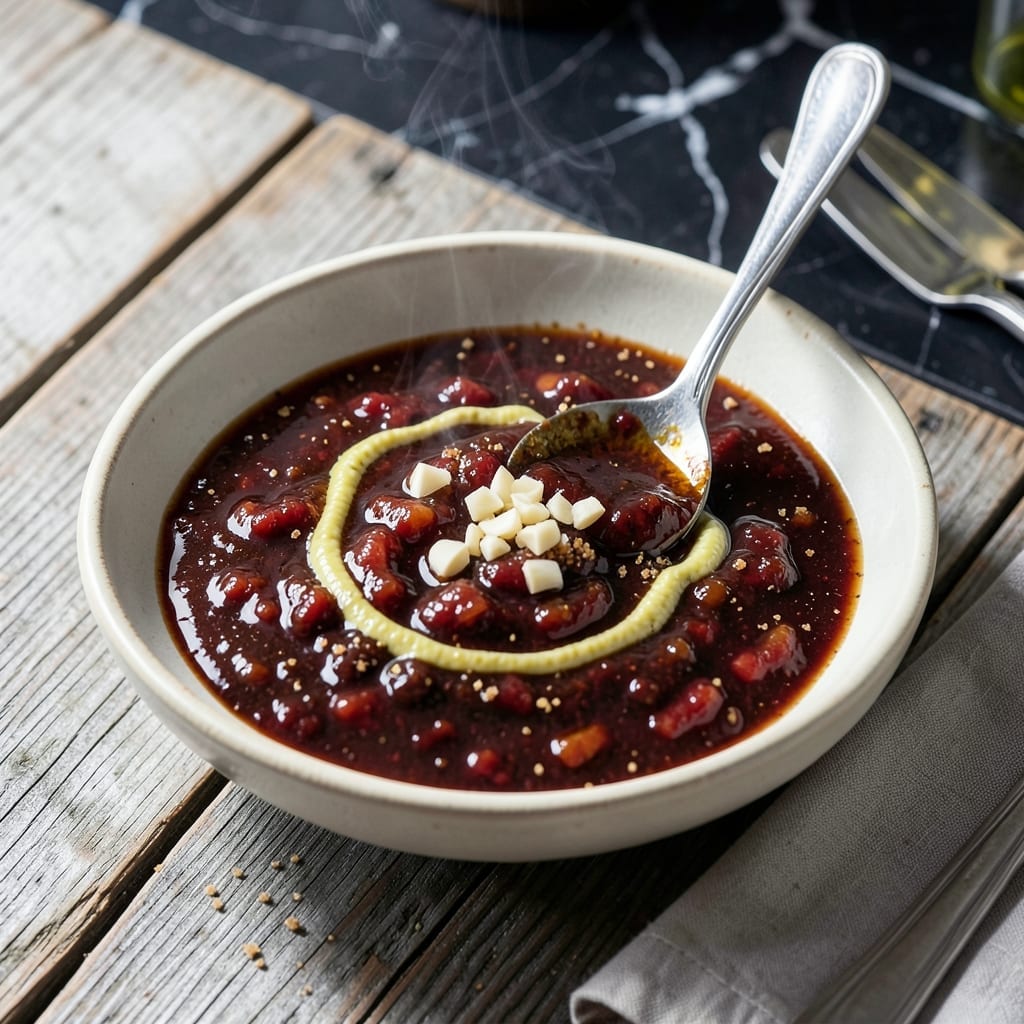
This sauce bridges my French training with pitmaster instincts, creating a barbecue essential that’s both sophisticated and bold.
Balanced sweetness and tang from balsamic vinegar elevate grilled meats without overpowering them. Simple ingredients combine for a versatile condiment that works on ribs, chicken, or as a dipping sauce.
Ingredients for Balsamic Barbecue Sauce
Ten simple ingredients craft a sophisticated sauce with bold barbecue character and French-inspired balance.
| Ingredient | Amount | Notes |
|---|---|---|
| Balsamic Vinegar 🍷 | 1 ½ cups | Aged 12 years for depth |
| Tomato Paste 🍅 | ½ cup | Double-concentrated preferred |
| Molasses 🫙 | ¼ cup | Unsulphured for cleaner taste |
| Brown Sugar 🥛 | ⅓ cup | Light or dark variety |
| Garlic Cloves 🧄 | 4 cloves | Finely minced for even distribution |
| Dijon Mustard 🟡 | 2 tbsp | Whole-grain for texture (optional) |
| Worcestershire Sauce 🍶 | 2 tbsp | Vegan variety required |
| Smoked Paprika 🌶️ | 1 tsp | Spanish variety preferred |
| Black Pepper 🌶️ | 1 tsp | Freshly cracked for boldness |
| Sea Salt 🧂 | ½ tsp | Fine grain for dissolution |
[recipe_ingredient_scaler]
Aged balsamic vinegar is non-negotiable here—12-year minimum for the depth this sauce deserves. Whole Foods or Trader Joe’s carry quality options, but avoid the cheap stuff; it lacks complexity. Tomato paste should be double-concentrated (look for Amor or Mutti brands). The molasses must be unsulphured to prevent bitterness from creeping in.
No molasses? Maple syrup at equal volume works, though it’ll be slightly thinner. Vegan Worcestershire is a must—Annie’s or Edward & Sons are reliable brands. Swap Dijon for yellow mustard in a pinch (half the amount), but you’ll lose that sharp tang. For heat, a pinch of cayenne pairs well with the smoked paprika.
This keeps beautifully. 1 week in the fridge in a sealed jar, or freeze for up to 3 months in ice cube trays for single-serving portions. The flavors meld and deepen over time, so making it a day ahead is ideal (worth the extra minute).
Why You’ll Love This Recipe
- One-Pot Wonder: I dump everything in a single saucepan—balsamic, molasses, the works—and let it simmer while I prep the rest of dinner.
- Sweet-Tangy Magic: The molasses and vinegar balance each other so well it taste like I’ve been simmering it all day.
- Grill Season MVP: I slather it on chicken, ribs, even portobello mushrooms—works for weeknight dinners and weekend cookouts.
- Budget-Friendly Batch: A dollar’s worth of tomato paste and vinegar makes enough sauce to last me two weeks.
Step-by-Step Instructions for Balsamic Barbecue Sauce
Master this technique for a balanced, complex sauce that elevates any grilled dish.
Step 1: Sauté Aromatics for Depth of Flavor
Begin by mincing the 4 cloves garlic cloves finely. Heat a medium saucepan over medium heat and add the minced garlic. Sauté for 1-2 minutes until just fragrant—don’t let it brown or it will turn bitter.
This quick step releases the garlic’s essential oils and creates a flavor foundation. The aroma should be pungent and sweet, not acrid. If it starts to brown, reduce heat immediately. The goal is to soften the raw edge while preserving its fresh character.
Step 2: Combine All Liquid and Dry Ingredients
Add the 1.5 cups balsamic vinegar, 0.5 cup tomato paste, 0.25 cup molasses, 0.33 cup brown sugar, 2 tbsp Dijon mustard, 2 tbsp Worcestershire sauce, 1 tsp smoked paprika, 1 tsp black pepper, and 0.5 tsp sea salt to the saucepan.
Whisk all ingredients together until fully incorporated and smooth. The mixture should be glossy and thick, with no visible streaks of tomato paste. The molasses and brown sugar will create a rich, dark base that deepens as it simmers.
Step 3: Simmer to Achieve Perfect Consistency
Increase heat to medium-high and bring the mixture to a gentle boil. Once boiling, reduce heat to medium-low to maintain a steady simmer. Cook for 15-20 minutes, stirring occasionally to prevent sticking.
You’ll notice the sauce gradually thicken and darken as the liquid reduces. It should coat the back of a spoon when done, with a consistency between syrup and ketchup. The balsamic vinegar will mellow and blend with the other flavors, creating a harmonious balance of sweet, tangy, and smoky notes.
Step 4: Adjust Seasoning and Cool
Remove the sauce from heat and let it cool for 5-10 minutes. As it cools, taste and adjust seasoning if needed. The flavors will intensify as it sits, so be conservative with any additions.
The finished sauce should have a deep mahogany color and a complex flavor profile where no single ingredient dominates. The smoked paprika should provide a subtle background warmth, while the balsamic vinegar delivers its characteristic tang. Transfer to an airtight container once completely cooled.
Pro Tips For Making Balsamic Barbecue Sauce
- Simmer Low and Slow: Cook the sauce on medium-low heat for at least 20 minutes—rushing it with high heat will caramelize the brown sugar and molasses too quickly, leaving a bitter aftertaste.
- Mince the Garlic Finely: I learned this the hard way—chopping garlic too coarsely gives the sauce an uneven texture and sharp bites. A fine mince ensures it melts into the sauce.
- Balance the Vinegar: Balsamic vinegar can overpower if you’re heavy-handed. Start with 1/2 cup, taste, then add more in tablespoons if needed.
- Use Aged Balsamic: Sounds weird, but it works: A good aged balsamic vinegar adds depth and complexity that the cheap stuff just can’t match.
Essential Equipment for Great balsamic barbecue sauce
Saucepan Selection
I always reach for my 3-quart stainless steel saucepan from All-Clad—the heavy bottom prevents hot spots that can burn your garlic. A medium saucepan gives enough room for the sauce to reduce without risking boil-overs. Avoid nonstick for this recipe; the fond that develops adds depth. 🔥
Whisk Matters
A flat-bottomed silicone whisk is my tool of choice for combining ingredients smoothly. It scrapes the corners of the saucepan better than a wooden spoon and won’t scratch your cookware. The OXO Good Grips version has the perfect stiffness for thick sauces like this one.
Measuring Tools
Precision counts with sticky ingredients like molasses. I use Pyrex glass measuring cups with clear markings—they’re heatproof and won’t absorb odors. For spices, stainless steel measuring spoons from Cuisinox ensure accurate 1 tsp to ¼ cup portions every time.
Storage Solutions
Once cooled, transfer your sauce to 16-ounce mason jars—the wide mouth makes dipping brushes easy. I label mine with chalkboard labels and the date. For long-term storage, silicone ice cube trays portion perfectly for single-use servings.
Cleanup Help
Balsamic vinegar and molasses can be stubborn. I soak my tools in hot, soapy water immediately after use. A nylon scrubber lifts residue without damaging cookware. This small habit saves me 10 minutes of scrubbing later. 💡
Pro Tip
A fine-mesh strainer is useful if you want ultra-smooth sauce, though I prefer the texture from minced garlic. The Cuisinox strainer fits perfectly over my saucepan for easy straining directly into storage containers.
Nutrition Facts
Frequently Asked Questions
Can I use a different vinegar?
Apple cider vinegar works in a pinch, but the flavor won’t be as rich. Stick with aged balsamic for the signature depth. Avoid white vinegar—it’s too harsh for this recipe.
How long does homemade sauce keep?
Store in an airtight container in the fridge for up to 1 week. For longer storage, freeze in ice cube trays for up to 3 months.
Why did my sauce turn out too thin?
It likely needs more simmering time. Cook uncovered for an additional 5-10 minutes on medium-low heat to reduce further. Stir frequently to prevent burning.
Can I make this spicier?
Add a pinch of cayenne or ½ tsp red pepper flakes while simmering. For smoky heat, include a dash of chipotle powder with the paprika.

Trained in classic French technique but raised on slow-cooked ribs and spicy rubs, she blends culinary skill with smoke and soul.
- Recipe for Boneless Pork Chops in Cast Iron Skillet: Sear and Baste to Juicy Perfection - October 3, 2026
- Recipe for Boneless Cross Rib Roast: Slow-Roasted Beef with Herb Crust - October 3, 2026
- Hamburgers in Sauce Recipe Crock Pot: Slow-Cooked Savory Delight - October 3, 2026