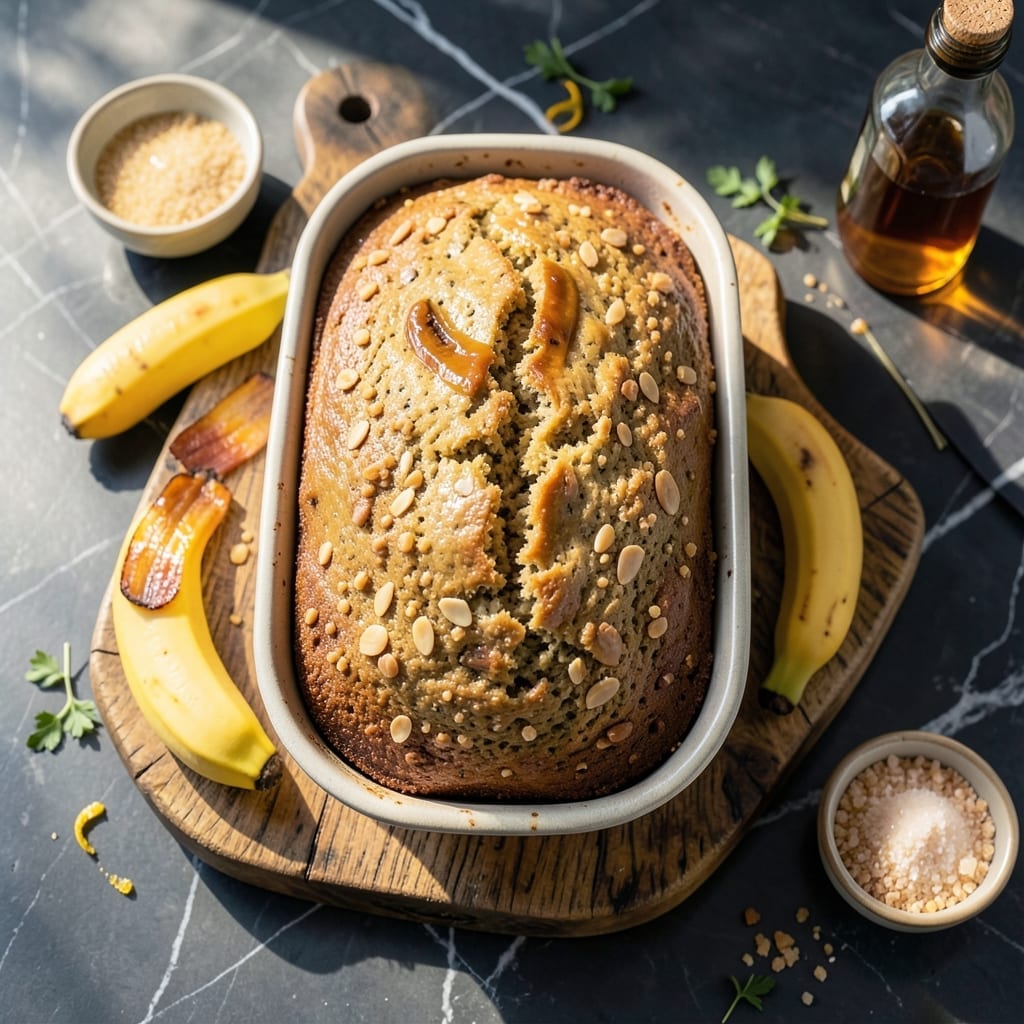
This gluten-free version delivers the same comforting moistness as classic banana bread, with a nutty depth from almond flour. The texture stays tender without wheat, proving specialty diets don’t mean sacrificing quality.
I developed this recipe after years of testing ratios to achieve perfect rise and crumb. The almond flour creates a dense, rich base that’s naturally sweet and pairs beautifully with ripe bananas.
Ingredients for Banana Bread Recipe Using Almond Flour
Simple gluten-free ingredients create this moist, nutty banana bread everyone will love.
| Ingredient | Amount | Notes |
|---|---|---|
| Ripe Bananas 🍌 | 3 whole | Very ripe, heavily speckled |
| Almond Flour 🌰 | 2 ½ cups | Fine, blanched variety preferred |
| Large Eggs 🥚 | 2 whole | Room temperature for even mixing |
| Coconut Sugar 🍚 | ½ cup | Or substitute granulated sugar |
| Vanilla Extract 🌿 | 1 tsp | Pure vanilla for best flavor |
| Baking Soda 🧂 | 1 tsp | Ensures proper rise in batter |
| Ground Cinnamon 🌶️ | 1 tsp | Freshly ground if possible |
| Salt 🧂 | ½ tsp | Fine sea salt preferred |
| Coconut Oil 🥥 | ¼ cup | Melted, or substitute vegetable oil |
| Chopped Walnuts 🌰 | ½ cup | Optional for added crunch |
| Greek Yogurt 🥛 | ¼ cup | Full-fat for moisture retention |
[recipe_ingredient_scaler]
The almond flour quality matters here. Bob’s Red Mill offers a consistent fine grind, but Costco’s Kirkland brand works well for bulk purchases (the good stuff, not the coarser meal). Ripe bananas are non-negotiable—look for black-spotted peels. The coconut oil adds moisture without dairy, and Nutiva is a reliable organic option.
No almond flour? Sunflower seed flour at a 1:1 ratio works, though the flavor shifts slightly. Coconut sugar can be swapped for maple syrup at two-thirds the amount. Skip the walnuts? Pecans or chopped almonds add similar texture. The Greek yogurt keeps it tender—dairy sour cream is an equal substitute if you’re not strict vegetarian.
This bread stays fresh wrapped at room temperature for 2 days. For longer storage, slice and freeze for up to 3 months (worth the extra minute to portion). The texture improves overnight as the almond flour absorbs moisture.
Why You’ll Love This Recipe
- I’ll be real: it tastes even better the next day, and it never dries out like some other gluten-free loaves.
- No-Fuss Mixing: I just dump the almond flour, mashed bananas, and eggs in one bowl—no sifting, no fancy steps.
- Warm Spiced Sweetness: The coconut sugar caramelizes just enough to give it that deep, cozy flavor with a hint of vanilla.
- Breakfast or Snack: Honestly, it’s my go-to for school lunches, afternoon pick-me-ups, or even a quick breakfast on the run.
Step-by-Step Instructions for Banana Bread Using Almond Flour
This method ensures a moist crumb and perfect rise with gluten-free ingredients.
Step 1: Mash Bananas and Mix Wet Ingredients
In a large mixing bowl, mash the 3 whole Ripe Bananas until smooth with only a few small lumps remaining. The natural sweetness and moisture from the bananas are essential for texture and flavor in this gluten-free version.
Add the 0.5 cup Coconut Sugar, 2 whole Large Eggs, 1 tsp Vanilla Extract, and 0.25 cup Greek Yogurt. Whisk vigorously for 1-2 minutes until the mixture is completely homogeneous and slightly thickened. The Greek yogurt adds tang and guarantees moisture retention.
Step 2: Combine Dry Ingredients and Incorporate
In a separate bowl, whisk together the 2.5 cups Almond Flour, 1 tsp Baking Soda, 1 tsp Ground Cinnamon, and 0.5 tsp Salt. This ensures the leavening agent and spices are evenly distributed throughout the batter.
Gradually add the dry mixture to the wet ingredients, alternating with the 0.25 cup Coconut Oil (melted and cooled slightly). Fold gently with a spatula just until combined—overmixing will result in a dense loaf. The batter will be thick but pourable, perfect for almond flour’s unique properties.
Step 3: Fold in Walnuts and Prepare the Pan
Gently fold in the 0.5 cup Chopped Walnuts (if using) to distribute them evenly without deflating the batter. The walnuts add a satisfying crunch that contrasts beautifully with the moist crumb.
Grease a standard 9×5-inch loaf pan thoroughly with additional coconut oil or line it with parchment paper. Almond flour batters can be sticky, so proper pan preparation prevents the loaf from adhering during baking.
Step 4: Bake to Golden Perfection
Preheat your oven to 350°F. Pour the batter into the prepared pan and smooth the top with a spatula. Bake on the center rack for 45-55 minutes, or until the top is deep golden brown and a toothpick inserted in the center comes out clean.
Almond flour bakes differently than wheat flour, so resist the urge to check too early. The loaf is done when the internal temperature reaches 200-205°F on an instant-read thermometer. If the top browns too quickly, tent loosely with foil during the last 15 minutes of baking.
Step 5: Cool Completely Before Slicing
Remove the pan from the oven and let the bread cool in the pan for 10 minutes. This brief rest allows the structure to set. Then, transfer the loaf to a wire rack and cool completely for at least 1 hour before slicing.
This cooling period is crucial for gluten-free breads—slicing too soon can result in a gummy texture. Once cooled, the bread will have a moist, tender crumb with a lightly crisp exterior. Store leftovers wrapped at room temperature for up to 3 days or refrigerated for up to 5 days.
Pro Tips For Making Banana Bread Recipe Using Almond Flour
- Preheat the Pan: Almond flour burns faster than wheat flour, so lower your oven to 325°F and preheat for a full 15 minutes—this prevents a dark crust before the center cooks through.
- Mash Bananas Well: I learned this the hard way—lazy mashing leaves big chunks that create uneven moisture pockets. Use a fork until they’re almost liquid for a consistent crumb.
- Skip Cold Eggs: Cold eggs can seize the almond flour’s oils, making the batter dense. After ruining a loaf this way, I now always use room-temperature eggs—just set them out 30 minutes before mixing.
- Tent with Foil: About 30 minutes in, loosely cover the top with foil if it’s browning too fast. Almond flour’s high fat content browns quickly, and this keeps the loaf baking evenly without over-darkening.
Troubleshooting banana bread recipe using almond flour
Dense or Gummy Texture
If your loaf turns out dense, you likely overmixed the batter or used coarse almond flour. Fold just until combined—20-25 strokes max. For gumminess, ensure your bananas are very ripe and cool the bread fully before slicing. 💡
Sinking Middle
This usually means the center wasn’t fully baked. Check with a toothpick—it should come out with just a few moist crumbs. If it’s wet, return to the oven for 5-10 more minutes at 350°F.
Also, avoid opening the oven door during the first 30 minutes of baking, as temperature fluctuations can cause collapse.
Dry Crumb
Almond flour absorbs moisture differently. If your bread is dry, try adding 2 extra tbsp Greek yogurt next time. Overbaking is another culprit—pull it out when the internal temp hits 200°F, not higher.
Uneven Browning
If the top browns too fast while the center stays raw, tent with foil at the 30-minute mark. Also, ensure your oven rack is centered. I rotate my pan 180 degrees halfway through for even cooking.
Bitter Aftertaste
This often comes from using old almond flour or overbaking. Always check your flour’s expiration date. If it’s fresh, reduce baking time by 5 minutes and check for doneness with a toothpick. 🌟
Nutrition Facts
Frequently Asked Questions
Why use almond flour instead of regular flour?
Almond flour creates a dense, moist texture with a naturally sweet, nutty flavor. It’s also gluten-free and packed with protein, making it a nutritious alternative to wheat flour.
Can I use a different flour as a substitute?
Yes! Sunflower seed flour works in a 1:1 ratio, though the taste differs slightly. Coconut flour isn’t recommended as it absorbs moisture very differently and requires recipe adjustments.
How do I know when it’s fully baked?
A toothpick inserted in the center should come out clean or with a few moist crumbs. The internal temperature should reach 200-205°F. Avoid opening the oven during the first 30 minutes.
Why did my bread sink in the middle?
This usually means the center wasn’t fully baked. Return it to the oven for 5-10 more minutes at 350°F. Opening the oven door too early can also cause collapse.

Trained in classic French technique but raised on slow-cooked ribs and spicy rubs, she blends culinary skill with smoke and soul.
- Recipe for Curried Lamb Chops: Spice-Rubbed and Pan-Seared to Succulence - October 3, 2026
- Recipe for Boneless Leg of Lamb Roast in the Oven: Herb-Crusted and Rosy Pink Inside - October 3, 2026
- Meat Loaf Recipe With Beef And Pork: Homestyle Blend With Rich Gravy - October 3, 2026