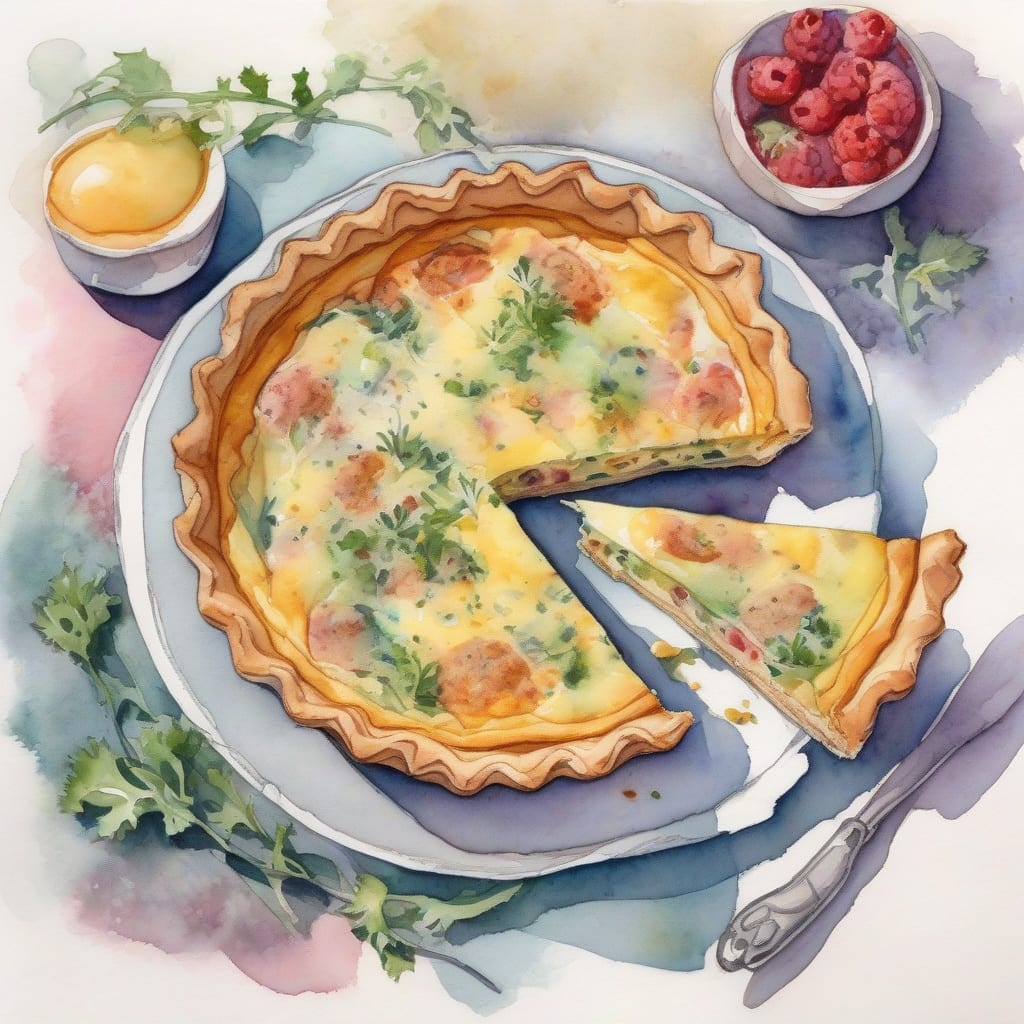
Mastering quiche means nailing that perfect internal temperature—it’s the difference between a silky, custard-like filling and a rubbery, overcooked disaster. 🔥 I’ve spent years perfecting my technique, and I’m sharing all my secrets with you today.
The key to a great quiche is achieving that ideal internal temperature of 170°F to 175°F (77°C to 80°C). This ensures the eggs are set but still creamy, while the crust remains flaky and golden. It’s all about balance.
We’ll walk through the entire process, from preparing the crust to baking the quiche to perfection. With a few simple tips and tricks, you’ll be creating restaurant-quality quiches that will impress anyone.
Let’s get started on this quiche journey! ✨
Ingredients for internal temp of quiche
These simple ingredients come together to create a perfect quiche with silky filling.
| Ingredient | Amount | Notes |
|---|---|---|
| All-Purpose Flour 🌾 | 2 cups | For flaky crust |
| Cold Unsalted Butter 🧈 | 1 cup | Cut into small pieces |
| Ice Water 💧 | ¼ cup | For dough hydration |
| Large Eggs 🥚 | 4 whole | Room temperature preferred |
| Heavy Cream 🥛 | 1 ½ cups | For creamy filling |
| Salt 🧂 | ½ tsp | Kosher or sea salt |
| Black Pepper 🌶️ | ¼ tsp | Freshly ground preferred |
| Shredded Cheese 🧀 | 1 cup | Gruyère or cheddar works |
| Diced Ham 🥓 | ½ cup | Or bacon, cooked |
| Chopped Fresh Herbs 🌿 | ¼ cup | Parsley or chives |
| Garlic Cloves 🧄 | 2 cloves | Minced for flavor |
For the best quiche, find high-quality ingredients at local grocery stores or farmers markets. Use cold butter and ice water for the flakiest crust. Choose farm-fresh eggs for the richest flavor. For cheese, Gruyère from Trader Joe's or Whole Foods adds wonderful depth.
Don't have heavy cream? Mix equal parts whole milk and half-and-half as a substitute. For a vegetarian version, swap the ham for sautéed mushrooms or spinach. If you're using bacon, cook until crispy before dicing. Fresh herbs like parsley or chives add brightness—use them just before baking.
Store leftover quiche in the refrigerator for up to 3 days. Reheat gently in a 300°F oven until warmed through. For best results, let quiche rest at room temperature for 30 minutes before serving. Freeze individual slices on a baking sheet, then transfer to freezer bags for up to 2 months.
Step-by-Step Instructions for Quiche Done Right
Let me guide you through making the perfect quiche with ideal internal temperature every time.
👨🍳 Step 1: Make the Flaky Crust
Start by combining 2 cups of All-Purpose Flour and 1 cup of Cold Unsalted Butter in a food processor. Pulse until the mixture resembles coarse crumbs with some larger pea-sized pieces of butter remaining. This mixture should look uneven but still hold together slightly when pinched.
Gradually add 0.25 cup of Ice Water while pulsing until the dough just comes together in a shaggy mass. Be careful not to overwork it—the dough should still look a bit rough. Turn it out onto a lightly floured surface and gently knead just until it becomes smooth and cohesive. Wrap in plastic wrap and refrigerate for at least 1 hour.
👨🍳 Step 2: Prepare the Filling Ingredients
While the crust chills, prepare your filling ingredients. Dice 0.5 cup of cooked ham or bacon into small pieces and set aside. Mince 2 cloves of Garlic Cloves and chop 0.25 cup of fresh herbs like parsley or chives. Grate 1 cup of cheese—Gruyère or cheddar work beautifully for quiche.
In a separate bowl, whisk together 4 whole Large Eggs and 1.5 cups of Heavy Cream until well combined. Season with 0.5 tsp of Salt and 0.25 tsp of freshly ground Black Pepper. The mixture should be smooth and creamy, with no visible egg whites.
🥘 Step 3: Assemble and Bake the Quiche
Preheat your oven to 375°F. Roll out the chilled crust to fit a 9-inch tart pan with a removable bottom. Carefully transfer the dough to the pan, pressing it into the corners and trimming any excess. Arrange the diced ham, minced garlic, and chopped herbs evenly over the bottom of the crust, then sprinkle with grated cheese.
Pour the egg mixture over the filling ingredients, making sure not to overfill—the quiche should be about ¾ full. Bake for 35-40 minutes until the edges are golden brown and the center is just set.
⏰ Step 4: Check Internal Temperature
The most critical step is checking the internal temperature. Quiche is done when it reaches an internal temperature of 165-170°F in the center. Use an instant-read thermometer inserted into the center (avoiding the crust) to check this. If it’s not quite there, continue baking in 5-minute increments until you reach the correct temperature.
Once done, remove from the oven and let cool on a wire rack for at least 10-15 minutes before serving. This resting period allows the filling to set completely, making it easier to slice cleanly. The crust should be golden and the center should be just set but still creamy.
🍽️ Step 5: Serve and Enjoy
When ready to serve, carefully remove the quiche from the tart pan and transfer to a serving plate. Slice into wedges and serve warm or at room temperature. The quiche should have a beautiful golden crust and a creamy, custard-like center. You can store leftovers in the refrigerator for up to 3 days and reheat gently in the oven.
When it comes to baking a quiche, achieving the perfect internal temperature is crucial for a delicious and safe-to-eat dish 🥘. The internal temperature of a quiche indicates whether the eggs are set, the filling is cooked, and the crust is perfectly baked.
Understanding Quiche Internal Temperature 🔥
A perfectly cooked quiche should have an internal temperature between 165°F (74°C) and 170°F (77°C). This temperature range ensures that the eggs are cooked through, and the filling is heated evenly. If you’re using a meat or vegetable filling, make sure it’s also cooked to a safe internal temperature.
- Undercooked Quiche: If the internal temperature is below 160°F (71°C), the quiche may be undercooked, and the eggs might be runny.
- Overcooked Quiche: On the other hand, if the internal temperature exceeds 180°F (82°C), the quiche may become dry and overcooked.
To check the internal temperature, use a food thermometer, preferably a digital one, to get an accurate reading. Insert the thermometer into the center of the quiche, avoiding any fillings or the crust. Wait for a few seconds until the temperature stabilizes, then take the reading. 💡
| Quiche Status | Internal Temperature |
|---|---|
| Undercooked | Below 160°F (71°C) |
| Perfectly Cooked | 165°F – 170°F (74°C – 77°C) |
| Overcooked | Above 180°F (82°C) |
By checking the internal temperature, you can ensure your quiche is cooked to perfection, making it a delightful main course for any meal 🍴.
Tips & Tricks for Perfect Quiche Internal Temperature
These expert tips will help you achieve the perfect quiche with ideal internal temperature every time.
Crust Preparation: In Step 1, when making the crust, keep your butter extremely cold. I even chill my flour in the freezer for 10 minutes before starting. This helps create those beautiful flaky layers that make quiche crust so special. 💡
Temperature Control: As mentioned in Step 4, the key to perfect quiche is reaching an internal temperature of 165-170°F. Use an instant-read thermometer to check this accurately. If you don’t have one, you can test doneness by gently jiggling the quiche – it should be just set in the center.
Make-Ahead Strategy: You can prepare the quiche up to Step 3 the night before and refrigerate it overnight. When you’re ready to bake, simply pop it in the oven as directed. This makes breakfast or brunch entertaining so much easier!
Storage Tips: As mentioned in Step 5, leftovers keep beautifully in the refrigerator for up to 3 days. To reheat, cover with foil and warm in a 300°F oven until heated through. You can also freeze individual slices for up to 2 months – simply thaw overnight in the fridge.
Nutrition Facts
420kcal

Trained in classic French technique but raised on slow-cooked ribs and spicy rubs, she blends culinary skill with smoke and soul.
- Recipe for Boneless Pork Chops in Cast Iron Skillet: Sear and Baste to Juicy Perfection - October 3, 2026
- Recipe for Boneless Cross Rib Roast: Slow-Roasted Beef with Herb Crust - October 3, 2026
- Hamburgers in Sauce Recipe Crock Pot: Slow-Cooked Savory Delight - October 3, 2026