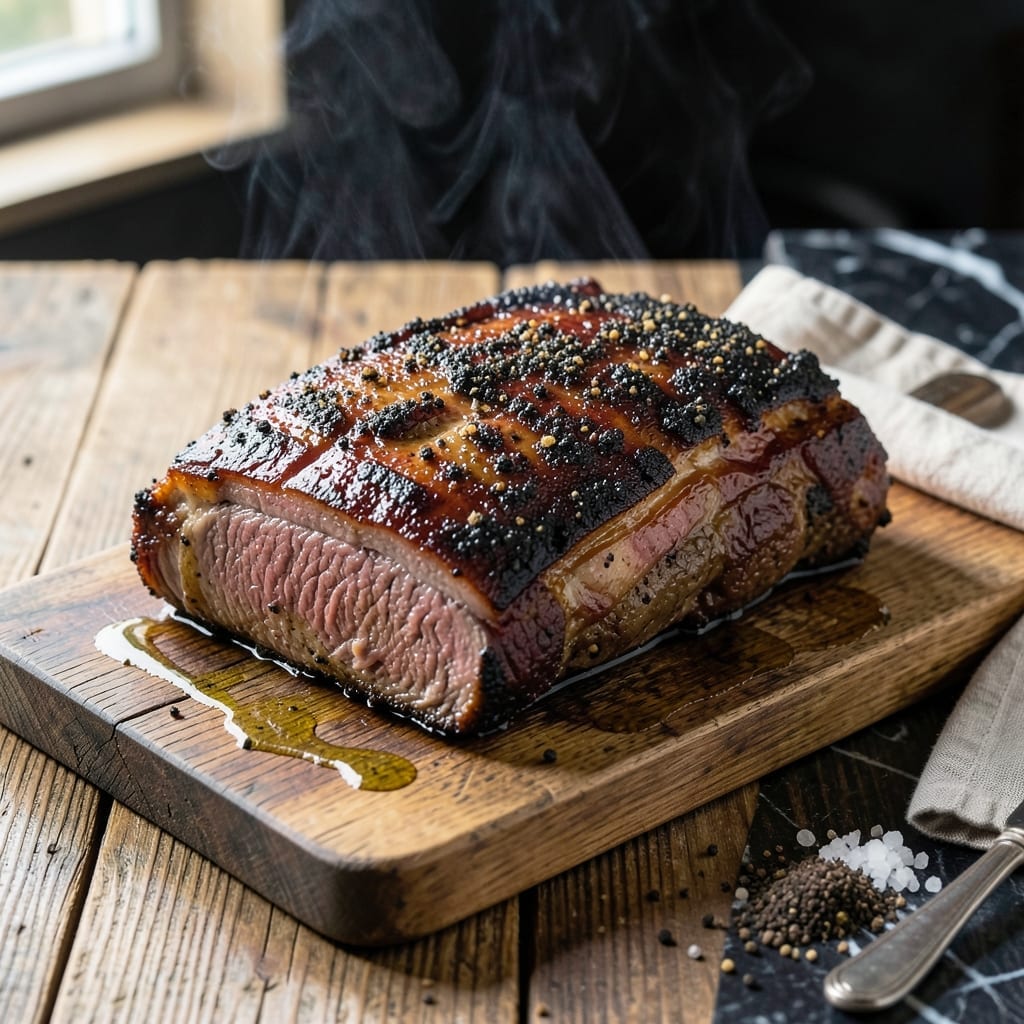
True Texas brisket requires patience and respect for the process. This low and slow technique transforms tough beef into tender, smoky perfection.
I learned early that great brisket starts with quality meat and a simple, bold rub. The smoke does the rest, developing that signature bark and deep flavor only 12 hours can deliver.
Ingredients for Barbecue Beef Brisket Recipe Texas Style
Patience and respect start with these ingredients for that signature Texas bark.
| Ingredient | Amount | Notes |
|---|---|---|
| Beef Brisket 🥩 | 5 lb | Whole packer cut, untrimmed |
| Kosher Salt 🧂 | ½ cup | Diamond Crystal preferred for texture |
| Coarse Black Pepper 🌶️ | ½ cup | Freshly ground for bold flavor |
| Garlic Powder 🧄 | 2 tbsp | Not garlic salt |
| Onion Powder 🧅 | 2 tbsp | Fresh ground preferred |
| Paprika 🌶️ | 2 tbsp | Sweet or smoked variety |
| Cayenne Pepper 🔥 | 1 tsp | Adjust for heat preference |
| Mustard Powder 🟡 | 2 tbsp | For rub binding and tang |
| Brown Sugar 🍚 | ¼ cup | Light or dark for caramelization |
| Hickory Wood Chunks 🪵 | 4 pieces | Or oak for traditional smoke |
| Apple Cider Vinegar 🍏 | ½ cup | For spritzing during smoke |
| Beef Tallow 🧈 | ¼ cup | For binding rub (optional) |
[recipe_ingredient_scaler]
The brisket itself is non-negotiable. Whole packer cut from a reputable butcher gives you the flat and point together—this is what competition pitmasters use. Look for USDA Prime if you can find it (Costco often has it), or at least Choice grade with good marbling. The fat cap should be at least a quarter-inch thick. Avoid pre-trimmed briskets; the fat protects the meat during that 12-hour smoke.
No hickory? Post oak or pecan wood deliver that classic Central Texas flavor. Out of brown sugar? White sugar with a touch of molasses gets you close. The vinegar spritz keeps the surface moist—apple juice works too (trust me on this). If you’re skipping the tallow, a light coat of olive oil helps the rub stick. And that cayenne? Start with half if you’re heat-sensitive; you can always add more next time.
Trim excess fat before cooking (leave about 1/4 inch for protection). Store uncooked brisket in the fridge for up to 3 days, or freeze for 6 months. Once smoked, it keeps 4-5 days refrigerated or freezes beautifully for 3 months.
Why You’ll Love This Recipe
- Set It and Forget: Honestly, rub the brisket with salt, pepper, garlic and onion powder, then let the smoker do the work.
- Crust Worth Waiting For: That dark, peppery bark from the coarse black pepper and slow smoke? It’s the reason I keep making this.
- Feeds a Hungry Crowd: One brisket serves a party, and the leftovers make killer sandwiches or tacos the next day.
- Budget-Friendly Centerpiece: A whole brisket is cheaper per pound than most cuts, and it turns a simple rub into a showstopper.
Step-by-Step Instructions for Barbecue Beef Brisket Texas Style
Here is the method for achieving that perfect bark and tender texture every time.
Step 1: Trim and Apply the Rub
Start with the 5 lb Beef Brisket and trim the fat cap to about ¼ inch thickness. This step ensures even cooking and allows the smoke to penetrate properly.
In a bowl, combine the 0.5 cup Kosher Salt, 0.5 cup Coarse Black Pepper, 2 tbsp Garlic Powder, 2 tbsp Onion Powder, 2 tbsp Paprika, 1 tsp Cayenne Pepper, 2 tbsp Mustard Powder, and 0.25 cup Brown Sugar. Add the 0.25 cup Beef Tallow to bind the rub if desired.
Generously coat the brisket with the rub on all sides, pressing it in firmly to adhere. Let it rest at room temperature for 1 hour to allow the seasoning to penetrate the meat.
Step 2: Set Up the Smoker
Prepare your smoker with the 4 pieces Hickory Wood Chunks and preheat it to 225-250°F. Maintain this temperature throughout the cooking process for consistent results.
Once the smoker reaches temperature and produces clean, thin blue smoke, place the brisket fat-side up on the grates. The fat will render down, basting the meat as it cooks.
Step 3: Smoke the Brisket Low and Slow
Insert a meat probe into the thickest part of the brisket and smoke undisturbed for 6-8 hours. You’re aiming for an internal temperature of 165-170°F, which signals the beginning of the stall.
During the cook, spritz the brisket every 1-2 hours with the 0.5 cup Apple Cider Vinegar mixed with an equal amount of water to keep the surface moist and build a good bark.
Step 4: Wrap and Continue Cooking
Once the brisket hits 165-170°F internally, remove it from the smoker and wrap it tightly in pink butcher paper. This step, known as the Texas crutch, helps push through the stall while preserving the bark.
Return the wrapped brisket to the smoker and continue cooking until the internal temperature reaches 200-205°F and a probe slides in like butter. This usually takes another 4-6 hours.
Step 5: Rest and Slice
Remove the brisket from the smoker and let it rest, still wrapped, in a cooler or warm oven for at least 1 hour (up to 2 hours for best results). This resting period allows the juices to redistribute throughout the meat.
Unwrap the brisket and slice against the grain into ¼-inch thick portions. The grain direction may vary between the flat and point, so adjust your slicing angle accordingly. Serve immediately and enjoy the fruits of your low and slow labor.
Pro Tips For Making Barbecue Beef Brisket Recipe Texas Style
- Trim the Fat Cap: Leave about 1/4 inch of fat on the brisket—any thicker and it won’t render properly, any thinner and the meat dries out. I learned this the hard way after my first brisket came out greasy and tough.
- Season Overnight: Rub the brisket with kosher salt, black pepper, garlic powder, and onion powder the night before. The salt needs at least 12 hours to penetrate deep into the meat for that classic Texas bark.
- Skip the Rush: Resist the urge to crank the heat above 225°F—low and slow is non-negotiable for tender brisket. After burning three batches, I finally figured out that patience beats speed every time.
- Rest Under Foil: Once it hits 195°F internally, pull it off, wrap it in foil, and let it rest for at least 1 hour. Sounds weird, but it works: the juices redistribute, and it stays moist when you slice it.
Perfect Pairings for This Recipe
Classic Texas Sides
You can’t go wrong with creamy potato salad—I make mine with Yukon Golds, a touch of Dijon mustard, and fresh dill. The cool creaminess contrasts perfectly with smoky brisket. For a lighter option, vinegar-based slaw with cabbage and carrots adds crunch without heaviness. 🥗
Bread for Soaking
Fresh white bread from a local bakery is essential for mopping up juices. I also love cornbread muffins—their sweetness complements the savory bark. Toast them lightly on the grill for extra smokiness.
Pickled Perfection
Pickled jalapeños and red onions cut through the richness with bright acidity. I quick-pickle mine with apple cider vinegar, 1 tsp sugar, and ½ tsp salt for just 30 minutes. These add color and tang to every bite.
Beer Pairings
A cold Lone Star Beer is the Texas classic—its light, crisp profile refreshes your palate. For craft lovers, Shiner Bock offers maltier notes that stand up to the smoke. I always serve beer in frosted mugs for that authentic BBQ joint feel. 🍺
Sauce on the Side
True Texas brisket needs no sauce, but I keep sweet BBQ sauce and spicy vinegar mop available. The sauce should complement, not overpower. My vinegar mop uses equal parts apple cider vinegar and water with a dash of hot sauce.
Nutrition Facts
Frequently Asked Questions
What’s the best wood for smoking?
Hickory or post oak deliver the classic Texas flavor. Mesquite burns hotter, so use it sparingly.
How do I know when it’s done?
Target 200-205°F internally, but the real test is probe tenderness—it should slide in like butter.
Should I trim the fat cap completely?
Leave about ¼ inch of fat to protect the meat. Trim any thicker sections for even cooking.
Can I skip the wrapping step?
You can, but wrapping in butcher paper helps power through the stall while keeping the bark intact.

Trained in classic French technique but raised on slow-cooked ribs and spicy rubs, she blends culinary skill with smoke and soul.
- Recipe for Boneless Pork Chops in Cast Iron Skillet: Sear and Baste to Juicy Perfection - October 3, 2026
- Recipe for Boneless Cross Rib Roast: Slow-Roasted Beef with Herb Crust - October 3, 2026
- Hamburgers in Sauce Recipe Crock Pot: Slow-Cooked Savory Delight - October 3, 2026