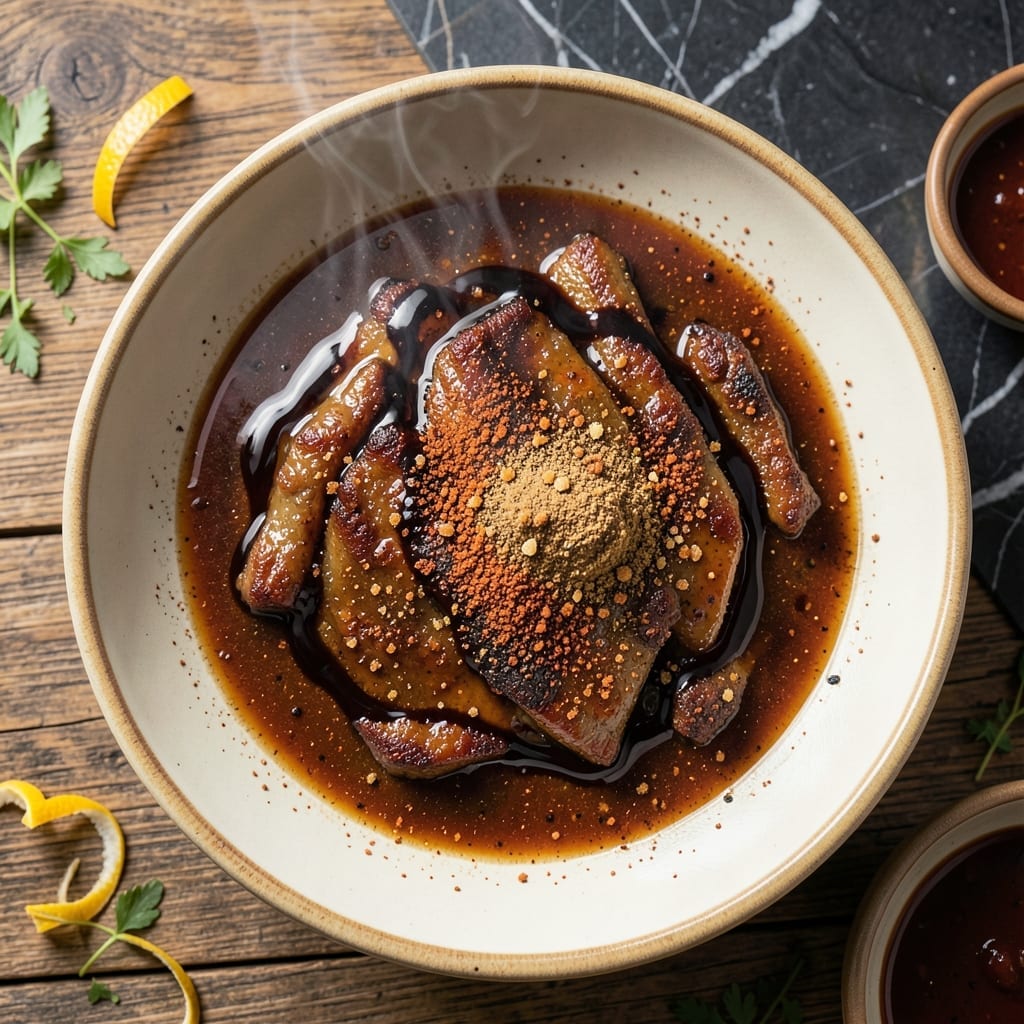
This marinade transforms beef ribs with deep, smoky flavor before they hit the grill. The blend of spices and liquids penetrates the meat, ensuring every bite is packed with bold character.
Developed through years of competition cooking, this recipe balances tang, sweetness, and heat without overpowering the beef. It’s the foundation for restaurant-quality ribs every time.
Ingredients for Barbecue Beef Ribs Marinade
Ten bold ingredients create competition-level depth for your beef ribs marinade.
| Ingredient | Amount | Notes |
|---|---|---|
| Apple Cider Vinegar 💧 | ½ cup | For tangy acidity balance |
| Worcestershire Sauce 🫒 | ¼ cup | Adds umami depth to marinade |
| Soy Sauce 🫒 | ¼ cup | Low-sodium preferred for control |
| Brown Sugar 🍚 | ¼ cup | Light or dark for caramelization |
| Smoked Paprika 🌶️ | 2 tbsp | Essential for smoky profile |
| Garlic Powder 🧄 | 1 tbsp | Granulated for even distribution |
| Onion Powder 🧅 | 1 tbsp | Complements garlic complexity |
| Ground Black Pepper 🌶️ | 1 tbsp | Freshly ground preferred |
| Cayenne Pepper 🔥 | ½ tsp | Adjust for heat preference |
| Olive Oil 🫒 | ¼ cup | Light olive oil recommended |
[recipe_ingredient_scaler]
The smoked paprika is non-negotiable—Penzeys or McCormick both deliver consistent quality. For the soy sauce, Kikkoman low-sodium allows precise seasoning control without overwhelming saltiness. Worcestershire sauce from Lea & Perrins is the industry standard. Brown sugar should be fresh and clump-free (the older it gets, the harder it packs). Always use light olive oil here—extra-virgin can be too assertive and mask the other flavors.
No apple cider vinegar? White vinegar with a splash of apple juice works in a pinch. Out of Worcestershire? Soy sauce plus a dash of molasses mimics the complexity. Want more heat? Double the cayenne or add half a teaspoon of chipotle powder. If you’re avoiding gluten, tamari replaces soy sauce at a 1:1 ratio. The garlic and onion powders can be swapped for fresh minced at triple the amount, but powders distribute more evenly.
Marinade keeps 5 days refrigerated in a sealed jar. For longer storage, freeze for up to 3 months—the flavors actually meld and deepen. Always shake before using, as sugars settle. Discard any marinade that’s touched raw meat unless boiling it first for a sauce.
Why You’ll Love This Recipe
- Five Minute Mix: I just dump everything in a bowl—vinegar, Worcestershire, soy, sugar, paprika—and stir. No chopping, no fuss.
- Smoky Sweet Balance: The brown sugar caramelizes while the smoked paprika adds that deep, campfire flavor I crave in every bite.
- Grill or Oven Ready: Honestly, I’ve used this marinade for ribs, chicken, even tofu. Works on the grill, in the oven, or slow cooker.
- Budget Stretcher: One batch covers 4 pounds of ribs, and the leftovers make killer sandwiches the next day.
Step-by-Step Instructions for Barbecue Beef Ribs Marinade
This professional method ensures maximum flavor penetration with a balanced smoky-sweet profile.
Step 1: Combine Liquid Components for Foundation
In a large mixing bowl, whisk together the 0.5 cup Apple Cider Vinegar, 0.25 cup Worcestershire Sauce, and 0.25 cup Soy Sauce until fully incorporated. The vinegar provides the necessary acidity to tenderize the meat while the sauces build umami depth.
Add the 0.25 cup Brown Sugar and continue whisking until the sugar completely dissolves. This creates the sweet base that will caramelize beautifully during grilling. The mixture should appear smooth with no visible sugar granules.
Step 2: Incorporate Spice Blend for Smoky Complexity
Measure in the 2 tbsp Smoked Paprika, 1 tbsp Garlic Powder, 1 tbsp Onion Powder, 1 tbsp Ground Black Pepper, and 0.5 tsp Cayenne Pepper. These dry ingredients form the aromatic backbone of your marinade.
The smoked paprika delivers that essential barbecue character, while the garlic and onion powders provide savory depth. The black pepper adds intensity, and the cayenne contributes a subtle heat that builds gradually. Whisk vigorously to eliminate any lumps.
Step 3: Emulsify with Olive Oil for Complete Integration
Slowly drizzle in the 0.25 cup Olive Oil while whisking continuously. This emulsification process ensures the oil distributes evenly throughout the liquid components rather than separating to the surface.
Continue whisking for an additional 30-45 seconds until the marinade develops a slightly thickened, cohesive consistency. The oil serves as a flavor carrier, helping the spices adhere to the ribs and preventing them from settling to the bottom of the bowl.
Step 4: Rest and Infuse for Maximum Potency
Allow the marinade to rest at room temperature for 10-15 minutes before using. This brief resting period lets the flavors meld and the spices fully hydrate, creating a more unified and potent mixture.
You’ll notice the color deepen slightly and the aroma intensify as the ingredients harmonize. For best results, prepare the marinade 4-12 hours before grilling to allow the flavors to develop their full complexity.
Pro Tips For Making Barbecue Beef Ribs Marinade
- Marinate Overnight: I learned this the hard way—less than 4 hours and the smoked paprika and brown sugar barely penetrate the meat. Give it a full 12, and the flavor actually changes the outcome.
- Bloom the Spices: Toast the smoked paprika in a dry pan for 30 seconds before mixing—sounds weird, but it works. The heat wakes up the smoky depth that gets lost in raw marinades.
- Skip the Metal: After ruining a batch with a reactive aluminum bowl, I finally figured out acidic ingredients like apple cider vinegar and Worcestershire need glass or plastic. No weird aftertaste, no wasted ribs.
- Balance the Sweet: Brown sugar can overpower, so cut it with an extra splash of apple cider vinegar if your mix tastes one-note. My grandmother swore by this, and she was right.
Common Mistakes When Making This Recipe
Over-Marinating the Meat
I see many pitmasters leave ribs in marinade too long, thinking more time equals more flavor. With beef ribs, 12-24 hours is the sweet spot. Beyond that, the acidity in vinegar and Worcestershire can start breaking down the meat fibers too much, leading to mushy texture. 💡
Skipping the Emulsification
Simply mixing all ingredients isn’t enough. If you don’t properly whisk the olive oil into the liquids, it’ll separate and float on top, leaving your ribs with uneven flavor. Take that extra 30-45 seconds to create a cohesive mixture.
Using Cold Marinade
Always bring your marinade to room temperature before applying. Cold marinade from the fridge can cause the meat to seize up, preventing proper absorption. I learned this the hard way at my first local BBQ competition.
Reusing Marinade
Never reuse marinade that’s touched raw meat unless you boil it first for at least 3 minutes. This kills any bacteria. I always make extra marinade specifically for basting during cooking to avoid cross-contamination.
Incorrect Container Choice
Use non-reactive containers like glass or food-grade plastic. Metal can react with the acidic components, altering flavors. I prefer wide, shallow dishes that ensure all ribs are fully submerged.
Ignoring Sugar Settling
Always stir your marinade thoroughly before each use. The brown sugar tends to settle at the bottom, and you’ll miss out on that caramelization if not redistributed. A quick whisk right before applying solves this. ✨
Nutrition Facts
Frequently Asked Questions
How long should I marinate beef ribs?
For best results, marinate beef ribs for 12-24 hours. This allows the flavors to penetrate deeply without over-tenderizing the meat. Any longer risks a mushy texture from the acidic ingredients.
Can I use this marinade for other meats?
This works beautifully with pork ribs, chicken, or even steak. For poultry, reduce marinating time to 4-6 hours to avoid over-tenderizing.
What if I don’t have smoked paprika?
Use 1 tbsp regular paprika plus 1 tsp liquid smoke as a substitute. The combination mimics the smoky depth, though fresh smoked paprika is ideal for authentic flavor.
Can I make this ahead and store it?
Yes! The marinade keeps for 5 days refrigerated or 3 months frozen. Store in an airtight container and shake before using as sugars may settle.

Trained in classic French technique but raised on slow-cooked ribs and spicy rubs, she blends culinary skill with smoke and soul.
- Recipe for Boneless Pork Chops in Cast Iron Skillet: Sear and Baste to Juicy Perfection - October 3, 2026
- Recipe for Boneless Cross Rib Roast: Slow-Roasted Beef with Herb Crust - October 3, 2026
- Hamburgers in Sauce Recipe Crock Pot: Slow-Cooked Savory Delight - October 3, 2026