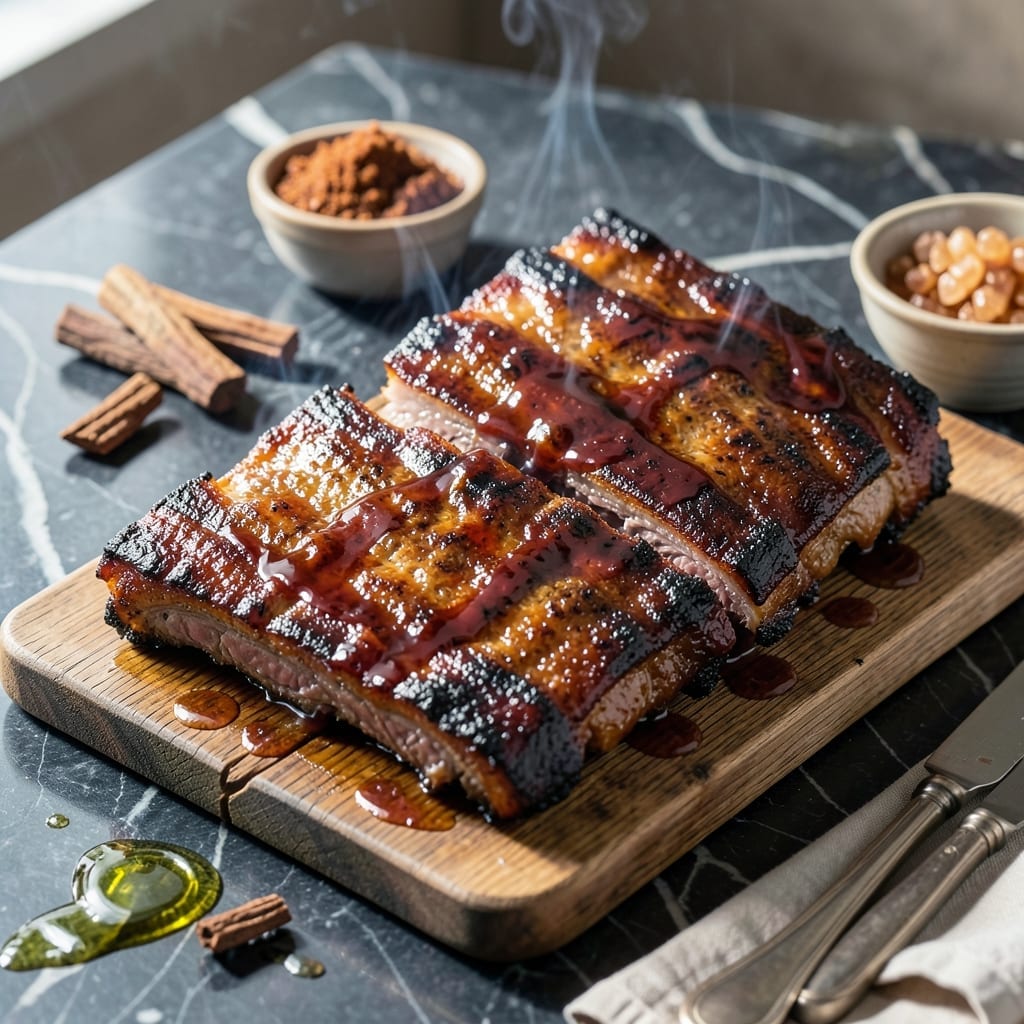
Getting my first whiff of hickory smoke at my family backyard cookout still brings a smile to my face. These ribs deliver that same fall-off-the-bone tenderness with deep smoky flavor.
My classic French training meets old-school pitmaster techniques in this foolproof method. The secret is low and slow cooking for perfectly tender results every time.
Ingredients for Barbecue Beef Spare Ribs
Full rack of spare ribs plus a bold dry rub and slow smoke. Simple ingredients, big flavor.
| Ingredient | Amount | Notes |
|---|---|---|
| Beef Spare Ribs 🥩 | 4 lb | Full rack, membrane removed |
| Barbecue Rub 🌶️ | ¼ cup | Store-bought or homemade blend |
| Hickory Wood Chips 🪵 | 2 cups | Soaked in water for 30 minutes |
| Apple Cider Vinegar 🍏 | ½ cup | For spritzing during cooking |
| Barbecue Sauce 🍯 | 1 ½ cups | For basting and serving |
| Brown Sugar 🫙 | ¼ cup | For sweetness in rub |
| Kosher Salt 🧂 | 2 tbsp | Diamond Crystal preferred |
| Black Pepper 🌶️ | 2 tbsp | Freshly ground for best flavor |
| Garlic Powder 🧄 | 1 tbsp | For depth in rub |
| Onion Powder 🧅 | 1 tbsp | Complements the garlic |
| Smoked Paprika 🌶️ | 1 tbsp | Adds smoky depth |
| Mustard Powder 🟡 | 1 tsp | Balances the sweetness |
| Cayenne Pepper 🔥 | ½ tsp | Adjust for heat preference |
[recipe_ingredient_scaler]
The ribs are everything here. Full spare ribs (not baby backs) give you that meaty, fall-off-the-bone texture. Ask your butcher for St. Louis-style—they’re trimmed uniform, cook more evenly. I grab mine from Costco when feeding a crowd, but a good local butcher will have better quality. Always remove the membrane yourself (don’t trust the store to do it right).
No hickory chips? Apple or cherry wood works great too—sweeter smoke. Swap brown sugar for turbinado if you want crunch. The barbecue sauce can be store-bought (I like Stubb’s for this), but homemade takes it next level. Mustard powder missing? Skip it—Dijon paste in the sauce works as a backup. Don’t skip the vinegar spritz though (keeps the meat moist).
Ribs taste even better the next day. Wrap cooled racks in foil, then plastic—keeps 4-5 days in the fridge. Freeze for up to 3 months (vacuum-seal if you’ve got the setup). Reheat in a low oven, covered, with a splash of apple juice.
Why You’ll Love This Recipe
- Set It and Forget: I just season the ribs with the rub, toss in the hickory chips, and let the smoker do the heavy lifting.
- Smoky Sweet Perfection: The hickory smoke mixed with that tangy apple cider vinegar gives every bite a deep, crave-worthy flavor.
- Crowd-Pleasing Star: Honestly, it’s my go-to for summer cookouts—everyone from picky kids to barbecue snobs asks for seconds.
- Leftovers for Days: One rack feeds my family of four twice, and the flavors taste even better reheated the next day.
Step-by-Step Instructions for Barbecue Beef Spare Ribs
Here’s the method I use to achieve perfectly tender ribs with a smoky bark every time.
Step 1: Prepare the Ribs and Custom Rub
First, pat the 4 lb beef spare ribs dry with paper towels—this ensures the rub adheres properly. If you haven’t already, remove the membrane from the bone side by sliding a butter knife underneath, then pulling it off with a paper towel for grip.
In a bowl, combine the 0.25 cup barbecue rub, 0.25 cup brown sugar, 2 tbsp kosher salt, 2 tbsp black pepper, 1 tbsp garlic powder, 1 tbsp onion powder, 1 tbsp smoked paprika, 1 tsp mustard powder, and 0.5 tsp cayenne pepper. Massage this mixture generously over all sides of the ribs, pressing it into the meat. Let them sit at room temperature for 30 minutes while you prep the smoker.
Step 2: Set Up the Smoker for Low and Slow Cooking
Soak the 2 cups hickory wood chips in water for 30 minutes to ensure they produce slow, steady smoke. Fill your smoker’s water pan to maintain moisture during the long cook. Preheat the smoker to 225°F using indirect heat.
Once the smoker reaches temperature, add the drained wood chips to the firebox or smoker box. You want thin, blue smoke—not thick white smoke, which can make the ribs bitter. Place the ribs bone-side down on the grill grates, away from direct heat.
Step 3: Smoke and Spritz for Tenderness
Smoke the ribs undisturbed for 3 hours. After this time, check the color—you’re looking for a deep mahogany bark. Every 45-60 minutes, spritz the ribs lightly with the 0.5 cup apple cider vinegar to keep the surface moist and enhance bark formation.
At the 5-hour mark, wrap the ribs tightly in aluminum foil with a splash of apple cider vinegar to power through the stall. Return them to the smoker and continue cooking until the internal temperature reaches 195-203°F, about 1-2 more hours.
Step 4: Glaze and Finish
Unwrap the ribs and place them back on the grill grates, bone-side up. Brush generously with 1.5 cups barbecue sauce and smoke for another 15-20 minutes to set the glaze. Flip and repeat on the meat side for a sticky, caramelized finish.
You’ll know they’re done when the meat pulls back from the bones and a toothpick slides in like butter. Let the ribs rest for 10-15 minutes before slicing between the bones. Serve with extra barbecue sauce on the side for dipping.
Pro Tips For Making Barbecue Beef Spare Ribs
- Pre-Dry the Ribs: Pat the spare ribs thoroughly dry with paper towels before applying the rub—this helps the seasoning stick and gives a better bark. I learned this the hard way after watching my rub slide right off wet ribs.
- Soak the Wood Chips: Soak hickory chips in water for at least 30 minutes before smoking, or they’ll burn up too fast and give bitter flavor instead of that smooth, deep smoke.
- Low and Slow Wins: Keep your smoker or grill between 225–250°F and give the ribs 5–6 hours. Rushing with higher heat makes tough, chewy meat—no amount of sauce fixes that.
- Vinegar Spritz Mid-Cook: Every hour or so, spritz the ribs with apple cider vinegar to keep them moist and add a subtle tang that cuts through the richness. Sounds fussy, but it actually changes the outcome.
Regional Styles of This Recipe
Texas Style
In the Lone Star State, they keep it simple with a salt-and-pepper-heavy rub—sometimes just those two. The focus is on the beef, smoked low and slow at 225°F for up to 8 hours with post oak or hickory. I love the bark this creates. 🔥
Memphis Dry Rub
This Tennessee approach skips the sauce entirely, relying on a complex dry rub with paprika, garlic, and cayenne. After smoking, the ribs get dusted with more rub before serving. Try Rendezvous Restaurant’s famous seasoning blend for authenticity.
Kansas City Style
Here, it’s all about the sauce—a thick, sweet, tomato-based glaze applied generously during the last 30 minutes of cooking. The ribs are smoked first, then finished with that signature sticky coating. Arthur Bryant’s sauce is a local favorite.
Carolina Vinegar
Eastern North Carolina pits ribs with a tangy twist, using a vinegar-based mop sauce during cooking. The rub is simpler, often just salt, pepper, and cayenne. This style highlights the porky flavor of spare ribs beautifully.
St. Louis Style
These ribs are pre-trimmed into a rectangular shape, making them more uniform for cooking. The technique remains low and slow, but the presentation is cleaner. I always ask my butcher for St. Louis-cut when I’m feeding a crowd.
Nutrition Facts
Frequently Asked Questions
What’s the best wood for smoking?
Hickory delivers classic bold flavor, but apple or cherry wood add sweeter notes. 2 cups of soaked chips provide steady smoke for 6-8 hours at 225°F.
How do I know when they’re done?
The meat should pull back from bones and reach 195-203°F internally. A toothpick should slide in like butter after 6-7 hours total cooking time.
Can I use baby back ribs instead?
Yes, but reduce cook time to 4-5 hours. Spare ribs have more fat and connective tissue, making them better for long smoking. Baby backs are leaner and cook faster.
Why wrap in foil during cooking?
Wrapping at 5 hours helps power through the stall, speeds cooking, and keeps moisture in. This step creates that fall-off-the-bone tenderness we all love.

Trained in classic French technique but raised on slow-cooked ribs and spicy rubs, she blends culinary skill with smoke and soul.
- Recipe for Boneless Pork Chops in Cast Iron Skillet: Sear and Baste to Juicy Perfection - October 3, 2026
- Recipe for Boneless Cross Rib Roast: Slow-Roasted Beef with Herb Crust - October 3, 2026
- Hamburgers in Sauce Recipe Crock Pot: Slow-Cooked Savory Delight - October 3, 2026