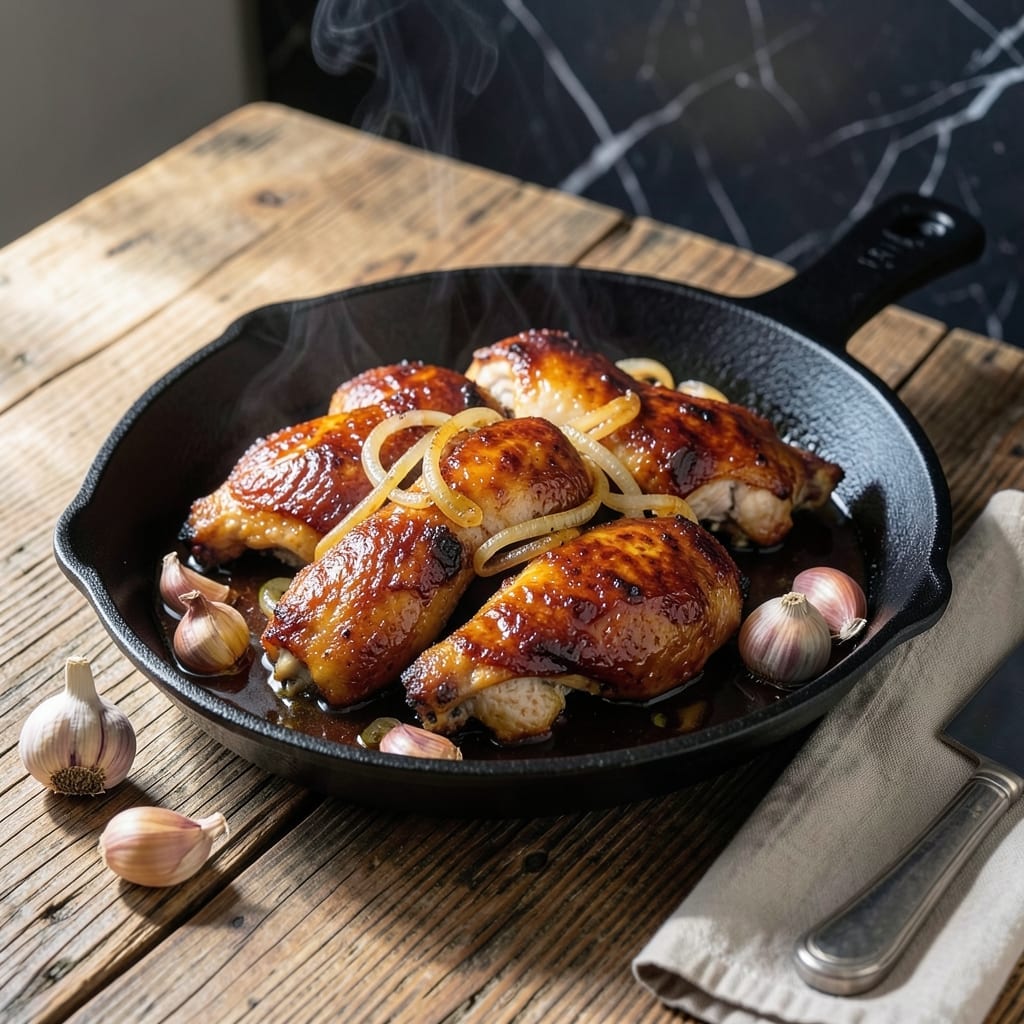
You can achieve smoky, fall-off-the-bone barbecue chicken right on your stove. My French training meets pitmaster roots in this foolproof method.
No grill, no problem. This technique delivers tender chicken with a caramelized glaze that rivals outdoor cooking.
Ingredients for Barbecue Chicken Recipe Stove Top
Pantry staples plus chicken meet smoky, sweet perfection on the stove.
| Ingredient | Amount | Notes |
|---|---|---|
| Chicken Thighs 🍗 | 2 ½ lb | Boneless, skinless preferred |
| Barbecue Sauce 🍯 | 1 ½ cups | Thick, smoky variety |
| Olive Oil 🫒 | 2 tbsp | Extra-virgin for richness |
| Onion 🧅 | 1 whole | Yellow or white, finely diced |
| Garlic Cloves 🧄 | 4 cloves | Minced for depth |
| Apple Cider Vinegar 🍏 | 2 tbsp | For tangy balance |
| Brown Sugar 🍚 | 2 tbsp | Light or dark, packed |
| Smoked Paprika 🌶️ | 1 tsp | Essential for smokiness |
| Salt 🧂 | 1 tsp | Kosher or sea salt |
| Black Pepper 🌶️ | ½ tsp | Freshly ground preferred |
| Chicken Broth 💧 | ½ cup | Low-sodium if available |
| Worcestershire Sauce 🍶 | 1 tbsp | For umami depth |
| Dijon Mustard 🟡 | 1 tbsp | Smooth, sharp variety |
[recipe_ingredient_scaler]
The chicken matters most here. Thighs stay juicier than breasts—boneless, skinless save time but bone-in adds flavor (worth the extra effort). I grab mine from Whole Foods or Costco for quality and price. The barbecue sauce should be thick and smoky; Stubb’s Original or Sweet Baby Ray’s are solid grocery store picks.
No barbecue sauce? Mix ketchup with a splash of liquid smoke and brown sugar. Swap smoked paprika for regular, but add a pinch of chipotle powder for heat. Chicken broth can be water plus bouillon, but the real stuff is better. Annie’s or Better Than Bouillon are my go-tos. The vinegar can be white if that’s what you’ve got.
Leftover sauce keeps in the fridge for about 5 days—great on sandwiches or as a dip. Cooked chicken stays good for 4 days refrigerated or 3 months frozen. Reheat gently to avoid drying out.
Why You’ll Love This Recipe
- One Pan Dinner: I love that I only need one skillet—chicken, onions, garlic, and sauce all cook together with barely any cleanup.
- Sticky, Smoky Bite: The barbecue sauce caramelizes on the chicken thighs, and the garlic adds this deep, savory kick that’s just ridiculously good.
- Weeknight Hero: Honestly, it’s my go-to when I need dinner fast but still want something that feels special, not just thrown together.
- Budget Stretcher: Chicken thighs stay juicy and cheap, and the sauce makes them taste like I spent hours at the grill.
Step-by-Step Instructions for Barbecue Chicken Stove Top
Here’s how to achieve that smoky, caramelized glaze on your stovetop without firing up the grill.
Step 1: Sear and Brown the Chicken Thighs
Heat the 2 tbsp Olive Oil in a large, heavy skillet over medium-high heat until it shimmers. Pat the 2.5 lb Chicken Thighs dry with paper towels—this ensures a good sear instead of steaming. Season both sides generously with the 1 tsp Salt and 0.5 tsp Black Pepper.
Add the chicken thighs to the hot pan, skin-side down if using skin-on, or smooth side down if boneless. Don’t move them for 5-6 minutes—you want a deep golden-brown crust to form. Flip and sear the other side for another 4-5 minutes until browned. Remove the chicken to a plate and set aside.
Step 2: Build the Flavor Base with Aromatics
In the same skillet, reduce heat to medium and add the finely diced 1 whole Onion. Sauté for 4-5 minutes until softened and just starting to caramelize. Add the minced 4 cloves Garlic Cloves and cook for 30 seconds until fragrant—don’t let it burn.
Stir in the 1 tsp Smoked Paprika, 2 tbsp Brown Sugar, 1 tbsp Worcestershire Sauce, and 1 tbsp Dijon Mustard. Cook for 1 minute, stirring constantly, until the sugar melts and everything is well combined. This creates a rich, smoky-sweet foundation for your sauce.
Step 3: Deglaze and Simmer the Sauce
Pour in the 2 tbsp Apple Cider Vinegar and 0.5 cup Chicken Broth, scraping up all the browned bits from the bottom of the pan with a wooden spoon. These bits are packed with flavor and will dissolve into your sauce.
Add the 1.5 cups Barbecue Sauce and stir to combine. Bring the mixture to a gentle simmer and let it cook for 3-4 minutes until it thickens slightly and the flavors meld together. You want it bubbly but not boiling—this prevents the sugars from burning.
Step 4: Finish the Chicken in the Sauce
Return the chicken thighs to the skillet, nestling them into the sauce. Spoon the sauce over the top of each piece to coat evenly. Reduce the heat to medium-low and cover the pan.
Let everything simmer gently for 8-10 minutes, turning the chicken halfway through, until the thighs are cooked through and the sauce clings beautifully to each piece. The internal temperature of the chicken should reach 165°F for perfect doneness.
Step 5: Rest and Serve
Remove the chicken from the skillet and let it rest for 5 minutes on a plate. This allows the juices to redistribute, keeping the meat moist and tender. Spoon any remaining sauce from the pan over the top before serving.
Serve the chicken hot, with extra sauce on the side if desired. The sauce should be thick enough to coat the back of a spoon, with a glossy sheen and a balance of smoky, sweet, and tangy flavors. Pairs perfectly with mashed potatoes or crusty bread to soak up every last bit.
Pro Tips For Making Barbecue Chicken Recipe Stove Top
- Sear First, Sauce Later: Start the chicken thighs in hot oil for 3-4 minutes per side to get a good crust before adding the barbecue sauce—I learned this the hard way after ending up with soggy skin more than once.
- Thin Your Sauce: Mix 1-2 tablespoons of water into the barbecue sauce before adding it to the pan; it coats the chicken better and prevents burning, which thick, sticky sauces love to do.
- Don’t Crowd the Pan: Cook the thighs in batches if needed—overcrowding steams them instead of browning, and nobody wants pale, rubbery barbecue chicken.
- Rest Under Foil: Let the chicken rest covered for 5 minutes after cooking; it keeps the juices inside where they belong, and the sauce clings better too.
Troubleshooting Perfect Results
Sauce Too Thin
If your sauce is watery after simmering, create a cornstarch slurry with 1 tbsp cornstarch and 1 tbsp cold water. Stir into the bubbling sauce and cook for 1-2 minutes until thickened. I always keep cornstarch in my pantry for this exact issue. 💡
Burnt Garlic Bits
Garlic burns easily at high heat. If you see dark bits, immediately lower the temperature and scrape them out with a spoon. Next time, pull the pan off heat when adding garlic to control the temperature better.
Chicken Sticks to Pan
This happens when the pan isn’t hot enough before adding chicken. Heat your skillet until the oil shimmers, then wait another 30 seconds before adding the thighs. Also, ensure the chicken is completely dry—pat with paper towels. I learned this the hard way at my first local BBQ competition.
Sauce Too Sweet
Balance sweetness with acidity. Add 1 tbsp apple cider vinegar or 1 tsp lemon juice and stir well. Taste and repeat if needed. The vinegar already in your pantry works perfectly for this adjustment.
Chicken Cooks Unevenly
If some pieces finish before others, remove the done ones and continue cooking the rest. For even cooking, ensure all thighs are similar in size—trim larger pieces to match. I always check the thickest piece with my meat thermometer for accuracy.
Sauce Separates
If the sauce breaks or looks greasy, whisk in 1 tsp Dijon mustard or 1 tbsp cold water to re-emulsify. This binds the fat and liquid components back together smoothly. 🔥
Nutrition Facts
Frequently Asked Questions
What’s the best pan for stovetop barbecue chicken?
Use a heavy skillet like cast iron or stainless steel. These distribute heat evenly and develop the best sear. Avoid nonstick for high-heat cooking.
Can I substitute chicken breasts?
Yes, but reduce cooking time to 6-8 minutes total to prevent drying out. Thighs stay juicier, but breasts work in a pinch. Always check internal temp reaches 165°F.
How do I fix bland sauce?
Boost flavor with 1 tsp smoked paprika or a dash of hot sauce. Balance with 1 tbsp vinegar if it needs tang. Taste and adjust gradually.
Should I cover the pan while cooking?
Cover only during the final 8-10 minutes of simmering. This helps the sauce cling and chicken cook through evenly without drying out.

Trained in classic French technique but raised on slow-cooked ribs and spicy rubs, she blends culinary skill with smoke and soul.
- Recipe for Boneless Pork Chops in Cast Iron Skillet: Sear and Baste to Juicy Perfection - October 3, 2026
- Recipe for Boneless Cross Rib Roast: Slow-Roasted Beef with Herb Crust - October 3, 2026
- Hamburgers in Sauce Recipe Crock Pot: Slow-Cooked Savory Delight - October 3, 2026