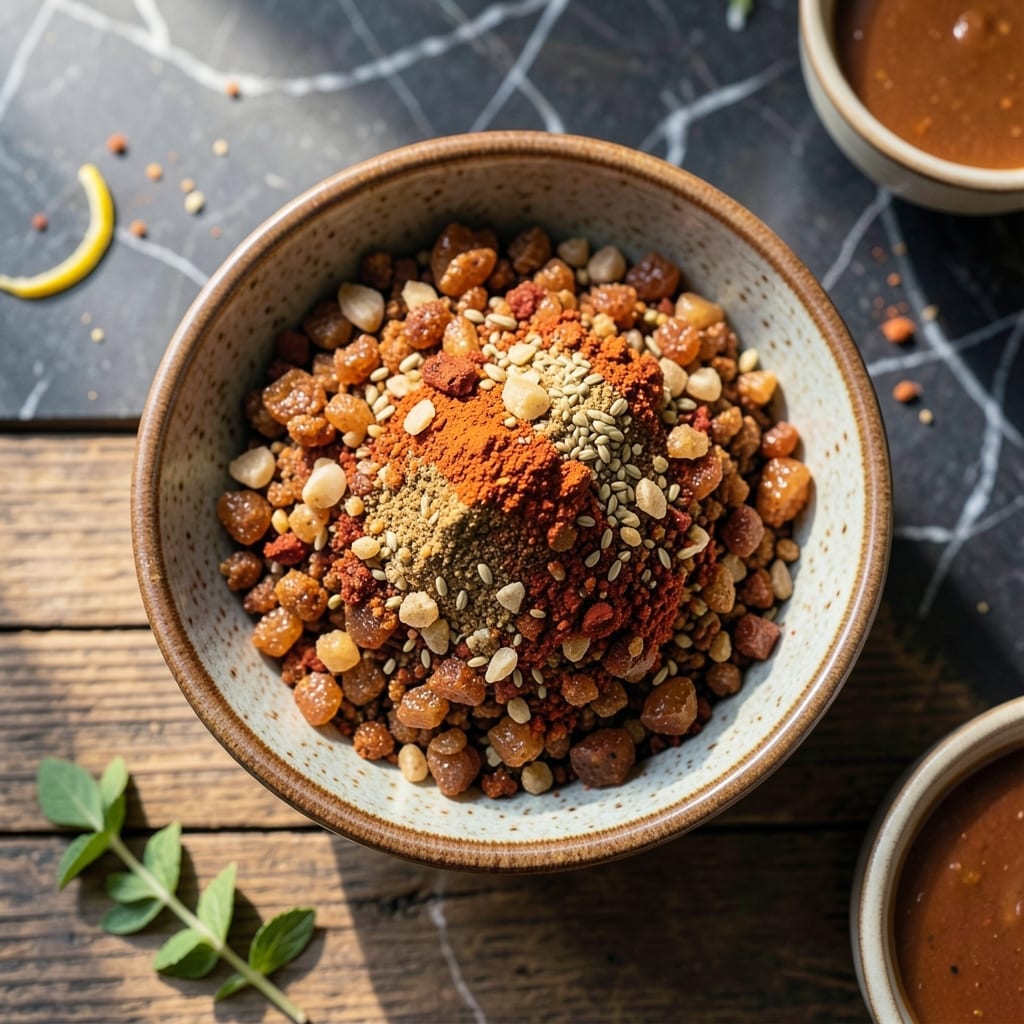
This smoky barbecue chicken rub transforms ordinary poultry into competition-worthy masterpieces. My French training meets pitmaster instincts in every tablespoon of this blend.
Perfectly balanced with bold spices and a touch of sweetness, it creates that coveted bark on grilled chicken. Make a big batch and keep it on hand for spontaneous cookouts.
Ingredients for Barbecue Chicken Rub
Nine bold spices create that competition-worthy bark on your chicken. Big flavor, minimal effort.
| Ingredient | Amount | Notes |
|---|---|---|
| Brown Sugar 🍚 | ½ cup | Light or dark, packed |
| Smoked Paprika 🌶️ | 2 tbsp | Essential for smoky depth |
| Garlic Powder 🧄 | 1 tbsp | Not garlic salt substitute |
| Onion Powder 🧅 | 1 tbsp | Fresh ground preferred |
| Ground Cumin 🌿 | 1 tbsp | Toasted for warmth |
| Chili Powder 🌶️ | 1 tbsp | Mild or hot variety |
| Kosher Salt 🧂 | 1 tbsp | Diamond Crystal preferred |
| Coarse Black Pepper 🌶️ | 1 tbsp | Freshly ground best |
| Dried Mustard Powder 🟡 | 1 tsp | Adds subtle tang |
| Cayenne Pepper 🔥 | ½ tsp | Adjust for heat level |
[recipe_ingredient_scaler]
The smoked paprika is non-negotiable here—Penzeys has the best depth of flavor, but any good brand works if it’s fresh. I grab mine from Whole Foods bulk bins to avoid those sad, dusty jars. Brown sugar adds the caramelized crust you want; Domino or store-brand is fine. Just don’t use powdered sugar (yes, I’ve seen it happen). The cumin should be toasted whole then ground if you’re feeling fancy, but pre-ground is totally acceptable for weeknight grilling.
No cayenne? Crushed red pepper flakes at half the amount work in a pinch. Swap smoked paprika for regular if that’s all you’ve got, but you’ll miss that campfire flavor. The mustard powder can be omitted, but it adds a subtle tang that balances the sweetness. If you’re out of garlic powder, granulated garlic at the same amount works—just not the same punch. Want more heat? Add a pinch of chipotle powder.
Store in an airtight container away from light—lasts 6-12 months. I make a double batch and keep half in a small jar by the grill. The spices will dull over time, so smell them before using. If they don’t smell like anything, they won’t taste like anything either.
Why You’ll Love This Recipe
- 5-Minute Mix: I dump all five spices in a bowl, stir, and boom—it’s ready before the grill even heats up.
- Sweet & Smoky: Brown sugar caramelizes while smoked paprika adds that deep, campfire flavor I crave.
- Rub for Anything: I’ve used it on chicken, ribs, even roasted veggies—so reliable.
- Pantry Staples Only: Honestly, I always have these spices on hand, so it’s a zero-cost flavor upgrade.
Step-by-Step Instructions for Barbecue Chicken Rub
Here’s the method. Straightforward, tested, works every time.
Step 1: Combine the Sweet and Smoky Base
In a medium bowl, add the 0.5 cup Brown Sugar. I prefer dark brown sugar for its deeper molasses flavor, but light works too. Pack it down firmly into your measuring cup to ensure accuracy—this is your foundation for sweetness and caramelization on the grill.
Add the 2 tbsp Smoked Paprika to the bowl. This is what gives your rub that signature smoky depth. I always use a spoon to level off the tablespoon measure—those extra heaping bits can throw off the balance of flavors in your final blend.
Step 2: Build the Savory Foundation
Now add the aromatic trio: 1 tbsp Garlic Powder, 1 tbsp Onion Powder, and 1 tbsp Ground Cumin. These three work together to create that deep, savory backbone that makes the rub complex and satisfying. Stir after each addition to distribute evenly.
The Ground Cumin adds a warm, earthy note that complements the smokiness beautifully. Make sure your cumin is fresh—old spices lose their potency and won’t give you that vibrant flavor you’re after.
Step 3: Add Heat and Depth
Next comes the 1 tbsp Chili Powder, 1 tbsp Kosher Salt, and 1 tbsp Coarse Black Pepper. The chili powder brings a mild heat and earthy complexity, while the salt and pepper provide the essential seasoning base. I always use Diamond Crystal kosher salt because of its clean flavor and consistent grain size.
Add the 1 tsp Dried Mustard Powder and 0.5 tsp Cayenne Pepper. The mustard powder adds a subtle tang that brightens up the blend, while the cayenne brings the heat. If you prefer a milder rub, you can reduce the cayenne to ¼ tsp, but I love the little kick it provides.
Step 4: Mix Thoroughly and Test
Using a whisk or fork, thoroughly combine all ingredients until the mixture is uniform in color and texture. The brown sugar should be completely broken up and distributed evenly throughout the blend. You’ll end up with about 1 cup of rub—enough for 4 generous applications on whole chickens or multiple smaller cuts.
Here’s the thing—always taste your rub before using it. Rub a pinch between your fingers and taste it. You should detect a balance of sweet, smoky, savory, and slightly spicy notes. If it needs adjustment, now’s the time to tweak it to your preference.
Step 5: Store and Apply
Transfer the rub to an airtight container. I like to use a small mason jar—it keeps the rub fresh and makes it easy to shake and apply. Store in a cool, dark place for up to 3 months. The flavors will meld and develop over time, making it even more delicious.
When ready to use, pat your chicken dry and apply the rub generously, pressing it into the meat so it adheres well. Let it sit for at least 30 minutes before grilling, or up to 24 hours in the refrigerator for maximum flavor penetration.
Pro Tips For Making Barbecue Chicken Rub
- Toast the Spices: Lightly toast the smoked paprika and cumin in a dry pan for 30 seconds before mixing—it wakes up the flavors and makes the rub taste richer.
- Crush the Sugar: Pulse the brown sugar in a food processor or crush it with a rolling pin to break up clumps, so it sticks better to the chicken and caramelizes evenly.
- Skip the Salt: I learned this the hard way—brown sugar already adds sweetness, and if you salt the rub too much, it can overpower the smoked paprika and cumin.
- Rest the Rub: Mix the rub the night before and let it sit—this gives the garlic and onion powders time to mellow and blend into the other spices.
Best Sauces and Condiments for barbecue chicken rub
Classic BBQ Sauce
My go-to pairing is a Kansas City-style sauce with its thick, sweet, and tangy profile. I love Sweet Baby Ray’s for convenience, but homemade with 2 tbsp apple cider vinegar and 1 tbsp molasses takes it to another level. Brush it on during the last 10 minutes of grilling. 🔥
Alabama White Sauce
This mayonnaise-based sauce from Big Bob Gibson’s is a game-changer. Mix 1 cup mayo, ¼ cup apple cider vinegar, 1 tbsp horseradish, and 1 tsp black pepper. It’s creamy, tangy, and perfect for dipping or drizzling over rubbed chicken.
Spicy Mustard Glaze
Combine ½ cup yellow mustard, ¼ cup honey, and 1 tbsp hot sauce for a bold, tangy glaze. I discovered this combo at a local BBQ competition—it cuts through the richness of the rub beautifully. Apply in the last 5 minutes of cooking.
Honey Butter Finish
For a sweeter touch, melt 4 tbsp butter with 2 tbsp honey and a pinch of cayenne. Drizzle this over your chicken right after it comes off the grill. The heat from the chicken will help it soak in, creating a glossy, flavorful finish.
Fresh Herb Garnish
Sometimes simplicity wins. I forage wild rosemary or thyme from my coastal rides and sprinkle it fresh over the finished chicken. The aromatic oils complement the smoky rub perfectly. Just a tablespoon of chopped herbs adds brightness and color.
Nutrition Facts
Frequently Asked Questions
Can I use regular paprika instead of smoked?
Yes, but you’ll lose that deep smoky flavor. Add ½ tsp liquid smoke to compensate. Smoked paprika is ideal for authentic barbecue taste.
How long will this rub stay fresh?
Stored in an airtight container away from light, it lasts 6-12 months. Check potency by smelling before use—fresh spices smell vibrant.
Can I make this without brown sugar?
Substitute with coconut sugar or turbinado sugar in equal amounts. Avoid white sugar—it lacks the molasses notes that balance the spices.
How much rub do I need per pound of chicken?
Use about 1 tbsp per pound. Press it firmly into the meat for maximum flavor adhesion. For whole chickens, 2-3 tbsp works perfectly.

Trained in classic French technique but raised on slow-cooked ribs and spicy rubs, she blends culinary skill with smoke and soul.
- Recipe for Oven Baked Halibut: Buttery White Fish with Zesty Lemon Topping - October 3, 2026
- Meatball Curry Recipe Kerala Style: Coconut-Spiced Gravy With Tender Bites - October 3, 2026
- Recipe for Curried Tofu: Aromatic Spices With Crispy Edges - October 3, 2026