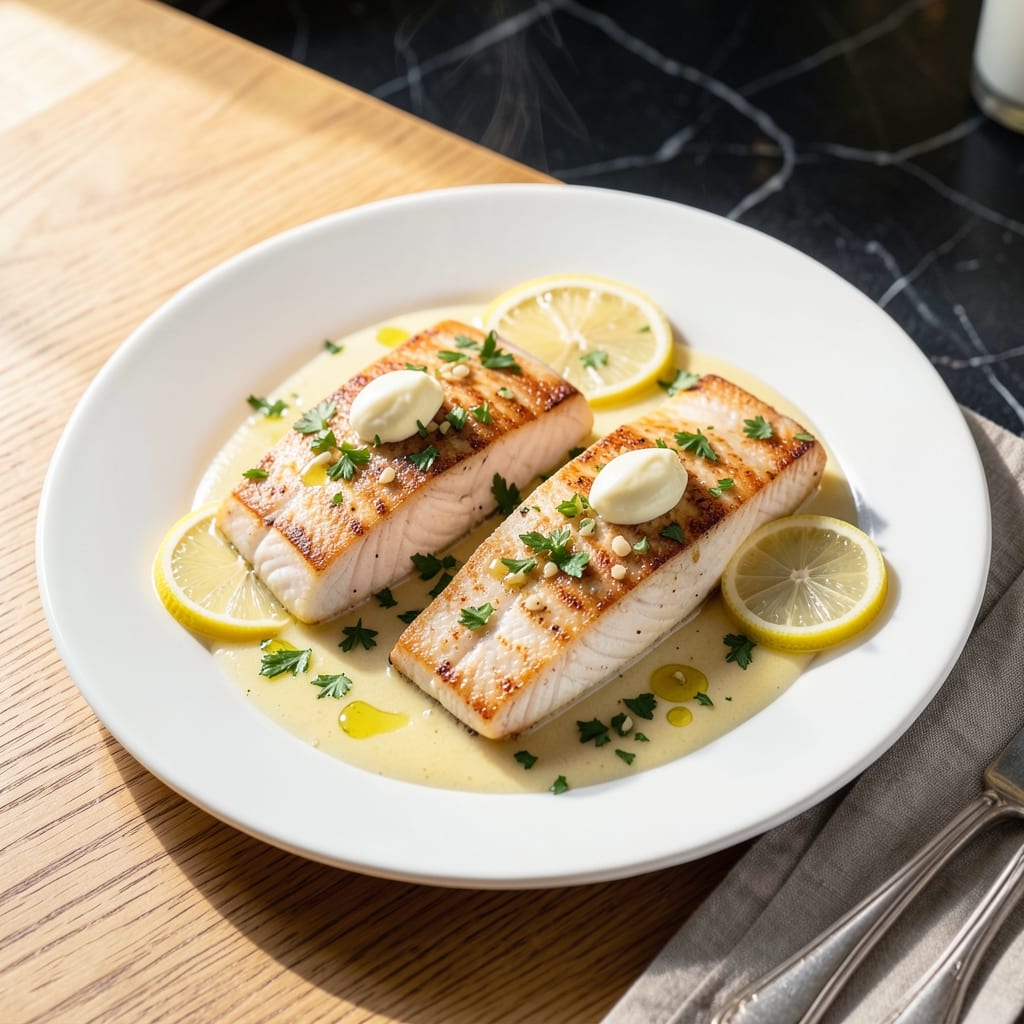
This oven-baked halibut delivers restaurant-quality results with minimal effort. The white fish stays moist and flaky while developing a delicate golden crust.
I learned this method from my grandmother’s handwritten notes, which emphasized simplicity and precision. The key is baking at 400°F just until opaque.
The zesty lemon topping brightens the natural sweetness of the halibut. It adds freshness without overpowering the delicate flavor of the fish.
Serve with roasted vegetables or rice for a complete meal. This technique works perfectly for any firm white fish.
Ingredients for Recipe for Oven Baked Halibut
These quality ingredients create a buttery, restaurant-worthy fish dish with minimal effort.
| Ingredient | Amount | Notes |
|---|---|---|
| Halibut Fillets 🐟 | 1 ½ lb | Skinless, bone-in or boneless |
| Unsalted Butter 🧈 | 4 tbsp | Melted for basting |
| Extra-Virgin Olive Oil 🫒 | 2 tbsp | Divided for greasing and drizzling |
| Lemon 🍋 | 1 whole | Zested and juiced |
| Garlic Cloves 🧄 | 3 cloves | Minced finely |
| Fresh Parsley 🌿 | ¼ cup | Chopped, for garnish |
| Dijon Mustard 🟡 | 1 tbsp | Smooth variety preferred |
| Kosher Salt 🧂 | 1 tsp | Diamond Crystal preferred |
| Freshly Ground Black Pepper 🌶️ | ½ tsp | Coarse grind preferred |
| Dry White Wine 🍷 | ¼ cup | Sauvignon Blanc or Pinot Grigio |
| Shallot 🧅 | 1 whole | Finely diced |
| Fresh Dill 🌿 | 2 tbsp | Chopped, optional |
[recipe_ingredient_scaler]
The halibut quality is paramount—wild-caught from Alaska or Pacific varieties offer superior flavor and texture. Whole Foods or local seafood markets typically carry the freshest options. Look for fillets with a firm, slightly translucent appearance and no fishy odor. If buying frozen, ensure it’s previously frozen at peak freshness and thaw it overnight in the refrigerator.
No dry white wine? Substitute with additional lemon juice or a splash of vermouth. Fresh dill can be replaced with fresh tarragon at equal amounts. If you lack shallots, red onion at half the quantity works well. The Dijon mustard can be swapped for whole-grain mustard for a rustic texture. Avoid overpowering the delicate fish with strong herbs or spices.
Halibut is best cooked the day of purchase but can be stored in the fridge for up to 1 day. The lemon topping can be prepped 1 hour ahead—keep it covered. Leftovers? They’ll keep for 2-3 days in the fridge, though halibut is truly best fresh out of the oven.
Why You’ll Love This Recipe
- One Pan Wonder: I toss the halibut with butter, olive oil, and lemon on a single sheet pan—no piles of dishes afterward.
- Buttery Garlic Zing: The garlic melts into the butter and soaks into the fish, while the lemon cuts through with this bright, fresh finish.
- Weeknight Hero: I’ve served this for a fancy dinner and also scarfed it straight from the pan on a busy Tuesday.
- Leftovers? Yes Please: The flavors actually deepen overnight, so I pack the extras for lunch the next day and it’s still ridiculously good.
Step-by-Step Instructions for Oven Baked Halibut
This method ensures perfectly flaky fish with a bright, herbaceous finish every time.
Step 1: Prep the Halibut and Aromatics
Preheat your oven to 400°F. Pat the 1.5 lb halibut fillets completely dry with paper towels—this ensures even browning. Season both sides evenly with 1 tsp kosher salt and 0.5 tsp freshly ground black pepper.
Finely dice the 1 whole shallot and mince the 3 cloves garlic cloves. Zest the 1 whole lemon before juicing it, reserving both zest and juice separately. In a small bowl, whisk together the 1 tbsp Dijon mustard, half the 4 tbsp unsalted butter (melted), and the lemon zest for the topping.
Step 2: Sear the Halibut for Crisp Edges
Heat 1 tbsp extra-virgin olive oil in a large oven-safe skillet over medium-high heat. When the oil shimmers, add the halibut fillets and sear undisturbed for 2-3 minutes per side until golden brown and the edges appear slightly opaque.
Remove the skillet from heat and transfer the fillets to a plate. In the same skillet, reduce heat to medium and add the remaining 1 tbsp extra-virgin olive oil, diced shallot, and minced garlic. Sauté for 1-2 minutes until the shallots soften and the garlic becomes fragrant.
Step 3: Deglaze and Finish in the Oven
Pour the 0.25 cup dry white wine into the skillet and scrape up any browned bits from the bottom. Let it simmer for 1-2 minutes until the liquid reduces by half. Stir in the remaining 2 tbsp unsalted butter and the lemon juice.
Return the halibut fillets to the skillet, spooning the pan sauce over them. Transfer the skillet to the preheated oven and bake for 8-10 minutes until the fish is opaque and flakes easily with a fork. The internal temperature should reach 145°F.
Step 4: Garnish and Serve
Remove the skillet from the oven and drizzle the prepared mustard-butter mixture over the fillets. Sprinkle with the 0.25 cup fresh parsley and 2 tbsp fresh dill, both chopped.
Let the halibut rest in the skillet for 2-3 minutes to allow the flavors to meld. Serve immediately with the pan sauce spooned over each portion, ensuring every bite is infused with the bright, herby finish.
Pro Tips For Making Recipe For Oven Baked Halibut
- Pat Fillets Dry: I learned this the hard way—dab the halibut with paper towels before seasoning, or the butter and oil will just pool instead of forming that golden crust.
- Preheat the Pan: Start with a screaming-hot oven (425°F minimum) and a preheated baking sheet to lock in moisture and prevent the fish from steaming in its own juices.
- Skip the Overcrowding: Leave at least an inch between fillets on the tray—crowding makes them steam, and you’ll end up with sad, pale halibut instead of crisp-edged perfection.
- Add Lemon Last: Sounds weird, but it works: add lemon slices or juice only in the last 5 minutes of baking to avoid drying out the fish while still getting that bright, citrusy finish.
Wine and Beer Pairings for recipe for oven baked halibut
White Wine Pairs
A crisp Sauvignon Blanc from New Zealand mirrors the lemon notes in this dish beautifully. Its bright acidity cuts through the butter while enhancing the halibut’s natural sweetness. I always keep a bottle of Kim Crawford on hand for just this purpose. 🍷
Rich White Options
For a fuller-bodied pairing, try a Chardonnay from California’s Central Coast. The subtle oak and buttery notes complement the fish perfectly—La Crema is my go-to. The wine’s creaminess echoes the dish’s texture without overwhelming it.
Light Beer Choices
A Belgian-style witbier like Hoegaarden works wonderfully, with its citrus and coriander notes harmonizing with the lemon and herbs. The effervescence cleanses your palate between bites. Serve it ice-cold for the best experience. 🍺
Crisp Lager Pairing
For beer lovers, a clean pilsner such as Sam Adams Noble Pils offers a refreshing contrast. The light body and subtle hop bitterness balance the richness of the buttery halibut without competing with its delicate flavor.
Nutrition Facts
Frequently Asked Questions
What temperature should the oven be set to?
Preheat your oven to 400°F for optimal results. This high heat helps create a golden crust while keeping the fish moist and flaky inside.
How long does it take to bake?
Bake the halibut for 8-10 minutes after searing. The fish is done when it reaches an internal temperature of 145°F and flakes easily.
Can I use frozen halibut?
Yes, but thaw it overnight in the fridge first. Pat it completely dry before seasoning to ensure even cooking and proper browning.
What can I substitute for white wine?
Use additional lemon juice or a splash of vermouth. These alternatives maintain the acidity needed to balance the dish’s richness.

Trained in classic French technique but raised on slow-cooked ribs and spicy rubs, she blends culinary skill with smoke and soul.
- Recipe for Oven Baked Halibut: Buttery White Fish with Zesty Lemon Topping - October 3, 2026
- Meatball Curry Recipe Kerala Style: Coconut-Spiced Gravy With Tender Bites - October 3, 2026
- Recipe for Curried Tofu: Aromatic Spices With Crispy Edges - October 3, 2026