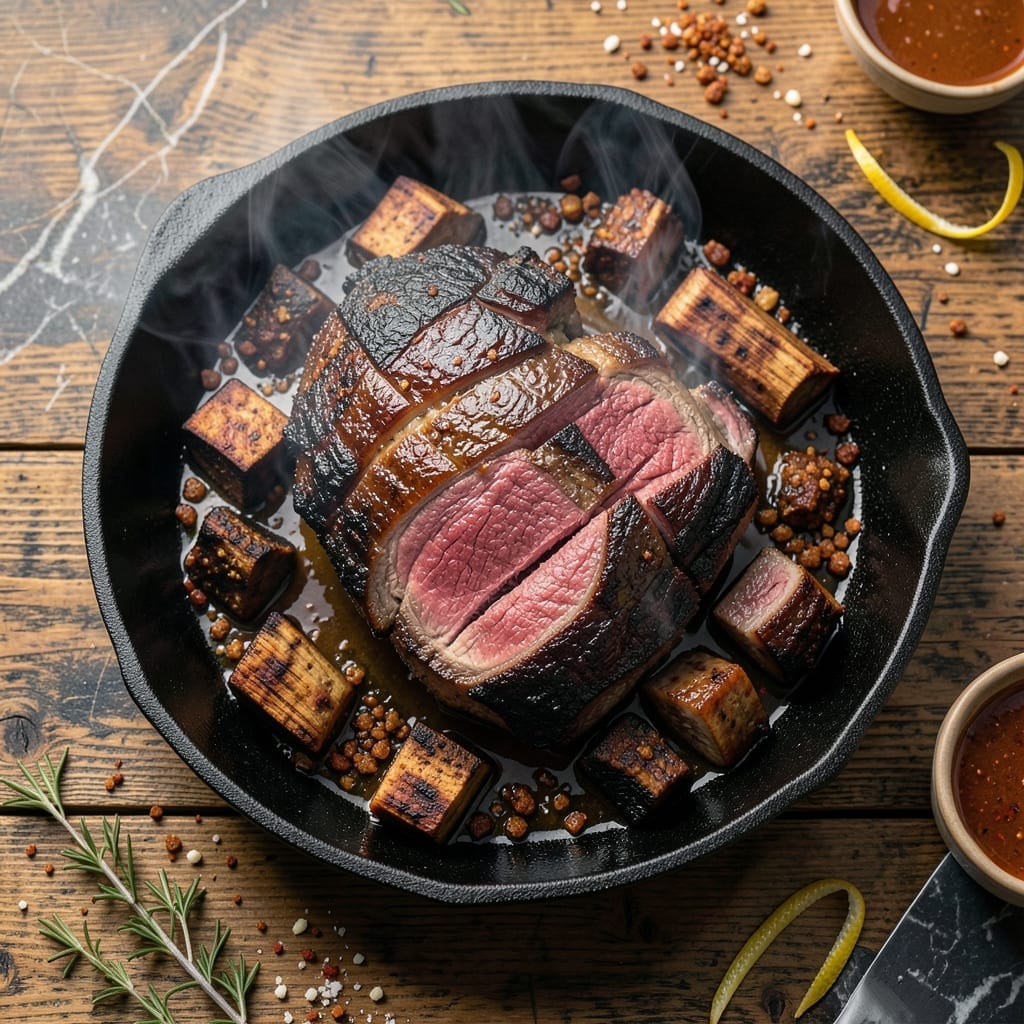
Oak-smoked chuck roast transforms tough meat into fall-off-the-bone tenderness with slow, steady heat. My French training meets pitmaster instincts in this method.
This barbecue approach delivers consistent results every time. The smoke penetrates deep while the low temperature breaks down the fibers for that signature melt-in-your-mouth texture.
Ingredients for Barbecue Chuck Roast
Pantry staples plus a well-chosen roast. Nothing exotic, just flavor builders for the smoker.
| Ingredient | Amount | Notes |
|---|---|---|
| Chuck Roast 🥩 | 3 lb | Well-marbled, trimmed of excess fat |
| Oak Wood Chunks 🪵 | 4 cups | For smoking, soaked in water |
| Brown Sugar 🧈 | ½ cup | Light or dark variety |
| Paprika 🌶️ | 2 tbsp | Smoked paprika preferred |
| Garlic Powder 🧄 | 1 tbsp | Fresh minced works too |
| Onion Powder 🧅 | 1 tbsp | Ground from dried onions |
| Kosher Salt 🧂 | 1 tbsp | Diamond Crystal preferred |
| Black Pepper 🌶️ | 1 tbsp | Freshly ground for best flavor |
| Apple Cider Vinegar 🍏 | ½ cup | For tangy balance |
| Tomato Paste 🍅 | ¼ cup | Double-concentrated preferred |
| Worcestershire Sauce 💧 | 2 tbsp | Adds umami depth |
| Yellow Mustard 🟡 | 2 tbsp | For rub binding |
| Beef Broth 🥩 | 1 cup | Low-sodium recommended |
[recipe_ingredient_scaler]
The chuck roast is non-negotiable—look for heavy marbling (those white fat streaks) at Costco or your local butcher. Avoid lean cuts like sirloin; they won’t get tender. Oak wood gives that classic BBQ flavor, but hickory or cherry work too. Soak the chunks for at least 30 minutes so they smolder, not flare up. And yes, the fat cap matters (don’t trim it all off).
No oak? Pecan or apple wood adds a milder smoke. Swap brown sugar for turbinado or maple syrup—just keep the sweetness. Out of tomato paste? Ketchup at half the amount works in a pinch, though it’s thinner. The vinegar can be white or red, but apple cider has the right tang. And if you’re worried about sodium, low-sodium Worcestershire exists (check the label).
This keeps 4-5 days in the fridge, but honestly, it’s better fresh. Freeze for up to 3 months if you must. Leftovers? Shred for sandwiches or tacos (no reheating needed).
Why You’ll Love This Recipe
- Set It and Forget: I toss the chuck roast with brown sugar and spices, then let the smoker do the work for hours.
- Smoky Sweet Crust: The oak wood chunks pair with paprika and garlic powder to create this ridiculously good bark.
- Feeds a Crowd: One roast makes enough for Sunday dinner, weekday leftovers, and maybe even a sandwich or two.
- Budget Friendly Cut: Honestly, chuck roast gives me that slow-cooked barbecue taste without the brisket price tag.
Step-by-Step Instructions for Oak-Smoked Chuck Roast
Here’s my tested method for achieving that perfect fall-apart texture with rich smoked flavor.
Step 1: Prepare the Rub and Season the Roast
In a small bowl, combine the 0.5 cup brown sugar, 2 tbsp paprika, 1 tbsp garlic powder, 1 tbsp onion powder, 1 tbsp kosher salt, and 1 tbsp black pepper. Stir until evenly mixed—this creates your flavor base.
Pat the 3 lb chuck roast completely dry with paper towels. This step is crucial for the rub to adhere properly and form a beautiful bark. Coat the entire surface of the roast with 2 tbsp yellow mustard—it acts as a binder and adds subtle tang without overpowering.
Massage the dry rub mixture all over the mustard-coated roast, pressing firmly to ensure it sticks. The surface should be completely covered with no bare spots. Let it sit at room temperature for 30 minutes while you prepare the smoker.
Step 2: Set Up Your Smoker for Low and Slow Cooking
Soak the 4 cups oak wood chunks in water for at least 30 minutes before using. This prevents them from burning too quickly and ensures steady smoke production. Drain them just before adding to the smoker.
Preheat your smoker to 225-250°F. I recommend using a water pan in the smoker to maintain moisture during the long cook. Once the smoker reaches temperature and produces thin blue smoke (not thick white smoke), you’re ready to begin.
Place the seasoned chuck roast directly on the grates, fat-side up. The fat cap will render down during cooking, basting the meat and adding incredible flavor. Close the lid and resist the urge to peek—every time you open it, you lose heat and add to your cooking time.
Step 3: Smoke and Build the Bark
Smoke the roast undisturbed for 4-5 hours until it develops a dark, caramelized bark on the surface. This is where the magic happens—the spices in the rub combine with the smoke to create a flavorful crust.
After the initial smoke period, check the internal temperature. You’re aiming for 160-165°F at this stage. The meat will likely hit a stall here where the temperature plateaus as moisture evaporates—this is completely normal and part of the process.
In a bowl, whisk together the 0.5 cup apple cider vinegar, 0.25 cup tomato paste, 2 tbsp Worcestershire sauce, and 1 cup beef broth until smooth. This will be your mop sauce to keep the roast moist during the final cooking phase.
Step 4: Wrap and Finish the Cook
Once the roast hits 165°F internally, transfer it to a large sheet of heavy-duty aluminum foil. Pour about half of your mop sauce over the roast, then wrap it tightly in the foil. This braising step helps power through the stall and ensures the meat stays moist.
Return the wrapped roast to the smoker and continue cooking until the internal temperature reaches 200-203°F. This usually takes another 3-4 hours, but trust the temperature over time. The roast is done when a probe slides in like butter with no resistance.
During this phase, check the smoker every 45-60 minutes to ensure it maintains temperature. Add more soaked oak wood chunks as needed to keep that steady smoke going.
Step 5: Rest and Serve
Carefully remove the roast from the smoker and transfer it to a cutting board. Unwrap the foil and let it rest for at least 30 minutes (I prefer 1 hour for maximum tenderness). This resting period allows the juices to redistribute throughout the meat.
Before serving, you can optionally shred the chuck roast with two forks—it should come apart with minimal effort. Mix in some of the reserved mop sauce for extra moisture and flavor. Serve on buns or over mashed potatoes, with extra sauce on the side for dipping.
Pro Tips For Making Barbecue Chuck Roast
- Low and Slow Wins: I learned this the hard way—rushing a chuck roast over high heat turns it into a chewy brick. Keep your smoker or grill between 225-250°F and give it 6-8 hours for that fall-apart texture.
- Dry the Roast First: Pat the chuck roast completely dry with paper towels before seasoning. Sounds weird, but it works: the rub sticks better and you’ll get a deeper bark instead of a steamy, uneven crust.
- Don’t Drown the Oak: Resist the urge to overload with wood chunks—two or three fist-sized oak pieces are plenty. Too much smoke early on can make the meat bitter, and nobody wants a roast that tastes like an ashtray.
- Rest Before Slicing: After pulling it off the heat, tent the roast with foil and let it rest for at least 20 minutes. I skip this when I’m lazy, but the juices redistribute and the meat stays moist every single time.
Health Benefits of This Dish
Rich in Iron
Chuck roast is packed with heme iron, the type your body absorbs most efficiently. A 3-ounce serving delivers about 2.5mg—that’s 14% of your daily needs. I notice my energy levels stay steady when I include this in my meals regularly. 💪
Protein Powerhouse
With about 25 grams of protein per 3-ounce serving, this cut supports muscle repair and growth. The slow cooking breaks down collagen into gelatin, making that protein easier to digest than quicker-cooked meats.
The amino acid profile is complete, providing all nine essentials your body can’t produce on its own. Perfect for post-ride recovery after my coastal motorcycle trips.
B Vitamin Boost
You’ll get a solid dose of B12, B6, and niacin from this dish. These vitamins help convert food into energy and support nervous system health. A 3-ounce portion covers about 30% of your daily B12 needs.
Zinc for Immunity
Beef is one of the best sources of zinc, with chuck roast providing about 7mg per serving—nearly 64% of your daily value. This mineral plays a key role in immune function and wound healing.
Healthy Fats
The marbling in chuck roast contains monounsaturated fats, similar to those in olive oil. These heart-healthy fats help reduce bad cholesterol levels when consumed as part of a balanced diet. 💛
Nutrition Facts
Frequently Asked Questions
Can I use a different type of wood for smoking?
Hickory adds stronger flavor, while apple or cherry gives a sweeter touch. Soak any wood for 30 minutes first to prevent flaring.
How do I know when it’s done?
Use a meat thermometer—the roast is ready at 200-203°F internally. It should probe like butter with no resistance. Never rely on time alone.
Is resting really necessary?
Yes! Resting for 30-60 minutes lets juices redistribute. Skipping this step means dry meat as all the moisture will spill out when you slice.
Can I make this in an oven instead?
Yes, use 250°F and follow the same steps, but add 1 hour to cooking time. Use a roasting pan with a rack for air circulation.

Trained in classic French technique but raised on slow-cooked ribs and spicy rubs, she blends culinary skill with smoke and soul.
- Recipe for Boneless Pork Chops in Cast Iron Skillet: Sear and Baste to Juicy Perfection - October 3, 2026
- Recipe for Boneless Cross Rib Roast: Slow-Roasted Beef with Herb Crust - October 3, 2026
- Hamburgers in Sauce Recipe Crock Pot: Slow-Cooked Savory Delight - October 3, 2026