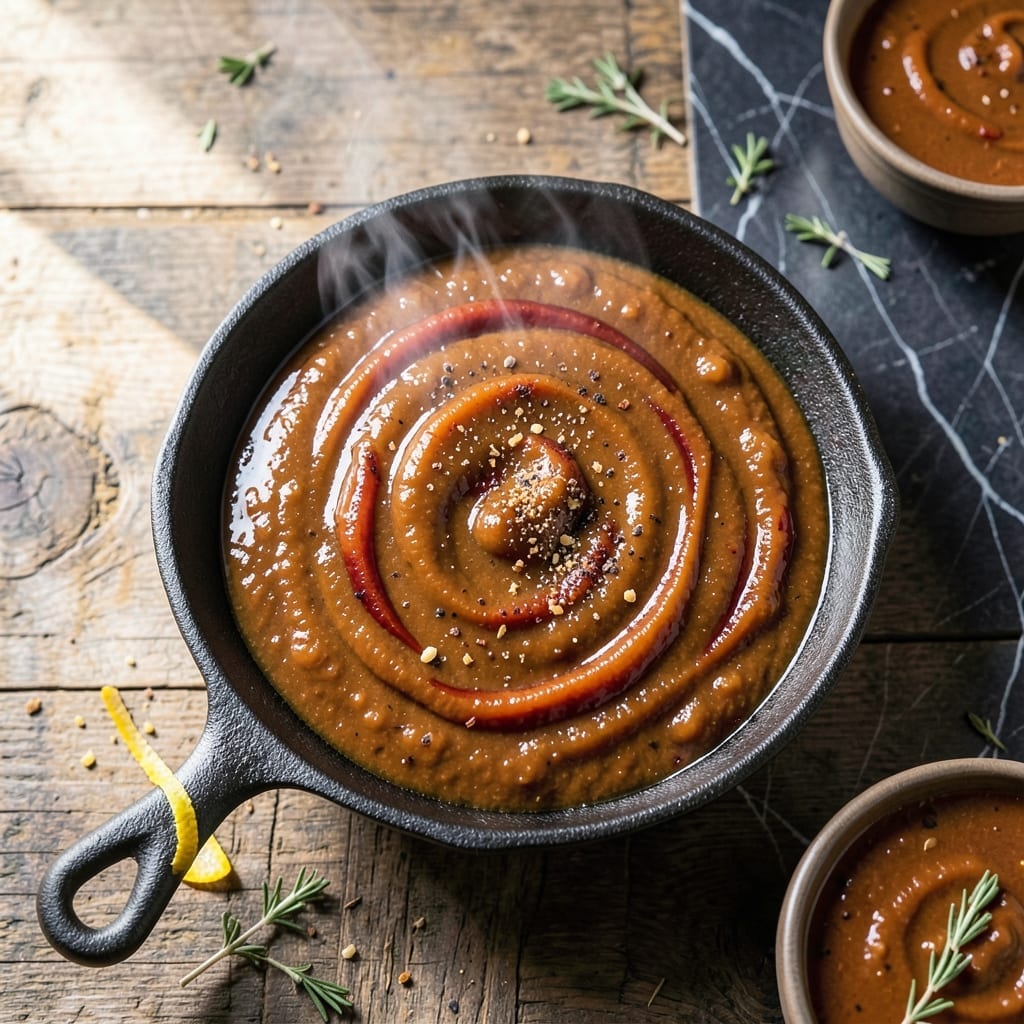
This sauce transforms any pizza into a smoky, tangy masterpiece. I developed it to bring pitmaster-level flavor to my wood-fired creations.
With just a few pantry staples, you’ll create a rich, balanced base that pairs perfectly with grilled meats and melted cheese. No cooking required—just mix and spread.
Ingredients for Barbecue Pizza Sauce
Ten simple ingredients create that signature smoky-sweet tang for your pizza base.
| Ingredient | Amount | Notes |
|---|---|---|
| Tomato Paste 🍅 | ¾ cup | High-quality for depth of flavor |
| Apple Cider Vinegar 🍏 | ¼ cup | For tangy brightness balance |
| Molasses 🍯 | 2 tbsp | Dark for rich smoky sweetness |
| Worcestershire Sauce 💧 | 1 tbsp | Adds umami complexity depth |
| Smoked Paprika 🌶️ | 1 tsp | Essential for authentic smokiness |
| Garlic Powder 🧄 | 1 tsp | Fine powder for even distribution |
| Onion Powder 🧅 | 1 tsp | Complements garlic perfectly balanced |
| Salt 🧂 | ½ tsp | Kosher or sea salt preferred |
| Black Pepper 🌶️ | ½ tsp | Freshly ground for best aroma |
| Brown Sugar 🍚 | 2 tbsp | Light or dark works equally |
[recipe_ingredient_scaler]
The tomato paste is your foundation—San Marzano double-concentrate from Mutti or Cento gives that restaurant-quality depth. Molasses adds the dark, caramelized backbone; Grandma’s or Brer Rabbit are solid grocery store picks. Don’t skip the smoked paprika (I use Penzeys), it’s what makes this taste like it came from a pitmaster’s kitchen. All these are shelf-stable, so stock up during sales.
No molasses? Honey or maple syrup at equal amounts work (though molasses brings more depth). Out of smoked paprika? Regular paprika plus half a teaspoon liquid smoke gets close. The Worcestershire can be swapped for soy sauce or coconut aminos—just reduce salt slightly. Apple cider vinegar is non-negotiable though; its brightness cuts through the richness perfectly.
This keeps beautifully. 1 week in the fridge in a sealed jar, or 3 months frozen in portion-sized containers. I always make a double batch—it’s just as good on burgers, chicken wings, or as a dipping sauce for fries.
Why You’ll Love This Recipe
- Five-Minute Mix: I dump all the ingredients in one bowl—tomato paste, vinegar, molasses—and stir. No chopping, no fuss.
- Smoky Sweet Balance: The molasses and smoked paprika hit that perfect sweet-and-smoky note every time. Honestly, it’s the sauce I crave on pizza night.
- Freezer Favorite: I make a double batch and freeze half for next month’s game day. So easy to pull out when I need a quick win.
- Pantry Staples Only: Between us, I always have these ingredients on hand. No last-minute grocery runs, just flavor ready to go.
Step-by-Step Instructions for Barbecue Pizza Sauce
Here’s the method. Straightforward, tested, works every time.
Step 1: Combine the Base Ingredients
In a medium saucepan, combine the 0.75 cup Tomato Paste, 0.25 cup Apple Cider Vinegar, 2 tbsp Molasses, and 1 tbsp Worcestershire Sauce. Use a whisk to break up any lumps in the tomato paste and blend everything into a smooth, thick liquid.
This combination creates the foundation of your sauce. The tomato paste brings concentrated flavor, the vinegar adds necessary acidity, while the molasses introduces deep, caramelized sweetness that balances the tang. Heat the mixture over medium-low heat to begin the cooking process gently.
Step 2: Incorporate the Spices and Seasonings
Add the 1 tsp Smoked Paprika, 1 tsp Garlic Powder, 1 tsp Onion Powder, 0.5 tsp Salt, and 0.5 tsp Black Pepper to the saucepan. Stir thoroughly to distribute the spices evenly throughout the mixture.
The smoked paprika is non-negotiable here—it delivers that signature smoky depth that defines barbecue flavor. The garlic and onion powders dissolve completely into the warm liquid, creating a uniform seasoning without any grainy texture. Let this simmer for 2-3 minutes to bloom the spices.
Step 3: Sweeten and Simmer to Perfection
Stir in the 2 tbsp Brown Sugar until fully dissolved. This final addition rounds out the flavor profile, adding molasses-like richness with a hint of caramel. The sugar should incorporate completely, leaving no visible granules.
Reduce heat to low and let the sauce simmer uncovered for 15-20 minutes. Stir occasionally to prevent sticking, and watch as the mixture thickens slightly and deepens in color. You’ll notice the sauce transform from a bright red to a richer, more complex hue as the flavors meld together.
Taste and adjust seasoning if needed, though the measured ingredients should provide perfect balance. The sauce should coat the back of a spoon with a glossy sheen when it’s ready.
Step 4: Cool and Store for Optimal Flavor
Remove the saucepan from heat and let the sauce cool to room temperature. As it cools, it will thicken further, reaching the ideal consistency for spreading on pizza dough without making it soggy.
Transfer to an airtight container. For best results, refrigerate for at least 2 hours before using. This resting time allows all the flavors to fully develop and harmonize. The sauce will keep in the refrigerator for up to 1 week, and the flavors will continue to improve over time.
Pro Tips For Making Barbecue Pizza Sauce
- Simmer Low and Slow: Cook the sauce on low heat for at least 15-20 minutes—any higher and the molasses will scorch, leaving a bitter aftertaste. I learned this the hard way after ruining two batches by rushing it.
- Bloom the Paprika: Toast the smoked paprika in the pot for 30 seconds before adding liquids. Sounds weird, but it works: this wakes up the smoky depth that makes the sauce taste like it’s been slow-cooked all day.
- Balance the Vinegar: Apple cider vinegar can overpower if you’re heavy-handed—start with half the amount, taste, then add more. After burning my tongue on an overly tangy batch, I now measure with a light pour.
- Thin with Care: If the sauce thickens too much, use a splash of water or broth to loosen it, not more vinegar. I was skeptical until I tried it, but this keeps the flavor rich instead of watery or sour.
Wine and Beer Pairings for These Flavors
Bold Red Wines
A Zinfandel from California’s Dry Creek Valley matches the sauce’s smoky sweetness beautifully. Its jammy fruit and peppery finish complement the molasses and smoked paprika. I reach for Ravenswood for reliable quality. 🍷
Crisp White Wines
Surprisingly, a chilled Viognier works wonders—the stone fruit notes contrast the tangy vinegar while the body stands up to the sauce’s richness. Try Yalumba from Australia.
American Craft Beers
An amber ale like Fat Tire from New Belgium Brewery mirrors the caramelized brown sugar notes. The malt sweetness enhances the sauce without overwhelming it. 🍺
Smoky Porter
A robust porter with coffee notes—Deschutes Black Butte is my go-to—pairs perfectly with the sauce’s depth. The roasted malt echoes the smoked paprika beautifully.
Non-Alcoholic Option
For a zero-proof pairing, try sparkling apple cider—its effervescence cuts through the richness while the apple notes harmonize with the vinegar base. Martinelli’s is widely available.
Nutrition Facts
Frequently Asked Questions
Can I make this without cooking?
Yes, but simmering for 15-20 minutes deepens the flavors significantly. Without heat, the spices won’t bloom and the molasses won’t caramelize, resulting in a flatter taste.
What can I use instead of molasses?
Honey or maple syrup work in equal amounts, though they lack molasses’ deep caramel complexity. For best results, stick with the original.
How long does this sauce last?
It stays fresh for 1 week refrigerated in an airtight container. For longer storage, freeze for up to 3 months.
Why is apple cider vinegar important?
It adds essential acidity to balance the sweetness. Other vinegars can work, but the apple flavor complements the sauce’s smoky profile perfectly.

Trained in classic French technique but raised on slow-cooked ribs and spicy rubs, she blends culinary skill with smoke and soul.
- Recipe for Boneless Pork Chops in Cast Iron Skillet: Sear and Baste to Juicy Perfection - October 3, 2026
- Recipe for Boneless Cross Rib Roast: Slow-Roasted Beef with Herb Crust - October 3, 2026
- Hamburgers in Sauce Recipe Crock Pot: Slow-Cooked Savory Delight - October 3, 2026