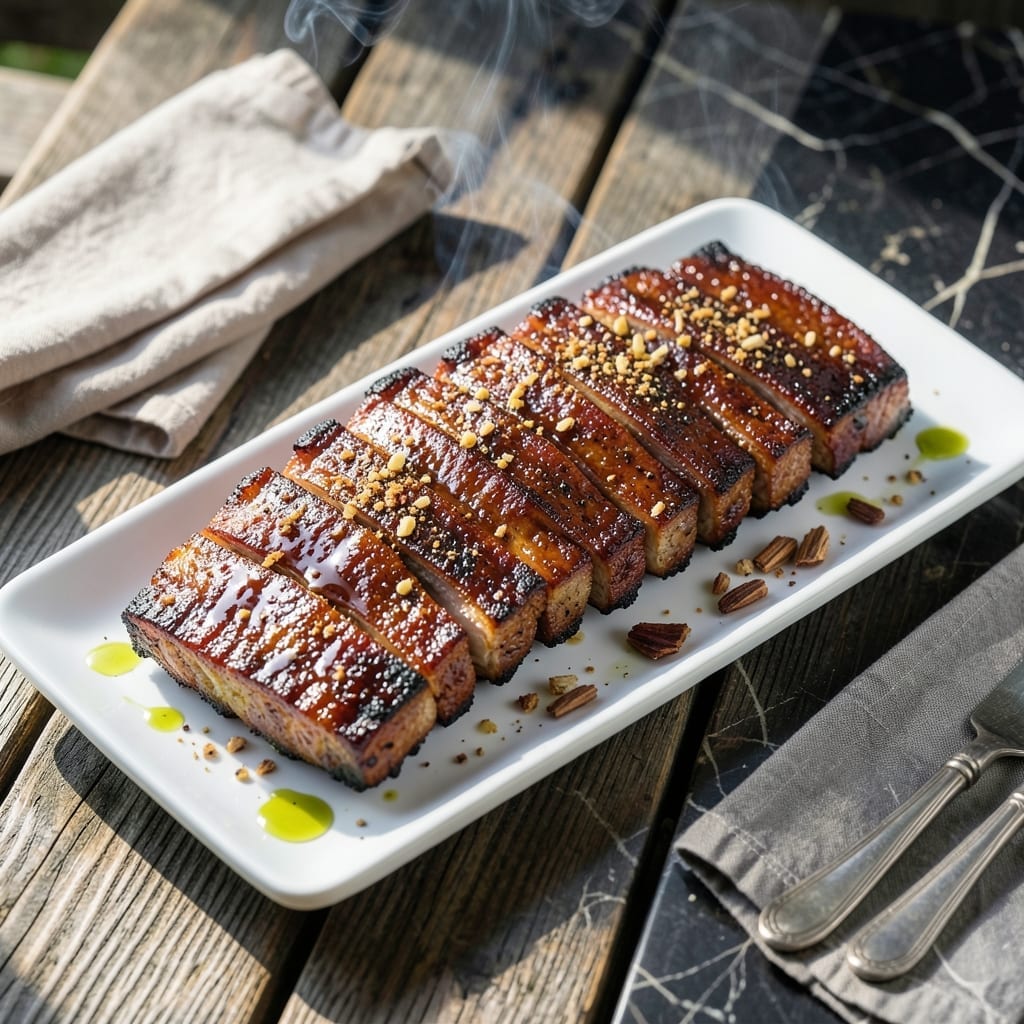
There’s nothing quite like the deep, smoky aroma of slow-cooked ribs filling the air. This method delivers perfectly tender meat with a rich, caramelized crust.
I developed this technique blending classic pitmaster wisdom with precise French methods. The dry rub forms a flavorful bark while the low heat ensures fall-off-the-bone results.
Ingredients for Barbecue Pork Back Ribs
Full rack ribs and a bold dry rub deliver that competition-level bark and tenderness.
| Ingredient | Amount | Notes |
|---|---|---|
| Pork Back Ribs 🥩 | 3 lb | Full rack, membrane removed |
| Kosher Salt 🧂 | ¼ cup | Diamond Crystal preferred |
| Black Pepper 🌶️ | 2 tbsp | Freshly ground, coarse |
| Paprika 🌶️ | 2 tbsp | Sweet or smoked variety |
| Garlic Powder 🧄 | 1 tbsp | Not garlic salt |
| Onion Powder 🧅 | 1 tbsp | Fresh ground preferred |
| Brown Sugar 🍚 | ¼ cup | Light or dark, packed |
| Cayenne Pepper 🔥 | 1 tsp | Adjust for heat preference |
| Dried Mustard 🌿 | 1 tbsp | Powdered, for depth |
| Apple Cider Vinegar 🍏 | 2 tbsp | For tang in rub |
| Yellow Mustard 🟡 | ¼ cup | Binder for dry rub |
| Wood Chips 🌳 | 2 cups | Hickory or apple preferred |
| Barbecue Sauce 🍲 | 1 cup | For finishing, optional |
[recipe_ingredient_scaler]
The ribs are the foundation—look for well-marbled pork back ribs (about 3 pounds per rack) from a trusted butcher or Costco. The membrane must be removed (a butter knife and paper towel trick works). For the dry rub, freshly ground black pepper and Diamond Crystal kosher salt create that signature bark texture. Wood chips matter too: hickory gives classic smoke, while applewood adds sweetness.
No pork back ribs? Baby back ribs work in a pinch but cook faster. Out of brown sugar? Turbinado or raw sugar at equal amounts. Skip the cayenne for mild heat. The yellow mustard binder can be swapped for Dijon or olive oil—just enough to make the rub stick. For wood chips, cherry or pecan add interesting depth if hickory isn’t available.
Rub the ribs up to 24 hours ahead for maximum flavor penetration (worth the extra minute). Store uncooked ribs in the fridge for 2-3 days or freeze for 3 months. Leftover smoked ribs reheat beautifully wrapped in foil with a splash of apple juice.
Why You’ll Love This Recipe
- Set It and Forget: I rub the ribs with salt, pepper, paprika, and garlic powder, then let the oven do the work for hours.
- Smoky Sweet Crust: The dry rub turns into a dark, sticky bark that cracks when you bite into it.
- Feeds a Hungry Table: I make a double rack for Sunday suppers and everyone leaves full and happy.
- Leftovers for Days: The meat pulls off the bone just as well the next day, so I always have extra for sandwiches.
Step-by-Step Instructions for Barbecue Pork Back Ribs
Master the technique for fall-off-the-bone ribs with a perfectly balanced dry rub and smoke.
Step 1: Prepare and Season the Pork Back Ribs
Begin by patting the 3 lb pork back ribs completely dry with paper towels. This critical step ensures the dry rub adheres properly and promotes optimal bark formation during smoking.
In a bowl, combine the 0.25 cup kosher salt, 2 tbsp black pepper, 2 tbsp paprika, 1 tbsp garlic powder, 1 tbsp onion powder, 0.25 cup brown sugar, 1 tsp cayenne pepper, and 1 tbsp dried mustard. Stir in the 2 tbsp apple cider vinegar and 0.25 cup yellow mustard to create a thick paste. Apply this mixture generously to all sides of the ribs, pressing it into the meat. Let the seasoned ribs rest at room temperature for 30 minutes while you prepare the smoker.
Step 2: Set Up the Smoker for Indirect Heat
Soak the 2 cups wood chips in water for 30 minutes to ensure they produce clean, consistent smoke. Drain them just before use. Set up your smoker for indirect heat, maintaining a temperature of 225-250°F.
Once the smoker reaches the desired temperature, add the drained wood chips to the coals or smoke box. When you see a steady stream of thin blue smoke, you’re ready to begin cooking. Avoid thick white smoke, as it can impart a bitter flavor to the ribs.
Step 3: Smoke the Ribs Low and Slow
Place the seasoned ribs bone-side down on the smoker grates, away from direct heat. Close the lid and smoke undisturbed for 3 hours. Resist the urge to peek, as this causes temperature fluctuations and extends the cooking time.
After 3 hours, check the ribs. They should have developed a deep reddish-brown color. Wrap the ribs tightly in heavy-duty aluminum foil with ¼ cup apple cider vinegar to help tenderize the meat. Return them to the smoker and continue cooking for another 1.5-2 hours.
Step 4: Finish and Sauce the Ribs
Remove the ribs from the foil and place them back on the smoker grates. Brush both sides with 1 cup barbecue sauce if using. Smoke uncovered for an additional 30-45 minutes to set the sauce and achieve a sticky, caramelized finish.
You’ll know the ribs are done when the meat has pulled back from the bones by about ¼ inch and the internal temperature reaches 195-203°F. The ribs should bend slightly when picked up with tongs, but not fall apart completely.
Step 5: Rest and Serve
Transfer the ribs to a cutting board and tent loosely with foil. Let them rest for 10-15 minutes to allow the juices to redistribute throughout the meat. This step ensures the ribs remain moist and tender when sliced.
Slice the ribs between the bones and serve immediately. The meat should be tender enough to pull away from the bone with a gentle tug, with a perfect balance of smoky flavor and spicy-sweet seasoning. Any remaining barbecue sauce can be served on the side for dipping.
Pro Tips For Making Barbecue Pork Back Ribs
- Dry the Ribs First: Pat the ribs completely dry with paper towels before seasoning—moisture is the enemy of a good bark, and I learned this the hard way after my first three attempts came out steamed instead of smoky.
- Low and Slow Wins: Keep your grill or oven at 225°F and resist the urge to crank it up. After burning a rack to charcoal, I finally accepted that patience is what turns tough ribs fall-off-the-bone tender.
- Skip the Overcrowding: Give each rack its own space on the grill or oven rack—crowding them steams the ribs instead of letting them caramelize, and yes, I’ve ruined a perfectly good slab by trying to fit too many at once.
- Rest Before Serving: Tent the ribs with foil and let them rest for 10-15 minutes after cooking—this lets the juices redistribute, and my grandmother swore by it, even if it’s torture waiting to dig in.
Regional Styles of This Recipe
Memphis Dry Rub
This Tennessee classic skips the sauce entirely, relying on a bold dry rub. I use a mix of paprika, garlic powder, and brown sugar for that signature Memphis flavor. The ribs get dusted with extra rub after smoking for a powerful bark. 🌶️
Kansas City Style
Here, it’s all about the sauce—thick, sweet, and tangy. I brush on 1 cup barbecue sauce during the last 30-45 minutes of smoking. The sauce caramelizes beautifully, creating a sticky, glossy finish that’s become iconic.
Texas Twist
Everything’s bigger in Texas, including the flavor. I add 1 tbsp chili powder and 1 tsp cumin to the dry rub for a Southwestern kick. The ribs are smoked with pecan wood for a deeper, nuttier profile.
Carolina Vinegar
Eastern Carolina pitmasters swear by vinegar-based sauces. After smoking, I spritz the ribs with a mix of apple cider vinegar and red pepper flakes for that signature tangy heat. It cuts through the richness perfectly.
This style is all about the balance of acidity and spice.
St. Louis Style
These ribs are trimmed St. Louis-style—square-cut with the sternum bone, cartilage, and rib tips removed. I use a slightly sweeter rub with extra brown sugar to complement the uniform shape. They cook more evenly and look stunning on the plate.
Nutrition Facts
Frequently Asked Questions
How long does it take to smoke pork back ribs?
Total smoking time is 4.5-5.5 hours at 225-250°F. This includes 3 hours unwrapped, 1.5-2 hours wrapped, and 30-45 minutes for saucing.
Should I remove the membrane from back ribs?
Always remove the tough membrane first. Use a butter knife to lift it, then pull it off with a paper towel for better grip. This ensures the rub penetrates and the bark forms properly.
What’s the ideal internal temperature for done ribs?
Aim for 195-203°F internally. The meat will pull back from bones by ¼ inch and bend slightly when picked up. This guarantees tender, juicy results every time.
Can I use an oven instead of a smoker?
Yes, bake at 275°F for 2.5-3 hours wrapped in foil, then finish with sauce under the broiler. Add liquid smoke to the rub for that classic flavor.

Trained in classic French technique but raised on slow-cooked ribs and spicy rubs, she blends culinary skill with smoke and soul.
- Recipe for Boneless Pork Chops in Cast Iron Skillet: Sear and Baste to Juicy Perfection - October 3, 2026
- Recipe for Boneless Cross Rib Roast: Slow-Roasted Beef with Herb Crust - October 3, 2026
- Hamburgers in Sauce Recipe Crock Pot: Slow-Cooked Savory Delight - October 3, 2026