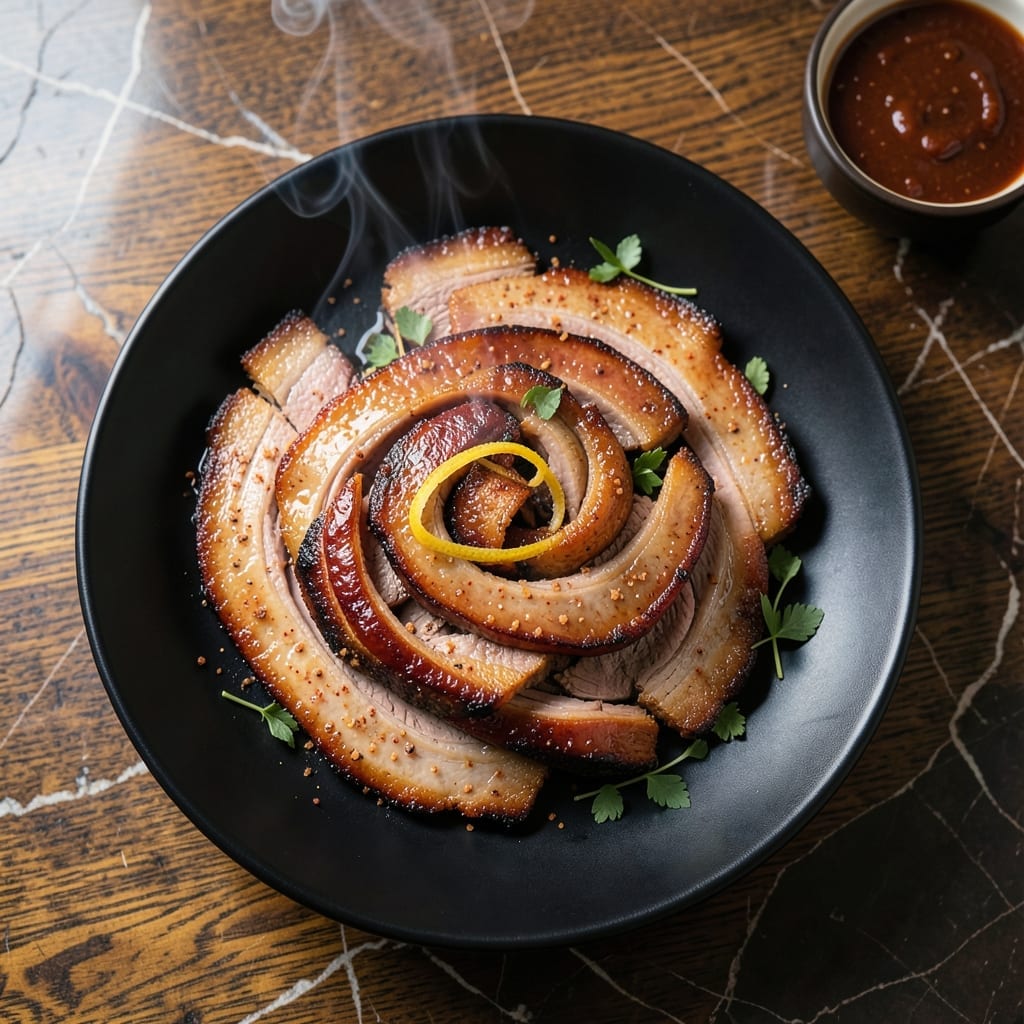
Getting my first whiff of hickory smoke at a family cookout still defines my love for barbecue. This recipe delivers smoke-kissed pork belly with crisp edges and tender centers.
Simple ingredients and precise smoking transform pork belly into succulent, caramelized strips. The method balances French technique with pitmaster tradition for restaurant-quality results at home.
Ingredients for Barbecue Pork Belly Strips
Transform pork belly into restaurant-quality strips with these precise ingredients and smoking technique.
| Ingredient | Amount | Notes |
|---|---|---|
| Pork Belly 🥓 | 2 lb | Skin-on, cut into 1-inch strips |
| Hickory Wood Chips 🪵 | 2 cups | Soaked in water 1 hour |
| Kosher Salt 🧂 | 1 tbsp | Diamond Crystal preferred for even curing |
| Light Brown Sugar 🍚 | ½ cup | Packed, for bark formation |
| Black Pepper 🌶️ | 1 tbsp | Freshly cracked, coarse grind |
| Smoked Paprika 🌶️ | 1 tbsp | Spanish variety for depth |
| Garlic Powder 🧄 | 1 tbsp | Not garlic salt for pure flavor |
| Onion Powder 🧅 | 1 tbsp | Enhances savory base notes |
| Cayenne Pepper 🔥 | ½ tsp | Adjust for heat preference |
| Apple Cider Vinegar 🍏 | ¼ cup | Balances richness with acidity |
| Yellow Mustard 🟡 | 2 tbsp | Binds dry rub to pork |
| Barbecue Sauce 🍯 | 1 cup | High-quality, low-sugar preferred |
| Olive Oil 🫒 | 2 tbsp | For searing finish |
| Honey 🍯 | 2 tbsp | For glaze sheen |
[recipe_ingredient_scaler]
The pork belly is non-negotiable—skin-on, well-marbled slabs from a trusted butcher or Whole Foods yield the best texture. Avoid pre-cubed versions, as they lack the structural integrity for proper smoking. Hickory wood chips are essential for that authentic barbecue aroma; apple or cherry wood works in a pinch but won’t deliver the same depth. Soak the chips for at least one hour to ensure slow, steady smoke.
No hickory chips? Pecan or oak provide similar robustness. For the rub, turbinado sugar can replace brown sugar, though the molasses notes will be less pronounced. The yellow mustard is purely a binder—Dijon works too (just use half the amount). If avoiding refined sugar, maple syrup substitutes for honey in the glaze, though it may darken faster during searing.
The dry rub can be mixed and stored in an airtight container for up to 3 months. Pork belly freezes beautifully for 6 months—vacuum-seal for best results. Once smoked, the strips keep in the fridge for 5 days, though they’re best served immediately for maximum crispness.
Why You’ll Love This Recipe
- One Pan Wonder: I just toss the pork belly with the salt, sugar, and pepper, then let the smoker do the work.
- Smoky Sweetness: That hickory wood chips flavor mixed with the brown sugar glaze? Ridiculously good.
- Crowd Pleaser: I’ve served these at backyard BBQs and weeknight dinners—always the first thing to disappear.
- Leftovers Magic: Honestly, they taste even better the next day in tacos or fried rice.
Step-by-Step Instructions for Smoke-Kissed Pork Belly Strips
Master the technique for achieving crisp edges and tender meat with this tested approach.
Step 1: Prepare and Cure the Pork Belly
Pat the 2 lb Pork Belly strips dry with paper towels to ensure the cure adheres properly. In a bowl, combine the 1 tbsp Kosher Salt, 0.5 cup Light Brown Sugar, 1 tbsp Black Pepper, 1 tbsp Smoked Paprika, 1 tbsp Garlic Powder, 1 tbsp Onion Powder, and 0.5 tsp Cayenne Pepper.
Rub this mixture evenly over all surfaces of the pork belly strips, pressing it in to create a solid crust. Place the strips on a wire rack set over a baking sheet and refrigerate uncovered for 12-24 hours to allow the cure to penetrate deeply and form the foundation of your bark.
Step 2: Smoke the Pork Belly to Perfection
Soak the 2 cups Hickory Wood Chips in water for 1 hour before use. Preheat your smoker to 225°F and add the drained wood chips once it reaches temperature. Place the cured pork belly strips directly on the grates, leaving space between each for smoke circulation.
Smoke the strips for 3-4 hours until they develop a deep mahogany bark and reach an internal temperature of 165°F. Maintain consistent temperature throughout—fluctuations can toughen the meat. Spritz with the 0.25 cup Apple Cider Vinegar every 45-60 minutes to keep the surface moist and enhance bark formation.
Step 3: Apply the Glaze and Finish
In a small bowl, whisk together the 1 cup Barbecue Sauce, 2 tbsp Yellow Mustard, 2 tbsp Olive Oil, and 2 tbsp Honey until smooth. This glaze will caramelize beautifully on the smoked pork belly.
During the last 30 minutes of smoking, brush the glaze generously over the pork belly strips every 10 minutes. This creates a sticky, glossy finish while adding layers of sweet and tangy flavor. The strips are ready when they reach an internal temperature of 195-203°F and the bark is set but not burnt.
Step 4: Rest and Serve
Transfer the glazed pork belly strips to a cutting board and let them rest for 10-15 minutes. This allows the juices to redistribute and the glaze to set slightly, ensuring each bite is moist and flavorful.
Slice the strips into bite-sized pieces if desired, or serve whole for a rustic presentation. The exterior should offer a satisfying resistance when bitten into, giving way to tender, smoke-infused meat within. The balance of sweet, spicy, and smoky flavors should be evident in every piece.
Pro Tips For Making Barbecue Pork Belly Strips
- Score the Skin: Cut 1/4-inch deep slashes across the pork belly skin before seasoning—this lets the fat render out and the smoke penetrate, and I learned this the hard way after my first batch came out greasy.
- Soak the Wood: Submerge hickory chips in water for at least 30 minutes before smoking; dry wood burns too fast and gives bitter flavor, and after ruining a brisket with unsoaked chips, I never skip this.
- Low and Slow: Keep your smoker or grill between 225-250°F and give it 3-4 hours—rushing with higher heat leaves the belly tough, and my first attempt at 300°F was inedible.
- Rest Before Slicing: Let the pork belly rest 15 minutes under foil after smoking, or the juices will flood your cutting board; I skip this when I’m hungry, but the slices are noticeably juicier when I don’t.
Dietary Considerations for barbecue pork belly strips
Keto-Friendly Adaptation
This dish can fit a keto diet with simple tweaks. Replace the 0.5 cup Light Brown Sugar in the rub with ½ cup erythritol or allulose—both maintain sweetness without carbs. Swap the 2 tbsp Honey in the glaze for sugar-free maple syrup. 💪
Gluten-Free Considerations
Most ingredients are naturally gluten-free, but verify your Barbecue Sauce and Yellow Mustard. I recommend Stubb’s Original sauce and French’s mustard as safe, widely available options. Always check labels for hidden gluten in spices or sauces.
Dairy-Free Naturally
This recipe is inherently dairy-free—no butter, cheese, or milk products are used. The only potential concern is cross-contamination in shared smokers. If cooking for someone with severe allergies, clean grates thoroughly and use fresh Hickory Wood Chips.
Lower Sodium Option
To reduce sodium, cut the 1 tbsp Kosher Salt in half and replace with 1 tsp celery salt for depth. Use low-sodium barbecue sauce and skip added salt in the glaze. The Smoked Paprika and Garlic Powder will still provide plenty of flavor.
Pescatarian Alternative
For a plant-based twist, swap pork belly for thick-cut tempeh strips. Marinate in the same rub for 4 hours before smoking. The texture won’t replicate pork, but the smoky, spicy flavors translate beautifully. I’ve had great results with Lightlife Original Tempeh. 🌱
Nut Allergy Note
This recipe is naturally nut-free, but always verify your Barbecue Sauce and spice blends—some brands process in facilities with nuts. For absolute safety, make your own sauce using tomato paste, apple cider vinegar, and spices.
Nutrition Facts
Frequently Asked Questions
Should I remove the skin before smoking?
No! The skin helps hold the strips together during smoking. It will crisp up beautifully and add texture to the final dish.
Can I use an oven instead of a smoker?
Yes. Set your oven to 225°F and use a roasting pan with a rack. Add 1-2 drops of liquid smoke to the glaze for authentic flavor.
Why did my pork belly turn out tough?
Likely smoked at too high a temperature or not rested enough. Stick to 225°F and let strips rest for 10-15 minutes before serving.
How long will leftovers keep?
Store in an airtight container in the fridge for up to 5 days. Reheat in a 350°F oven for 10 minutes to restore crispness.

Trained in classic French technique but raised on slow-cooked ribs and spicy rubs, she blends culinary skill with smoke and soul.
- Recipe for Boneless Pork Chops in Cast Iron Skillet: Sear and Baste to Juicy Perfection - October 3, 2026
- Recipe for Boneless Cross Rib Roast: Slow-Roasted Beef with Herb Crust - October 3, 2026
- Hamburgers in Sauce Recipe Crock Pot: Slow-Cooked Savory Delight - October 3, 2026