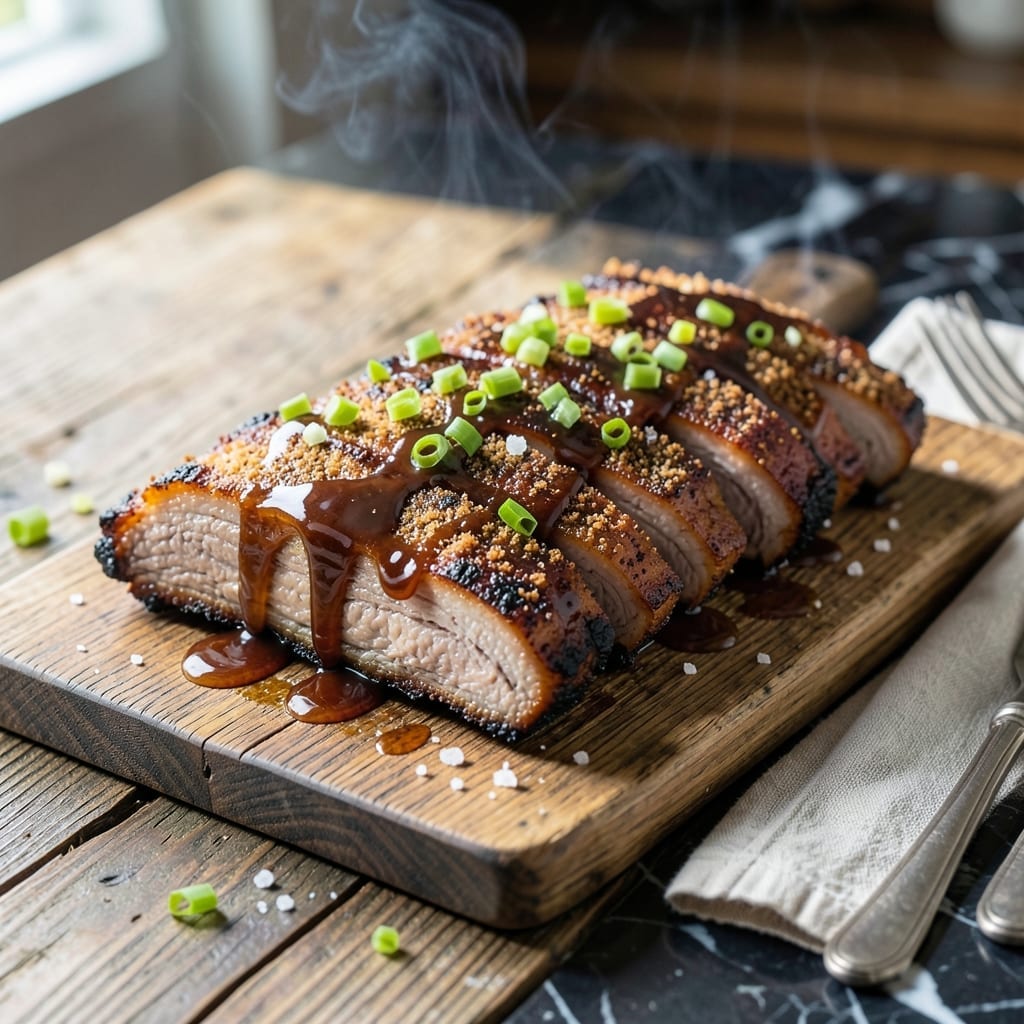
There’s nothing like the aroma of slow-smoked pork ribs developing that perfect sweet and spicy bark. This method transforms pork loin ribs into tender, fall-off-the-bone perfection.
I’ve refined this technique through years of competition and backyard cookouts. The key is patience—low heat and careful attention create that signature smoky depth and caramelized crust.
Ingredients for Barbecue Pork Loin Ribs
Transform pork loin ribs into competition-worthy barbecue with these essential ingredients for that signature bark.
| Ingredient | Amount | Notes |
|---|---|---|
| Pork Loin Back Ribs 🥩 | 2 lb | Full rack, membrane removed |
| Brown Sugar 🧈 | ½ cup | Light or dark variety |
| Paprika 🌶️ | 2 tbsp | Smoked paprika preferred |
| Garlic Powder 🧄 | 1 tbsp | Fresh ground if available |
| Onion Powder 🧅 | 1 tbsp | Fine powder consistency |
| Kosher Salt 🧂 | 1 tbsp | Coarse flakes for texture |
| Ground Black Pepper 🌶️ | 1 tbsp | Freshly ground preferred |
| Cayenne Pepper 🔥 | ½ tsp | Adjust for heat preference |
| Chili Powder 🌶️ | 1 tbsp | Mild or hot variety |
| Yellow Mustard 🟡 | ¼ cup | Binder for dry rub |
| Apple Cider Vinegar 🍏 | ¼ cup | For spritzing during smoking |
| Barbecue Sauce 🍯 | 1 cup | Sweet and tangy variety |
| Hickory Wood Chips 🪵 | 2 cups | Soaked in water for 30 minutes |
[recipe_ingredient_scaler]
The ribs are the foundation. Pork loin back ribs (sometimes called baby back ribs) offer the best meat-to-bone ratio. Look for racks with generous marbling—this fat renders down during smoking, basting the meat from within. Most butchers will remove the membrane if you ask, but it’s a quick DIY job. Costco and Sam’s Club sell high-quality bulk packs, ideal for feeding a crowd.
No smoked paprika? Regular paprika plus a pinch of chipotle powder mimics the flavor. The brown sugar can be swapped for turbinado sugar for a coarser texture. If you’re out of apple cider vinegar, white vinegar with a teaspoon of sugar per quarter cup works. For the barbecue sauce, Stubb’s or Sweet Baby Ray’s are reliable store-bought options—just avoid sauces with high fructose corn syrup if possible.
Store uncooked ribs in the fridge for up to 3 days, or freeze for 4-6 months. Once smoked, leftovers keep for 4 days refrigerated or 3 months frozen. The dry rub mix can be prepped ahead and stored in an airtight container for 1 month.
Why You’ll Love This Recipe
- Set It and Forget It: I rub the ribs with brown sugar and spices, pop them in the oven, and let them do their thing—no babysitting required.
- Smoky Sweet Perfection: The paprika and brown sugar create this crazy-good balance of sweet with just a hint of heat.
- Feeds a Crowd: I made these for a Sunday dinner and had zero leftovers—even my pickiest nephew went back for seconds.
- Leftovers for Days: Honestly, they taste even better the next day in sandwiches or tossed into tacos.
Step-by-Step Instructions for Slow-Smoked Barbecue Pork Loin Ribs
Master the art of tender ribs with a perfect bark using this tested smoking method.
Step 1: Prepare and Season the Ribs
Begin by patting the 2 lb pork loin back ribs completely dry with paper towels. This crucial step ensures the dry rub adheres properly and promotes optimal bark formation during smoking. The membrane should already be removed as specified in the preparation.
In a bowl, combine the 0.5 cup brown sugar, 2 tbsp paprika, 1 tbsp garlic powder, 1 tbsp onion powder, 1 tbsp kosher salt, 1 tbsp ground black pepper, 0.5 tsp cayenne pepper, and 1 tbsp chili powder. This blend creates the signature sweet and spicy profile.
Brush the 0.25 cup yellow mustard evenly over both sides of the ribs—this acts as a binder for the rub. Apply the spice mixture generously, pressing it into the meat to create a thick, even coating. Let the seasoned ribs rest at room temperature for 30 minutes while you prepare the smoker.
Step 2: Set Up the Smoker with Hickory Wood
Soak the 2 cups hickory wood chips in water for 30 minutes to ensure they produce clean, slow-burning smoke. Drain them just before use. Meanwhile, preheat your smoker to maintain a consistent 225°F—this low-and-slow temperature is essential for tender, fall-off-the-bone results.
Add the soaked wood chips to the smoker according to manufacturer instructions. You want to achieve a steady stream of thin, blue smoke, not thick white smoke which can impart bitter flavors. Place a water pan in the smoker to maintain moisture throughout the long cooking process.
Step 3: Smoke the Ribs Low and Slow
Place the ribs directly on the smoker grates, bone-side down. Smoke undisturbed for 3 hours. This initial phase allows the ribs to absorb maximum smoke flavor while the bark begins to form. Resist the urge to peek—every time you open the smoker, you lose heat and smoke.
After 3 hours, lightly spritz the ribs with the 0.25 cup apple cider vinegar using a spray bottle. This adds a subtle tang and helps keep the surface moist. Repeat this spritzing every 45-60 minutes for the remainder of the cook.
Step 4: Wrap and Continue Cooking
When the ribs develop a dark mahogany bark (usually after 4-5 hours total smoking time), it’s time to wrap. Lay out a large sheet of heavy-duty aluminum foil and place the ribs meat-side down in the center. Pour ½ cup barbecue sauce over the ribs, then wrap tightly.
Return the wrapped ribs to the smoker and continue cooking for another 1-1.5 hours. This wrapped phase (called the “Texas crutch”) helps tenderize the meat by steaming it in its own juices while preventing the bark from becoming too dark.
Step 5: Finish with Sauce and Rest
Carefully unwrap the ribs and place them back on the smoker grates, meat-side up. Brush with the remaining ½ cup barbecue sauce. Smoke uncovered for a final 30-45 minutes to set the sauce and firm up the bark.
The ribs are done when the meat has pulled back from the bones by about ¼ inch and the internal temperature reaches 195-203°F. Transfer to a cutting board, tent loosely with foil, and let rest for 15 minutes to allow the juices to redistribute before slicing between the bones to serve.
Pro Tips For Making Barbecue Pork Loin Ribs
- Pat Ribs Dry: I learned this the hard way—skip this and your rub won’t stick. Use paper towels to remove all moisture from the ribs before seasoning.
- Low and Slow: After burning two batches, I now cook pork loin ribs at 250°F for 3-4 hours. Any higher and the brown sugar burns before the meat tenderizes.
- Skip the Overcrowd: Resist the urge to stack ribs on the grill or smoker. Give each rack space so the heat circulates—otherwise, you’ll get uneven cooking.
- Rest Before Serving: Pull the ribs off at 190°F internal temp, tent with foil, and let them rest 10 minutes. My grandmother swore by this, and she was right: it keeps all the juices in.
Flavor Customization for These Flavors
Spice It Up
For extra heat, add 1 tsp chipotle powder to your dry rub. This gives a deep, smoky spice without overpowering. I also love blending in ½ tsp ground coriander for a citrusy note that brightens the bark. 🌶️
Sweet Variations
Swap half the brown sugar for maple sugar to add a subtle caramel depth. For a Southern twist, use ¼ cup molasses in place of some brown sugar—this creates a darker, richer bark that reminds me of my first competition ribs.
Smoky Depth
Enhance the smoke profile by adding 1 tsp ground cumin to the rub. I learned this trick from a pitmaster at a local BBQ competition—it adds an earthy complexity that pairs perfectly with hickory. For extra smokiness, use cherry wood chips alongside the hickory.
Herb Infusion
Fresh herbs can elevate your ribs. Finely chop 2 tbsp fresh rosemary and mix into the rub. Or, add 1 tbsp dried thyme for a subtle earthy note. I forage wild rosemary along the coast for an extra-special touch.
Tangy Twist
For a vinegar-forward bark, increase the apple cider vinegar in your spritz to ½ cup and add 1 tbsp lemon juice. This creates a tangier crust that cuts through the richness. I learned this from my French training—acid balances fat beautifully. 💡
Umami Boost
Add 1 tbsp instant coffee granules to your dry rub for a deep, rich umami flavor. This is a secret weapon I picked up from a fellow pitmaster. The coffee enhances the meaty flavor without making the ribs taste like a cup of joe.
Nutrition Facts
Frequently Asked Questions
Why remove the membrane from the ribs?
Removing it allows the rub to penetrate the meat and creates a better bark. It also prevents a chewy texture on the finished ribs.
Can I use a gas grill instead of a smoker?
Yes! Use indirect heat with a drip pan and wood chips in a foil packet. Maintain 225°F and add chips every 30-45 minutes for smoke.
How do I tell when the ribs are done?
The meat should pull back from the bones by ¼ inch, and the internal temp should reach 195-203°F. The bend test is another reliable method.
What if my bark isn’t forming properly?
Ensure your smoker stays at 225°F and avoid opening it too often. Spritzing with vinegar every 45-60 minutes helps maintain moisture for bark development.

Trained in classic French technique but raised on slow-cooked ribs and spicy rubs, she blends culinary skill with smoke and soul.
- Recipe for Boneless Pork Chops in Cast Iron Skillet: Sear and Baste to Juicy Perfection - October 3, 2026
- Recipe for Boneless Cross Rib Roast: Slow-Roasted Beef with Herb Crust - October 3, 2026
- Hamburgers in Sauce Recipe Crock Pot: Slow-Cooked Savory Delight - October 3, 2026