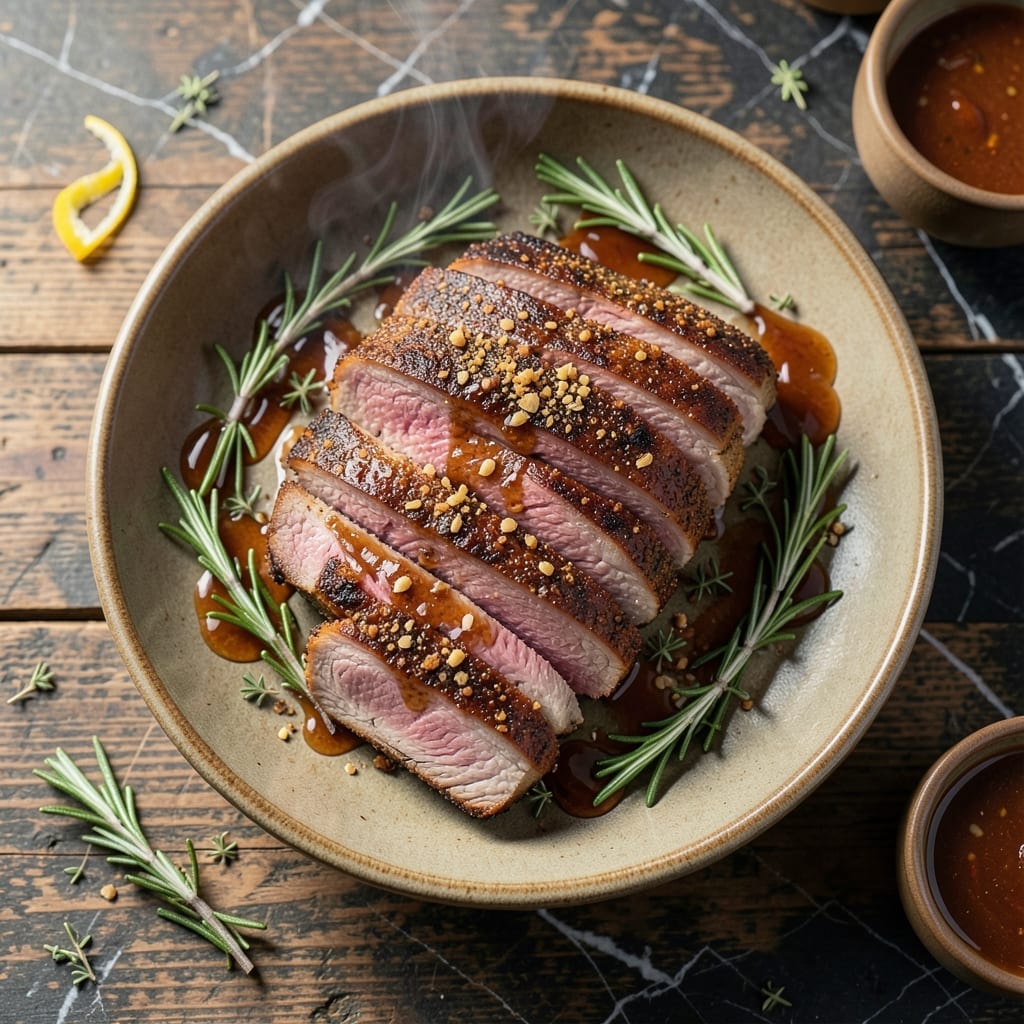
There’s nothing like the aroma of slow-roasted pork loin filling the kitchen, promising juicy results every time. This method transforms a simple cut into a tender, flavorful masterpiece.
With careful seasoning and low, steady heat, the meat stays succulent while developing a rich, caramelized crust. Perfect for gatherings or a special weeknight meal.
Ingredients for Barbecue Pork Loin Roast
Slow-roasted pork loin with bold barbecue flavors. Simple ingredients, extraordinary results.
| Ingredient | Amount | Notes |
|---|---|---|
| Pork Loin Roast 🥩 | 3 lb | Bone-in for extra flavor |
| Kosher Salt 🧂 | 1 ½ tbsp | Diamond Crystal preferred |
| Black Pepper 🌶️ | 1 tbsp | Freshly cracked for best flavor |
| Smoked Paprika 🌶️ | 1 tbsp | Sweet or hot variety |
| Garlic Powder 🧄 | 1 tbsp | Not garlic salt |
| Onion Powder 🧅 | 1 tbsp | Fine grind preferred |
| Brown Sugar 🍚 | ½ cup | Light or dark, packed |
| Apple Cider Vinegar 🍏 | ¼ cup | For acidity balance |
| Barbecue Sauce 🍯 | 1 ½ cups | High-quality, thick variety |
| Olive Oil 🫒 | 2 tbsp | Extra-virgin for richness |
| Yellow Mustard 🟡 | 2 tbsp | For rub binding |
| Fresh Rosemary 🌿 | 2 tbsp | Chopped, stems removed |
| Fresh Thyme 🍃 | 2 tbsp | Chopped, stems removed |
[recipe_ingredient_scaler]
The pork loin quality is paramount. Bone-in roasts retain more moisture during the long cooking process. Source from Whole Foods or a trusted local butcher for the best marbling. A 3-pound roast serves four generously, with leftovers (which reheat beautifully). For the rub, freshly cracked black pepper provides superior aroma compared to pre-ground.
No smoked paprika? Regular paprika plus a pinch of cayenne approximates the smokiness. Out of apple cider vinegar? White vinegar works at the same ratio. The barbecue sauce can be store-bought (Stubb’s Original is reliable), but avoid overly sweet varieties. For herb substitutions, dried rosemary and thyme at one-third the amount work if fresh aren’t available.
The roast can be dry-brined overnight for deeper seasoning penetration. Leftovers keep for 4-5 days refrigerated or freeze for 3 months. Reheat gently to preserve moisture—low oven or sous vide works best to avoid drying out.
Why You’ll Love This Recipe
- Set and Forget: I rub the pork with salt, pepper, smoked paprika, and garlic powder, pop it in the oven, and walk away.
- Smoky Depth: That combo of smoked paprika and garlic powder gives it a rich, barbecue flavor without any sauce.
- Feeds the Gang: One pork loin roast serves my whole family, plus leftovers for sandwiches the next day.
- Budget Winner: Pork loin is affordable, and I stretch it across multiple meals without sacrificing taste.
Step-by-Step Instructions for Barbecue Pork Loin Roast
Master this slow-roasting technique for fall-apart tender pork with caramelized barbecue glaze.
Step 1: Prepare the Dry Rub and Season the Roast
In a small bowl, combine the 1.5 tbsp Kosher Salt, 1 tbsp Black Pepper, 1 tbsp Smoked Paprika, 1 tbsp Garlic Powder, 1 tbsp Onion Powder, 0.5 cup Brown Sugar, 2 tbsp Fresh Rosemary, and 2 tbsp Fresh Thyme. This aromatic blend creates a flavorful crust that complements the pork beautifully.
Pat the 3 lb Pork Loin Roast dry with paper towels to ensure the rub adheres properly. Rub the pork all over with the 2 tbsp Olive Oil, then coat it evenly with the 2 tbsp Yellow Mustard. The mustard acts as a binder for the dry rub. Press the spice mixture firmly onto all surfaces of the roast, creating an even layer.
Step 2: Sear the Roast for Depth of Flavor
Preheat your oven to 325°F. While the oven heats, place a large oven-safe Dutch oven or roasting pan over medium-high heat on the stovetop. Add the seasoned pork loin and sear for 2-3 minutes per side until deeply browned.
You’re looking for a rich, caramelized crust on all sides—this adds incredible depth to the final dish. The brown sugar in the rub will begin to melt and create a sticky surface that will later help the barbecue sauce adhere. Don’t rush this step; proper searing is key to developing complex flavors.
Step 3: Slow-Roast with Barbecue Glaze
After searing, pour the 0.25 cup Apple Cider Vinegar into the hot pan, using a wooden spoon to scrape up any browned bits from the bottom. This deglazing step incorporates those concentrated flavors into your cooking liquid.
Pour 1 cup of the 1.5 cups Barbecue Sauce over the pork, then cover the pan tightly with a lid or foil. Transfer to the preheated oven and roast for 2 to 2.5 hours, basting with the pan juices every 45 minutes. The pork is done when it reaches an internal temperature of 195°F and shreds easily with a fork.
Step 4: Finish with Final Glaze and Rest
Remove the pork from the oven and transfer it to a cutting board. Skim any excess fat from the pan juices, then stir in the remaining 0.5 cup Barbecue Sauce. Simmer the sauce for 3-5 minutes until it thickens slightly into a glossy glaze.
Brush the glaze generously over the roast, then let it rest for 15-20 minutes before slicing. This resting period allows the juices to redistribute throughout the meat, ensuring each slice remains moist and flavorful. The internal temperature will continue to rise slightly during this time, reaching the perfect serving temperature of 200-205°F.
Pro Tips For Making Barbecue Pork Loin Roast
- Rest Before Slicing: Give it a solid 15 minutes under foil after pulling from the oven—this keeps all the juices inside where they belong instead of on your cutting board. I learned this the hard way after serving dry pork to my in-laws.
- Score the Fat: Cut shallow slits in the fat cap before seasoning so the smoked paprika and garlic powder really penetrate. Sounds weird, but it works: the spices stick better and the fat renders more evenly.
- Skip the High Heat: Start at 275°F and cook low and slow until it hits 145°F internally. After burning three roasts on high heat, I finally figured out that patience gives you tender, juicy meat every time.
- Dry the Surface: Pat the pork loin completely dry with paper towels before seasoning—this guarantees a better crust and helps the salt stick. My grandmother swore by this, and she was right.
Flavor Customization for This barbecue pork loin roast
Sweet Heat Twist
Add 1 tsp cayenne pepper to your rub for a spicy kick that balances the sweetness of the brown sugar. I love this combination at local BBQ competitions—it always gets attention. For extra depth, mix in ½ tsp chipotle powder for smoky heat. 🌶️
Herb-Infused Elegance
Since I forage wild herbs, I often add 1 tbsp chopped sage to the rub for an earthy note. Or try 1 tbsp fresh oregano for a Mediterranean twist. The herbs from our coastal rides always elevate the pork’s natural flavors.
Tangy Mustard Glaze
Swap the yellow mustard for Dijon in the rub binding step, then brush the roast with a mix of ¼ cup honey and 2 tbsp whole-grain mustard during the last 30 minutes of cooking. This creates a glossy, tangy crust.
Smokehouse Style
For a deeper smoke flavor, add 1 tsp liquid smoke to the barbecue sauce before glazing. I learned this trick from pitmasters at local cookouts—it mimics the flavor of a traditional smoker. Use sparingly to avoid overpowering the dish.
Citrus Brightness
Stir 1 tbsp orange zest into the rub for a bright, citrusy note that cuts through the richness. Alternatively, replace apple cider vinegar with orange juice when deglazing. This works beautifully with the pork’s natural sweetness.
Coffee-Rubbed Depth
Mix 1 tbsp finely ground coffee into your dry rub for a deep, complex flavor that pairs wonderfully with the barbecue glaze. I source my coffee from local roasters—it adds a subtle bitterness that enhances the pork’s caramelization. 🔥
Nutrition Facts
Frequently Asked Questions
Do I need to marinate the pork loin overnight?
Not required, but highly recommended for deeper flavor! A 12-hour dry brine with the rub enhances tenderness and seasoning penetration. Even 2-3 hours makes a noticeable difference.
Can I use a boneless pork loin instead?
Yes, but bone-in stays juicier during slow roasting. If using boneless, reduce cooking time by 20-30 minutes and monitor internal temperature closely to avoid drying out.
How can I tell when it’s done without a thermometer?
Press the meat with tongs—it should feel very tender and almost fall apart. The meat will also pull away from the bone easily when fully cooked. For best results, use a thermometer to hit 195°F.
What’s the best way to reheat leftovers?
Gently warm in a 250°F oven with a splash of broth or sauce to prevent drying. Cover with foil and heat for 15-20 minutes, or until warmed through. Avoid microwaving, which can make it tough.

Trained in classic French technique but raised on slow-cooked ribs and spicy rubs, she blends culinary skill with smoke and soul.
- Recipe for Boneless Pork Chops in Cast Iron Skillet: Sear and Baste to Juicy Perfection - October 3, 2026
- Recipe for Boneless Cross Rib Roast: Slow-Roasted Beef with Herb Crust - October 3, 2026
- Hamburgers in Sauce Recipe Crock Pot: Slow-Cooked Savory Delight - October 3, 2026