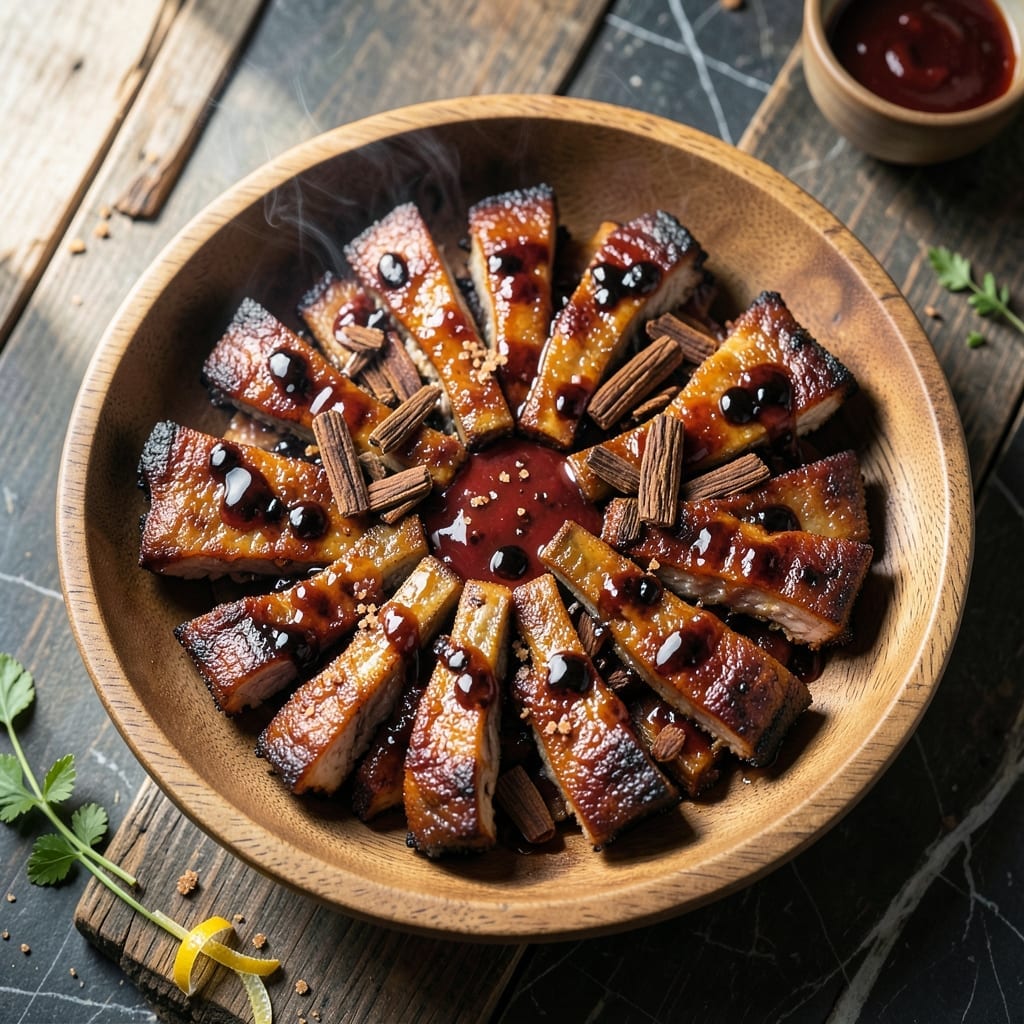
Getting my first whiff of hickory smoke at a backyard cookout changed how I view ribs forever. This method uses low heat and a sticky glaze to create fall-off-the-bone perfection.
I blend French technique with smoke-cooking tradition for ribs that are tender inside with a caramelized exterior. The slow-smoked process ensures every bite delivers deep, complex flavor.
Ingredients for Barbecue Pork Rib
Low heat, hickory smoke, and a sweet glaze transform these ribs into pure perfection.
| Ingredient | Amount | Notes |
|---|---|---|
| Pork Baby Back Ribs 🥩 | 3 lb | Membrane removed, trimmed of excess fat |
| Hickory Wood Chips 🌳 | 2 cups | Soaked in water for 30 minutes |
| Brown Sugar 🫙 | ½ cup | Light or dark variety |
| Ketchup 🍅 | 1 cup | High-quality for best flavor |
| Apple Cider Vinegar 🍏 | ¼ cup | Balances sweetness in glaze |
| Molasses 🍯 | 2 tbsp | Adds depth to glaze |
| Worcestershire Sauce 🫒 | 2 tbsp | Use vegan if dietary restrictions apply |
| Garlic Powder 🧄 | 1 tbsp | Freshly ground preferred |
| Onion Powder 🧅 | 1 tbsp | Fine grind for even distribution |
| Smoked Paprika 🌶️ | 1 tsp | Enhances smoke flavor |
| Salt 🧂 | 1 tbsp | Diamond Crystal preferred for rub |
| Black Pepper 🌶️ | 1 tbsp | Freshly ground for best aroma |
| Dijon Mustard 🟡 | 1 tbsp | Smooths out glaze texture |
| Olive Oil 🫒 | 2 tbsp | For brushing ribs before seasoning |
[recipe_ingredient_scaler]
The ribs are the star here. Baby back ribs give you that ideal meat-to-bone ratio—spare ribs work too, but they’re fattier. I grab mine from Costco or Whole Foods when they’re on sale (usually around holidays). Look for slabs with even meat coverage and minimal bone exposure. Hickory wood chips are essential for that authentic smoke flavor—avoid the pre-flavored chips.
No hickory? Apple or cherry wood gives a sweeter, milder smoke. Out of molasses? Honey or maple syrup works in the glaze (just cut the brown sugar slightly). If you’re avoiding sugar, sugar-free ketchup and monk fruit sweetener can substitute, but the texture might differ. The glaze can be made ahead—simmer and store in the fridge for up to 5 days.
Ribs are best smoked fresh, but leftovers keep well. Store in an airtight container for 3-4 days in the fridge or freeze for up to 3 months. Reheat gently in the oven with a splash of water to keep them moist. The wood chips? Keep them in a sealed bag—they’ll last indefinitely if stored dry.
Why You’ll Love This Recipe
- I’ll be real: the ribs taste even better the next day, and one rack stretches to sandwiches, tacos, or just picking straight from the fridge.
- Set It and Forget: That slow smoker with hickory wood chips does all the work—just mix the brown sugar and vinegar glaze, brush, and let the ribs drink it in.
- Sticky Sweet Magic: The brown sugar caramelizes with the ketchup glaze, creating that finger-licking finish I crave every time.
- Backyard Star: Honestly, these ribs turn any weekend into a celebration—great for lazy Sundays or impressing guests.
Step-by-Step Instructions for Slow-Smoked Barbecue Pork Ribs
Here’s how I get that competition-style bark with meat that practically melts off the bone.
Step 1: Prep the Ribs and Smoker
Start by patting the 3 lb Pork Baby Back Ribs completely dry with paper towels. This removes moisture that would otherwise prevent the rub from adhering properly. I always check for any remaining membrane on the bone side and remove it with a paper towel for better smoke penetration.
Soak the 2 cups Hickory Wood Chips in water for at least 30 minutes while you prep the ribs. This prevents them from burning too quickly in the smoker. Set up your smoker for indirect heat at 225-250°F—this low-and-slow temperature is crucial for tender meat that doesn’t dry out.
Step 2: Apply the Dry Rub
In a bowl, combine the 0.5 cup Brown Sugar, 1 tbsp Salt, 1 tbsp Black Pepper, 1 tbsp Garlic Powder, 1 tbsp Onion Powder, and 1 tsp Smoked Paprika. Mix thoroughly to ensure even distribution of all the spices.
Brush the 3 lb Pork Baby Back Ribs lightly with the 2 tbsp Olive Oil to help the rub stick. Apply the dry rub generously to all sides of the ribs, pressing it in firmly with your hands. You want a visible crust of seasoning—don’t be shy. Let the seasoned ribs sit at room temperature for 30 minutes while the smoker preheats.
Step 3: Smoke the Ribs
Place the ribs bone-side down on the smoker grates. Add half of the soaked 2 cups Hickory Wood Chips to the smoker box or directly on the coals. Smoke the ribs undisturbed for 3 hours—this builds that beautiful mahogany bark we’re after.
After 3 hours, wrap the ribs tightly in heavy-duty aluminum foil with ¼ cup of apple juice or beer (or just wrap as-is if you prefer). Return them to the smoker and add the remaining 2 cups Hickory Wood Chips. Continue smoking for another 1.5-2 hours until the meat is probe-tender.
Step 4: Glaze and Finish
While the ribs smoke, make the glaze by combining the 1 cup Ketchup, 0.25 cup Apple Cider Vinegar, 2 tbsp Molasses, 2 tbsp Worcestershire Sauce, and 1 tbsp Dijon Mustard in a saucepan. Simmer over medium heat for 10-12 minutes until thickened, stirring occasionally.
Unwrap the ribs and brush generously with the glaze. Return them to the smoker, unwrapped, for a final 30-45 minutes to set the glaze and tighten up the bark. You’re looking for a sticky, glossy finish with just a bit of char on the edges.
Step 5: Rest and Serve
Remove the ribs from the smoker and let them rest for 10-15 minutes before slicing. This allows the juices to redistribute throughout the meat. Slice between the bones and serve with any remaining glaze on the side for dipping.
The ribs should have a deep, smoky aroma with a slight pull as you separate the bones. Each bite should deliver that perfect balance of sweet, tangy glaze with the rich, smoky pork flavor we worked so hard to achieve.
Pro Tips For Making Barbecue Pork Rib
- Preheat the Smoker: Get your smoker to 225°F before adding the ribs—I learned this the hard way after a few batches came out tough from temperature swings.
- Trim the Membrane: Peel off that tough silver skin on the bone side of the ribs; it blocks smoke and rub from penetrating, and your guests will notice the difference.
- Skip Boiling the Sauce: Mix your ketchup, brown sugar, and apple cider vinegar cold, then brush it on during the last 30 minutes—boiling it first just thickens it too much and burns easier.
- Wrap in Foil: After 2 hours of smoking, wrap the ribs in foil with a splash of apple cider vinegar for 1 more hour; it steams them just enough to get that fall-off-the-bone texture without drying out.
Regional Styles of These Flavors
Memphis Dry Rub
Memphis ribs skip the sauce entirely, relying on a bold dry rub. I use a mix of 2 tbsp paprika, 1 tbsp garlic powder, and 1 tbsp brown sugar for that signature sweet-spicy crust. The ribs are smoked low and slow, then finished with a dusting of the same rub. 🌶️
Kansas City Style
This is the style I grew up with—ribs slathered in a thick, sweet glaze. The sauce is typically tomato-based with molasses and vinegar, like in our recipe. I always brush it on during the last 30 minutes of smoking for that sticky, caramelized finish.
Texas Twist
Texas ribs often use beef instead of pork, but for pork ribs, they keep it simple with just salt and pepper. The focus is on the smoke—post oak or mesquite wood gives that distinct Lone Star flavor. I add a touch of cayenne for heat.
Carolina Vinegar
In the Carolinas, it’s all about the tang. Instead of a sweet glaze, they use a vinegar-based mop sauce. Mix 1 cup apple cider vinegar with 1 tbsp red pepper flakes and 1 tbsp sugar. Baste the ribs every 45 minutes during smoking.
St. Louis Style
These ribs are spare ribs, trimmed into a rectangular shape for even cooking. I love the meat-to-bone ratio. The rub is similar to Memphis, but I add 1 tsp celery salt for a unique twist. They’re often grilled over direct heat for a crispier finish.
Alabama White Sauce
For something different, try Alabama’s white sauce—a mayonnaise-based condiment with horsehadish and apple cider vinegar. It’s tangy and creamy, perfect for dipping or basting. I serve it on the side for a cool contrast to the smoky ribs. ✨
Nutrition Facts
Frequently Asked Questions
How do I know when the ribs are done?
Use the bend test: pick up the slab with tongs—when they bend and cracks appear in the meat, they’re ready. Or insert a probe thermometer between bones; it should slide in like butter at 195-203°F.
Should I remove the membrane before cooking?
Yes, always remove the tough membrane on the bone side for better smoke penetration and tenderness. Slide a butter knife under it, lift, then pull it off with a paper towel for better grip.
Can I use my oven instead of a smoker?
Set your oven to 275°F and place ribs on a rack over a pan with 1 cup water. Add liquid smoke to the water for that smoky flavor.
What if my glaze burns in the smoker?
Lower the temperature to 200°F and move ribs away from direct heat. Brush on glaze only during the last 30 minutes to prevent burning.

Trained in classic French technique but raised on slow-cooked ribs and spicy rubs, she blends culinary skill with smoke and soul.
- Recipe for Boneless Pork Chops in Cast Iron Skillet: Sear and Baste to Juicy Perfection - October 3, 2026
- Recipe for Boneless Cross Rib Roast: Slow-Roasted Beef with Herb Crust - October 3, 2026
- Hamburgers in Sauce Recipe Crock Pot: Slow-Cooked Savory Delight - October 3, 2026