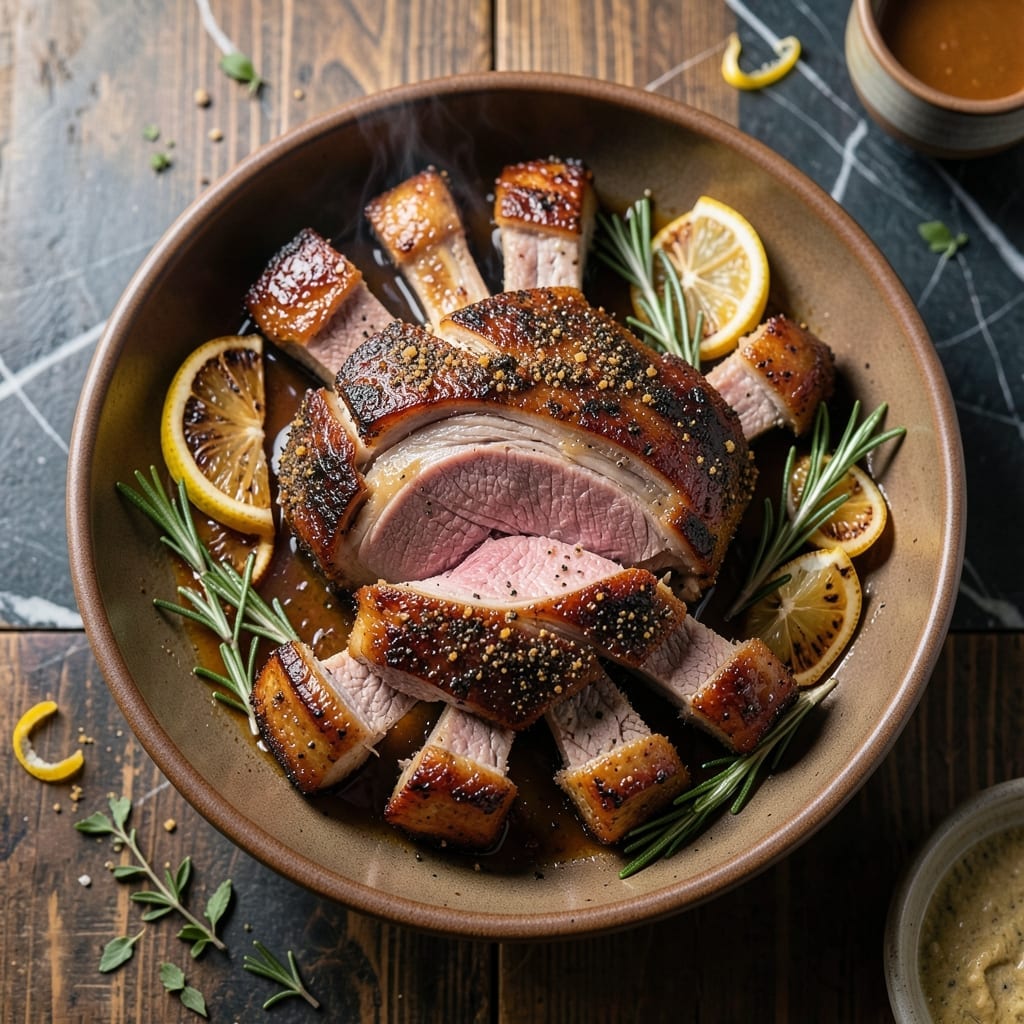
Slow-roasting transforms pork rib roast into a tender masterpiece with a smoky bark that cracks with every bite. This method honors both fire and finesse.
I developed this technique blending pitmaster traditions with classic French training. The result is fall-off-the-bone meat with deep, complex flavors.
Ingredients for Barbecue Pork Rib Roast
A well-marbled pork rib roast and a few pantry staples create this showstopping dish with smoky depth.
| Ingredient | Amount | Notes |
|---|---|---|
| Pork Rib Roast 🥩 | 4 lb | Bone-in, well-marbled preferred |
| Kosher Salt 🧂 | 2 tbsp | Diamond Crystal preferred for texture |
| Black Pepper 🌶️ | 2 tsp | Freshly ground coarse |
| Smoked Paprika 🌶️ | 1 ½ tbsp | Sweet or hot variety |
| Garlic Powder 🧄 | 1 tbsp | Fresh ground for intensity |
| Onion Powder 🧅 | 1 tbsp | Fine granular preferred |
| Brown Sugar 🍚 | ½ cup | Light or dark, packed |
| Apple Cider Vinegar 🍏 | ¼ cup | Raw unfiltered preferred |
| Worcestershire Sauce 🫒 | 2 tbsp | Lea & Perrins recommended |
| Yellow Mustard 🟡 | 2 tbsp | Classic prepared style |
| Olive Oil 🫒 | 2 tbsp | Extra-virgin for finishing |
| Hickory Wood Chips 🪵 | 1 cup | Soaked in water for smoking |
| Beer or Apple Juice 🍺 | 1 cup | For spritzing during cook |
[recipe_ingredient_scaler]
The pork rib roast is non-negotiable for texture and flavor. Source bone-in roasts from a trusted butcher—Whole Foods or Local specialty markets often carry superior quality with consistent marbling. Look for vibrant pink color and a thick fat cap. The rub ingredients should be fresh (smell your paprika—if it doesn’t have a potent aroma, replace it). Penzeys offers exceptional quality for spices if you’re investing in bulk.
No Worcestershire sauce? Soy sauce with a dash of lemon juice provides similar umami depth. For a sweeter profile, maple syrup can replace brown sugar at a 1:1 ratio. Out of apple cider vinegar? White vinegar with a teaspoon of sugar works in a pinch. The wood chips can be swapped for cherry or apple wood—hickory is traditional but fruit woods add a milder, sweeter smoke.
The roast benefits from resting 30 minutes before slicing—this keeps it juicy. Store leftovers wrapped tightly in foil for up to 4 days. The rub mixture keeps in an airtight container for 2 weeks, though it’s best used fresh. Reheat gently in a low oven to preserve moisture.
Why You’ll Love This Recipe
- Set It and Forget: I rub the pork with salt, pepper, smoked paprika, and garlic powder, pop it in the oven, and let the roast do the rest of the work.
- Smoky Depth: The smoked paprika and garlic powder give it that rich, barbecue flavor without needing a smoker or grill.
- Crowd Pleaser: Between us, this is the only dish I make that gets devoured at family dinners and weekend gatherings alike.
- Leftovers for Days: Honestly, the roast tastes even better the next day—shred it for sandwiches or toss it into tacos.
Step-by-Step Instructions for Barbecue Pork Rib Roast
This method ensures a perfectly smoked roast with a caramelized bark and tender interior.
Step 1: Prepare the Dry Rub and Season the Roast
In a small bowl, combine the 2 tbsp Kosher Salt, 2 tsp Black Pepper, 1.5 tbsp Smoked Paprika, 1 tbsp Garlic Powder, and 1 tbsp Onion Powder. This blend creates the foundation of flavor for your bark.
Pat the 4 lb Pork Rib Roast dry with paper towels to ensure the rub adheres properly. Apply the 2 tbsp Yellow Mustard all over the surface of the roast—this acts as a binder. Generously coat the roast with the dry rub mixture, pressing it into the meat so it forms a thick, even layer. Let it sit at room temperature for 30 minutes while you prepare the smoker.
Step 2: Set Up the Smoker and Add Wood Chips
Soak the 1 cup Hickory Wood Chips in water for at least 30 minutes to ensure they produce clean, steady smoke. Fill your smoker’s water pan with hot water to maintain a humid environment, which prevents the roast from drying out during the long cook.
Preheat your smoker to 225°F. Once it reaches temperature, add the soaked hickory wood chips directly to the coals or smoker box. You want a thin, steady stream of blue smoke—this is the ideal condition for infusing flavor without bitterness. Place the roast on the grill grates, fat-side up, and close the lid.
Step 3: Smoke the Roast and Build the Bark
Smoke the roast undisturbed for 3 hours. After this time, mix the 0.5 cup Brown Sugar, 0.25 cup Apple Cider Vinegar, and 2 tbsp Worcestershire Sauce in a small bowl to create a mop sauce. This adds a sweet and tangy layer to the bark.
Every 45-60 minutes, spritz the roast with 1 cup Beer or Apple Juice and mop it with the sauce mixture. This keeps the surface moist and encourages the formation of a dark, sticky bark. Continue smoking until the internal temperature reaches 195-203°F, which should take approximately 6-8 hours total, depending on your smoker.
Step 4: Rest and Finish with Olive Oil
Once the roast reaches the desired internal temperature, remove it from the smoker and transfer it to a cutting board. Tent it loosely with foil and let it rest for 30-45 minutes. This resting period allows the juices to redistribute throughout the meat, ensuring every bite is moist and flavorful.
Before slicing, drizzle the roast with 2 tbsp Olive Oil and let it sit for 5 minutes. This step adds a final touch of richness and enhances the bark’s glossy appearance. Slice against the grain into ½-inch thick pieces and serve immediately. The meat should pull apart easily with a fork, and the bark should have a deep mahogany color with a slightly crisp texture.
Pro Tips For Making Barbecue Pork Rib Roast
- Dry the Roast: Pat the pork rib roast completely dry with paper towels before seasoning—I learned this the hard way after my first few attempts had a steamed, pale crust instead of that deep barbecue bark.
- Season Overnight: Rub the kosher salt, black pepper, smoked paprika, and garlic powder on the roast at least 12 hours ahead. The spices penetrate deeper and the salt draws out moisture that reabsorbs, making the meat juicier.
- Use a Thermometer: Skip guessing and pull the roast at 195°F internal temp for fall-apart tender pork. I burned through a lot of trial and error before accepting that timing alone isn’t reliable.
- Rest Under Foil: Tent the roast with foil and let it rest 20-30 minutes after cooking—the juices redistribute and the temperature climbs another 5-10 degrees, so it’s ready to slice without losing all the moisture.
Wine and Beer Pairings for This Recipe
Bold Red Wines
A full-bodied Zinfandel from California pairs beautifully with the smoky richness of this dish. The bold fruit flavors and spicy notes complement the bark’s depth. I love Ravenswood Zinfandel for its jammy character that stands up to the rub. 🍷
Malty Beers
A porter or stout with chocolate and coffee undertones enhances the caramelized crust. Try Guinness or Sierra Nevada Porter—their roasted malt flavors mirror the smoke. The carbonation also cleanses your palate between bites.
Fruity Whites
For a lighter option, an off-dry Riesling from Washington State balances the heat and sweetness. The honeyed notes and crisp acidity cut through the fat. Chateau Ste. Michelle Riesling is my go-to for BBQ.
Amber Ales
An amber ale with caramel and toffee notes complements the bark’s sweetness. Fat Tire Amber Ale offers the perfect malty backbone. The moderate hop bitterness also contrasts the smoky flavors nicely.
Dessert Pairing
After the meal, a glass of tawny port with its nutty, caramel notes echoes the dish’s depth. Serve it slightly chilled at 60°F to highlight its complexity. I find this elevates the entire dining experience.
Nutrition Facts
Frequently Asked Questions
What’s the best wood for smoking?
Hickory is traditional for its strong, classic flavor. Fruit woods like apple or cherry add a sweeter, milder smoke that pairs well with pork.
Can I use an oven instead of a smoker?
Yes, but you’ll miss the smoke flavor. Roast at 275°F in a pan with liquid, covered for 4-5 hours until tender.
How do I know when it’s done?
The meat should reach 195-203°F internally. Test with a probe in the thickest part. It should slide in like butter.
Why rest the meat before slicing?
Resting for 30-45 minutes lets juices redistribute. Slicing too soon causes dry meat and lost flavor.

Trained in classic French technique but raised on slow-cooked ribs and spicy rubs, she blends culinary skill with smoke and soul.
- Recipe for Boneless Cross Rib Roast: Slow-Roasted Beef with Herb Crust - October 3, 2026
- Hamburgers in Sauce Recipe Crock Pot: Slow-Cooked Savory Delight - October 3, 2026
- Sanjeev Kapoor Egg Biryani Recipe: Fragrant Spiced Rice With Boiled Eggs - October 3, 2026