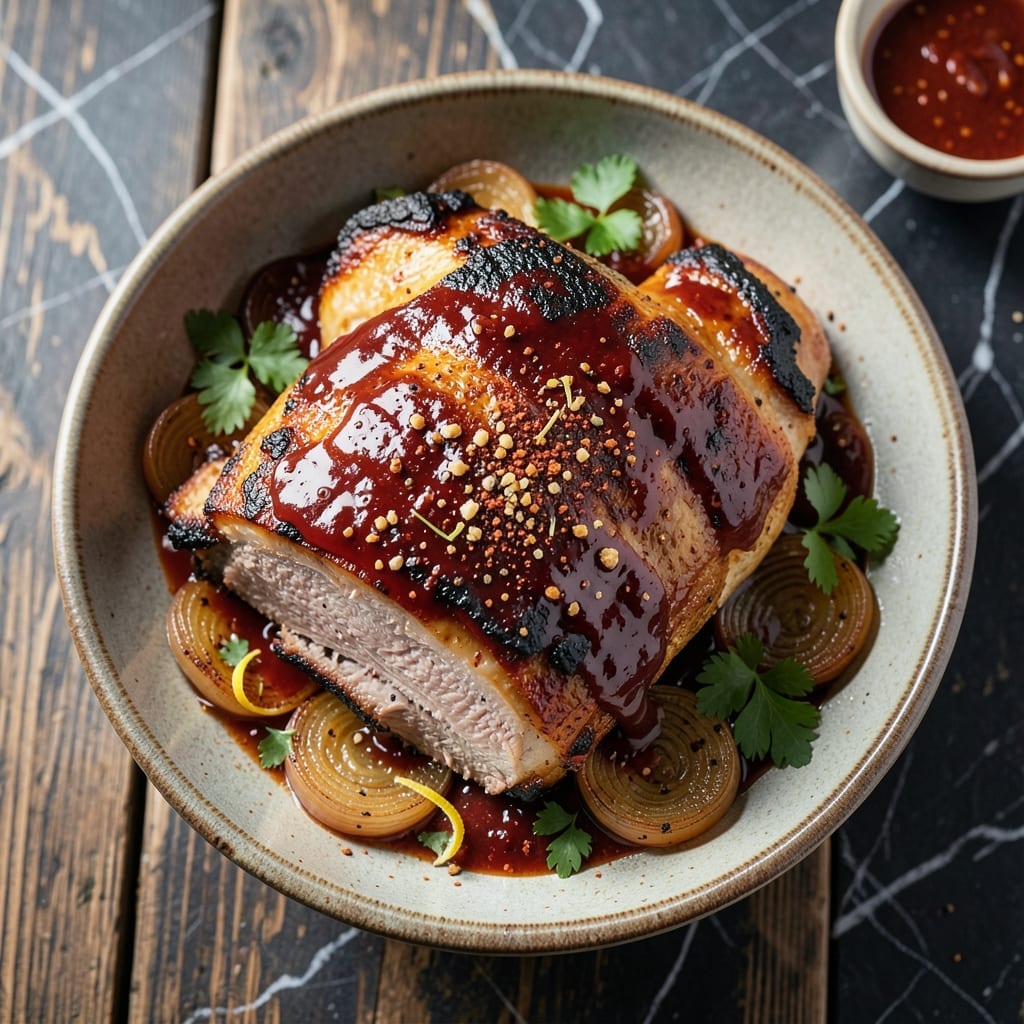
Slow-roasting transforms pork into tender, smoky perfection that falls apart at the touch of a fork.
This method blends my pitmaster roots with French precision, delivering deep flavor without complicated steps.
Ingredients for Barbecue Pork Roast
Pork shoulder and a bold dry rub create that fall-apart smoky tenderness you expect.
| Ingredient | Amount | Notes |
|---|---|---|
| Pork Shoulder 🥩 | 4 lb | Bone-in for maximum flavor |
| Kosher Salt 🧂 | 2 tbsp | Diamond Crystal preferred |
| Black Pepper 🌶️ | 1 tbsp | Freshly ground coarse |
| Smoked Paprika 🌶️ | 2 tsp | Spanish variety ideal |
| Garlic Powder 🧄 | 1 tbsp | Not garlic salt |
| Onion Powder 🧅 | 1 tbsp | Fresh ground preferred |
| Brown Sugar 🍚 | ½ cup | Light or dark variety |
| Apple Cider Vinegar 🍏 | ½ cup | Raw unfiltered recommended |
| Barbecue Sauce 🍯 | 2 cups | Quality store-bought or homemade |
| Olive Oil 🫒 | 2 tbsp | For searing and rubbing |
| Yellow Mustard 🟡 | 2 tbsp | Creates bark on exterior |
| Worcestershire Sauce 🍶 | 2 tbsp | Adds depth to rub |
| Liquid Smoke 🔥 | 1 tsp | Optional for extra smokiness |
[recipe_ingredient_scaler]
The pork shoulder is non-negotiable here. Bone-in yields superior moisture and flavor—avoid pre-cut cubes. Costco offers excellent quality at bulk pricing, while Whole Foods carries organic options. Look for good marbling throughout the cut. For authentic pitmaster results, source from a local butcher who can provide heritage breeds with proper fat content.
No smoked paprika? Chipotle powder at half the amount works, though it adds heat. Brown sugar can be swapped for honey or maple syrup (adjust liquid ratios accordingly). If avoiding alcohol, additional vinegar with a pinch of sugar replaces Worcestershire. The barbecue sauce should be low-sugar to prevent burning—Stubb’s Original is a reliable choice. Mustard can be Dijon for sharper flavor.
The dry rub can be prepared 24 hours ahead and stored airtight. Cooked pork keeps 4-5 days refrigerated or freezes beautifully for 3 months. For best texture, shred only when ready to serve—reheating whole retains moisture better than pre-shredded meat.
Why You’ll Love This Recipe
- Set It and Forget: I rub the pork shoulder with salt, pepper, smoked paprika, and garlic powder, then let the oven do the work.
- Smoky & Sweet: The smoked paprika and garlic powder create that deep, barbecue flavor without a grill.
- Feeds the Whole Crew: One pork shoulder makes enough for a big family dinner or meal prep for the week.
- Leftovers for Days: Honestly, the pulled pork tastes even better the next day in sandwiches or tacos.
Step-by-Step Instructions for Barbecue Pork Roast
This method delivers fall-apart tenderness with a rich, smoky bark every time.
Step 1: Prepare the Dry Rub Mixture
In a small bowl, combine the 2 tbsp Kosher Salt, 1 tbsp Black Pepper, 2 tsp Smoked Paprika, 1 tbsp Garlic Powder, and 1 tbsp Onion Powder. Stir until evenly blended. The smoked paprika adds that essential barbecue depth, while the garlic and onion powders create a robust base flavor.
This rub will form the foundation of your bark. I always mix it fresh rather than using pre-made blends—the difference in potency and aroma is noticeable. Set this aside while you prepare the pork shoulder.
Step 2: Season and Sear the Pork Shoulder
Pat the 4 lb Pork Shoulder dry with paper towels to ensure the rub adheres properly. Rub the entire surface with the 2 tbsp Yellow Mustard—this creates a sticky base for the dry rub to cling to and helps develop that coveted bark. The mustard flavor cooks off, leaving only its binding properties.
Massage the dry rub mixture all over the pork, pressing it into the meat so it forms an even coating. Heat the 2 tbsp Olive Oil in a large Dutch oven over medium-high heat. Sear the pork on all sides for 3-4 minutes per side until deeply browned. You’re looking for a dark, caramelized crust that signals the Maillard reaction is working.
Step 3: Slow-Roast with Moisture and Flavor
Preheat your oven to 300°F. After searing, place the pork shoulder in the Dutch oven. In a separate bowl, whisk together the 0.5 cup Brown Sugar, 0.5 cup Apple Cider Vinegar, 2 tbsp Worcestershire Sauce, and 1 tsp Liquid Smoke. Pour this mixture around the pork, not over it, to avoid washing off the rub.
Cover the Dutch oven tightly with its lid and transfer to the oven. Roast for 3 hours, then check the pork. It should be fork-tender at this point, with the internal temperature reaching 195-200°F. The low temperature and long cook time break down the collagen in the shoulder, transforming it into melt-in-your-mouth tenderness.
Step 4: Finish with Barbecue Sauce
Carefully remove the pork from the oven and increase the temperature to 325°F. Brush the top of the pork generously with half of the 2 cups Barbecue Sauce. Return it to the oven, uncovered, and roast for an additional 30-45 minutes.
This final step allows the sauce to caramelize and create a sticky, glossy glaze. Baste the pork with the remaining barbecue sauce every 10-15 minutes during this period. You’ll know it’s ready when the sauce has thickened and the pork pulls apart easily with a fork. The exterior should be a deep mahogany color with a slightly crispy bark.
Step 5: Rest and Shred
Transfer the pork to a cutting board and let it rest for 15-20 minutes. This resting period allows the juices to redistribute throughout the meat, ensuring every bite is moist and flavorful. Tent it loosely with foil to keep it warm.
Using two forks, shred the pork into your desired size pieces. Mix in any accumulated juices from the resting process. The pork should be so tender that it falls apart with minimal effort. Serve immediately while hot, with additional barbecue sauce on the side if desired.
Pro Tips For Making Barbecue Pork Roast
- Dry the Pork First: Pat the pork shoulder completely dry before seasoning—I learned this the hard way after my first few roasts came out steamed instead of crispy.
- Go Heavy on Spice: Don’t be shy with the smoked paprika and garlic powder; pork shoulder can handle bold flavors, and the crust needs that punch.
- Low and Slow Wins: Resist the urge to crank the heat; 275°F for 6-8 hours breaks down the fat without drying out the meat.
- Rest Before Slicing: Give it a solid 20 minutes under foil after cooking, or all those juices will end up on the cutting board instead of in your roast.
Pro Cooking Tips for barbecue pork roast
Perfect Your Rub
Always use freshly ground spices for maximum potency in your dry rub. I source smoked paprika from local spice shops—it makes a noticeable difference. Mix the rub just before applying to preserve its aromatic oils.
Low and Slow Wins
Maintain 300°F precisely during the long roast. I check my oven with a ThermoWorks thermometer to ensure accuracy. The collagen breaks down between 195-200°F, creating that signature pull-apart texture. 🌡️
Sear for Bark
Don’t rush the sear—3-4 minutes per side in hot olive oil develops the Maillard reaction. This creates a dark crust that locks in juices and forms the foundation for your bark.
Sauce Timing
Wait until the final 30-45 minutes to add barbecue sauce. Applying it earlier can cause burning. Baste every 10-15 minutes for a glossy, caramelized finish that clings to the meat.
Rest for Moisture
Let the pork rest 15-20 minutes after cooking. This allows juices to redistribute, ensuring every bite stays succulent. Tent loosely with foil to keep it warm without steaming. 💡
Shred Like a Pro
Use two forks to pull the meat apart gently. Mix in accumulated juices from the resting process for extra flavor. The pork should fall apart with minimal effort when done right.
Nutrition Facts
Frequently Asked Questions
What cut works best for this method?
Bone-in pork shoulder is ideal for its fat content and connective tissue. It breaks down beautifully during the 3-4 hour cook, creating that signature tenderness. Avoid lean cuts like tenderloin.
Can I cook this without a Dutch oven?
Yes, use a heavy oven-safe pot with a tight lid or wrap in foil. The key is maintaining 300°F and trapping steam. A slow cooker works too, but adjust time to 6-8 hours on low.
Why rest the meat before shredding?
Resting for 15-20 minutes lets juices redistribute, keeping the meat moist. Skipping this step means dry, tough pork. Tent with foil to keep it warm without steaming.

Trained in classic French technique but raised on slow-cooked ribs and spicy rubs, she blends culinary skill with smoke and soul.
- Recipe for French Pork Spread Gorton: Savory Gallic Flavors in a Spreadable Delight - October 3, 2026
- Recipe for Pan Fried: Golden Crust with Savory Depth - October 3, 2026
- Recipe For Fried Chicken In A Pressure Cooker: Crispy Golden Bites in Half the Time - October 3, 2026