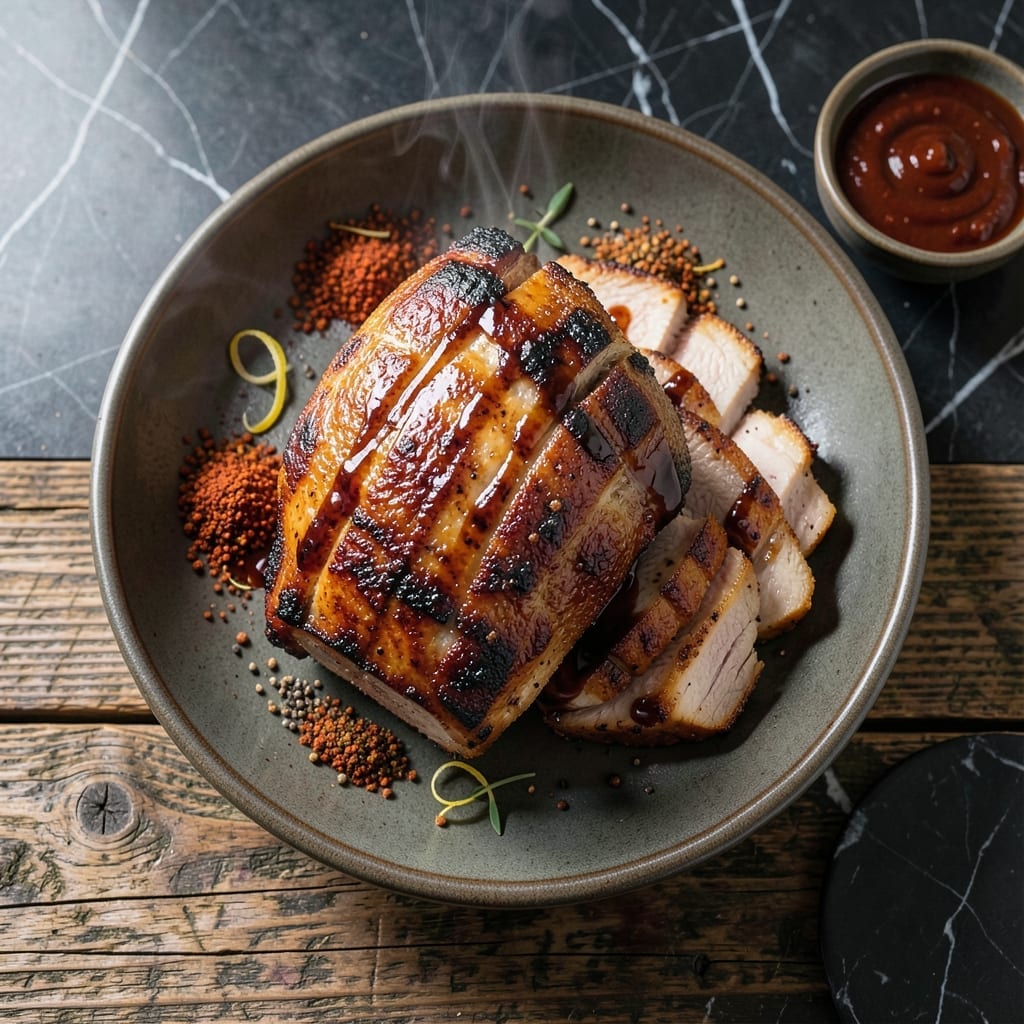
Few things beat the aroma of pork shoulder slow-smoked until it falls apart at the touch of a fork. This method delivers tender results every time.
I’ve perfected this technique over years of pitmaster practice, blending patience with precision. The reward is meat so soft it nearly melts in your mouth.
Ingredients for Barbecue Pork Shoulder Roast
Pork shoulder and a handful of pantry spices. Slow-smoked perfection starts here.
| Ingredient | Amount | Notes |
|---|---|---|
| Pork Shoulder 🐖 | 4 lb | Bone-in, skin-on preferred for flavor |
| Brown Sugar 🍚 | ½ cup | Light or dark variety works |
| Paprika 🌶️ | 2 tbsp | Sweet or smoked for depth |
| Garlic Powder 🧄 | 1 tbsp | Freshly ground if possible |
| Onion Powder 🧅 | 1 tbsp | Fine grind for even distribution |
| Kosher Salt 🧂 | 1 tbsp | Diamond Crystal preferred for texture |
| Black Pepper 🌶️ | 1 tbsp | Freshly ground for boldness |
| Cayenne Pepper 🔥 | ½ tsp | Adjust for heat preference |
| Apple Cider Vinegar 🍏 | ½ cup | Balances sweetness in rub |
| Mustard 🟡 | ¼ cup | Yellow or Dijon for binder |
| Hickory Wood Chunks 🪵 | 4 pieces | For authentic smoke flavor |
| Barbecue Sauce 🍯 | 2 cups | Use during last hour of smoking |
[recipe_ingredient_scaler]
The pork shoulder is non-negotiable for authentic results. Bone-in, skin-on delivers the best texture and flavor—look for 8-10 lb whole shoulders at Costco or Sam’s Club and portion them yourself. The fat cap should be at least 1/4-inch thick for proper rendering. Avoid pre-cut pieces labeled as ‘pork butt’ if they lack the skin; the crispy bark is half the appeal.
No hickory? Apple or cherry wood offers a milder, sweeter smoke. For the rub, turbinado sugar can replace brown sugar in a pinch. The vinegar isn’t just for flavor—it helps tenderize the meat. If you’re out of mustard, honey or olive oil will bind the rub, though the tang will differ. Always use freshly ground spices for maximum potency.
The rub keeps in an airtight container for 3 months. Pork shoulder freezes beautifully for up to 6 months—vacuum seal if possible. Leftovers (if any exist) reheat well in a slow cooker with extra barbecue sauce. The bark softens but the flavor intensifies overnight.
Why You’ll Love This Recipe
- Set It and Forget: I rub the pork with brown sugar and spices, pop it in the oven, and let it do its thing for hours—no babysitting required.
- Smoky Sweet Crust: The paprika and brown sugar form this ridiculous caramelized bark that’s sticky, smoky, and downright addictive.
- Feeds a Hungry Crowd: One pork shoulder makes enough for a family dinner, Sunday football, or meal prep that actually lasts all week.
- Leftovers Level Up: Honestly, the pulled pork tastes even better the next day—tacos, sandwiches, or straight from the fridge at midnight.
Step-by-Step Instructions for Barbecue Pork Shoulder Roast
Master the art of low-and-slow smoking with this proven technique for fall-apart tender pork.
Step 1: Prepare the Rub and Season the Pork
In a small bowl, combine the 0.5 cup Brown Sugar, 2 tbsp Paprika, 1 tbsp Garlic Powder, 1 tbsp Onion Powder, 1 tbsp Kosher Salt, 1 tbsp Black Pepper, and 0.5 tsp Cayenne Pepper. Mix thoroughly until the spices are evenly distributed—the sugar should look fully integrated with the dry spices.
Pat the 4 lb Pork Shoulder dry with paper towels to ensure the rub adheres properly. Apply the 0.25 cup Mustard as a binder, coating the entire surface of the pork. Then generously rub the spice mixture over every inch, pressing firmly so it forms a crust. This creates the bark that will caramelize during smoking.
Step 2: Set Up the Smoker for Optimal Heat
Prepare your smoker for indirect cooking at 225-250°F. Add the 4 pieces Hickory Wood Chunks to the charcoal or smoker box once the temperature stabilizes. Hickory provides the robust, classic smoke flavor that pairs perfectly with pork. Maintain consistent heat—fluctuations can extend cooking time significantly.
Place a water pan in the smoker to help regulate temperature and add moisture to the cooking environment. This prevents the pork from drying out during the long cook. You should see thin, blue smoke (not thick white smoke) when it’s ready for the meat.
Step 3: Smoke the Pork Shoulder to Perfection
Place the seasoned pork shoulder on the smoker grate, fat-side up. This position allows the fat to render down and baste the meat naturally. Smoke undisturbed for 6-8 hours, or until the internal temperature reaches 165-170°F. Avoid opening the smoker unnecessarily—each peek can add 10-15 minutes to your cook time.
At this stage, you’ll hit the “stall,” where the temperature plateaus as moisture evaporates. Wrap the pork shoulder tightly in pink butcher paper or foil, then return it to the smoker. Continue cooking until the internal temperature reaches 200-205°F and a probe slides in like butter.
Step 4: Sauce and Finish for Maximum Tenderness
During the final 1 hour of smoking, begin brushing the pork shoulder with the 2 cups Barbecue Sauce every 20-30 minutes. This builds layers of flavor and creates a sticky, caramelized glaze. The sauce should thicken slightly and adhere to the bark as it cooks.
Once the pork reaches 205°F internally, remove it from the smoker. The meat should pull apart effortlessly with a fork. Let it rest wrapped in a towel-lined cooler for at least 1 hour—this step is non-negotiable for retaining moisture and tenderness.
Step 5: Shred and Serve
Unwrap the pork shoulder and transfer it to a large cutting board. Using two forks or meat claws, shred the pork into large chunks, then pull apart into individual strands. Discard any large fat pieces or connective tissue. Toss the shredded pork with any accumulated juices from the wrapping for added moisture.
Serve immediately with additional barbecue sauce on the side. The pork should be impossibly tender, with a deep smoke flavor and a perfect balance of sweet, spicy, and tangy notes from the rub and sauce.
Pro Tips For Making Barbecue Pork Shoulder Roast
- Score the Fat: Use a sharp knife to cut 1/4-inch crosshatches into the fat cap before seasoning. I learned this the hard way—without scoring, the rub doesn’t penetrate and the fat renders unevenly.
- Low and Slow Wins: Keep your oven or smoker at 225°F and plan for 1.5-2 hours per pound. After burning one too many shoulders at higher temps, I finally figured out patience is the only way to get that fall-apart texture.
- Don’t Skip the Rest: Let the pork rest under foil for at least 30 minutes after cooking. Sounds weird, but it works: the juices redistribute, and you won’t lose half the moisture when you slice it.
- Double the Rub: Mix twice the amount of brown sugar, paprika, garlic powder, and onion powder you think you need—half for the initial coat, half for a mid-cook touch-up. My grandmother swore by this, and she was right.
Troubleshooting Great barbecue pork shoulder roast
Stall Stagnation
When your pork shoulder hits 165-170°F internal and stalls, don’t panic. This normal phase can last 2-4 hours as moisture evaporates. I wrap mine in pink butcher paper to push through faster while keeping the bark intact. 🔥
Temperature Drops
If your smoker dips below 225°F, resist opening it to check. Instead, add 1-2 charcoal briquettes or adjust your vents. I learned this the hard way at my first local BBQ competition—consistency is everything.
Dry Meat Worries
Dry pork usually means it cooked too fast or lacked moisture. Spritz with apple cider vinegar every 1-2 hours and always use a water pan. Remember, low and slow wins the race.
Bark Not Forming
For a better bark, ensure your rub has enough brown sugar and don’t wrap too early. I’ve found that uncovered smoking for the first 6 hours creates the best crust. The sugar caramelizes beautifully with hickory smoke.
Sauce Burning
Applying barbecue sauce too early can cause burning. Wait until the final 1 hour and brush lightly every 20-30 minutes. This builds flavor without bitterness.
Resting Skipped
Never skip the 1-hour rest in a cooler. The juices redistribute, making the difference between good and incredible pulled pork. I once served a shoulder straight off the smoker—big mistake. 💡
Nutrition Facts
Frequently Asked Questions
What’s the ideal internal temperature for tenderness?
Aim for 200-205°F internally. At this point, collagen breaks down completely, making the meat pull-apart tender. Use a probe thermometer to check—it should slide in like butter.
Can I use an oven instead of a smoker?
Yes, but you’ll miss the smoke flavor. Roast at 275°F for 6-8 hours, adding liquid smoke to the rub. The texture will be similar, though the flavor profile differs.
How long should I rest the meat before serving?
Rest for at least 1 hour wrapped in a towel-lined cooler. This lets juices redistribute for maximum moisture. Skipping this step risks dry, uneven meat.
Why does the temperature stall during cooking?
The stall occurs around 165-170°F as moisture evaporates. It’s normal and can last 2-4 hours. Wrap in foil or butcher paper to push through faster.

Trained in classic French technique but raised on slow-cooked ribs and spicy rubs, she blends culinary skill with smoke and soul.
- Recipe for Boneless Pork Chops in Cast Iron Skillet: Sear and Baste to Juicy Perfection - October 3, 2026
- Recipe for Boneless Cross Rib Roast: Slow-Roasted Beef with Herb Crust - October 3, 2026
- Hamburgers in Sauce Recipe Crock Pot: Slow-Cooked Savory Delight - October 3, 2026