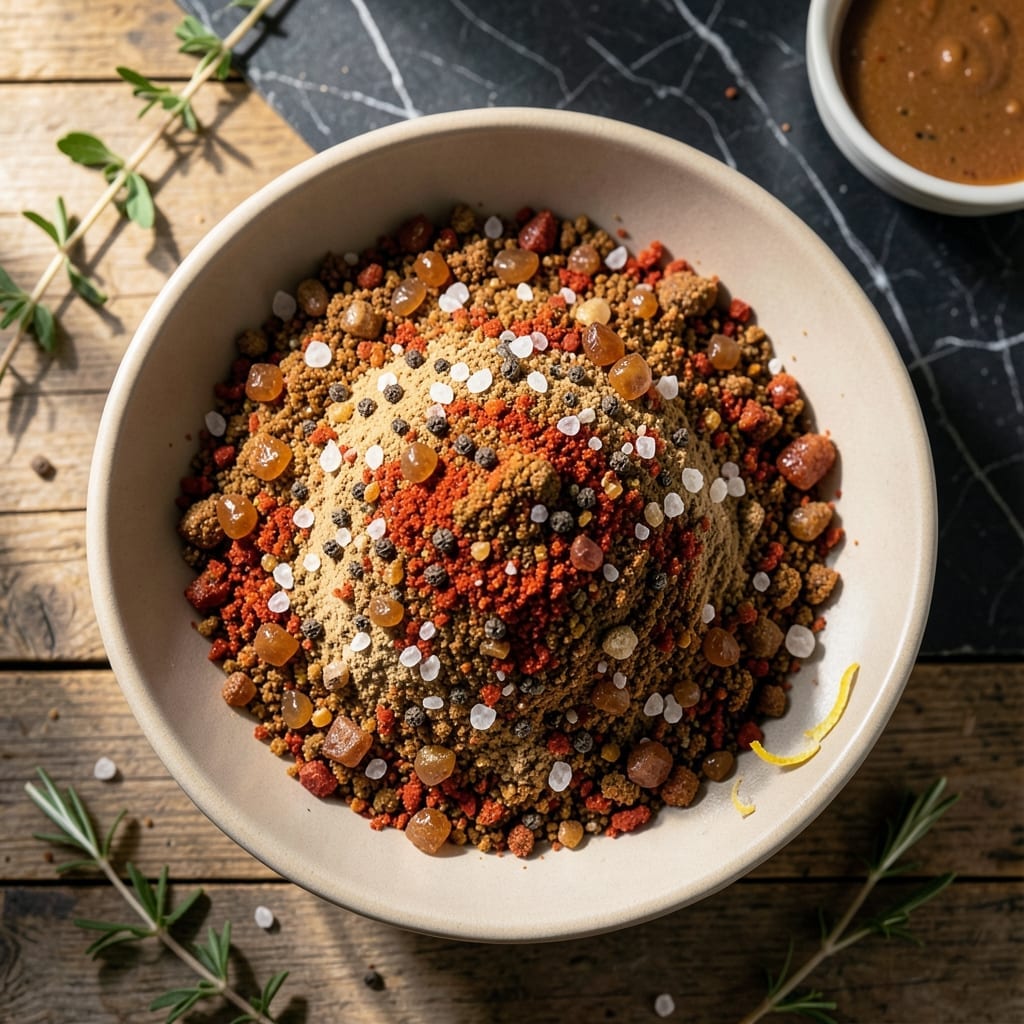
This rub transforms pork shoulder with a balanced blend of smoky and sweet spices. I developed it after years of competing in local BBQ competitions, perfecting the ratio for maximum flavor impact.
Each ingredient plays a role, from the earthy depth of paprika to the warmth of cumin. Store in an airtight container for up to six months and use it for tender, flavorful results every time.
Ingredients for Barbecue Pork Shoulder Rub
Ten spices. One rub. Competition-level flavor for your pork shoulder.
| Ingredient | Amount | Notes |
|---|---|---|
| Sweet Paprika 🌶️ | 3 tbsp | For earthy, smoky base |
| Brown Sugar 🍚 | 2 tbsp | Light or dark works |
| Coarse Kosher Salt 🧂 | 1 tbsp | Diamond Crystal preferred |
| Ground Black Pepper 🌶️ | 1 tbsp | Freshly ground for best flavor |
| Garlic Powder 🧄 | 1 tbsp | Not garlic salt |
| Onion Powder 🧅 | 1 tbsp | Adds savory depth |
| Ground Cumin 🌿 | 1 tsp | Toasted for warmth |
| Chili Powder 🌶️ | 1 tsp | Mild or hot variety |
| Dried Mustard 🌿 | 1 tsp | Powdered or ground |
| Cayenne Pepper 🔥 | ½ tsp | Adjust for heat preference |
[recipe_ingredient_scaler]
The paprika is non-negotiable here—sweet or smoked, both work, but don’t skip it. I get mine from Penzeys when I’m feeling fancy, but the bulk bins at Whole Foods are just as good (and cheaper). Brown sugar adds that caramelized crust—light or dark, your call. The salt? Diamond Crystal kosher is what I’ve used in comps, but any coarse salt works.
No brown sugar? White sugar plus a teaspoon of molasses gets you close. Out of cumin? Coriander at half the amount keeps the earthy vibe. If you’re heat-averse, skip the cayenne—smoked paprika can pick up the slack. The garlic and onion powders are the backbone, so don’t sub those out. And no, pre-made BBQ seasoning won’t cut it (worth the extra minute to mix fresh).
Store in an airtight container, away from light. Keeps for 6 months easy—if it lasts that long. I make a triple batch every time, since it’s just as good on ribs, chicken, even roasted veggies.
Why You’ll Love This Recipe
- Mix and Forget: The five spices blend in seconds—no chopping, no fuss, just a jar and a spoon.
- Sweet Heat Balance: Brown sugar caramelizes while paprika and pepper add a smoky kick that sticks to every bite.
- Weekend or Wednesday: Honestly, it works for a slow-smoked feast or a quick oven roast when I’m short on time.
- Stretch Your Dollar: A single batch seasons multiple shoulders, and the ingredients cost less than a fancy store-bought rub.
Step-by-Step Instructions for Barbecue Pork Shoulder Rub
This smoky blend comes together in minutes with the perfect balance of sweet, spicy, and savory.
Step 1: Combine the Base Spices
In a medium bowl, whisk together the 3 tbsp Sweet Paprika and 2 tbsp Brown Sugar. The paprika provides that signature earthy backbone while the sugar caramelizes beautifully during cooking. I use a fork for this—it breaks up any clumps in the brown sugar more effectively than a spoon.
This combination creates the foundation of your rub. The paprika’s deep red color will start to mellow as the sugar dissolves slightly, giving you that classic barbecue hue. Make sure there are no visible sugar granules before moving to the next step.
Step 2: Add the Salty and Pungent Elements
Sprinkle in the 1 tbsp Coarse Kosher Salt, 1 tbsp Ground Black Pepper, 1 tbsp Garlic Powder, and 1 tbsp Onion Powder. These ingredients form the savory heart of your rub. The coarse salt will dissolve during cooking, but its larger crystals help distribute the seasoning more evenly.
I always add these simultaneously rather than one at a time—this prevents any single flavor from overpowering. The garlic and onion powders might seem like a lot, but they mellow significantly during the long cooking process, leaving just the right amount of depth.
Step 3: Incorporate the Warm and Spicy Notes
Now add the 1 tsp Ground Cumin, 1 tsp Chili Powder, 1 tsp Dried Mustard, and 0.5 tsp Cayenne Pepper. These spices bring the complexity that separates a good rub from a great one. The cumin adds warmth, the chili powder contributes subtle heat, and the mustard powder enhances the other flavors without being noticeable on its own.
The cayenne is the only ingredient where you might want to adjust based on preference. For a milder rub, you can reduce it slightly, but I find the 0.5 tsp provides just enough kick to balance the sweetness without overwhelming the other flavors. Whisk everything together until fully combined and uniform in color.
Step 4: Test and Adjust the Rub
Before using, taste a small pinch of the rub on your fingertip. You should immediately notice the sweetness from the sugar, followed by the earthy paprika, then the building warmth from the spices. The salt should be present but not overpowering—remember, it will concentrate slightly as the meat cooks.
If the mixture seems too coarse, you can pulse it briefly in a spice grinder, but I prefer leaving it as-is. The slightly textured rub adheres better to the meat and creates a more interesting bark. Store any unused portion in an airtight container away from light and heat for up to 6 months.
Pro Tips For Making Barbecue Pork Shoulder Rub
- Toast the Paprika: Heat the sweet paprika in a dry pan for 30 seconds until fragrant—this wakes up the flavor and makes the rub taste deeper.
- Use Fresh Brown Sugar: Pack the brown sugar tightly when measuring, and make sure it’s soft, not hardened; old sugar won’t dissolve well into the meat.
- Rub the Night Before: Coat the pork shoulder and let it sit overnight in the fridge—this gives the salt and spices time to really penetrate.
- Skip the Clumps: Sift the brown sugar if it’s lumpy, or the rub won’t stick evenly and you’ll end up with patchy seasoning on the meat.
Creative Variations of This barbecue pork shoulder rub
Memphis-Style Dry Rub
This variation leans into paprika and brown sugar, with less emphasis on heat. Use 4 tbsp Sweet Paprika and 3 tbsp Brown Sugar, reduce the cumin to ½ tsp, and omit the cayenne. It’s the style that won me my first local BBQ competition ribbon. 🔥
Texas-Style Bold Blend
For a punchier profile, increase the chili powder to 2 tsp and add 1 tsp smoked paprika. Swap the brown sugar for turbinado sugar for a deeper molasses note. This version pairs well with a long, slow smoke on my vintage offset pit.
Spicy Chipotle Variation
Replace the regular chili powder with 1 tsp chipotle powder and add ½ tsp ground coriander. The smoky heat from the chipotle gives it a Southwestern twist. I love this one when I’m foraging for wild herbs to add a unique touch.
Herb-Forward Blend
For a coastal twist, add 1 tbsp dried thyme and 1 tsp dried rosemary to the base mix. These herbs complement the pork beautifully and remind me of rides along the coast where I gather wild rosemary.
Sweet and Smoky
Increase the brown sugar to 3 tbsp and add 1 tsp cinnamon for warmth. This sweeter profile works great for pulled pork sandwiches. The cinnamon adds a subtle complexity that balances the smokiness.
Coffee-Enhanced Rub
Add 1 tbsp finely ground coffee to the mix for a deep, earthy richness. It enhances the bark and pairs wonderfully with a dark beer mop. I first tried this at a competition and it’s been a staple ever since.
Nutrition Facts
Frequently Asked Questions
Can I use white sugar instead of brown?
Yes, but add 1 tsp molasses per 2 tbsp white sugar to mimic brown sugar’s depth. The molasses adds moisture and caramel notes that enhance the bark. Skip it only if you prefer a lighter, sweeter crust.
How much rub do I need per pound of pork?
Use about 1 tbsp of rub per pound of pork shoulder. For an 8 lb shoulder, you’ll need roughly ½ cup. Press it firmly into the meat to create a flavorful bark that locks in juices.
Can I make this rub ahead of time?
Mix a big batch and store in an airtight container for up to 6 months. Keep it in a cool, dark place to preserve the spices’ potency. Shake before using to redistribute settled ingredients.
How do I adjust the heat level?
Reduce or omit the cayenne pepper for milder flavor. For more heat, add up to 1 tsp gradually. Remember, the heat intensifies as the meat cooks, so taste the raw rub first.

Trained in classic French technique but raised on slow-cooked ribs and spicy rubs, she blends culinary skill with smoke and soul.
- Recipe for Boneless Pork Chops in Cast Iron Skillet: Sear and Baste to Juicy Perfection - October 3, 2026
- Recipe for Boneless Cross Rib Roast: Slow-Roasted Beef with Herb Crust - October 3, 2026
- Hamburgers in Sauce Recipe Crock Pot: Slow-Cooked Savory Delight - October 3, 2026