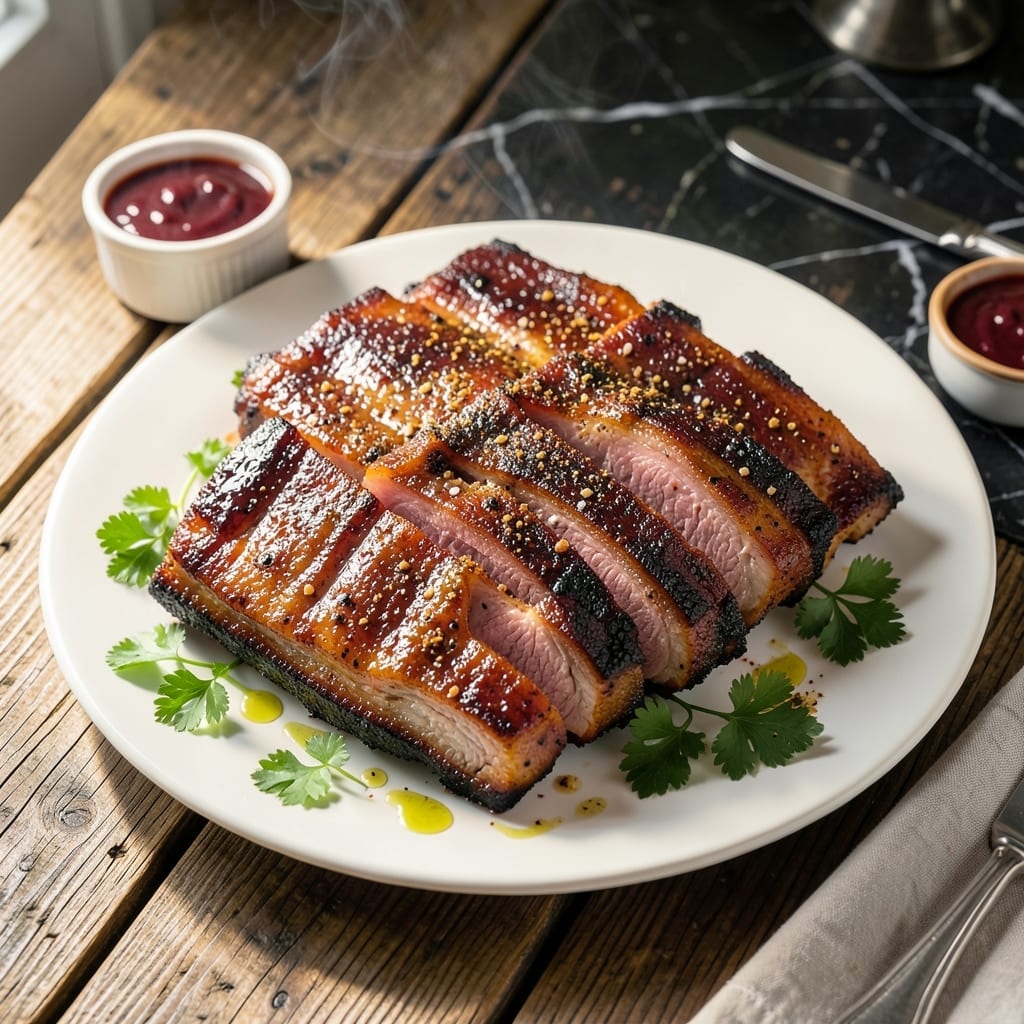
There’s nothing like the aroma of tender pork ribs slow-smoked to perfection. This method delivers fall-off-the-bone results every time.
Low heat and patience transform tough cuts into melt-in-your-mouth tenderness. The smoke does the rest, infusing deep, rich flavor.
Ingredients for Barbecue Pork Spare Ribs
Quality ingredients transform tough cuts into melt-in-your-mouth tenderness with deep smoky flavor.
| Ingredient | Amount | Notes |
|---|---|---|
| Pork Spare Ribs 🐖 | 4 lb | Full rack, membrane removed |
| Brown Sugar 🍚 | ½ cup | Light or dark variety |
| Kosher Salt 🧂 | 2 tbsp | Diamond Crystal preferred |
| Black Pepper 🌶️ | 2 tbsp | Freshly ground, coarse |
| Paprika 🌶️ | 1 tbsp | Sweet or smoked variety |
| Garlic Powder 🧄 | 1 tbsp | Not garlic salt |
| Onion Powder 🧅 | 1 tbsp | Fresh ground preferred |
| Chili Powder 🌶️ | 1 tsp | Mild or hot variety |
| Cayenne Pepper 🔥 | ½ tsp | Adjust for heat preference |
| Apple Cider Vinegar 🍏 | ½ cup | For tangy balance |
| Barbecue Sauce 🍯 | 2 cups | Quality store-bought or homemade |
| Wood Chips 🪵 | 2 cups | Hickory or applewood preferred |
| Yellow Mustard 🟡 | ¼ cup | For binder in rub |
[recipe_ingredient_scaler]
The pork spare ribs are the foundation—look for full racks with good marbling at your butcher or Costco for the best value. Remove the membrane yourself (use a paper towel for grip) for maximum rub penetration. Diamond Crystal kosher salt is ideal for its clean flavor and consistent grain size. Don’t skip the brown sugar; it caramelizes beautifully during the long cook.
No hickory chips? Applewood or cherry wood provide excellent alternatives with milder smoke. For the rub, substitute white sugar at a 1:1 ratio if that’s what you have, though brown adds depth. Out of apple cider vinegar? White vinegar in a pinch, but expect a sharper tang. The barbecue sauce can be homemade or premium bottled—just avoid overly sweet commercial varieties.
Store uncooked ribs in the fridge for up to 3 days or freeze for 6 months. Wood chips keep indefinitely in a dry place. Once smoked, the ribs stay fresh for 4 days refrigerated or freeze beautifully for 3 months in airtight containers.
Why You’ll Love This Recipe
- Set It and Forget: I rub the ribs with brown sugar, salt, and paprika, then let the oven do the work—no babysitting required.
- Sweet and Smoky: That caramelized crust from the brown sugar with the earthy kick of paprika? Ridiculously good.
- Crowd Pleaser: Honestly, I’ve served these at summer cookouts and weeknight dinners—always disappears first.
- Budget-Friendly Feast: Pork spare ribs are affordable, and one rack stretches to feed four with leftovers for sandwiches.
Step-by-Step Instructions for Barbecue Pork Spare Ribs
Master the low-and-slow technique for fall-off-the-bone tenderness with these professional steps.
Step 1: Prepare and Season the Ribs
Begin by removing the thin membrane from the bone side of the 4 lb pork spare ribs. I find that sliding a butter knife under the membrane to loosen it, then gripping with a paper towel for better traction, makes this process easier. This step ensures the rub penetrates deeply and the smoke flavor adheres properly.
In a bowl, combine the 0.5 cup brown sugar, 2 tbsp kosher salt, 2 tbsp black pepper, 1 tbsp paprika, 1 tbsp garlic powder, 1 tbsp onion powder, 1 tsp chili powder, and 0.5 tsp cayenne pepper. Add the 0.25 cup yellow mustard as a binder—it helps the rub cling without adding mustard flavor once cooked.
Rub this mixture generously over both sides of the ribs, pressing firmly to create an even coating. The ribs should appear fully coated with a visible crust. Let them rest at room temperature for 30 minutes while you prepare the smoker.
Step 2: Set Up the Smoker for Optimal Heat
Soak the 2 cups wood chips in water for 30 minutes to ensure they smolder rather than burn. Drain them just before use. Set up your smoker for indirect heat, maintaining a consistent temperature of 225-250°F. I prefer hickory or applewood for that classic barbecue aroma.
Place a drip pan filled with water beneath the cooking grate to catch drippings and stabilize the temperature. When the smoker reaches the desired temperature and you see thin blue smoke, you’re ready to begin. This type of smoke imparts the best flavor without bitterness.
Step 3: Smoke the Ribs Low and Slow
Place the ribs bone-side down on the cooking grate, away from direct heat. Close the lid and resist the urge to peek—maintaining consistent temperature is crucial. Smoke the ribs undisturbed for 3 hours, then check for color development.
At the 3-hour mark, spritz the ribs with the 0.5 cup apple cider vinegar mixed with an equal amount of water. This keeps the surface moist and adds a subtle tang. Repeat this spritzing every 45-60 minutes for the next 2 hours.
Step 4: Wrap and Finish with Sauce
After 5 hours of smoking, the ribs should have developed a deep mahogany color. Remove them from the smoker and place each rack on a large sheet of heavy-duty aluminum foil. Drizzle 1 cup barbecue sauce over each rack, then wrap tightly.
Return the wrapped ribs to the smoker and cook for another 1-2 hours. This wrapping technique, known as the “Texas crutch,” helps tenderize the meat by steaming it in its own juices while the sauce caramelizes.
Step 5: Rest and Serve
Carefully unwrap the ribs and place them back on the cooking grate. Brush with the remaining barbecue sauce and smoke uncovered for a final 30 minutes to set the glaze. The sauce should be slightly tacky and glossy.
Remove the ribs from the smoker and let them rest for 10-15 minutes before slicing. This allows the juices to redistribute, ensuring each bite is moist and flavorful. Slice between the bones and serve immediately with any remaining sauce on the side.
Pro Tips For Making Barbecue Pork Spare Ribs
- Pat Ribs Dry: Sounds weird, but it works: drying the ribs with paper towels before seasoning guarantees the rub sticks better and forms that coveted crust.
- Low and Slow: I learned this the hard way—keep the heat at 225°F for 4-5 hours, or you’ll end up with tough meat instead of fall-off-the-bone tenderness.
- Skip the Rush: Resist the urge to crank up the heat to speed things up; the collagen in spare ribs needs time to break down properly.
- Rest Before Serving: Give the ribs 10 minutes under foil after cooking—my grandmother swore by this, and she was right: the juices redistribute, making every bite richer.
Storing and Reheating Leftovers
Refrigerator Storage
Let your ribs cool completely before storing—this prevents condensation that can make them soggy. I use airtight containers or wrap them tightly in foil, then refrigerate at 40°F or below for up to 4 days. Honestly, they taste even better the next day as flavors meld. ❄️
Freezer Storage
For longer storage, wrap cooled ribs in heavy-duty foil, then place in freezer bags. Squeeze out all air to prevent freezer burn. They’ll stay delicious for 3 months—I always label with the date to keep track.
Oven Reheating
Preheat oven to 300°F, wrap ribs in foil with 2 tbsp apple cider vinegar to maintain moisture. Heat for 20-25 minutes until internal temp reaches 165°F. This method preserves that smoky tenderness I work so hard to achieve. 🔥
Grill Reheating
For that just-smoked taste, reheat on indirect grill heat. Wrap ribs in foil with a splash of vinegar, place on grill over medium heat for 15-20 minutes. Real talk—this brings back that fresh-off-the-smoker feel.
Sauce Refresh
If ribs seem dry after reheating, brush with extra barbecue sauce and broil for 2-3 minutes to caramelize. I keep a small bottle of sauce just for this purpose—it’s a game-changer.
Nutrition Facts
Frequently Asked Questions
What’s the best wood for smoking?
Hickory delivers classic bold flavor, while applewood offers a sweeter, milder profile. 2 cups of either works perfectly.
Can I skip the membrane removal?
No—this step is crucial for rub penetration and tender results. Use a paper towel for grip to remove it easily.
How do I know when they’re done?
The meat should pull back from the bones by 1/4 inch and bend when lifted. Total cook time is 6-8 hours.
Why wrap in foil during cooking?
The “Texas crutch” speeds up cooking and locks in moisture. Wrap after 5 hours with sauce for best results.

Trained in classic French technique but raised on slow-cooked ribs and spicy rubs, she blends culinary skill with smoke and soul.
- Recipe for Boneless Pork Chops in Cast Iron Skillet: Sear and Baste to Juicy Perfection - October 3, 2026
- Recipe for Boneless Cross Rib Roast: Slow-Roasted Beef with Herb Crust - October 3, 2026
- Hamburgers in Sauce Recipe Crock Pot: Slow-Cooked Savory Delight - October 3, 2026