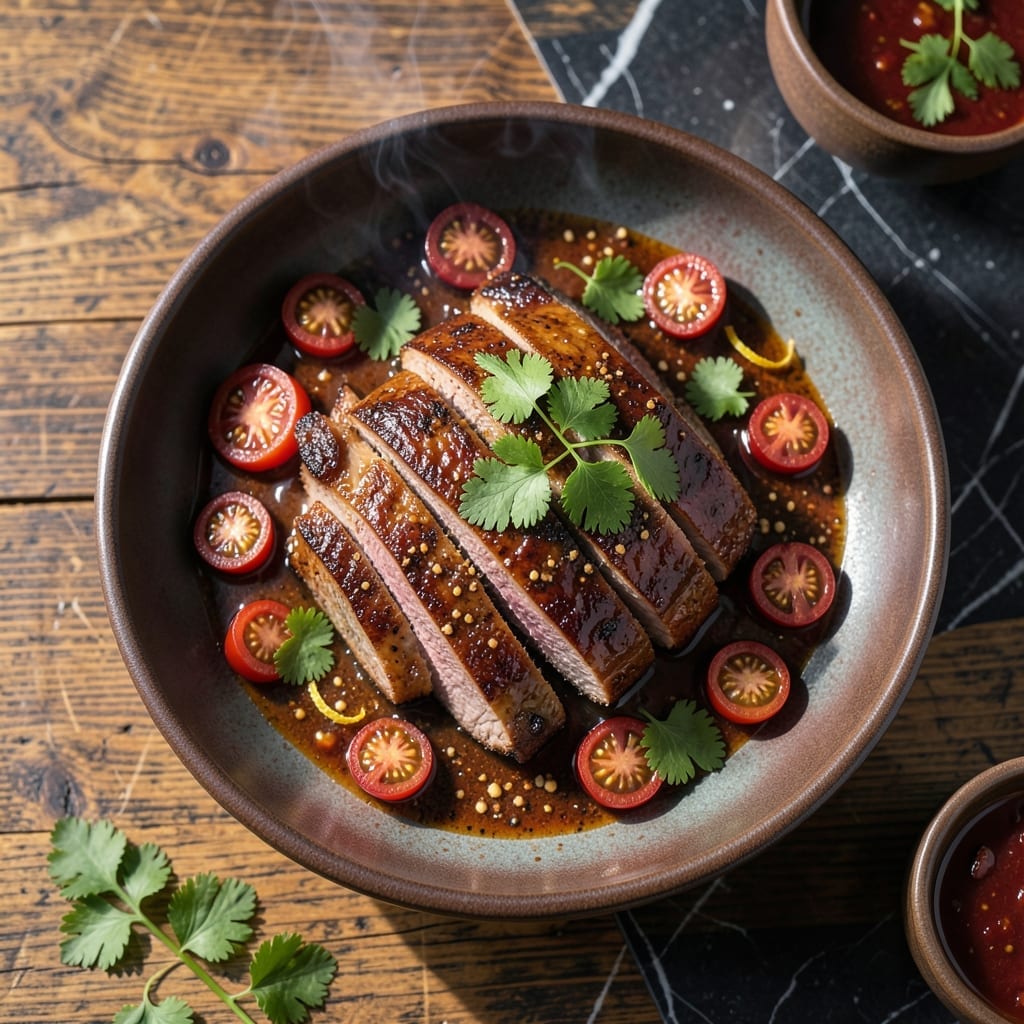
This pork tenderloin delivers tender, smoky flavor without a grill. My French training meets pitmaster instincts in every bite.
Using simple techniques and bold seasoning, this method guarantees juicy, flavorful results every time. Perfect for bringing barbecue indoors.
Ingredients for Barbecue Pork Tenderloin
French technique meets American barbecue with these bold, simple ingredients for tender results.
| Ingredient | Amount | Notes |
|---|---|---|
| Pork Tenderloin 🥩 | 1 ½ lb | Trimmed of silver skin |
| Olive Oil 🫒 | 2 tbsp | Divided for searing and finishing |
| Kosher Salt 🧂 | 1 ½ tsp | Diamond Crystal preferred |
| Black Pepper 🌶️ | 1 tsp | Freshly ground coarse |
| Smoked Paprika 🌶️ | 1 tbsp | Sweet or hot variety |
| Garlic Powder 🧄 | 1 tbsp | Not garlic salt |
| Onion Powder 🧅 | 1 tbsp | Fresh ground preferred |
| Brown Sugar 🧈 | 2 tbsp | Light or dark variety |
| Chili Powder 🌶️ | 1 tsp | Mild or medium heat |
| Ground Cumin 🌿 | 1 tsp | Toasted for depth |
| Barbecue Sauce 🍯 | 1 cup | High-quality bottled or homemade |
| Apple Cider Vinegar 🍏 | 1 tbsp | For acidity balance |
| Worcestershire Sauce 💧 | 1 tbsp | Anchovy-free if preferred |
| Fresh Rosemary 🌿 | 2 tsp | Finely chopped stems |
[recipe_ingredient_scaler]
The pork tenderloin must be fresh, with a rosy hue and minimal odor. Whole Foods or Costco offer consistent quality, but any reputable butcher will suffice. Look for pieces around 1.5 pounds—uniform thickness ensures even cooking. The smoked paprika is non-negotiable for that authentic pitmaster depth; Penzeys carries exceptional blends (worth the investment).
No smoked paprika? Substitute with half chipotle powder and half sweet paprika. Brown sugar can be swapped for maple syrup at a 1:1 ratio. For a gluten-free version, verify your Worcestershire sauce is anchovy-free. The rosemary is flexible—fresh thyme offers a similar earthy note. Barbecue sauce brands vary wildly; Stubb’s Original delivers reliable smokiness without overpowering sweetness.
The seasoned pork keeps refrigerated for 24 hours before cooking. Leftovers? They reheat beautifully, retaining moisture for 4-5 days. For longer storage, vacuum-seal and freeze for up to 3 months—thaw overnight in the fridge before reheating gently to preserve tenderness.
Why You’ll Love This Recipe
- One Pan Wonder: I toss the tenderloin with olive oil, salt, pepper, and smoked paprika, then roast—no marinating, no fuss.
- Smoky Depth: That smoked paprika gives it a real barbecue flavor without firing up the grill.
- Feeds a Crowd: One pork tenderloin stretches to serve four, and it’s just as good sliced for sandwiches the next day.
- Budget Friendly: Pork tenderloin is lean, affordable, and cooks fast—no long braising or expensive cuts.
Step-by-Step Instructions for Barbecue Pork Tenderloin
This method delivers smoky, tender results using your oven and stovetop with precision timing.
Step 1: Create the Dry Rub and Season the Pork
In a small bowl, combine the 1.5 tsp kosher salt, 1 tsp black pepper, 1 tbsp smoked paprika, 1 tbsp garlic powder, 1 tbsp onion powder, 2 tbsp brown sugar, 1 tsp chili powder, and 1 tsp ground cumin. Stir until evenly blended—this ensures every bite carries balanced flavor.
Pat the 1.5 lb pork tenderloin dry with paper towels, then rub it all over with 1 tbsp olive oil. Press the dry rub mixture onto all surfaces of the meat, creating a thick, even coating. The sugar in the mix will caramelize during cooking, forming a flavorful crust.
Step 2: Sear the Tenderloin for Depth of Flavor
Heat the remaining 1 tbsp olive oil in a large oven-safe skillet over medium-high heat. When the oil shimmers and a drop of water sizzles when flicked into the pan, add the seasoned pork tenderloin. Sear for 2-3 minutes per side until deeply browned—you’re building a flavor foundation, not cooking it through.
Add the 2 tsp fresh rosemary to the pan during the last minute of searing, allowing its aromatic oils to infuse the meat. The rosemary should sizzle and become fragrant, signaling its flavors are releasing. Remove the skillet from heat temporarily if the rosemary begins to smoke.
Step 3: Finish in the Oven Until Perfectly Tender
Preheat your oven to 400°F. Transfer the seared pork tenderloin in its skillet to the oven. Roast for 15-20 minutes or until the internal temperature reaches 145°F on an instant-read thermometer. The meat should feel slightly firm when pressed but still yield to gentle pressure.
Remove the skillet from the oven and let the pork rest for 5 minutes in the pan. This resting period allows the juices to redistribute throughout the meat, ensuring each slice remains moist and tender. The temperature will rise slightly during this time, which is normal.
Step 4: Glaze with Barbecue Sauce
While the pork rests, combine the 1 cup barbecue sauce, 1 tbsp apple cider vinegar, and 1 tbsp Worcestershire sauce in a small saucepan. Warm over low heat for 3-4 minutes, stirring occasionally, until the mixture is smooth and slightly thickened. The vinegar and Worcestershire add depth and balance to the sweetness of the sauce.
Slice the rested pork tenderloin into ½-inch thick medallions and arrange on a serving platter. Drizzle the warm barbecue sauce mixture over the top or serve it on the side for dipping. The sauce should cling to the meat, enhancing its smoky, spiced crust without overpowering the pork’s natural flavor.
Pro Tips For Making Barbecue Pork Tenderloin
- Sear First, Smoke Later: I learned this the hard way—get a good crust on the tenderloin over high heat first, then move to lower heat or indirect grilling to finish cooking without burning the spices.
- Pat It Dry: Skip the soggy seasoning: blot the pork tenderloin thoroughly with paper towels before rubbing with olive oil and spices so the salt and paprika actually stick.
- Don’t Overcrowd the Grill: Resist the urge to cook all pieces at once; leave space between tenderloins so they sear properly instead of steaming in their own juices.
- Rest Under Foil: After pulling it off the heat, tent the pork with foil and let it rest for 8-10 minutes—this keeps the juices inside where they belong instead of on your cutting board.
Troubleshooting Great barbecue pork tenderloin
Dry Rub Issues
If your rub isn’t sticking to the pork, the meat might still be too wet. Pat it extremely dry with paper towels first—I often press extra hard to draw out moisture. The sugar in the mix needs a dry surface to adhere properly. 💡
Uneven Cooking
Pork tenderloin tapers at one end, causing uneven cooking. I fold the thin end under and secure it with kitchen twine to create uniform thickness. This ensures the entire piece reaches 145°F simultaneously without overcooking the thinner portion.
Sauce Too Thin
If your barbecue sauce mixture seems watery, simmer it uncovered for an additional 2-3 minutes. The vinegar and Worcestershire need time to reduce. I often add 1 tsp cornstarch mixed with water as a last resort for stubbornly thin sauces.
Over-Searing
Burnt spices ruin the flavor. If your rub starts smoking excessively during searing, reduce heat to medium immediately. The sugar caramelizes quickly at high temps. I learned this the hard way at my first local BBQ competition, watching smoke billow from my pan.
Dry Results
Overcooking is the most common mistake. Pull the pork at 140°F and let it rest to 145°F. The carryover cooking will finish it perfectly. I always use a ThermoWorks instant-read thermometer for accuracy. ❤️
Sauce Separation
If your barbecue sauce separates when reheated, whisk in 1 tsp cold water to bring it back together. This happens when the fats and liquids split during storage. The vinegar helps stabilize the emulsion, but sometimes it needs a little encouragement.
Nutrition Facts
Frequently Asked Questions
Can I use a different cut of pork?
Pork loin works, but it’s thicker and leans drier. Reduce cooking time by 5-7 minutes and monitor temperature closely. Tenderloin is ideal for its quick cooking and natural tenderness.
Why rest the meat before slicing?
Resting for 5 minutes lets juices redistribute. Cutting too soon causes precious moisture to spill onto the cutting board. The internal temp will also rise 5-10°F during this time.
How do I know when it’s done?
Use a meat thermometer—the only sure way. Pull at 140°F; it’ll reach 145°F while resting. The meat should feel slightly springy, not hard.
Can I make this ahead?
Season the pork up to 24 hours ahead. Cook just before serving for best texture. Leftovers keep 4-5 days refrigerated or freeze for 3 months.

Trained in classic French technique but raised on slow-cooked ribs and spicy rubs, she blends culinary skill with smoke and soul.
- Recipe for Boneless Pork Chops in Cast Iron Skillet: Sear and Baste to Juicy Perfection - October 3, 2026
- Recipe for Boneless Cross Rib Roast: Slow-Roasted Beef with Herb Crust - October 3, 2026
- Hamburgers in Sauce Recipe Crock Pot: Slow-Cooked Savory Delight - October 3, 2026