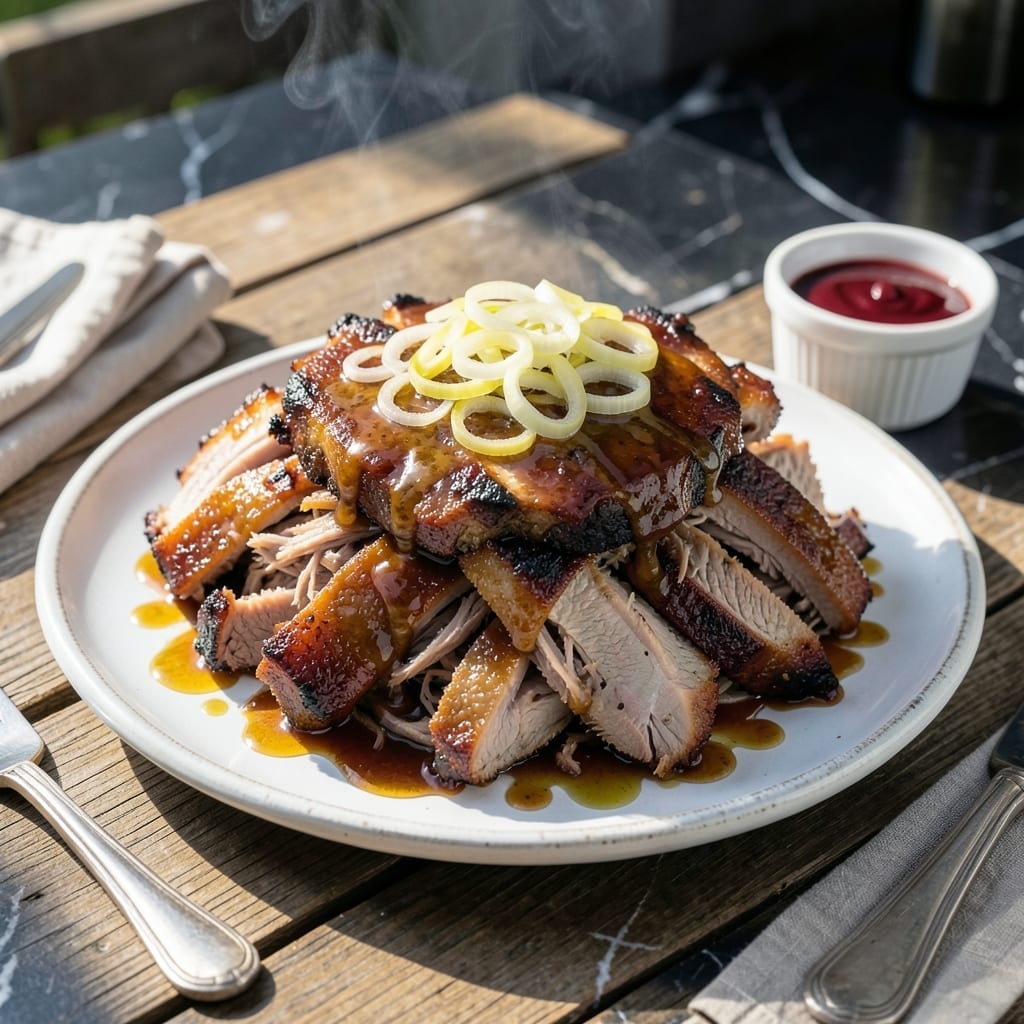
There’s nothing like the deep, smoky aroma of pork slowly transforming in the smoker. This method delivers tender results every time, with a bark that’s worth the wait.
Patience is key—low heat and careful timing turn tough cuts into pull-apart perfection. The reward is meat so soft it nearly melts before you can shred it.
Ingredients for Barbecue Pulled Pork
Slow-smoked pork shoulder plus pantry spices create that melt-in-your-mouth barbecue classic everyone loves.
| Ingredient | Amount | Notes |
|---|---|---|
| Pork Shoulder 🥩 | 4 lb | Bone-in, well-marbled preferred |
| Barbecue Rub 🌶️ | ¼ cup | Store-bought or homemade blend |
| Yellow Mustard 🟡 | 2 tbsp | For binder on pork |
| Apple Cider Vinegar 🍏 | ½ cup | For spritzing during smoke |
| Apple Juice 🍎 | 2 cups | For moisture in pan |
| Barbecue Sauce 🍯 | 2 cups | For finishing and serving |
| Brown Sugar 🍚 | ¼ cup | Light or dark variety |
| Kosher Salt 🧂 | 1 tbsp | Plus more to taste |
| Black Pepper 🌶️ | 1 tbsp | Freshly ground preferred |
| Garlic Powder 🧄 | 1 tbsp | For depth in rub |
| Onion Powder 🧅 | 1 tbsp | Balances sweet and smoky |
| Paprika 🌶️ | 1 tbsp | Sweet or smoked variety |
| Hickory Wood Chunks 🪵 | 4 pieces | For smoking fuel |
[recipe_ingredient_scaler]
The pork shoulder is non-negotiable here. Bone-in, well-marbled cuts from Costco or Sam’s Club give you the best fat content for long cooking. Look for pieces with a good fat cap—this renders down during smoking, basting the meat naturally. Most butchers will trim it to your preference. For the wood, hickory delivers that classic barbecue flavor, but apple or cherry wood adds a sweeter note if you prefer.
No yellow mustard? Dijon works in a pinch—it’s just for helping the rub stick. Short on apple juice? Beer or chicken stock adds moisture without overpowering. The barbecue sauce can be store-bought (Sweet Baby Ray’s is reliable), but if you’re making your own, balance sweet and tangy. Want more heat? Add cayenne or chipotle powder to the rub. Skip the sugar if you’re watching carbs—the pork has enough natural sweetness.
Pulled pork reheats beautifully. Store in the fridge for up to 4-5 days or freeze for 3 months. To serve, warm gently with extra sauce to keep it moist. Leftovers make incredible sandwiches, tacos, or loaded nachos (don’t skip the pickles).
Why You’ll Love This Recipe
- I’ll be real: this makes enough for sandwiches today, tacos tomorrow, and a freezer meal for next week.
- Set It and Forget: Honestly, just rub the pork shoulder, let the slow cooker do the work, and come back to fall-apart tender meat.
- Smoky Sweet Tang: That barbecue rub with apple cider vinegar and juice creates this ridiculous balance—sweet, tangy, and deeply smoky all at once.
- Feeds a Crowd: I’ll be real: this makes enough for sandwiches today, tacos tomorrow, and a freezer meal for next week.
Step-by-Step Instructions for Barbecue Pulled Pork
This tested method delivers competition-quality results with a perfect bark and melt-in-your-mouth texture.
Step 1: Prep and Season the Pork Shoulder
Pat the 4 lb Pork Shoulder dry with paper towels to ensure the rub adheres properly. I always trim any large fat caps, leaving about ¼ inch of fat to protect the meat during the long smoke. This prevents the rub from sliding off and helps achieve that coveted bark.
Brush the entire surface with 2 tbsp Yellow Mustard—this acts as a binder, not for flavor. Then apply the 0.25 cup Barbecue Rub aggressively, pressing it into the meat so it forms a thick, even crust. Let it sit at room temperature for 30-45 minutes while you prepare your smoker.
Step 2: Set Up Your Smoker for Low and Slow Cooking
Preheat your smoker to 225°F using the 4 pieces Hickory Wood Chunks as your fuel source. Hickory provides that classic, robust smoke flavor that pairs perfectly with pork. Fill a water pan with hot water and place it in the smoker to maintain moisture—this is critical for preventing the meat from drying out during the long cook.
Once the smoker reaches temperature and you see thin blue smoke (not thick white smoke), you’re ready to start. Clean, blue smoke means the wood is burning efficiently; white smoke indicates it’s not fully ignited and can impart bitter flavors. Place the pork shoulder fat-side up on the grill grates.
Step 3: Smoke and Spritz for Maximum Flavor
Smoke the pork undisturbed for 6-8 hours until the internal temperature reaches 165°F. This is the “stall” phase where the meat’s temperature plateaus as moisture evaporates—don’t rush it. Every 1-2 hours, spritz the pork with a 50/50 mix of 0.5 cup Apple Cider Vinegar and 2 cups Apple Juice to keep the surface moist and build layers of flavor.
I like to rotate the pork shoulder 180 degrees halfway through the cook to ensure even exposure to the smoke. Avoid opening the smoker unnecessarily—each time you do, you lose heat and add 10-15 minutes to your total cook time. The pork is ready for the next phase when it develops a dark, mahogany bark.
Step 4: Wrap and Continue Cooking Until Tender
When the pork hits 165°F, remove it from the smoker and wrap it tightly in pink butcher paper. This step, called the “Texas crutch,” powers you through the stall while preserving the bark. Return the wrapped pork to the smoker and continue cooking until the internal temperature reaches 200-205°F.
This phase typically takes another 4-6 hours, but trust the probe test over the thermometer. The pork is done when a probe slides in like butter with no resistance. At this point, the collagen has fully broken down, transforming tough meat into fall-off-the-bone tenderness.
Step 5: Rest, Shred, and Sauce the Pulled Pork
Transfer the wrapped pork to a cooler or insulated container and let it rest for 1-2 hours. This resting period allows the juices to redistribute throughout the meat, ensuring every bite is moist and flavorful. The internal temperature will continue to rise slightly during this time due to carryover cooking.
Unwrap the pork and discard any large fat chunks. Using two forks or meat claws, shred the pork into bite-sized pieces. Mix in 2 cups Barbecue Sauce until evenly coated. The sauce should cling to the pork without making it soggy. Serve immediately on buns or as a main dish with classic sides.
Pro Tips For Making Barbecue Pulled Pork
- Low and Slow: Cook the pork shoulder at 225°F for at least 8 hours—I learned this the hard way after trying to rush it at higher temps and ending up with tough, dry meat.
- Rub It Right: Coat the pork shoulder with yellow mustard before applying the barbecue rub; it sounds weird but it works, helping the rub stick and form a better bark.
- Don’t Drown It: Skip adding all the apple juice at once; use just enough to keep it moist during cooking, or you’ll end up with a watery, flavorless mess.
- Rest Before Shredding: Let the pork rest for 30 minutes after cooking—this isn’t the prettiest method, but it’s the tastiest, as it lets the juices redistribute so they don’t all end up on the cutting board.
Perfect Pairings for This Recipe
Classic BBQ Sides
You can’t go wrong with creamy coleslaw—the cool, crunchy texture cuts through the richness. I use a simple mix of cabbage, carrots, and a tangy dressing with 1 tbsp apple cider vinegar for brightness. Baked beans are another must, slow-cooked with ½ cup brown sugar for depth. 🥗
Bread and Bun Options
Soft brioche buns are my top choice—they’re sturdy enough to hold up to the juicy pork. Toast them lightly with butter for extra flavor. For a lighter option, sourdough rolls add a nice chew. Don’t forget corn tortillas for tacos if you want to switch things up.
Fresh and Crunchy
Pickles are non-negotiable for that acidity to balance the smoky pork. I love bread-and-butter pickles or quick-pickled red onions. A simple cucumber salad with 2 tbsp rice vinegar and a pinch of salt adds a refreshing crunch. These sides keep the meal from feeling too heavy.
Drink Pairings
For beer, a crisp lager like Budweiser or a local craft option cleanses your palate. Sweet tea is a Southern classic—brew it strong with ¼ cup sugar per quart. Iced water with lemon slices works too if you want something lighter. 🍺
Finishing Touches
Set out extra barbecue sauce on the side for dipping—Sweet Baby Ray’s is a crowd-pleaser. A sprinkle of chopped green onions or a dash of hot sauce adds a final layer of flavor. These small details make all the difference.
Nutrition Facts
Frequently Asked Questions
What’s the ideal internal temperature for pulling?
Pull the pork when it reaches 200-205°F internally. At this point, the collagen breaks down and the meat becomes fork-tender. The probe should slide in like butter with no resistance.
Can I use an oven instead of a smoker?
Yes! Use 225°F and place a water pan in the oven for moisture. Liquid smoke (1 tsp) added to your rub mimics the smoky flavor. Expect similar cook times but less bark development.
How long should I rest the pork before shredding?
Let it rest wrapped for 1-2 hours in a cooler. This allows juices to redistribute for maximum moisture. Skipping this step can make your pork dry.
What’s the best cut if pork shoulder isn’t available?
Pork butt (Boston butt) works perfectly as it’s from the same primal cut. Avoid leaner cuts like tenderloin—they lack the fat needed for long cooking.

Trained in classic French technique but raised on slow-cooked ribs and spicy rubs, she blends culinary skill with smoke and soul.
- Recipe for Boneless Pork Chops in Cast Iron Skillet: Sear and Baste to Juicy Perfection - October 3, 2026
- Recipe for Boneless Cross Rib Roast: Slow-Roasted Beef with Herb Crust - October 3, 2026
- Hamburgers in Sauce Recipe Crock Pot: Slow-Cooked Savory Delight - October 3, 2026