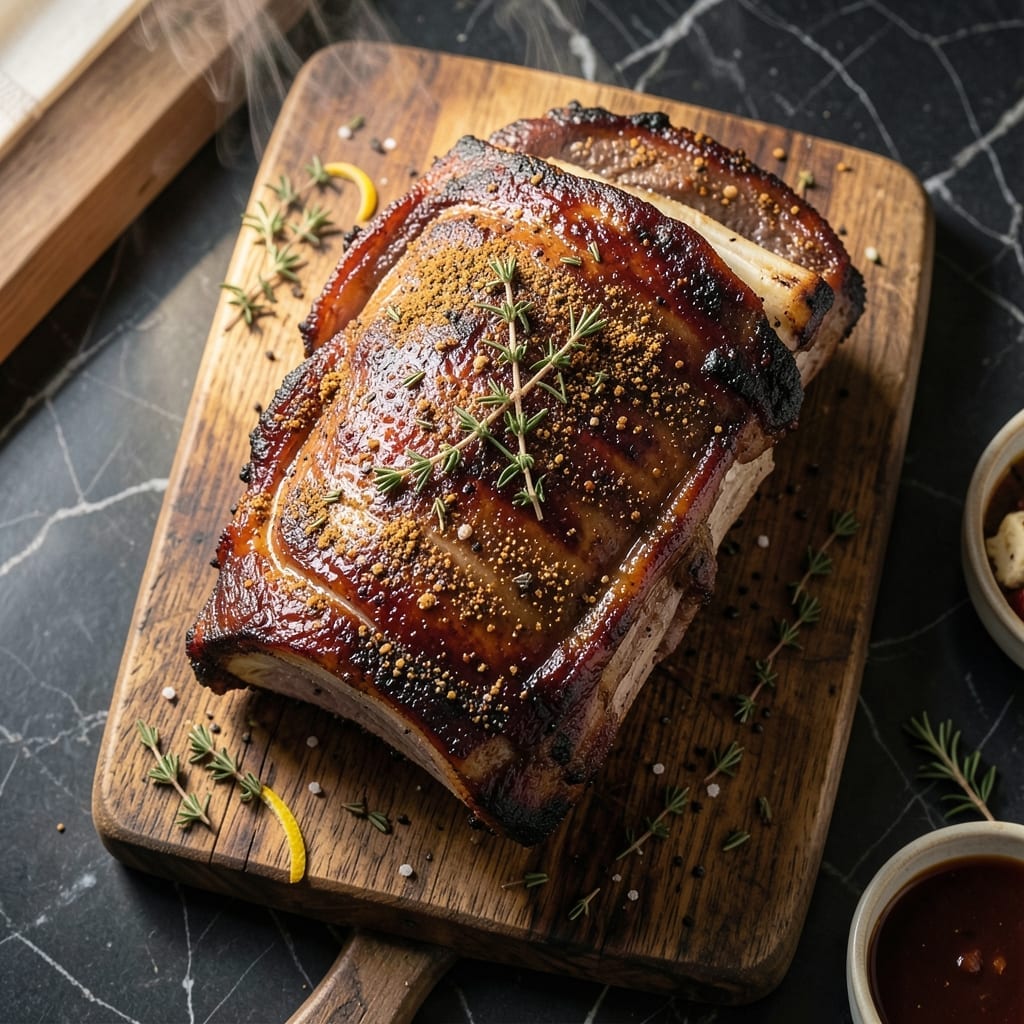
There’s nothing like the aroma of a slow-roasted rib roast filling the air, promising tender, smoky perfection. This method transforms a simple cut into a showstopping centerpiece.
With careful seasoning and low heat, the meat develops a rich crust while staying juicy inside. The result is a dish that commands attention at any gathering.
Ingredients for Barbecue Rib Roast
Prime rib roast and a bold dry rub create this showstopping barbecue centerpiece with minimal effort.
| Ingredient | Amount | Notes |
|---|---|---|
| Bone-In Rib Roast 🥩 | 4 lb | Prime grade preferred, well-marbled |
| Kosher Salt 🧂 | 2 tbsp | Diamond Crystal brand recommended |
| Coarsely Ground Black Pepper 🌶️ | 2 tbsp | Freshly cracked for best texture |
| Smoked Paprika 🌶️ | 1 tbsp | Spanish variety for authentic flavor |
| Garlic Powder 🧄 | 1 tbsp | Not garlic salt substitute |
| Onion Powder 🧅 | 1 tbsp | Balances the smoky profile |
| Brown Sugar 🍚 | ¼ cup | Light or dark works equally |
| Olive Oil 🫒 | 2 tbsp | Extra-virgin for crust development |
| Apple Cider Vinegar 🍏 | 2 tbsp | Adds tangy brightness to rub |
| Worcestershire Sauce 💧 | 2 tbsp | Lea & Perrins recommended |
| Yellow Mustard 🟡 | 1 tbsp | Binds the dry rub components |
| Dried Thyme 🌿 | 1 tsp | Rubbed between fingers to release oils |
| Dried Rosemary 🌿 | 1 tsp | Crushed before application |
| Liquid Smoke 🔥 | 1 tsp | Optional for enhanced smokiness |
[recipe_ingredient_scaler]
The rib roast quality is paramount. Prime grade from a reputable butcher ensures superior marbling and tenderness. Look for bright red color with creamy white fat—avoid anything gray or dried out. Whole Foods or Costco offer consistent quality at reasonable prices. For the rub, freshly ground spices provide unmatched depth of flavor compared to pre-mixed versions.
Substitutions are limited for this cut, but choice grade works if prime isn’t available (though results won’t be as tender). No smoked paprika? Use regular paprika plus 1/4 tsp chipotle powder. The apple cider vinegar can be replaced with white vinegar in a pinch, though the flavor profile will be sharper. Always use freshly cracked black pepper—pre-ground loses its potency quickly.
Store the uncooked roast in its original packaging on a tray in the coldest part of your refrigerator for up to 5 days. For longer storage, vacuum seal and freeze for 6-12 months. The spice rub can be mixed in advance and stored in an airtight container for 3 months.
Why You’ll Love This Recipe
- Set and Forget: Honestly, just rub the rib roast with salt, pepper, smoked paprika, and garlic powder, then let the oven do the work.
- Smoky Depth: The smoked paprika and garlic powder create that deep, barbecue-style crust without a smoker.
- Feeds a Crowd: I’ve served this for Sunday dinner and holiday gatherings—always disappears first.
- Next-Day Magic: Leftovers make insane sandwiches. Trust me, you’ll fight over the last bite.
Step-by-Step Instructions for Barbecue Rib Roast
Master the technique for achieving a perfectly smoked, fall-apart-tender roast with a caramelized crust.
Step 1: Prepare the Dry Rub Mixture
In a medium bowl, combine the 2 tbsp kosher salt, 2 tbsp coarsely ground black pepper, 1 tbsp smoked paprika, 1 tbsp garlic powder, 1 tbsp onion powder, and 0.25 cup brown sugar. I rub the 1 tsp dried thyme and 1 tsp dried rosemary between my fingers as I add them to release their essential oils.
This aromatic blend creates the foundation of flavor. The brown sugar will caramelize during cooking, forming a sticky, flavorful bark that locks in moisture and adds depth to each bite.
Step 2: Create the Wet Binder and Apply the Rub
In a separate small bowl, whisk together the 2 tbsp olive oil, 2 tbsp apple cider vinegar, 2 tbsp Worcestershire sauce, and 1 tbsp yellow mustard. Stir in the 1 tsp liquid smoke for an extra layer of smokiness. This mixture acts as a binder to help the dry rub adhere to the roast.
Pat the 4 lb bone-in rib roast completely dry with paper towels. Using a pastry brush, coat the entire surface of the roast with the wet mixture. Immediately apply the dry rub, pressing firmly to ensure it adheres to all sides, including the ends. The roast should be completely coated with a thick, even layer of the seasoning mixture.
Step 3: Slow-Roast to Perfection
Preheat your oven to 275°F. Place the roast on a wire rack set in a roasting pan, bone-side down. This elevation allows heat to circulate evenly around the roast, promoting consistent cooking and bark development.
Roast uncovered for 3 to 4 hours, or until the internal temperature reaches 195-203°F when measured in the thickest part of the meat. Baste the roast with its accumulated juices every 45 minutes to enhance moisture retention and bark formation. The roast is done when it probes like butter and the bark has developed a deep mahogany color.
Step 4: Rest and Serve
Remove the roast from the oven and transfer it to a cutting board. Tent loosely with aluminum foil and let it rest for 30 minutes. This crucial step allows the juices to redistribute throughout the meat, ensuring each slice is moist and flavorful.
Carve between the bones to separate into individual ribs. Serve immediately, allowing your guests to experience the full depth of the smoky, savory crust and the tender, juicy meat within. The bark should provide a satisfying resistance with each bite, giving way to the succulent interior.
Pro Tips For Making Barbecue Rib Roast
- Dry the Roast: Pat the rib roast completely dry with paper towels before seasoning—any moisture will prevent the rub from sticking and slow down the sear.
- Season Overnight: I learned this the hard way: rub the roast with salt, pepper, smoked paprika, and garlic powder at least 12 hours before cooking for deeper flavor penetration.
- Use a Thermometer: Skip guessing and pull the roast at 125°F for medium-rare; it’ll rise to 130°F while resting, and overcooking this cut is a crime.
- Rest Before Slicing: After cooking, tent the roast loosely with foil and let it rest 20-30 minutes—this keeps the juices in the meat, not on your cutting board.
Storing and Reheating Leftovers
Refrigerator Storage
Let your roast cool completely before storing—this prevents condensation that can make the bark soggy. I use heavy-duty aluminum foil or airtight containers to wrap leftovers tightly. Properly stored, it keeps in the fridge for 3-4 days without losing moisture. 🔥
Freezer Storage
For longer storage, wrap individual ribs in plastic wrap then aluminum foil, or use vacuum-sealed bags. Label with the date—it freezes beautifully for up to 3 months. I like to portion it for easy grab-and-go meals.
Oven Reheating
Preheat your oven to 300°F and place ribs on a wire rack over a baking sheet. Cover loosely with foil and heat for 15-20 minutes, then uncover to crisp the bark for 5 minutes. This method restores that fresh-from-the-smoker texture.
Smoker Reheating
If you have access to a smoker, reheat at 225°F for 20-30 minutes with a small chunk of your favorite wood. This adds a fresh smoke layer that revives the original flavor. I often use hickory for this.
Sauce Addition
After reheating, brush with a thin layer of BBQ sauce and return to heat for 2-3 minutes to set the glaze. This adds moisture and a sticky finish. A local competition trick I picked up at a BBQ competition last summer. ✨
Nutrition Facts
Frequently Asked Questions
What’s the best internal temperature for tenderness?
Target 195-203°F internally for fall-apart results. This range breaks down collagen while keeping meat moist. Use a probe thermometer for accuracy.
Can I use a boneless roast instead?
Yes, but bone-in adds flavor and helps retain shape. For boneless, reduce cooking time by 20% and watch for 195°F internal temp. The dry rub works the same.
How do I prevent the bark from burning?
Keep oven at 275°F max. Tent with foil if browning too fast. Baste every 45 minutes to maintain moisture in the crust.
Should I sear it before slow-roasting?
Not necessary with this method. The low heat and long cook develop a perfect bark without pre-searing. Searing can dry out the exterior.

Trained in classic French technique but raised on slow-cooked ribs and spicy rubs, she blends culinary skill with smoke and soul.
- Recipe for Boneless Pork Chops in Cast Iron Skillet: Sear and Baste to Juicy Perfection - October 3, 2026
- Recipe for Boneless Cross Rib Roast: Slow-Roasted Beef with Herb Crust - October 3, 2026
- Hamburgers in Sauce Recipe Crock Pot: Slow-Cooked Savory Delight - October 3, 2026