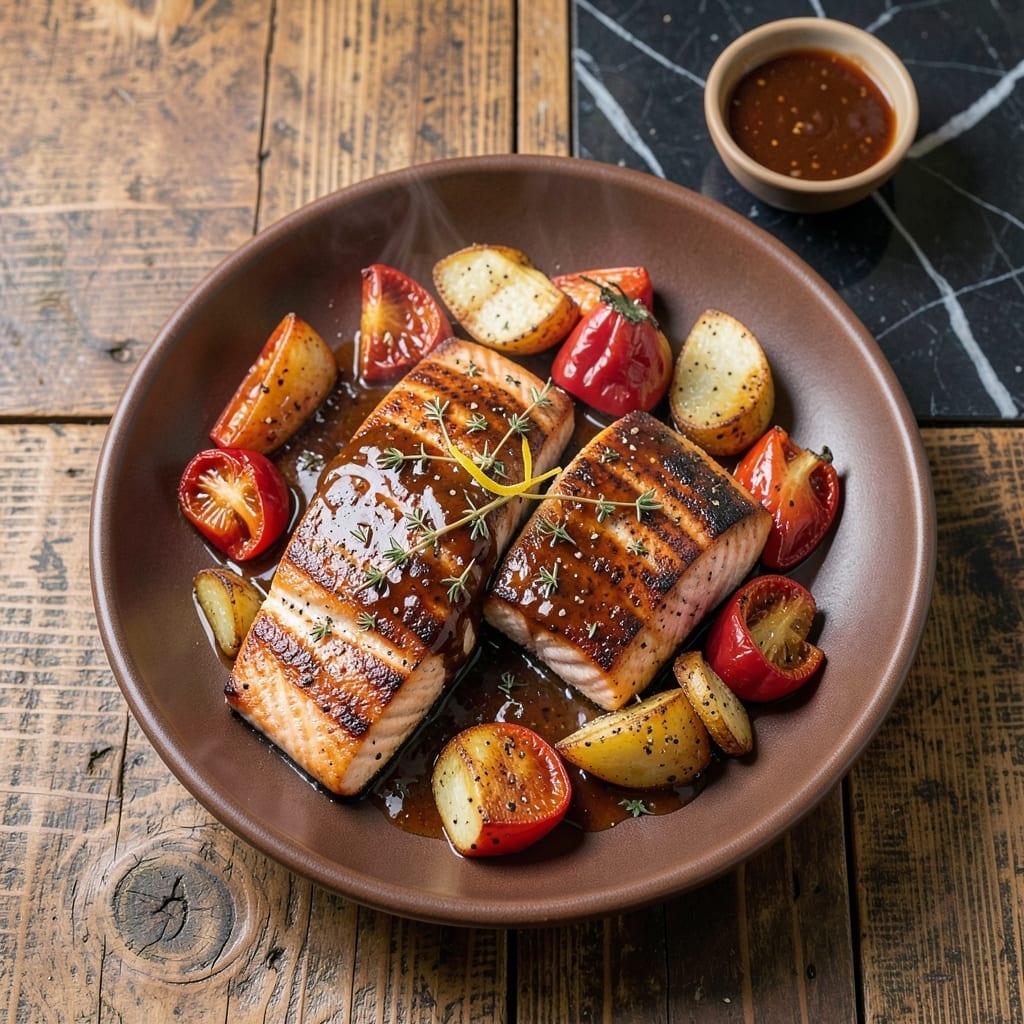
There’s nothing quite like the smoky char and flaky centers of perfectly grilled salmon. This method delivers professional results with simple techniques.
I developed this approach to balance robust barbecue flavor with the delicate nature of salmon. The key is precise timing and temperature control to preserve moisture.
Ingredients for Barbecue Salmon
Eleven carefully selected ingredients create that signature smoky char and flaky texture everyone loves.
| Ingredient | Amount | Notes |
|---|---|---|
| Salmon Fillets 🐟 | 1 ½ lb | Skin-on, center-cut preferred |
| Barbecue Sauce 🍯 | ¾ cup | High-quality, low-sugar preferred |
| Extra-Virgin Olive Oil 🫒 | 2 tbsp | For brushing salmon |
| Kosher Salt 🧂 | 1 tsp | Diamond Crystal preferred |
| Freshly Ground Black Pepper 🌶️ | ½ tsp | Coarse grind for texture |
| Garlic Powder 🧄 | 1 tsp | Not garlic salt |
| Smoked Paprika 🌶️ | 1 tsp | For depth of flavor |
| Dried Thyme 🌿 | ½ tsp | Crushed between fingers |
| Lemon Zest 🍋 | 1 tbsp | Finely grated, organic preferred |
| Fresh Lemon Juice 🍋 | 2 tbsp | Newly squeezed |
| Brown Sugar 🟤 | 1 tbsp | Light or dark variety |
| Dijon Mustard 🟡 | 1 tbsp | Smooth, not whole grain |
[recipe_ingredient_scaler]
The salmon quality is non-negotiable here. Wild-caught sockeye or king salmon from Whole Foods or a trusted fishmonger delivers the best texture and flavor. Look for fillets with vibrant color and no brown spots. Skin-on helps hold the fish together during grilling, and center-cut pieces ensure even cooking. Avoid previously frozen unless it’s been thawed properly—fresh is ideal for moisture retention.
No barbecue sauce on hand? Ketchup mixed with molasses and apple cider vinegar works in a pinch. Smoked paprika can be replaced with chipotle powder for a different heat profile. If you’re out of fresh lemons, bottled juice works but lacks the brightness—add a pinch of citric acid to compensate. For a sweeter glaze, maple syrup at a 1:1 ratio substitutes beautifully for brown sugar.
Salmon is best grilled the same day it’s purchased, but it’ll keep in the fridge for 1-2 days if stored properly. Leftovers? They reheat gently in a 275°F oven for about 10 minutes. The barbecue sauce blend can be made ahead and stored in the fridge for up to 1 week in an airtight container.
Why You’ll Love This Recipe
- 5-Minute Prep: I just brush the fillets with olive oil, sprinkle salt and pepper, and slather on the barbecue sauce—no fuss.
- Smoky Sweet Balance: The rich salmon holds up to that tangy-sweet BBQ sauce in a way that’s honestly addictive.
- Weeknight Hero: I serve it with roasted veggies or a quick salad, and it feels like a real meal without the effort.
- Leftovers? Yes Please: Cold the next day on a salad or in a wrap, it’s even better—if it lasts that long.
Step-by-Step Instructions for Barbecue Salmon
This method ensures perfectly flaky centers with a smoky char every time.
Step 1: Prepare the Dry Rub Mixture
In a small bowl, combine the 1 tsp Kosher Salt, 0.5 tsp Freshly Ground Black Pepper, 1 tsp Garlic Powder, 1 tsp Smoked Paprika, and 0.5 tsp Dried Thyme. Crush the thyme between your fingers to release its aromatic oils as you work.
Add the 1 tbsp Brown Sugar and mix thoroughly to break up any clumps. This rub creates a balanced sweet-savory crust that complements the barbecue sauce beautifully. The smoked paprika adds that essential depth of flavor promised in the title.
Step 2: Season and Marinate the Salmon
Pat the 1.5 lb Salmon Fillets dry with paper towels to ensure the seasoning adheres properly. Place them skin-side down on a clean work surface and brush lightly with 1 tbsp Extra-Virgin Olive Oil.
Rub the spice mixture evenly over all surfaces of the salmon, pressing gently to create a thin, even coating. In a separate small bowl, whisk together the 1 tbsp Dijon Mustard, 1 tbsp Lemon Zest, and 2 tbsp Fresh Lemon Juice, then brush this mixture over the seasoned fillets. Let them sit at room temperature for 10 minutes to allow the flavors to penetrate.
Step 3: Apply the Barbecue Sauce and Grill
Preheat your grill to medium-high heat (about 400°F). Clean and oil the grates thoroughly to prevent the salmon from sticking. Place the salmon fillets skin-side down on the grill.
Cook for 4-5 minutes until the skin is crisp and releases easily from the grates. Brush the top of each fillet generously with 0.75 cup Barbecue Sauce, using about half the total amount. Flip the fillets carefully with a wide spatula and brush with the remaining barbecue sauce.
Step 4: Finish Cooking to Flaky Perfection
Continue grilling for another 3-4 minutes until the salmon reaches an internal temperature of 145°F and flakes easily with a fork. Watch for the edges to turn opaque and the center to still have a slight translucency—this ensures the promised flaky texture.
The barbecue sauce will caramelize slightly, creating a sticky, smoky glaze. Avoid overcooking, as salmon continues to cook slightly after being removed from the heat. The combination of the dry rub and barbecue sauce creates a complex flavor profile that delivers on the smoky char mentioned in the title.
Transfer the salmon to a serving platter and let rest for 2-3 minutes before serving to allow the juices to redistribute.
Pro Tips For Making Barbecue Salmon
- Skin Side Down First: Always start grilling the salmon with the skin side down on medium-high heat for 4-5 minutes before flipping. I learned this the hard way—it prevents sticking and gives you that perfect crispy skin.
- Pat Fillets Dry: Use a paper towel to thoroughly dry the salmon fillets before seasoning. Sounds weird, but it works: the salt and pepper stick better, and you get a more even sear.
- Skip the Over-Saucing: Resist the urge to drown the salmon in barbecue sauce while cooking. Brush it on during the last 2 minutes to avoid burning the sugars—your future self will thank you.
- Rest Before Serving: Give the salmon a solid 5 minutes off the heat under loose foil before serving. This isn’t the prettiest method, but it keeps the juices from running all over the plate.
Common Mistakes When Making This Dish
Overcooking the Fish
Salmon continues cooking off the heat, so remove it when the center still has a hint of translucency. The 145°F internal temperature will be reached during the 2-3 minute rest. Overcooked salmon loses its promised flaky texture and becomes dry and chalky. 🔥
Skipping the Rest Period
Those 2-3 minutes of rest time allow the juices to redistribute throughout the fillet. Skipping this step means those precious juices will end up on your cutting board instead of in your salmon. I learned this the hard way at my first local BBQ competition.
Sticky Situation
Failing to properly clean and oil the grill grates causes salmon to stick and tear apart. Always preheat to 400°F and use a stiff brush, then oil with tongs and a folded paper towel. The skin should release easily when it’s ready to flip.
Sauce Too Soon
Brushing on barbecue sauce immediately can cause burning before the salmon cooks through. Wait until the fillets have cooked for 4-5 minutes skin-side down first. This ensures the sauce caramelizes without charring bitterly.
Inconsistent Fillet Size
The recipe calls for 1.5 lb Salmon Fillets for a reason – uneven sizes cook at different rates. I always buy center-cut pieces from my local fishmonger for consistent thickness. This prevents some pieces from drying out while others finish cooking.
Neglecting the Dry Rub
The combination of smoked paprika, brown sugar, and thyme creates a flavor foundation. Skipping this step leaves your salmon tasting one-dimensional. Press the rub into the flesh so it adheres during grilling for maximum flavor impact.
Nutrition Facts
Frequently Asked Questions
Should I leave the skin on when grilling?
Skin-on helps hold the fish together and creates a crispy texture. It also prevents the delicate flesh from sticking to the grates when cooked at 400°F.
Can I use fresh herbs instead of dried?
Yes, but use 3 times the amount since fresh herbs are less concentrated. Finely chop 1.5 tsp fresh thyme for the same flavor impact as the dried version.
How do I know when it’s done?
The salmon is ready when it reaches an internal temperature of 145°F and flakes easily with a fork. Look for opaque edges with a slightly translucent center.
What if my grill doesn’t have a thermometer?
Hold your hand 5 inches above the grates. If you can only hold it for 3-4 seconds, it’s at the right medium-high heat for grilling salmon.

Trained in classic French technique but raised on slow-cooked ribs and spicy rubs, she blends culinary skill with smoke and soul.
- Recipe for Boneless Pork Chops in Cast Iron Skillet: Sear and Baste to Juicy Perfection - October 3, 2026
- Recipe for Boneless Cross Rib Roast: Slow-Roasted Beef with Herb Crust - October 3, 2026
- Hamburgers in Sauce Recipe Crock Pot: Slow-Cooked Savory Delight - October 3, 2026