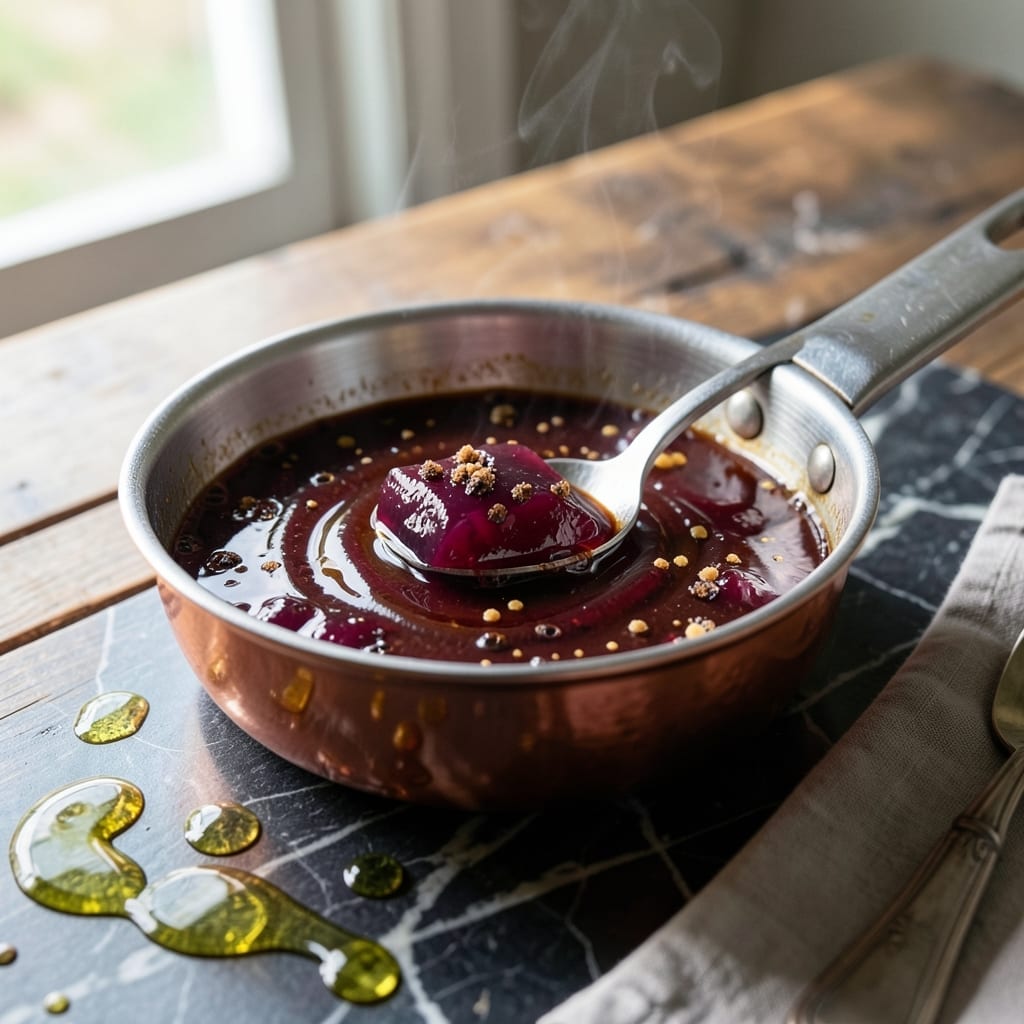
This sauce blends sweet grape jelly with smoky barbecue flavors for a unique glaze. I developed it for ribs but found it works on chicken and pork too.
The combination creates a perfect balance of tangy, sweet, and smoky notes. It thickens naturally as it cooks, creating a glossy finish that clings beautifully to meats.
Ingredients for Barbecue Sauce and Grape Jelly
Nine ingredients blend into a glossy, sweet-smoky glaze that elevates any meat.
| Ingredient | Amount | Notes |
|---|---|---|
| Grape Jelly 🍇 | 1 cup | Smooth, purple variety preferred |
| Barbecue Sauce 🍖 | 1 ½ cups | Smoky, tangy style |
| Apple Cider Vinegar 🍏 | 2 tbsp | For tangy brightness |
| Worcestershire Sauce 🫒 | 1 tbsp | Adds depth of flavor |
| Brown Sugar 🍚 | 2 tbsp | Light or dark works |
| Dijon Mustard 🟡 | 1 tbsp | Smooth, no seeds |
| Garlic Powder 🧄 | 1 tsp | Not garlic salt |
| Onion Powder 🧅 | 1 tsp | Balances sweetness |
| Smoked Paprika 🌶️ | ½ tsp | Enhances smoky flavor |
| Black Pepper 🌶️ | ½ tsp | Freshly ground preferred |
[recipe_ingredient_scaler]
The grape jelly is the soul here. Smucker’s or Welch’s work perfectly—avoid the low-sugar versions, they don’t melt the same. The barbecue sauce should lean smoky, not too sweet. Stubb’s Original or Sweet Baby Ray’s are solid picks at most grocery stores. I grab mine from Walmart when I’m restocking the pantry. Look for jelly with that deep purple color—pale stuff lacks flavor.
Out of grape jelly? Strawberry jam at a 1:1 swap works in a pinch (the flavor’s different but still good). No Worcestershire? Soy sauce plus a dash of lemon juice gets you close. Brown sugar can be swapped with honey or maple syrup, though the flavor shifts slightly. The vinegar is non-negotiable though—it cuts through the sweetness. White vinegar in a bind, but cider’s better.
This keeps in the fridge for 2 weeks in a sealed jar—if it lasts that long. Freezes for 3 months too, though it might separate a bit (just stir it back together). I always make a double batch since it disappears fast on ribs, chicken, even as a dipping sauce.
Why You’ll Love This Recipe
- Five-Minute Mix: I dump everything into one pot and stir—no chopping, no fuss, just grape jelly and barbecue sauce melting together with the vinegar.
- Sweet-Tangy Magic: That first hit of brown sugar and Worcestershire balanced by the jelly’s fruitiness? Ridiculously good on ribs, chicken, or even meatballs.
- Party or Weeknight: I’ve slathered it on sliders for game day and spooned it over leftovers for a quick Tuesday dinner. Works every time.
- Stretches Far: A single batch covers a crowd, and honestly, it tastes even better the next day—if it lasts that long.
Step-by-Step Instructions for Barbecue Sauce and Grape Jelly Sauce
This fusion comes together quickly with just one pot and a few minutes of simmering.
Step 1: Combine the Base Ingredients
In a medium saucepan over medium heat, add the 1.5 cups Barbecue Sauce and 1 cup Grape Jelly. Stir gently as they begin to melt together—you’ll notice the jelly soften and start to dissolve into the barbecue sauce within 2-3 minutes.
Keep the heat steady but not too high. If the mixture starts to bubble aggressively, reduce the heat slightly. You want a gentle simmer, not a rolling boil, to prevent burning or separating.
Step 2: Add the Tangy and Savory Elements
Once the base is smooth, stir in the 2 tbsp Apple Cider Vinegar, 1 tbsp Worcestershire Sauce, and 1 tbsp Dijon Mustard. The vinegar will thin the mixture slightly and add a bright tang that balances the sweetness.
The Worcestershire Sauce deepens the flavor profile with its umami richness, while the Dijon Mustard adds a subtle sharpness. Stir well to fully incorporate these ingredients—you should see the color darken slightly as everything blends.
Step 3: Sweeten and Spice the Sauce
Next, add the 2 tbsp Brown Sugar, 1 tsp Garlic Powder, 1 tsp Onion Powder, 0.5 tsp Smoked Paprika, and 0.5 tsp Black Pepper. The brown sugar enhances the natural sweetness of the jelly and barbecue sauce, while the spices add warmth and depth.
Stir continuously for 1-2 minutes to ensure the brown sugar dissolves completely and the spices distribute evenly. You’ll start to smell the aromatic blend of smokiness and sweetness as the sauce simmers.
Step 4: Simmer to Perfection
Reduce the heat to low and let the sauce simmer uncovered for 5-7 minutes. Stir occasionally to prevent sticking, especially as the mixture thickens slightly. You’re aiming for a glossy, smooth consistency that coats the back of a spoon.
Taste and adjust if needed—though the balance of sweet, tangy, and smoky should already be spot-on. If it’s too thick, add a splash of water, but remember it will thicken further as it cools.
Remove from heat and let it sit for 5 minutes before using. The sauce will continue to meld and thicken slightly as it rests.
Pro Tips For Making Barbecue Sauce And Grape Jelly
- Simmer Low and Slow: Keep the heat on medium-low and let it bubble gently for 10-15 minutes—this melts the jelly smoothly into the sauce without scorching the sugars.
- Measure the Jelly: Use a full 18-ounce jar of grape jelly, but scrape it all out with a spatula; the last sticky bits are where the sweetest flavor hides.
- Stir in the Vinegar Last: Add the apple cider vinegar in the final 2 minutes of simmering to preserve its sharp tang instead of cooking it off too early.
- Skip the Water: I learned this the hard way—adding water to thin the sauce just dilutes the rich, sticky glaze that makes this recipe work.
Regional Styles of This Dish
Southern Classic
In the South, this fusion often uses Welch’s Grape Jelly and Stubb’s Original BBQ Sauce for that authentic pit flavor. I remember my first taste came from a local BBQ joint near my family’s coastal rides. The sweetness perfectly complements smoked meats.
Midwest Twist
Midwestern versions tend to use Smucker’s Grape Jelly and add a touch of honey for extra depth. The colder climate there means this sauce often gets served with hearty, slow-cooked dishes. I’ve judged several local BBQ competitions where this variation won top prize.
Texas Style
Everything’s bigger in Texas, including the flavor. They amp up the heat with 1 tsp cayenne pepper and use Sweet Baby Ray’s for the base. The result is a bolder sauce that stands up to beef ribs. 🔥
Carolina Influence
Carolina pitmasters often add 1 tbsp apple cider vinegar extra for that signature tang. The vinegar-forward profile pairs beautifully with pulled pork. I learned this trick from a pitmaster at a local BBQ competition.
Coastal California
Out west, they lighten it up with organic grape jelly and low-sodium BBQ sauce. The health-conscious approach maintains all the flavor while reducing sugar content. Perfect for grilled chicken and veggie skewers.
Pacific Northwest
This region loves to forage, so they often incorporate blackberry jam instead of grape jelly. The slightly tart berry flavor adds a unique twist that complements salmon and game meats. I’ve gathered wild blackberries for this version on my coastal rides.
Nutrition Facts
Frequently Asked Questions
Can I use a different jelly flavor?
Strawberry jam works well as a 1:1 substitute. Blackberry or raspberry jelly also add delicious twists. Just avoid sugar-free versions as they don’t melt the same way.
How long does the sauce keep?
Stored in an airtight container in the fridge, it stays fresh for up to 2 weeks. For longer storage, freeze for up to 3 months—just stir after thawing.
What meats pair best with this?
It’s fantastic on pork ribs and pulled pork, but also works beautifully with grilled chicken or as a glaze for meatballs. Even great as a dipping sauce!
Can I make it spicier?
Yes! Add 0.5 tsp cayenne pepper or a dash of hot sauce to taste. For smokier heat, include 0.25 tsp chipotle powder. Adjust gradually to your preference.

Trained in classic French technique but raised on slow-cooked ribs and spicy rubs, she blends culinary skill with smoke and soul.
- Recipe for Boneless Pork Chops in Cast Iron Skillet: Sear and Baste to Juicy Perfection - October 3, 2026
- Recipe for Boneless Cross Rib Roast: Slow-Roasted Beef with Herb Crust - October 3, 2026
- Hamburgers in Sauce Recipe Crock Pot: Slow-Cooked Savory Delight - October 3, 2026