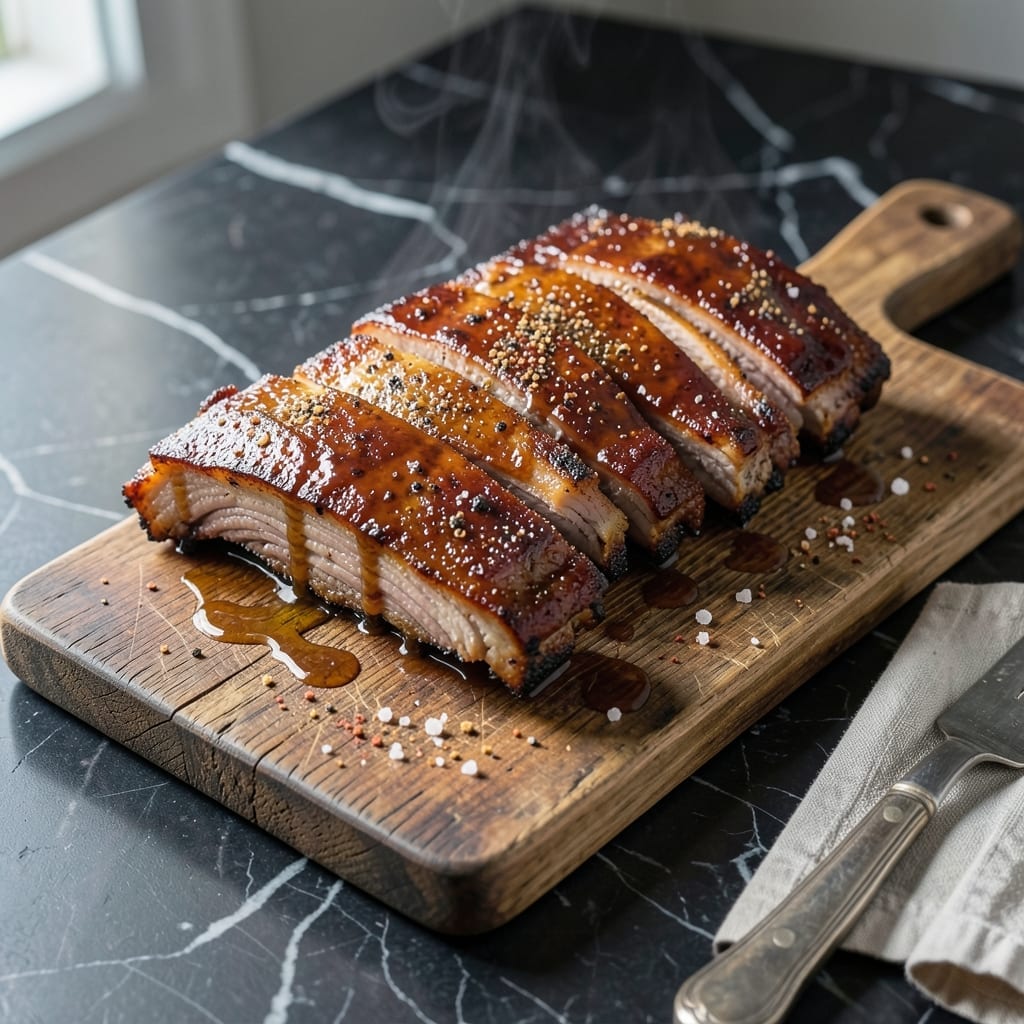
Achieving fall-off-the-bone ribs in the oven is simpler than you think. This method delivers the same tenderness as a smoker, with precise temperature control.
Slow-roasting at 275°F for 3 hours transforms tough cuts into a dish that rivals any competition-style barbecue. The sauce caramelizes to perfection in the final stage.
Ingredients for Barbecue Sauce Ribs Recipe Oven
A few quality ingredients and three hours transform tough ribs into competition-worthy barbecue.
| Ingredient | Amount | Notes |
|---|---|---|
| Pork Baby Back Ribs 🥩 | 2 lb | Full rack, membrane removed |
| Kosher Salt 🧂 | 1 tbsp | Diamond Crystal preferred for texture |
| Black Pepper 🌶️ | 1 tsp | Freshly cracked for maximum flavor |
| Brown Sugar 🍚 | ¼ cup | Light or dark variety |
| Smoked Paprika 🌶️ | 1 tsp | For authentic barbecue depth |
| Garlic Powder 🧄 | 1 tsp | Not garlic salt substitute |
| Onion Powder 🧅 | 1 tsp | Balances sweet and smoky notes |
| Cayenne Pepper 🔥 | ¼ tsp | Adjust to heat preference |
| Barbecue Sauce 🍯 | 1 ½ cups | High-quality bottle or homemade |
| Apple Cider Vinegar 🍏 | 2 tbsp | For tangy balance in sauce |
| Worcestershire Sauce 🫒 | 1 tbsp | Adds umami depth to glaze |
| Olive Oil 🫒 | 1 tbsp | For pre-cooking sear |
| Yellow Mustard 🟡 | 1 tbsp | Binds dry rub components |
[recipe_ingredient_scaler]
The ribs are everything here. Baby back ribs (about 2 lbs per rack) yield the most tender results, but spare ribs work too if that’s what’s available. Look for racks with even marbling—Costco or Sam’s Club typically carry high-quality options. Always remove the membrane yourself (a butter knife and paper towel make it easy) for maximum flavor penetration. The dry rub ingredients should be freshly opened—old spices lose their punch.
No brown sugar? Honey or maple syrup can substitute in the sauce (but skip for the dry rub—it’ll burn). Out of apple cider vinegar? White vinegar in a pinch, though the flavor profile shifts slightly. For the barbecue sauce, Stubb’s or Sweet Baby Ray’s deliver consistent results. Mustard can be omitted if absolutely necessary, but it helps the rub adhere. The vinegar is non-negotiable for cutting through the richness.
Rubbed ribs can rest overnight in the fridge—enhances flavor development. Cooked ribs keep 3-4 days refrigerated or freeze for 3 months. Sauced ribs are best reheated in the oven at 300°F for 15 minutes to restore that sticky glaze.
Why You’ll Love This Recipe
- Set It and Forget: The oven does most of the work while I’m free to prep sides or relax.
- Sweet Heat: Brown sugar and smoked paprika give these ribs that perfect balance of caramelized sweetness and subtle smokiness.
- Crowd Pleaser: I’ve served these at summer cookouts and quiet family dinners—always a hit.
- Leftovers? Yes Please: The ribs reheat beautifully, so I get two meals out of one batch without sacrificing flavor.
Step-by-Step Instructions for Barbecue Sauce Ribs
Here is the method. Straightforward, tested, works every time.
Step 1: Prepare and Season the Ribs
Pat the 2 lb pork baby back ribs dry with paper towels. This step is crucial for ensuring the dry rub adheres properly to the surface of the meat. Remove any remaining membrane if not already done—this prevents a chewy texture in the finished dish.
In a small bowl, combine the 1 tbsp kosher salt, 1 tsp black pepper, 0.25 cup brown sugar, 1 tsp smoked paprika, 1 tsp garlic powder, 1 tsp onion powder, and 0.25 tsp cayenne pepper. Add the 1 tbsp yellow mustard and mix until a thick paste forms. Rub this mixture evenly over both sides of the ribs, pressing firmly to create a flavorful crust. Let them sit at room temperature for 20-30 minutes while the oven preheats.
Step 2: Sear the Ribs for Depth of Flavor
Preheat your oven to 275°F. Heat the 1 tbsp olive oil in a large oven-safe skillet or Dutch oven over medium-high heat. Once the oil shimmers, add the ribs meat-side down. Sear for 3-4 minutes until the surface develops a deep golden-brown crust.
This searing step enhances the flavor through the Maillard reaction. Flip the ribs and sear the bone side for an additional 2-3 minutes. Remove from heat and transfer the ribs to a baking sheet lined with aluminum foil, meat-side up.
Step 3: Slow Roast to Tenderness
Cover the ribs tightly with aluminum foil, creating a steam-filled environment that breaks down the connective tissue. Place the baking sheet in the preheated oven and roast for 2 hours. This low-and-slow cooking method ensures the ribs become fall-off-the-bone tender.
After 2 hours, remove the ribs from the oven and carefully uncover the foil. Increase the oven temperature to 375°F to prepare for the final glazing step.
Step 4: Glaze and Finish
In a bowl, mix the 1.5 cups barbecue sauce, 2 tbsp apple cider vinegar, and 1 tbsp Worcestershire sauce. Brush this glaze generously over the ribs, coating all surfaces. Return the ribs to the oven, uncovered, and bake for an additional 20-25 minutes.
The glaze should caramelize slightly, forming a sticky, glossy coating on the ribs. If the sauce begins to darken too quickly, tent the ribs loosely with foil to prevent burning.
Step 5: Rest and Serve
Remove the ribs from the oven and transfer them to a cutting board. Let them rest for 5-10 minutes before slicing. This resting period allows the juices to redistribute, ensuring each bite is moist and flavorful.
Slice the ribs between the bones and serve immediately. The meat should pull away from the bone easily, with a perfect balance of smoky, sweet, and tangy flavors in every bite.
Pro Tips For Making Barbecue Sauce Ribs Recipe Oven
- Preheat the Oven: Set it to 275°F—low and slow is non-negotiable for ribs that fall off the bone without drying out. I learned this the hard way after my first batch came out tough as leather.
- Dry Rub First: Coat the ribs with the brown sugar, smoked paprika, kosher salt, and black pepper mix at least 30 minutes before cooking. This gives the spices time to stick and form that sticky, flavorful crust.
- Skip the Boiling: Resist the urge to parboil the ribs first—it washes away flavor and makes them mushy. Just season, wrap in foil, and let the oven do the work.
- Sauce Last: Brush on the barbecue sauce only in the last 15-20 minutes of cooking. Adding it too early burns the sugar and turns your sauce into a bitter, charred mess.
Pro Cooking Tips for Perfect Results
Temperature Precision
That 275°F sweet spot is non-negotiable for breaking down collagen without drying out the meat. I use an oven thermometer to verify my dial—I’ve caught my home oven off by 25°F more than once. A ThermoWorks Dot probe in the thickest part ensures you hit that perfect tenderness. 🌡️
Searing Secrets
Don’t rush the sear over medium-high heat. That 3-4 minutes per side develops the Maillard reaction for deep flavor. I prefer my Lodge cast iron for even heat distribution—just make sure it’s oven-safe before transferring.
Foil Technique
Tightly wrapping with heavy-duty foil creates a steam chamber that tenderizes faster. I double-layer regular foil to prevent leaks. After 2 hours, uncover carefully to avoid steam burns—that’s the voice of experience talking.
Glaze Timing
Only apply the barbecue glaze in the final 20-25 minutes at 375°F. Earlier application burns the sugars. I brush on a thick layer, let it set for 5 minutes, then add another coat for that glossy finish. 🔥
Resting Ritual
Those 5-10 minutes of rest aren’t optional. The juices redistribute, preventing dry meat when you slice. I tent loosely with foil to keep them warm—perfect for finishing side dishes.
Knife Choice
A long, sharp knife makes clean cuts between bones. I use my Wüsthof 8-inch chef’s knife for precision. Wipe the blade between cuts to prevent sticking, especially with that sticky glaze.
Nutrition Facts
Frequently Asked Questions
What temperature should I use for oven ribs?
Start at 275°F for the slow roast, then increase to 375°F for glazing. This two-stage method ensures tender meat and caramelized sauce without burning.
How long do ribs need to cook in the oven?
Total time is about 3 hours: 2 hours covered at 275°F, then 20-25 minutes uncovered at 375°F for the glaze. Always check for fall-off-the-bone tenderness.
Can I use a different sauce instead of barbecue?
Yes, but stick to sauces with similar consistency. Teriyaki or honey-mustard glaze work well. Avoid watery sauces—they won’t caramelize properly during the final bake.
Do I need to sear the ribs first?
Searing over medium-high heat for 3-4 minutes per side is optional but recommended. It develops deep flavor through the Maillard reaction before slow cooking.

Trained in classic French technique but raised on slow-cooked ribs and spicy rubs, she blends culinary skill with smoke and soul.
- Recipe for Boneless Pork Chops in Cast Iron Skillet: Sear and Baste to Juicy Perfection - October 3, 2026
- Recipe for Boneless Cross Rib Roast: Slow-Roasted Beef with Herb Crust - October 3, 2026
- Hamburgers in Sauce Recipe Crock Pot: Slow-Cooked Savory Delight - October 3, 2026