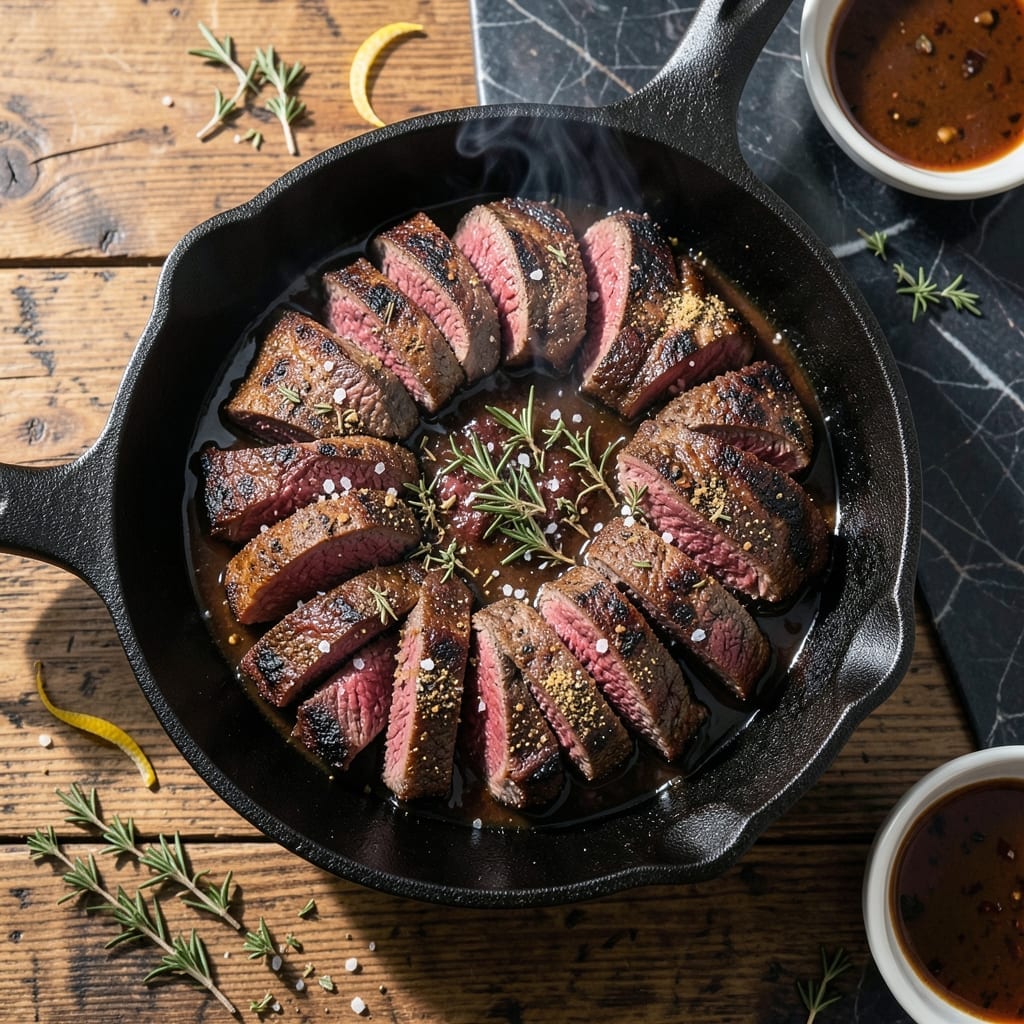
This tri tip recipe delivers oak-smoked richness with a bold herb rub that complements the beef’s natural flavor. The key is low and slow cooking over indirect heat.
I developed this method after years of competition smoking, perfecting the balance between smoky depth and tender meat. The result is juicy, flavorful steak with a perfect crust.
Ingredients for Barbecue Tri Tip Steak
Well-marbled beef and oak chips create that competition-worthy smoky depth everyone craves.
| Ingredient | Amount | Notes |
|---|---|---|
| Tri Tip Roast 🥩 | 2 ½ lb | Well-marbled, trimmed of excess fat |
| Oak Wood Chips 🪵 | 2 cups | Soaked in water for 30 minutes |
| Coarse Kosher Salt 🧂 | 1 ½ tbsp | Diamond Crystal preferred for texture |
| Freshly Ground Black Pepper 🌶️ | 1 ½ tbsp | Coarse grind for rub |
| Garlic Powder 🧄 | 1 tbsp | Not garlic salt |
| Onion Powder 🧅 | 1 tbsp | Fine grind for even distribution |
| Dried Rosemary 🌿 | 1 tbsp | Crushed to release oils |
| Dried Thyme 🍃 | 1 tbsp | Rubbed between fingers |
| Smoked Paprika 🌶️ | 1 tsp | For depth of flavor |
| Olive Oil 🫒 | ¼ cup | For binding herb rub |
| Apple Cider Vinegar 🍏 | ¼ cup | For mopping during cooking |
| Beef Broth 🥩 | ½ cup | Low-sodium preferred |
[recipe_ingredient_scaler]
The tri tip is non-negotiable—look for USDA Choice or Prime with visible marbling. Costco and Whole Foods consistently carry quality cuts. Oak wood chips are essential for that authentic smoke flavor; avoid mesquite as it can overpower. The herb rub relies on freshness, so check expiration dates on your spices. Coarse kosher salt, specifically Diamond Crystal, gives the perfect crust texture.
No oak chips? Hickory offers a similar profile, though slightly sweeter. Substitute fresh garlic at half the amount for garlic powder, but it may burn during cooking. Dried sage at one-third the quantity can replace rosemary in a pinch. For the vinegar mop, white vinegar works but lacks the subtle fruitiness of apple cider. Always use low-sodium broth to control seasoning.
The rubbed tri tip can rest overnight in the fridge—up to 24 hours actually enhances flavor penetration. Cooked leftovers keep 4-5 days refrigerated or freeze for 3 months. For best results, slice against the grain just before serving to maintain tenderness.
Why You’ll Love This Recipe
- Set It and Forget: I rub the tri tip with salt, pepper, and garlic powder, then let the oak chips do the work.
- Smoky, Meaty Bite: That oak-smoked crust with a pink center? Ridiculously good.
- Feeds a Hungry Crowd: One tri tip roast and I’ve got enough for sandwiches, tacos, and salads all week.
- Leftovers Level Up: Honestly, the sliced leftovers taste even better the next day in a grilled cheese.
Step-by-Step Instructions for Oak-Smoked Tri Tip Steak
Master the art of smoky, herb-crusted perfection with this professional approach to grilling.
Step 1: Prepare the Herb Rub and Season the Roast
In a small bowl, combine the 1.5 tbsp coarse kosher salt, 1.5 tbsp freshly ground black pepper, 1 tbsp garlic powder, 1 tbsp onion powder, 1 tbsp dried rosemary, 1 tbsp dried thyme, and 1 tsp smoked paprika. Crush the rosemary and thyme between your fingers as you add them to release their essential oils.
Pat the 2.5 lb tri tip roast dry with paper towels, then rub it all over with the 0.25 cup olive oil. Apply the herb mixture evenly, pressing it into the meat to create a thick, adherent crust. This step ensures maximum flavor penetration during the smoking process.
Step 2: Set Up the Smoker with Oak Wood Chips
Soak the 2 cups oak wood chips in water for 30 minutes to prevent them from burning too quickly. Drain them just before use. Set up your smoker for indirect heat at 225-250°F, placing the wood chips directly on the coals or in the smoker box.
Once the smoker reaches temperature and produces a steady stream of thin, blue smoke, you’re ready to cook. The low temperature and oak wood will infuse the tri tip with a deep, rich smokiness without overpowering the herb rub. Maintain this temperature range throughout the cooking process.
Step 3: Smoke the Tri Tip to Perfection
Place the tri tip roast on the smoker grate, fat-side up. Smoke it undisturbed for 2-3 hours, or until the internal temperature reaches 115-120°F for medium-rare. Use a meat thermometer to check the temperature in the thickest part of the roast.
Every 45 minutes, mop the tri tip with a mixture of the 0.25 cup apple cider vinegar and 0.5 cup beef broth to keep it moist and add a tangy depth of flavor. This step also helps build a beautiful bark on the exterior of the meat.
Step 4: Sear and Rest for Optimal Tenderness
Once the tri tip reaches the desired internal temperature, remove it from the smoker and let it rest on a cutting board for 10-15 minutes. This resting period allows the juices to redistribute throughout the meat, ensuring a moist and flavorful result.
For an added crust, you can sear the tri tip over direct heat for 1-2 minutes per side before resting. Slice the tri tip against the grain into thin strips for serving. The meat should be tender, juicy, and infused with the smoky, herby flavors of the rub and oak wood.
Pro Tips For Making Barbecue Tri Tip Steak
- Reverse sear first: Start with indirect heat at 225°F until the tri tip hits 115°F internally, then finish over direct heat for a perfect crust—this keeps the center juicy while getting that oak-smoked flavor.
- Score the fat cap: Cut shallow crosshatches into the fat before seasoning so the coarse salt and garlic powder penetrate deeper, and the fat renders more evenly.
- Skip the over-soaking: Oak chips only need 30 minutes in water—any longer and they lose their punch, leaving your tri tip with weak smoke flavor.
- Rest under foil: Tent it with foil and let it sit 10-15 minutes after pulling it off the grill; it redistributes the juices so you don’t lose them all when slicing.
Perfect Pairings for This barbecue tri tip steak
Bold Wine Pairings
A full-bodied Cabernet Sauvignon from Napa Valley stands up to the oak-smoked richness—its bold tannins cut through the fat beautifully. I love Caymus for its dark fruit notes that complement the herb rub. Serve slightly below room temperature at 65°F. 🍷
Craft Beer Options
Try a porter or stout with coffee and chocolate notes. Deschutes Black Butte is my go-to—its roasted malt profile mirrors the smoky depth of the tri tip. For something lighter, a brown ale like Newcastle offers caramel sweetness.
Side Dish Stars
Grilled asparagus tossed with 2 tbsp olive oil and lemon zest adds freshness. Or try my competition secret: smoked baked beans with bacon and brown sugar. The beans soak up the oak smoke while adding sweet contrast. 🔥
Simple Salad Pairing
A crisp shaved fennel and apple salad with 1 tbsp apple cider vinegar echoes the mopping liquid. Toss with arugula for peppery bite. I use Honeycrisp apples for their sweet-tart crunch.
Nutrition Facts
Frequently Asked Questions
What’s the best wood for smoking tri tip?
Oak is ideal for its balanced, medium smoke flavor that complements beef without overpowering. Hickory works as a stronger alternative, while pecan offers a sweeter, milder profile. Always avoid softwoods like pine.
How do I know when it’s done?
Use a meat thermometer—115-120°F for medium-rare, 125-130°F for medium. Remember the temperature will rise 5-10°F during resting. The meat should feel slightly firm but still springy to the touch.
Can I cook this on a gas grill?
Yes! Set up for indirect heat with one burner off. Add wood chips in a smoker box or foil pouch over the lit burner. Maintain 225-250°F and follow the same timing.
Why slice against the grain?
Tri tip has two distinct grain directions. Slicing against the grain shortens muscle fibers, making each bite more tender. Look for the natural seams dividing the grain patterns before cutting.

Trained in classic French technique but raised on slow-cooked ribs and spicy rubs, she blends culinary skill with smoke and soul.
- Recipe for Boneless Pork Chops in Cast Iron Skillet: Sear and Baste to Juicy Perfection - October 3, 2026
- Recipe for Boneless Cross Rib Roast: Slow-Roasted Beef with Herb Crust - October 3, 2026
- Hamburgers in Sauce Recipe Crock Pot: Slow-Cooked Savory Delight - October 3, 2026