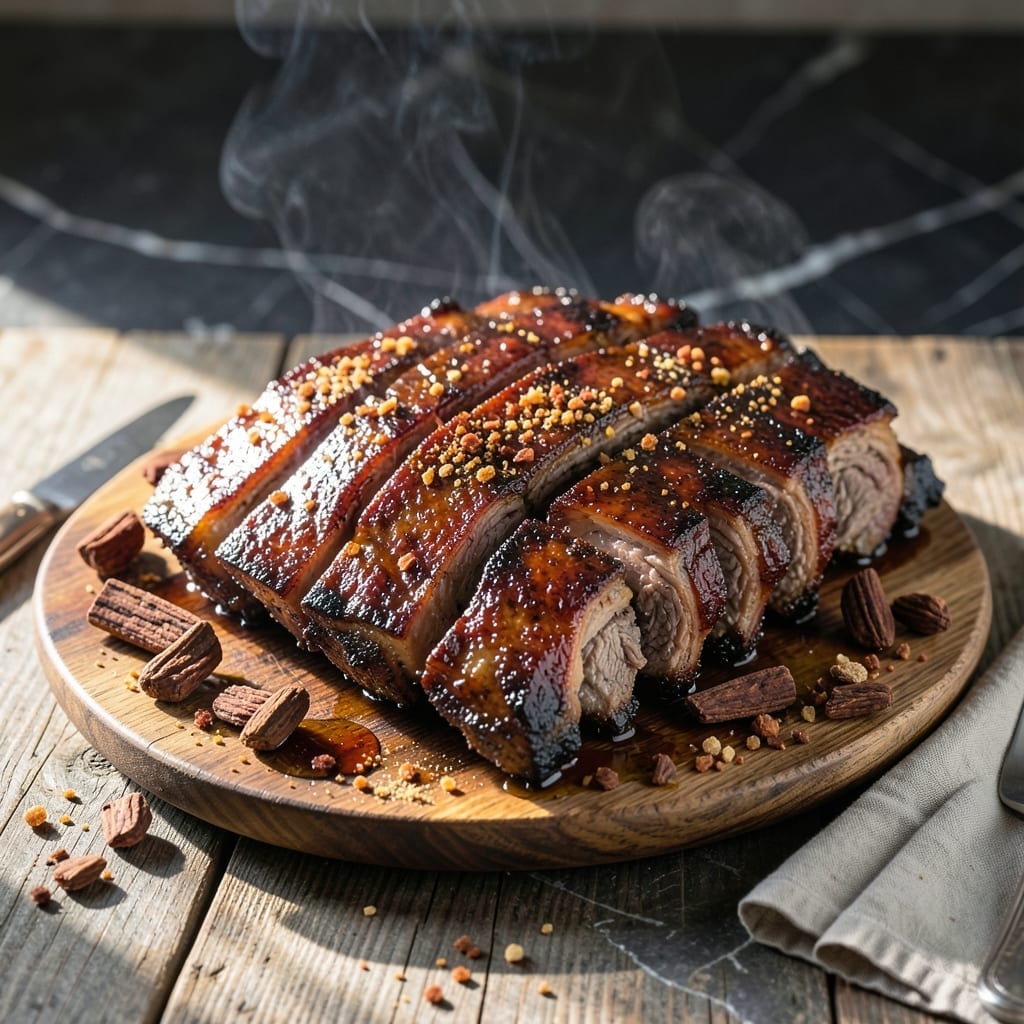
Few things beat the aroma of beef back ribs slow-smoked to tender perfection over hickory. This method transforms tough cuts into fall-off-the-bone deliciousness that’s hard to resist.
I developed this approach after years of refining my pitmaster skills, combining classic smoking principles with meticulous timing. The low and slow process at 225°F ensures the meat absorbs maximum smoke flavor while breaking down connective tissue.
The result is ribs with a deep mahogany bark outside and juicy, tender meat inside. Each bite delivers that signature smoky depth, with just the right balance of sweet and spicy from the rub.
Pair with tangy barbecue sauce and serve at your next gathering. These ribs will be the star of any meal.
Ingredients for Barbecued Beef Back Ribs
A full rack of beef back ribs plus a bold spice rub. Everything you need for that perfect bark.
| Ingredient | Amount | Notes |
|---|---|---|
| Beef Back Ribs 🥩 | 3 lb | Full rack, membrane removed |
| Hickory Wood Chunks 🪵 | 4 pieces | For smoking, soaked 30 minutes |
| Brown Sugar 🍚 | ½ cup | Light or dark, packed |
| Paprika 🌶️ | 2 tbsp | Sweet or smoked variety |
| Garlic Powder 🧄 | 1 tbsp | Fresh ground preferred |
| Onion Powder 🧅 | 1 tbsp | Fine granulated texture |
| Coarse Kosher Salt 🧂 | 1 ½ tbsp | Diamond Crystal preferred |
| Ground Black Pepper 🌶️ | 1 tbsp | Freshly cracked for best flavor |
| Cayenne Pepper 🔥 | ½ tsp | Adjust for heat preference |
| Yellow Mustard 🟡 | ¼ cup | Binder for dry rub |
| Apple Cider Vinegar 🍏 | ¼ cup | For spritzing during cook |
| Apple Juice 🍎 | ½ cup | For spritzing during cook |
| Barbecue Sauce 🫕 | 1 cup | Tangy variety for serving |
| Unsalted Butter 🧈 | ½ cup | For finishing, cubed |
[recipe_ingredient_scaler]
The ribs are everything here. Beef back ribs (not baby backs) give you that rich, beefy flavor and meaty texture. Look for well-marbled racks at Costco or a trusted butcher—they should have a good fat cap but not be overly fatty. The membrane on the bone side? Peel it off before seasoning (use a paper towel for grip). Hickory is my go-to wood, but oak or pecan work too if that’s what you’ve got.
No brown sugar? Turbinado or raw sugar works in a pinch. Out of paprika? Smoked paprika at half the amount adds extra depth. The mustard in the rub is just a binder—Dijon or regular yellow both work fine. If you’re watching heat, cut the cayenne to a pinch. For the spritz, apple juice plus vinegar keeps the ribs moist, but a 50/50 mix of water and vinegar is fine if that’s easier.
Rubbed ribs can sit in the fridge overnight (actually improves flavor). Cooked ribs rest 30-60 minutes before serving—don’t skip this. Leftovers? Wrap tightly and refrigerate for up to 4 days or freeze for 3 months (reheat in foil with a splash of juice).
Why You’ll Love This Recipe
- Set It And Forget: I rub the ribs with brown sugar and spices, then let the smoker do the work for hours.
- Hickory Smoke Magic: That deep, smoky flavor from hickory chunks with the sweet-spicy rub is next-level good.
- Crowd Pleaser: Honestly, these ribs disappear faster than I can slice them at family gatherings.
- Leftovers? Yes Please: The meat gets even more tender the next day, so I always make extra for sandwiches.
Step-by-Step Instructions for Barbecued Beef Back Ribs
Here’s my tested method for achieving competition-style tenderness with these ribs.
Step 1: Prep Ribs and Apply Dry Rub
Start by patting the 3 lb Beef Back Ribs completely dry with paper towels. The membrane should already be removed, but double-check and pull off any stubborn bits—this prevents a chewy texture. I like to trim any excess fat from the meat side, leaving just enough to enhance flavor.
In a bowl, combine the 0.5 cup Brown Sugar, 2 tbsp Paprika, 1 tbsp Garlic Powder, 1 tbsp Onion Powder, 1.5 tbsp Coarse Kosher Salt, 1 tbsp Ground Black Pepper, and 0.5 tsp Cayenne Pepper. Spread the 0.25 cup Yellow Mustard thinly over both sides of the ribs—it acts as a binder. Then press the dry rub generously onto every surface, ensuring full coverage. Let them sit at room temperature for 30 minutes while you prep the smoker.
Step 2: Set Up Smoker and Begin Low-and-Slow Cook
Soak the 4 pieces Hickory Wood Chunks in water for 30 minutes before use. Preheat your smoker to 225°F using the soaked hickory for smoke. Once stable, place the ribs bone-side down on the grate. The low temperature is critical here—it breaks down collagen over time, ensuring that promised tenderness.
Smoke undisturbed for 3 hours. Resist the urge to peek; every time you open the lid, you lose heat and smoke. After 3 hours, check the color—you’re aiming for a deep mahogany hue. This is when the magic starts happening beneath the surface.
Step 3: Wrap and Continue Cooking
Pull the ribs off the smoker and wrap them tightly in heavy-duty foil with the 0.5 cup Apple Juice and 0.25 cup Apple Cider Vinegar. This step, called the “Texas crutch,” steams the ribs, pushing them through the stall while keeping them moist. Return them to the smoker, still at 225°F.
Cook wrapped for another 2-3 hours. The ribs are ready when they probe like butter between the bones—typically when the internal temperature hits 200-205°F. This is the moment that matters: patience here guarantees fall-off-the-bone results.
Step 4: Finish, Sauce, and Rest
Carefully unwrap the ribs and return them to the smoker, bone-side up, for 30 minutes to firm up the surface. Meanwhile, melt the 0.5 cup Unsalted Butter and mix it with the 1 cup Barbecue Sauce in a small saucepan over low heat. Brush this mixture generously over the ribs during the final 30 minutes of cooking.
Once glazed to your liking, pull the ribs off and let them rest for 15 minutes under loose foil. This rest allows the juices to redistribute, ensuring every bite is packed with moisture and flavor. Slice between the bones and serve immediately—the ribs should be so tender they nearly pull apart on their own.
Pro Tips For Making Barbecued Beef Back Ribs
- Preheat the Smoker: I learned this the hard way—give your smoker a solid 15 minutes with hickory chunks to stabilize at 225°F before the ribs go in. Cold starts mean uneven cooking and that bitter white smoke you don’t want.
- Trim the Membrane: Sounds tedious, but peeling that tough silver skin off the bone side actually changes the outcome. Use a butter knife to lift it, then grab with a paper towel for grip—your ribs will take the rub better and cook more evenly.
- Skip the Boil: Resist the urge to parboil the ribs first. It washes away flavor and turns the meat mushy—I was skeptical until I tried dry-rubbed ribs straight on the smoker and never looked back.
- Wrap at the Stall: When the internal temp hits 160°F and stalls, wrap the ribs in foil with a splash of apple juice and a sprinkle of brown sugar. This pushes through the stall faster and keeps them from drying out.
Perfect Pairings for This barbecued beef back ribs
Classic Sides
You can’t go wrong with creamy coleslaw—I toss 4 cups shredded cabbage with a dressing of ½ cup mayonnaise, 2 tbsp apple cider vinegar, and 1 tbsp sugar. The cool crunch contrasts the smoky ribs perfectly.
Comforting Favorites
Mac and cheese with a crispy breadcrumb topping is my go-to. I use elbow pasta and a blend of sharp cheddar and Gruyère for depth. The ribs’ rich smokiness pairs beautifully with cheesy comfort.
Fresh Options
A simple cornbread salad with diced tomatoes, cucumbers, and red onion adds brightness. Drizzle with red wine vinegar and olive oil. It cuts through the ribs’ richness while keeping the meal hearty. 🥗
Drink Pairings
For beer, I reach for a smoky porter or amber ale—the malt notes complement the hickory. Non-alcoholic? Try sweet tea with lemon. Both cleanse the palate between bites of tender meat.
Sauce Variations
Beyond the tangy barbecue sauce, offer white BBQ sauce (mayonnaise, vinegar, and horseradish) for dipping. It’s an Alabama staple that adds a cool, tangy contrast to the ribs’ deep smokiness.
Dessert Finish
End with peach cobbler—warm, buttery, and slightly sweet. The fruit’s natural acidity balances the meal’s richness. I use fresh peaches when in season. 💛
Nutrition Facts
Frequently Asked Questions
What’s the best wood for smoking these ribs?
Hickory is my top pick for its bold, classic flavor that pairs perfectly with beef. Oak or pecan work well too if you prefer milder smoke. Avoid softwoods like pine—they create bitter flavors.
How do I know when the ribs are done?
They’re ready when the internal temperature reaches 200-205°F and the meat probes like butter. The bones should pull cleanly from the meat with just a slight tug.
Can I prep the ribs the night before?
Apply the rub and let them rest overnight in the fridge. This gives the spices time to penetrate deeper, enhancing flavor. Just bring them to room temperature before smoking.
Why wrap the ribs in foil?
Wrapping (the Texas crutch) speeds up cooking and prevents drying out. The foil traps steam, helping break down tough connective tissue while keeping the meat moist.

Trained in classic French technique but raised on slow-cooked ribs and spicy rubs, she blends culinary skill with smoke and soul.
- Recipe for Boneless Pork Chops in Cast Iron Skillet: Sear and Baste to Juicy Perfection - October 3, 2026
- Recipe for Boneless Cross Rib Roast: Slow-Roasted Beef with Herb Crust - October 3, 2026
- Hamburgers in Sauce Recipe Crock Pot: Slow-Cooked Savory Delight - October 3, 2026