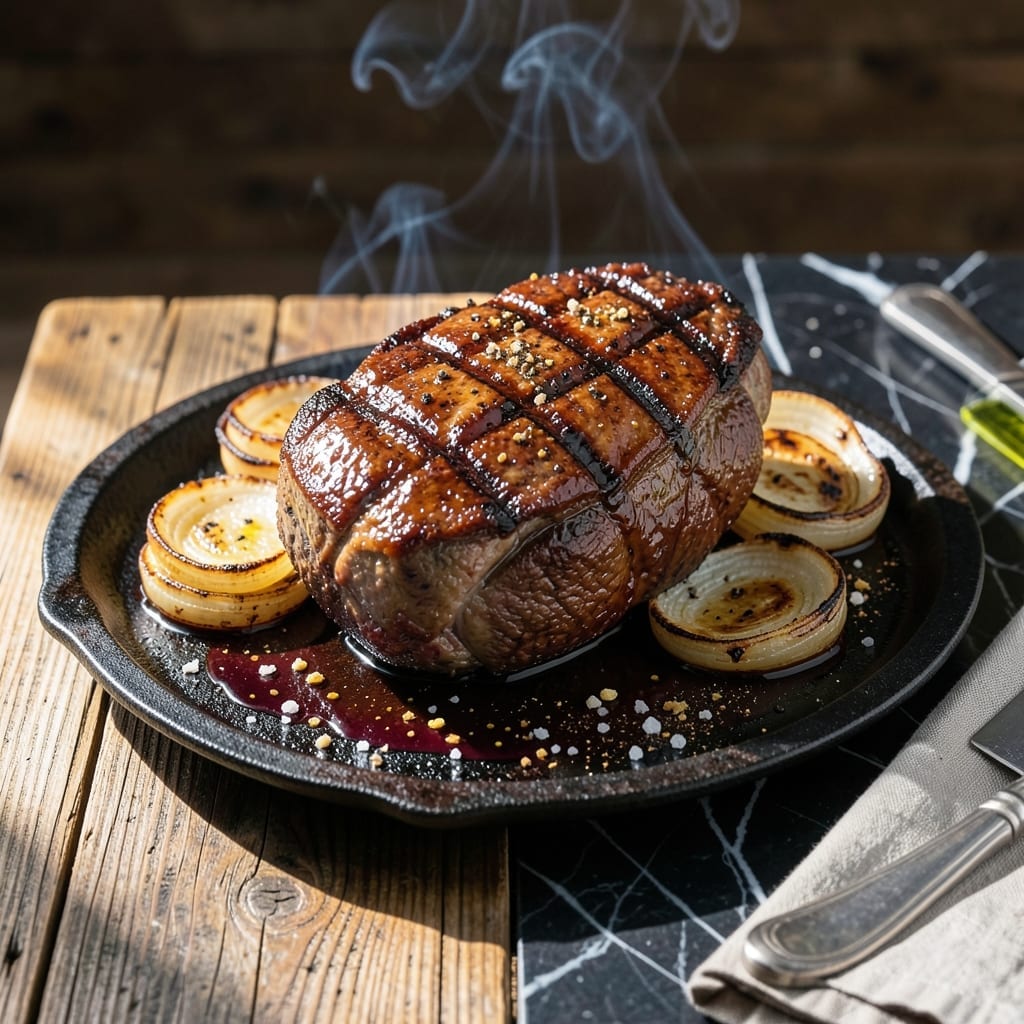
Few cooking experiences match the satisfaction of pulling apart slow-smoked beef that melts in your mouth. Getting my first whiff of hickory smoke at our family cookouts taught me that true barbecue requires patience and respect for the process.
This method transforms tough cuts into tender, flavorful masterpieces through low heat and careful timing. The smoke penetrates deep, creating a bark that gives way to juicy, succulent meat inside. It’s a technique honed over countless backyard sessions.
What emerges is beef with a perfect balance of smoky depth and natural richness. The meat pulls apart effortlessly, with each bite delivering that signature melting texture that defines great barbecue.
Serve with classic sides like tangy coleslaw and cornbread to complete the experience. Here’s how to achieve this at home.
Ingredients for Barbecued Beef
Slow-smoked beef starts with tough cuts and simple seasonings transformed by time and smoke.
| Ingredient | Amount | Notes |
|---|---|---|
| Beef Chuck Roast 🥩 | 3 lb | Well-marbled, trimmed of excess fat |
| Hickory Wood Chips 🪵 | 2 cups | Soaked in water for 1 hour |
| Coarse Kosher Salt 🧂 | 2 tbsp | Diamond Crystal preferred for texture |
| Freshly Ground Black Pepper 🌶️ | 2 tbsp | Coarse grind for bark formation |
| Garlic Powder 🧄 | 1 tbsp | Not garlic salt |
| Onion Powder 🧅 | 1 tbsp | Balances the rub flavors |
| Smoked Paprika 🌶️ | 1 tbsp | Adds depth to smoke profile |
| Brown Sugar 🍚 | ½ cup | Light or dark, packed |
| Yellow Mustard 🟡 | ¼ cup | Binder for the rub |
| Apple Cider Vinegar 🍏 | ¼ cup | For tangy mop sauce |
| Water 💧 | 1 cup | For spray bottle |
| Unsalted Butter 🧈 | ½ cup | For finishing, optional |
| Worcestershire Sauce 🍶 | 2 tbsp | Adds umami depth |
[recipe_ingredient_scaler]
The beef is everything here. Chuck roast is ideal for its fat marbling and connective tissue that breaks down beautifully over low heat. Look for pieces with vibrant red color and visible fat streaks—avoid anything gray or dried out. Most butchers at Whole Foods or local meat markets will happy to cut a whole chuck into smaller, more manageable pieces for smoking.
No hickory chips? Pecan or oak work well too (apple or cherry for a sweeter smoke). Short on time? Pre-made BBQ rub saves effort, but make your own for better flavor control. The mustard in the rub is just a binder—Dijon works fine. For the vinegar, cider is traditional, but white vinegar in a pinch won’t ruin it.
Smoked beef keeps 4-5 days wrapped tightly in the fridge, or freeze for 3 months (slice before freezing for easy portions). The rub can be mixed ahead and stored in a jar for 6 months. Always let the meat rest 30 minutes before pulling—it holds onto the juices better.
Why You’ll Love This Recipe
- I’ll be real: it tastes even better the next day, and my wallet loves that a single roast makes six generous servings.
- Set It and Forget: I just season the chuck roast, toss in the hickory chips, and let the smoker do the work.
- Smoky, Garlicky Bite: The hickory smoke plus that coarse salt and garlic powder crust—honestly, it’s the reason I fire up the grill in the first place.
- Feeds My Crew: One chuck roast stretched across tacos, sandwiches, and salads for the whole week. Between us, it’s my meal-prep MVP.
Step-by-Step Instructions for Slow-Smoked Beef
Here’s the method I rely on for that perfect melting tenderness every single time.
Step 1: Prepare and Season the Beef Chuck Roast
Start by patting the 3 lb Beef Chuck Roast completely dry with paper towels. This removes surface moisture that can prevent the rub from adhering properly. I always trim any excess fat, leaving just enough marbling for flavor and moisture.
In a bowl, combine the 2 tbsp Coarse Kosher Salt, 2 tbsp Freshly Ground Black Pepper, 1 tbsp Garlic Powder, 1 tbsp Onion Powder, 1 tbsp Smoked Paprika, and 0.5 cup Brown Sugar. This creates a robust, flavorful bark. Rub the mixture all over the beef, pressing firmly so it sticks. Then brush the entire surface with the 0.25 cup Yellow Mustard—this acts as a binder and adds a subtle tang.
Step 2: Set Up Your Smoker with Soaked Wood Chips
Soak the 2 cups Hickory Wood Chips in the 1 cup Water for at least 1 hour beforehand. This ensures they smolder and produce clean smoke rather than burning up too quickly. Drain them just before use.
Preheat your smoker to 225°F. I prefer using a water pan in the smoker to maintain consistent moisture levels, which helps prevent the beef from drying out during the long cook. Once the smoker reaches temperature and you see a steady stream of thin blue smoke, add the wood chips to the firebox or smoke tray.
Step 3: Smoke the Beef to Perfection
Place the seasoned Beef Chuck Roast directly on the smoker grate, fat-side up. Insert a meat probe into the thickest part of the roast, avoiding any large fat pockets. Smoke undisturbed for 4-5 hours until the internal temperature reaches 165°F.
Every 45-60 minutes, spritz the beef with a mixture of the 0.25 cup Apple Cider Vinegar and 1 cup Water in a spray bottle. This keeps the surface moist and builds layers of flavor. The beef is ready for the next step when it develops a dark, mahogany bark and the internal temperature hits 165°F.
Step 4: Wrap and Finish the Beef
Once the beef reaches 165°F, remove it from the smoker and wrap it tightly in pink butcher paper or aluminum foil. Add 2 tbsp Worcestershire Sauce and the 0.5 cup Unsalted Butter (if using) on top of the beef before sealing. This step, known as the Texas crutch, helps power through the stall while keeping the meat moist.
Return the wrapped beef to the smoker and continue cooking until the internal temperature reaches 200-205°F and the meat is probe-tender, usually another 2-3 hours. You’ll know it’s done when a thermometer probe slides in like butter with no resistance.
Step 5: Rest and Slice
Remove the beef from the smoker and let it rest, still wrapped, in a warm place for at least 1 hour. This resting period allows the juices to redistribute throughout the meat, ensuring every bite is tender and flavorful.
Unwrap the beef and slice against the grain into ½-inch thick slices. The beef should be incredibly tender, with a beautiful smoke ring just beneath the bark. Serve immediately with extra sauce or drippings from the wrap for a truly melt-in-your-mouth experience.
Pro Tips For Making Barbecued Beef
- Preheat the Wood Chips: Soak hickory chips for 30 minutes before adding them to the smoker—I learned this the hard way after my first few batches tasted more like campfire than barbecue.
- Dry the Chuck Roast: Pat the beef completely dry with paper towels before seasoning; moisture is the enemy of a good bark, and I skip this only when I’m in a hurry (and regret it every time).
- Resist Peeking Early: Keep the smoker closed for at least the first 2 hours—every time you open it, you lose heat and smoke, and the beef takes longer to hit that perfect 195°F internal temp.
- Double the Garlic Powder: Sounds like overkill, but a heavy hand with garlic powder (about 1 tablespoon per pound) actually changes the outcome—my grandmother swore by this, and she was right.
Essential Equipment for barbecued beef
Smoker Selection
For consistent results, I rely on my Weber Smokey Mountain—it holds 225°F effortlessly for hours. Pellet smokers like Traeger work too but lack that hands-on feel I love. A quality smoker is your foundation.
Temperature Control
A dual-probe thermometer like ThermoWorks Smoke is non-negotiable. One probe monitors smoker temp, the other tracks internal meat temp. I check both every 30-45 minutes to maintain precision. 🌡️
Wood Chip Essentials
Use a sturdy stainless steel chip box for even smoke distribution. I soak hickory chips in a gallon-sized ziplock with water for exactly 1 hour—longer soaking dilutes the flavor.
Moisture Management
A water pan in your smoker prevents drying. I use a 9×13 inch disposable aluminum pan filled ¾ full with hot water. Refill it every 2-3 hours during long cooks.
Spritzing Tools
Invest in a 16oz spray bottle for your vinegar-water mix. I prefer Misto brand because it doesn’t clog. Spritz every 45-60 minutes to build that beautiful bark. 💡
Resting Setup
After smoking, rest your beef in a cooler lined with towels. This keeps it warm for the full 1 hour rest. I use a Yeti Tundra—it retains heat perfectly for hours.
Nutrition Facts
Frequently Asked Questions
What’s the best wood for smoking beef?
Hickory is my go-to for a strong, classic flavor. Pecan or oak also work beautifully. For a sweeter note, try apple or cherry wood. Always soak chips for 1 hour before using.
Can I use a gas grill instead of a smoker?
Yes! Set up for indirect heat with a drip pan and wood chips in a foil pouch. Maintain 225°F and add chips every 45 minutes for consistent smoke.
How do I know when it’s done?
The meat is ready at 200-205°F internally. Test by probing—it should feel like butter. Never rely on time alone, as cuts vary.
Why rest the beef after smoking?
Resting for 1 hour lets juices redistribute. Skipping this step results in dry meat. Wrap it in a towel-lined cooler to keep it warm.

Trained in classic French technique but raised on slow-cooked ribs and spicy rubs, she blends culinary skill with smoke and soul.
- Recipe for Boneless Pork Chops in Cast Iron Skillet: Sear and Baste to Juicy Perfection - October 3, 2026
- Recipe for Boneless Cross Rib Roast: Slow-Roasted Beef with Herb Crust - October 3, 2026
- Hamburgers in Sauce Recipe Crock Pot: Slow-Cooked Savory Delight - October 3, 2026